

A Russian warship sailing close to the United Kingdom has been accused of jamming signals and disrupting commercial flights.
If the allegations are confirmed, it would mean that Russian electronic warfare is no longer just a problem for some of Russia’s neighbors, but also for others, including Western Europe.
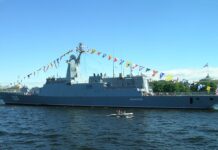
A Russian warship was suspected of jamming GPS signals used by about 140 commercial flights over the North Sea and parts of northern Europe on November 9, according to recent British media reports. Investigators believe a Russian warship escorting three cargo vessels through the North Sea, about 190 miles off the English coast, may have caused the unprecedented disruption.
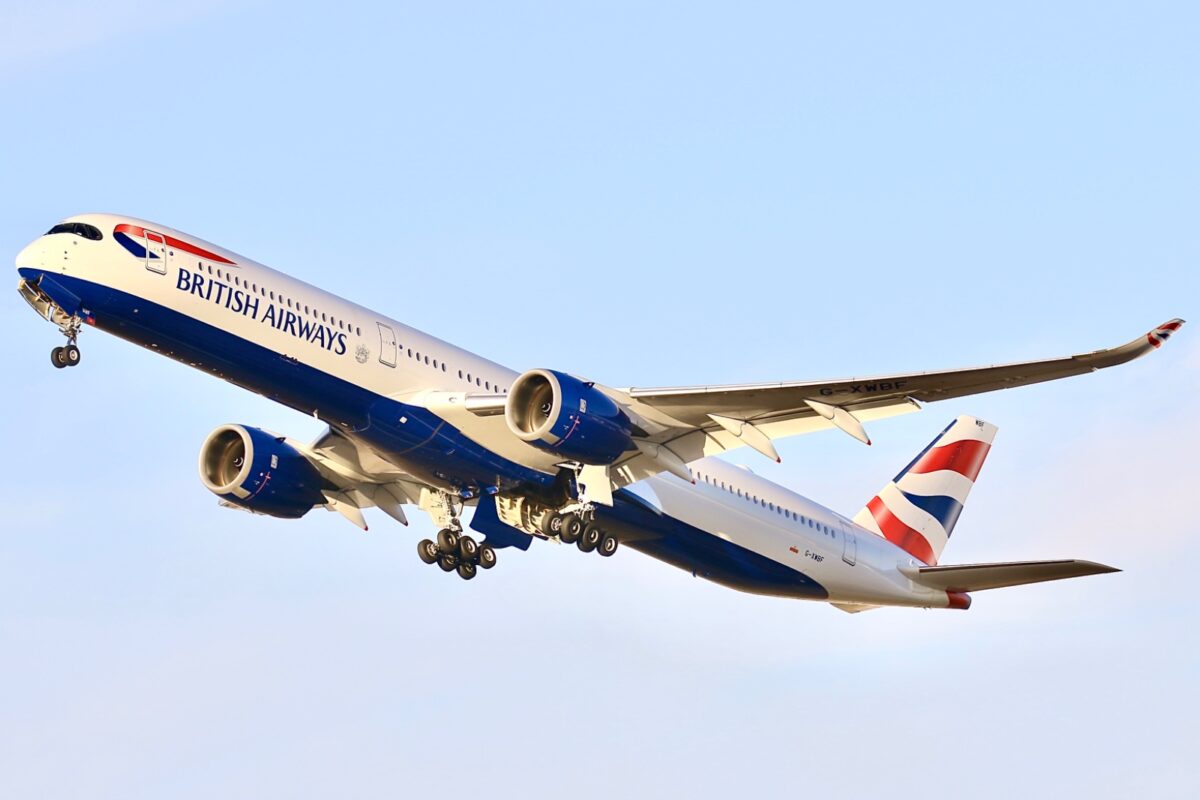
According to reports, an EasyJet flight from Manchester to Egypt and a Ryanair flight from Edinburgh to Rome were among the passenger jets affected. Additionally, a British Airways aircraft traveling from London to Stockholm was apparently impacted by the jamming attack and lost its GPS signal for about 20 minutes.
GPS jamming occurs when a transmitter emits radio-frequency interference that an aircraft’s GPS receiver picks up, disrupting its ability to determine its position and time.
Notably, NATO ships were reportedly following the Russian convoy when the alleged jamming occurred. Although it is still unclear whether Russia is responsible for the attack, former naval intelligence officer James Droxford told The Sun that the action may have been retaliation for NATO surveillance of the fleet.
British reports citing experts have noted that it would mark a major escalation with Moscow, which could be dangerous in some situations.
When GPS signals are jammed, an aircraft may lose its ability to determine its satellite-based position accurately. Its navigation display might show an unreliable position, trigger warnings, or temporarily stop providing GPS-based navigation information.
This would force the pilots to rely on alternative means such as inertial reference systems and ground-based radio navigation. This could be challenging during long flights over remote regions, where ground-based navigation infrastructure may be limited, and could cause the aircraft to stray off course.
Aircraft are designed to follow predefined paths, maintain distance from other aircraft, and avoid restricted or no-fly zones. If satellite navigation fails or is compromised, an aircraft’s navigation system will struggle to maintain its intended course. In this scenario, Pilots can navigate using alternative systems, but they may need to make manual adjustments and require assistance from air traffic control.
The situation could become more complicated if several aircraft experience interference at the same time, overwhelming controllers.
Notably, aircraft are normally separated by carefully managed vertical and horizontal distances. Air traffic controllers use radar, aircraft position reports, and other surveillance systems to maintain these separations. However, GPS jamming can complicate this, particularly if aircraft position information becomes unreliable across different systems.
Needless to say, the jamming has been seen as an extension of what has been routinely called out by the UK and the rest of Europe as Russian hybrid warfare.
Responding to the November 9 incident, Chair of the Joint Committee on the National Security Strategy, Matt Western MP, said, “Acts that fall below what would be classed as an act of war, but are intended to cause disruption and sow fear. They are also test runs for offensive capabilities and a test of preparedness. The UK needs to not only ensure that it has defensive measures in place to ensure that both military and civilian domains are robust, but also to prepare for every eventuality.”
If Russian involvement is eventually established, the incident would represent a concerning extension of the electronic warfare activity that European countries have increasingly reported around the Baltic region.
More importantly, though, it would also demonstrate that military electronic warfare systems operating from naval platforms could affect civilian aviation hundreds of kilometers away, closer to Western Europe.
Expanding Reach Of Russian Jamming & EW
For several years, Russia has been repeatedly accused of using GPS jamming and spoofing across parts of northern and eastern Europe, particularly around the Baltic states, Finland, Poland, and areas close to the Russian exclave of Kaliningrad.
Since the Russian military operations in February 2022, reports of satellite-navigation interference have become frequent, affecting commercial aviation, maritime navigation, and other services that depend on satellite positioning and timing.
The Baltic region has been more vulnerable because of its geographical proximity to Russian military installations and electronic warfare infrastructure.
In March 2024, for instance, a Royal Air Force (RAF) aircraft carrying former British Defense Secretary Grant Shapps had its GPS signal jammed while flying near Kaliningrad, a Russian exclave on the Baltic. The aircraft was reportedly traveling from the UK to Poland when its satellite signal was disrupted.
A similar incident occurred again this year when an RAF aircraft carrying Defense Secretary John Healey was jammed for three hours after flying close to the Russian border. Healey was reportedly returning to the UK after visiting British soldiers in Estonia when the electronic attack occurred. Pilots had to use an alternative navigation system because the plane’s GPS was turned off, and smartphones and laptops could not connect to the internet.
In September 2025, a jet carrying the President of the European Commission, Ursula von der Leyen, lost GPS navigation mid-air in Bulgarian airspace.
For several years, countries bordering the Baltic have reported persistent interference with Global Navigation Satellite Systems (GNSS), which include GPS and Europe’s Galileo navigation system. The interference has included both GPS jamming and spoofing. In some cases, aircraft have lost reliable satellite navigation signals, whereas in others, navigation systems have reportedly received misleading positioning information.
The threat extends beyond civilian aircraft. Ships, military platforms, telecommunications networks, financial systems and critical infrastructure can also depend on accurate satellite-based positioning and timing.
The proximity of Russian military installations has made the issue a major security concern for neighboring NATO countries, especially around the broader Russian Baltic region.
In January 2026, several Baltic and North Sea countries, along with Iceland, issued a joint warning about growing interference with satellite navigation and vessel-location data in European waters. Meanwhile, on 3 July 2026, the European Union Aviation Safety Agency (EASA) published a revised Safety Information Bulletin on the growing severity and sophistication of GNSS jamming and spoofing.
Against that backdrop, the recent North Sea jamming incident adds another dimension to this problem. Rather than being confined to regular hotspots, the interference was detected across a much wider geographical area, including parts of western European airspace.
The Baltic Sea has long been a major arena of military competition between Russia and NATO. However, the North Sea occupies a different strategic position because it connects the United Kingdom with continental Europe and supports some of the continent’s busiest commercial shipping and aviation routes.
The North Sea also hosts strategically important offshore energy installations, oil and gas infrastructure, wind farms, subsea telecommunications cables, and electricity interconnectors. These assets are essential to European energy security, communications and economic activity. Therefore, the threat of electronic warfare operations in the North Sea could extend well beyond aviation.
For the United Kingdom, the jamming adds to the existing threat posed by a sharp increase in Russian naval activity near its shores.
In July 2026, Royal Navy patrol vessel HMS Tyne monitored the Russian frigate Neustrashimy during a 30-minute live-fire gunnery exercise in international waters, about 40 to 46 miles south of Plymouth, outside British and French territorial waters. Similarly, in late August, the Royal Navy carried out a 72-hour monitoring operation in UK waters as Russian naval assets and sanctioned cargo vessels moved south from the North Sea through the Strait of Dover and into the English Channel.
Earlier this month, Luke Pollard, the UK’s Minister for Defense Readiness, said Russian naval activity around the UK increased by 41% in the first nine months of 2026.
Separately, the Royal Navy had already reported a 25% increase in operations to monitor Russian activity during the first seven months of the year. In fact, British warships and helicopters spent 21 days monitoring Russian vessels during July alone.
- Contact the author at sakshi.tiwari13 (at) outlook.com
- Follow EurAsian Times on Google News