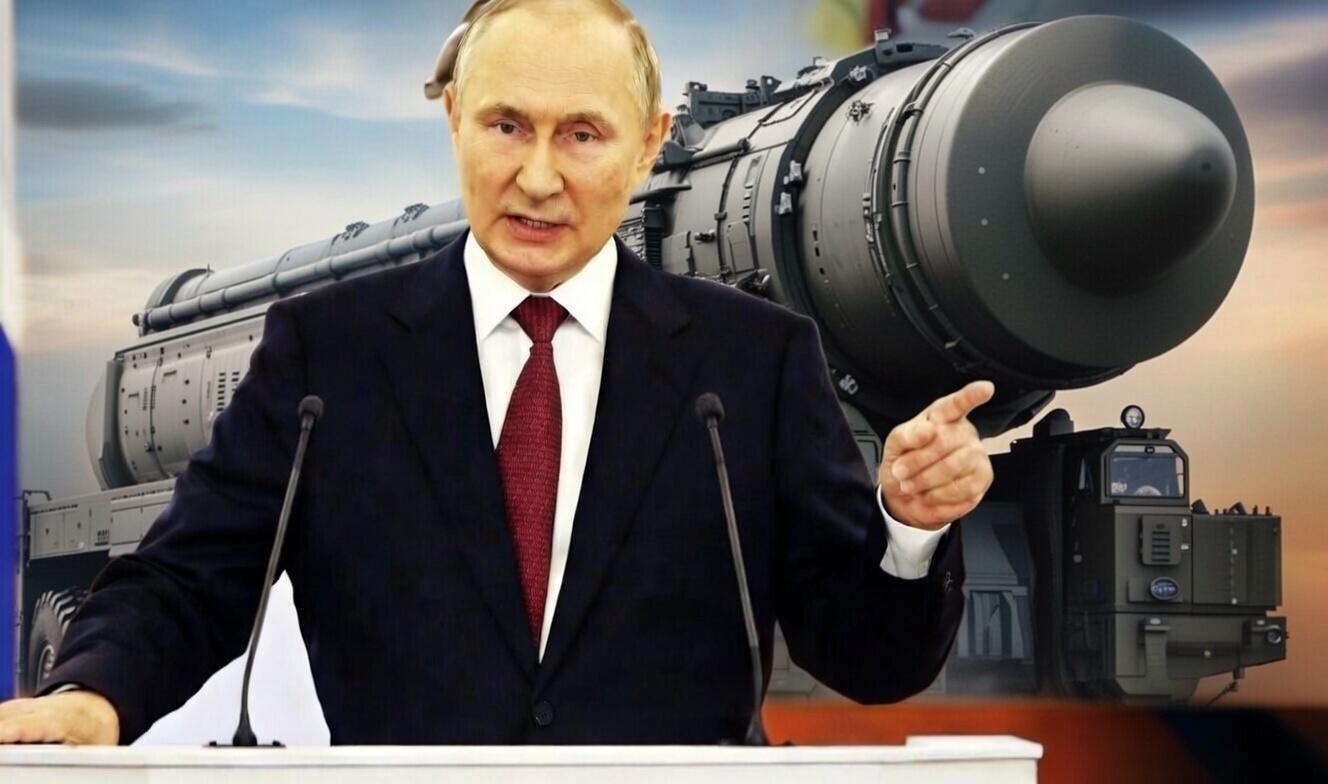
After surprising the Russian Black Sea Fleet (BSF) using unmanned surface vessels (USVs), Ukraine’s Armed Forces have achieved yet another milestone by reportedly sinking a Russian sea drone in a first “USV vs USV” battle.
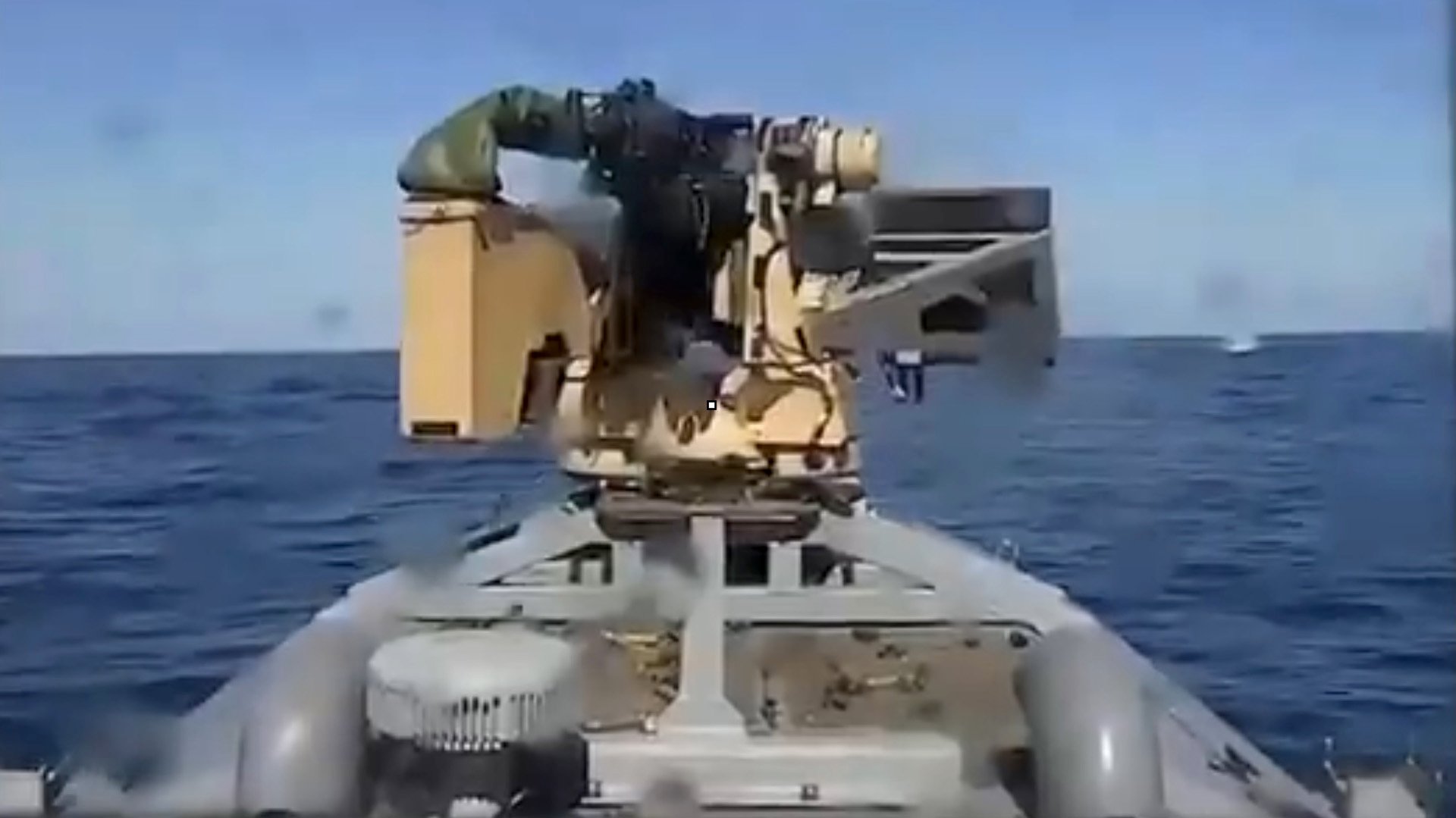
“Units of the Main Intelligence Directorate (GUR) detected the target,” the Ukrainian Navy said in a Telegram post on September 12. “The Ukrainian Navy’s ‘Sargan 3000’ unmanned boat, equipped with a remotely operated weapon station (RWS) Protector 12.7 mm, successfully destroyed it. This is the first naval battle in history between unmanned boats.”
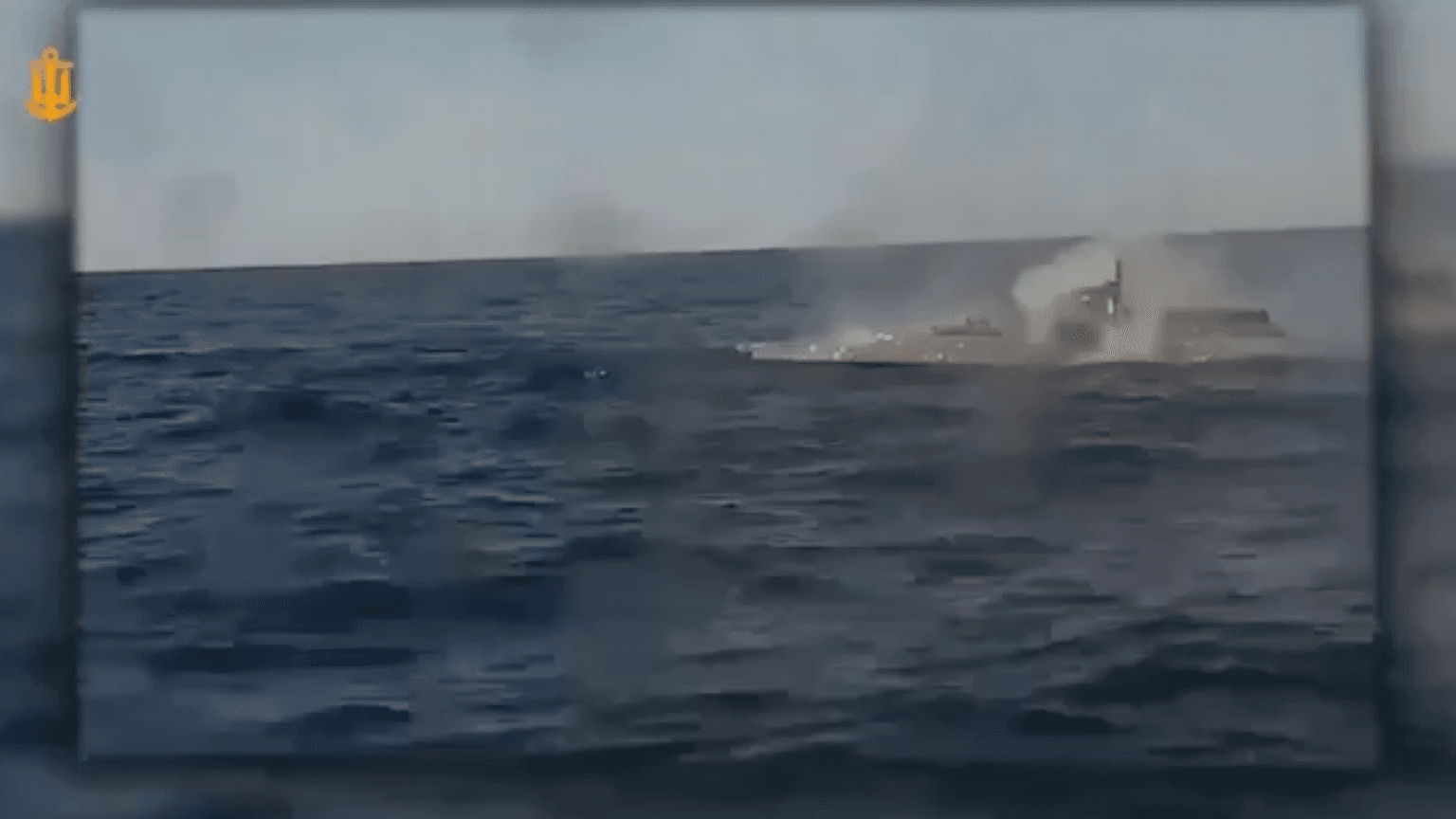
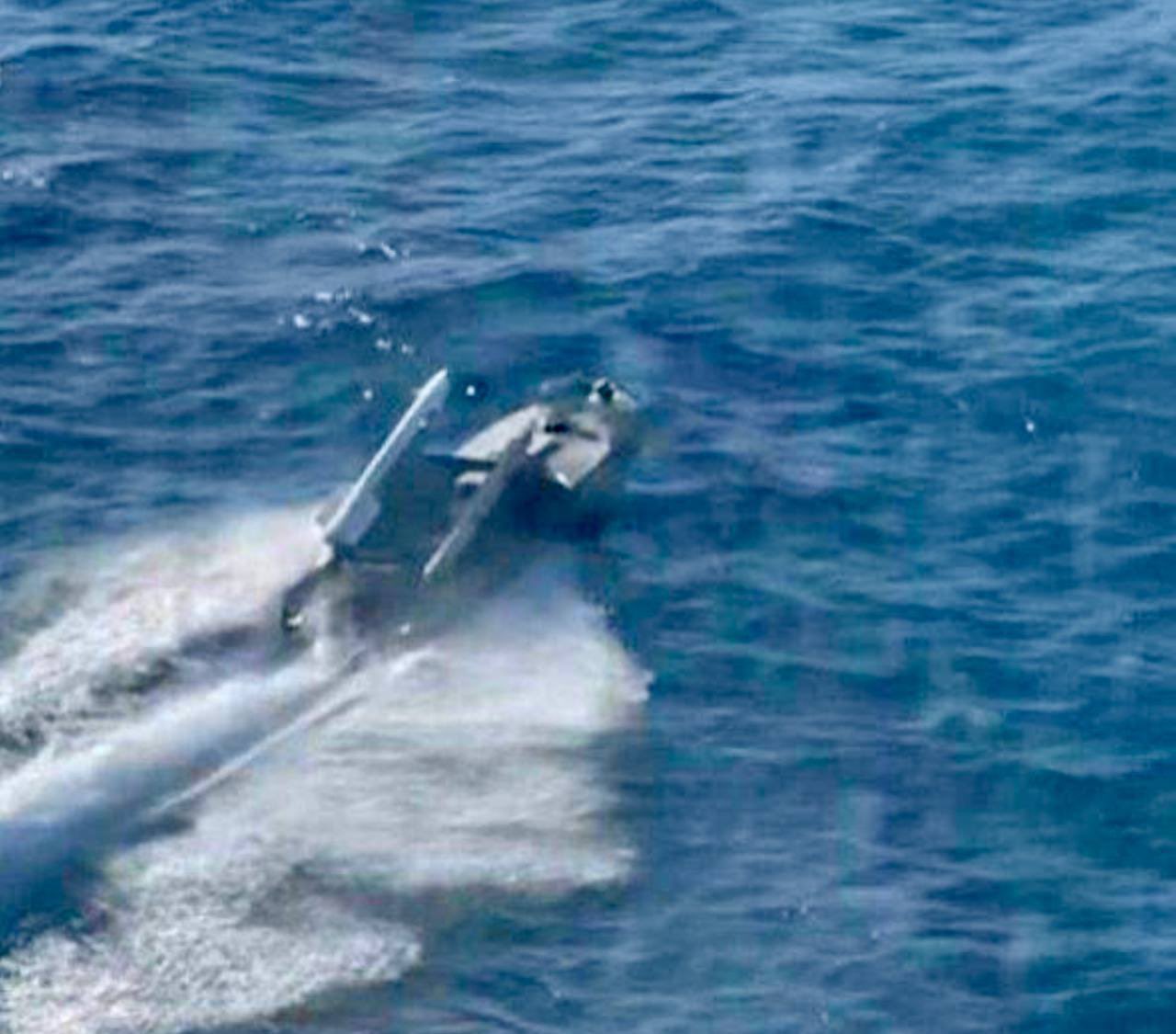
Although it refused to disclose the exact location of the engagement, the Ukrainian Navy released footage of the first-ever battle between the two sea drones. The 1:16-minute video that was posted to Telegram and has since been widely shared on X showed the Ukrainian unmanned surface vessel locking onto and then opening fire on a Russian USV with its machine gun in the first few seconds. The Ukrainian USV is seen hammering the Russian vessel with sustained heavy machine-gun fire until debris begins breaking away and the craft sinks stern-first towards the end of the video.
Developed by Ukrainian company Nordex, Sargan 3000 was designed as a modular, low-signature platform for asymmetric naval warfare. However, the vessel has since evolved from an earlier one-way attack vessel into a reusable multi-role combat system.
The Ukrainian Navy has released footage of the first ever battle between a pair of drone boats.
Seen here, a Ukrainian Sargan 3000 USV engages and sinks a Russian USV using its M2 Browning .50 HMG. pic.twitter.com/SoR9wkSebe
— OSINTtechnical (@Osinttechnical) September 12, 2026
This highly maneuverable USV integrates with Ukraine’s Delta situational awareness system for real-time video, telemetry, and targeting data. It leverages redundant satellite communications and features autonomous inertial and optical navigation for GPS-jammed environments, an electronic countermeasures (ECM) suite, and multi-channel remote control with onboard sensors.
The platform also supports a wide range of configurations, including the Kongsberg Protector remote weapon station (RWS) with a 12.7 mm heavy machine gun used in the recent engagement, as well as rockets and first-person-view drones.
Kongsberg manufactures the Protector remote weapon station fitted to the Sargan 3000. Its first publicly reported combat use occurred in July, when the Ukrainian Navy announced that one of the vessels had sunk the Russian FSB border guard ship Izumrud.
“Ukrainian naval sailors sank the border guard ship of the 2nd rank with the Sargan-3000 maritime unmanned complex near Novorossiysk,” the Ukrainian Navy claimed in a Facebook post at the time. “Among the crew of the ship are dead and wounded.”
Notably, the Ukrainian Navy did not formally identify the Russian sea drone involved in the engagement, and the Russian Ministry of Defense (MoD) has not acknowledged the alleged sinking so far.
However, open-source naval Analyst H.I. Sutton stated the Russian drone could be an improved version of the Orcan, a relatively small one-way attack (kamikaze) drone boat, similar in concept and size to Ukraine’s earlier Magura V3/V5 designs, designed to carry an explosive payload for ramming or striking targets.
According to publicly available information, the Orcan USV has an internally mounted motor driving a jet-ski-type steerable water jet, ensuring speed and agility.
It is worth emphasizing that Ukrainian USVs began primarily as low-cost, explosive-laden platforms for striking ships, ports, and infrastructure, achieving significant sea denial against Russia’s Black Sea Fleet. The latest duel, however, shows USVs can also serve as hunter-killer, patrol, and counter-USV platforms—changing the tactics and rules of engagement in the contentious Black Sea.
With this latest win, analysts believe Ukraine has ushered in a new chapter in naval warfare, where uncrewed systems go beyond the traditional role of conducting reconnaissance, one-way attacks, or strikes against conventional warships and coastal targets, and fight a fully autonomous war. Both Ukraine and Russia have extensively deployed uncrewed surfaced and submersible vessels in the war.
Ukrainian USVs Have Already Made History
Ukraine has positioned itself as a leader in maritime drone warfare by showing that comparatively simple and inexpensive systems can disable high-value naval targets. Using low-cost sea drones, the country has demonstrated that a force lacking conventional warships can still impose effective sea denial on a far larger, traditional fleet like Moscow’s.
“They do not approach our shores because of the capabilities of our naval drones,” Ukrainian President Volodymyr Zelenskyy said earlier this year.
Ukrainian sea drones struck Russian intelligence vessels such as the Ivan Khurs and contributed significantly to the sinking or disabling of several high-value Russian targets between 2023 and 2024. For example, in February 2024, the Magura V5 became the first sea drone to sink enemy warships in combat, destroying the Tarantul-class corvette Ivanovets and a large Ropucha-class landing ship.
Later that year, Magura V5 made history when it shot down a Russian military helicopter with an air-to-air missile near Cape Tarkhankut in Crimea in December 2024. This trend was carried into 2025 when a Ukrainian USV armed with R-73 air-to-air missiles shot down a Russian Su-30SM naval fighter on May 2, 2025—marking a first in aviation history. However, in images released by Ukrainian sources, it is now believed that AIM-9 missiles shot down the Su-30SM and not R-73.
Initially, Russia countered Ukrainian kamikaze and reconnaissance USVs with fighter jets and armed helicopters. However, Ukraine adapted and began arming its USVs to reduce the chances of interception, thereby changing the rules of engagement and tactics, as previously explained in detail by the EurAsian Times. Since they were first introduced by Ukraine, these sea drones have helped sink or severely damage roughly one-third of Russia’s BSF, showcasing the power of asymmetric naval warfare.
Ukraine also modified its USVs to launch First Person View (FPV) drones in 2024 and began using these cheap drones, launched from uncrewed surface vessels, to hit Russian air defense systems and surface-to-air missiles in 2025, heralding a new era of drone warfare in which sea drones would act as motherships for aerial drones.
In July 2025, one bomber drone released from a Ukrainian USV attacked a sophisticated Russian radar system deployed in the Crimean Peninsula, marking a historic first.
Continuing the streak of historic firsts, Ukrainian USVs destroyed Russian S-400 air defense launchers in August 2026. At the time, Group 13, a special unit under the Defense Intelligence of Ukraine (DIU), reportedly struck two Russian S-400 Triumf launchers and an antenna used to control Orion unmanned aerial vehicles (UAVs) in Crimea, with First Person View (FPV) drones launched from a Magura sea drone.
Priced under $500,000, depending on configuration, the drones represent a highly affordable option.
Russia also took a leaf out of Ukraine’s playbook and developed an array of sea drones itself, employing one to launch a strike on Ukraine for the first time in August 2025. At the same time, it adapted to Ukraine’s growing use of USVs and developed countermeasures.
Experts believe it will likely adapt to the new reality of unmanned combat in the Black Sea, probably by adding defensive armament or electronic countermeasures to its attack USVs.
The latest episode shows that as both sides field denser USV fleets in the same waters, unmanned boats become both targets and weapons. This will drive requirements for better detection or identification, self-defense armament, machine-to-machine targeting, and layered defenses, among other things.
- Contact the author at sakshi.tiwari13 (at) outlook.com
- Follow EurAsian Times on Google News