

The US and Japan have signed a deal to establish an AIM-120 Advanced Medium-Range Air-to-Air Missile (AMRAAM) facility in Japan, a move that will help bolster production of the most sought-after American beyond-visual-range air-to-air munition.
The agreement paves the way for a final assembly and checkout (FACO) facility for AIM-120 AMRAAMs—which arms F-35 Lightning II stealth fighters operated by both countries and many other US allies—in Japan.
“This is a groundbreaking agreement that will not only ensure the acquisition of equipment needed by both Japan and the United States, but will also strengthen Japan’s defense industry base,” Japanese Defense Minister Shinjirō Koizumi announced after holding discussions with US Secretary of War Pete Hegseth on 28 October, on the sidelines of the ASEAN Defense Ministers’ Meeting Plus in Cebu, the Philippines.
The Japanese Defense Minister said the AMRAAM missiles are “essential for the F-35” and that the new facility is part of “Operation Supercharge,” a US-Japan initiative to strengthen cooperation on defense equipment and technology, particularly munitions production and industrial capacity.
However, he did not provide any information on the potential facility location, operator, cost, timeline, or the planned output.
The AIM-120 is the primary beyond-visual-range (BVR) active radar-guided air-to-air missile and the longest-range air-to-air weapon in the US Air Force (USAF) arsenal.
It remains the most widely deployed active radar-guided missile, integrated on more than a dozen aircraft types across more than 40 nations, including the F-35, which the Japanese Air Self-Defense Force (JASDF) also operates.
Additionally, the missile is also used in the National Advanced Surface-to-Air Missile System (NASAMS) and other ground-based air defense systems, many of which have been combat-tested in Ukraine.
US and Japanese officials said that the agreement will diversify the AMRAAM industrial base and build regional stockpiles for Washington and its allies.
The agreement comes amid intense global demand for precision munitions, as conflicts in Ukraine and the Middle East have depleted stockpiles and rising tensions in the Indo-Pacific have heightened the need for resilient supply chains.
Earlier, Raytheon signed a deal with the US Department of War in February 2026 to produce at least 1,900 AIM-120 missiles annually. Later that year, the company was awarded a five-year AMRAAM production contract by the Department worth up to $20.7 billion in September 2026, with options for two more years.

Against that background, Japan’s new facility will not supplant US production lines but will create a second node, improving much-needed surge capacity and reducing logistics risks for the F-35 fleets and other platforms of both countries, as security risks from China in the Indo-Pacific continue to mount.
The agreement on the new facility stems from work that began in July 2024 at that year’s 2+2 meeting.
The licensing process took more than two years due in part to Japan’s tight constitutional prohibitions on exporting lethal weapons or even co-producing offensive equipment with allies, which stem from its peace-focused foreign policy following its tragic losses in World War II.
Additionally, the AMRAAM includes intellectual property and sensitive guidance systems that must be protected.
For this reason, the proposed facility does not promise to produce the entire missile locally. Instead, a final assembly and inspection approach enables Japan to finish and verify missiles with parts made through an industrial structure.
Japanese Industry Pursues Closer Ties With USA
Japan has pursued a deeper defense industrial relationship with the United States as a core element of its security strategy for decades. This push accelerated after the 2022 National Security Strategy and related documents, which called for fundamentally reinforcing Japan’s defense capabilities, revitalizing its industrial base, and expanding international cooperation amid heightened security threats from China.
It is, however, pertinent to note that while it pursues new areas of collaboration that were earlier farther, it already has a long history of licensed production of US equipment, as well as joint development of several cutting-edge systems.
This includes the SM-3 Block IIA ship- and land-based ballistic-missile interceptor, co-developed by Raytheon and Mitsubishi Heavy Industries.
Designed to engage ballistic missiles in the mid-course phase of flight and a key element of Aegis ballistic missile defense for both the US Navy and Japan’s Maritime Self-Defense Force, the SM-3 Block IIA entered full-rate production in 2024.
In fact, in addition to the latest AMRAAM deal, the US and Japan “agreed to share the necessary technical information to achieve increased production” of the Standard Missile-3 Block IIA missile. However, neither side has said when more output will be available or how much the most recent deal is expected to boost overall SM-3 production.

This follows Raytheon’s $745.4 million contract to manufacture and assemble SM-3 Block IIA all-up rounds for both the US and Japan earlier this year, and Tokyo reportedly funded nearly half of the immediate obligation under that contract.
Notably, the US Navy used SM-3—including the Block IIA variant—during the Iran War, and reports suggest the overall inventory of these interceptors has been significantly depleted in the past eight months of hostilities.
Japan has also manufactured Patriot air-and-missile interceptors for decades through licensed production agreements, including that of the PAC-2 and the PAC-3.
In a notable development reflecting easing rules, Japan exported finished PAC-3 missiles to the US in November 2025 to help replenish US stocks depleted by aid to Ukraine, as the EurAsian Times reported at the time. However, Japanese officials clarified that the interceptors would be used only by the US and would not be supplied to a third nation.
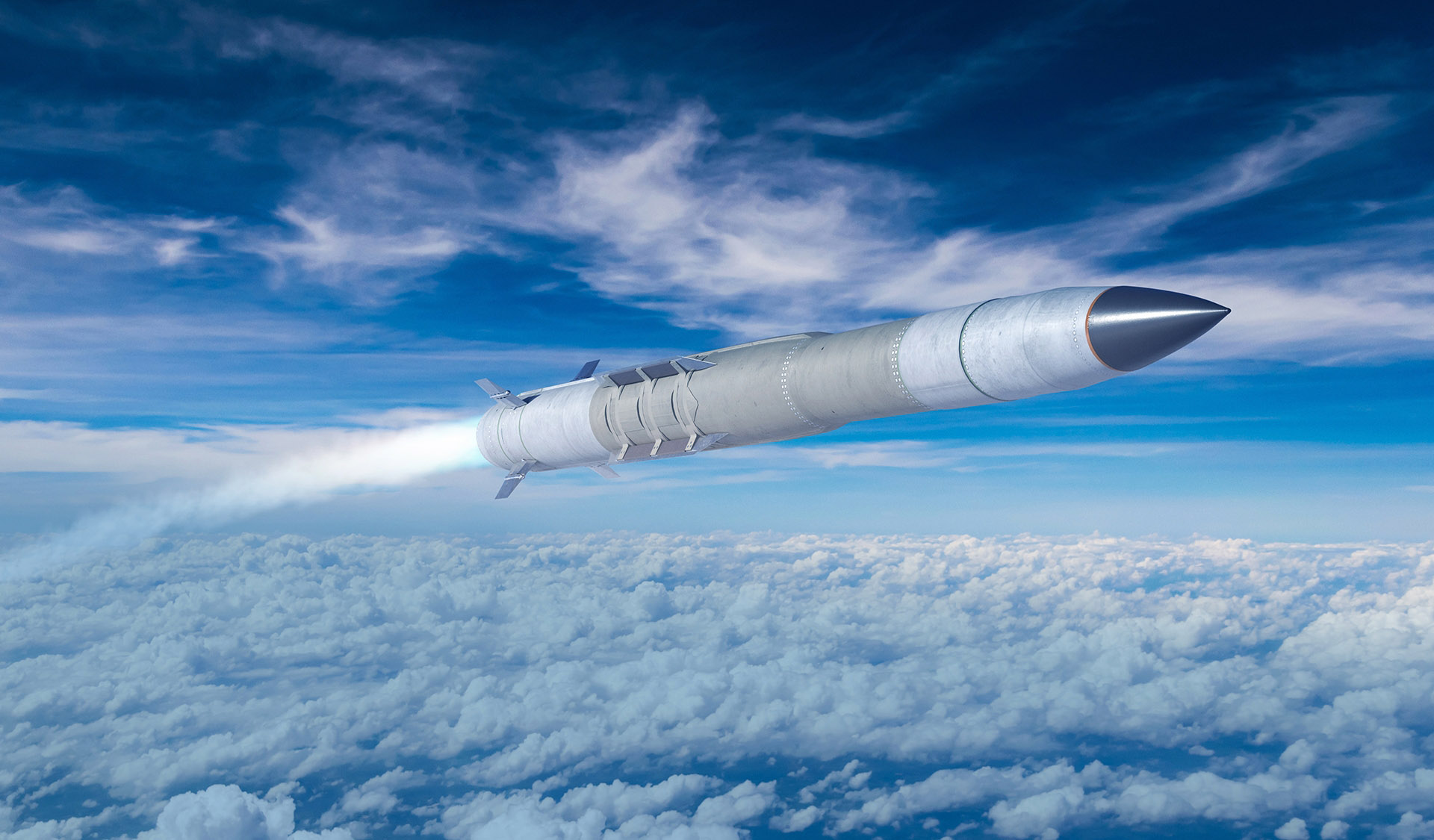
Patriot systems, particularly the PAC-3 MSE interceptor, have been a cornerstone of US defense alongside THAAD in its latest conflicts with Iran. In fact, the US and Japan are currently discussing co-production of the PAC-3 MSE, the more advanced hit-to-kill variant.
The co-development of the Mitsubishi F-2 combat aircraft by the United States and Japan remains a classic example of their collaboration and close defense ties.
The F-2 is a derivative of the US F-16 Fighting Falcon, developed through a partnership between Mitsubishi Heavy Industries (MHI) and Lockheed Martin through technology transfer, design support, and manufacturing. Japan has also license-produced an array of US aircraft, including the F-15J, the P-3C Orion, and Sea Hawk military helicopters, among others.
Beyond aircraft production, Japan currently operates a Final Assembly and Check-Out (FACO) facility for the F-35A Lightning II in Nagoya, operated by Mitsubishi Heavy Industries.
It is one of only a small number of F-35 FACO facilities located outside the United States. At this facility, Mitsubishi performs final assembly, systems integration, and check-out of F-35A aircraft destined for the JASDF.
For this, major components and kits are supplied from the global F-35 production network, with Japanese industry contributing certain parts and performing final build and testing.
In the past, the Japanese defense industry has also license-produced the AIM-7 Sparrow and AIM-9 Sidewinder air-to-air missiles. Currently, Japan is aiding the US in producing the Evolved SeaSparrow Missile (ESSM) Block 2 under a licensed production agreement struck in June 2025.
Under the agreement, Raytheon supplies missile kits, parts, components, and technical assistance, while Mitsubishi Electric Corporation (MELCO) handles the domestic assembly and production of the missiles.
Japan also builds and equips its destroyers with the Aegis Combat System and manufactures critical radar and missile components in partnership primarily with Lockheed Martin and Raytheon (RTX), along with Japanese firms such as Mitsubishi Heavy Industries and Mitsubishi Electric.
Japanese destroyers are based on US Arleigh Burke designs and incorporate licensed Aegis technology, and Japan builds the ships domestically with extensive US systems integration.
Further widening the scope of this industrial collaboration, the United States and Japan have expanded practical cooperation on ship repair and shipyard capacity with an eye on expanding the ability of Japanese shipyards to perform maintenance, repair, and overhaul (MRO) work on forward-deployed US Navy vessels.
In 2025, the two countries signed a memorandum of understanding on shipbuilding cooperation to expand capacity, encourage Japanese investment in US shipyards, explore standardization of designs and parts, and strengthen overall industrial resilience.
The US is considering Japan’s FFM Mogami-class guided-missile frigate design for its next frigate, after US President Donald Trump issued a national security memo in August 2026 allowing the Navy to acquire foreign ship designs and build some warships overseas amid delays and cost overruns at home.
Against that backdrop, the latest agreements on AMRAAM FACO and expanded SM-3 production cooperation suggest Japan is pursuing two goals: strengthening its defense industrial base and contributing more actively to collective deterrence.
- Contact the author at sakshi.tiwari13 (at) outlook.com
- Follow EurAsian Times on Google News