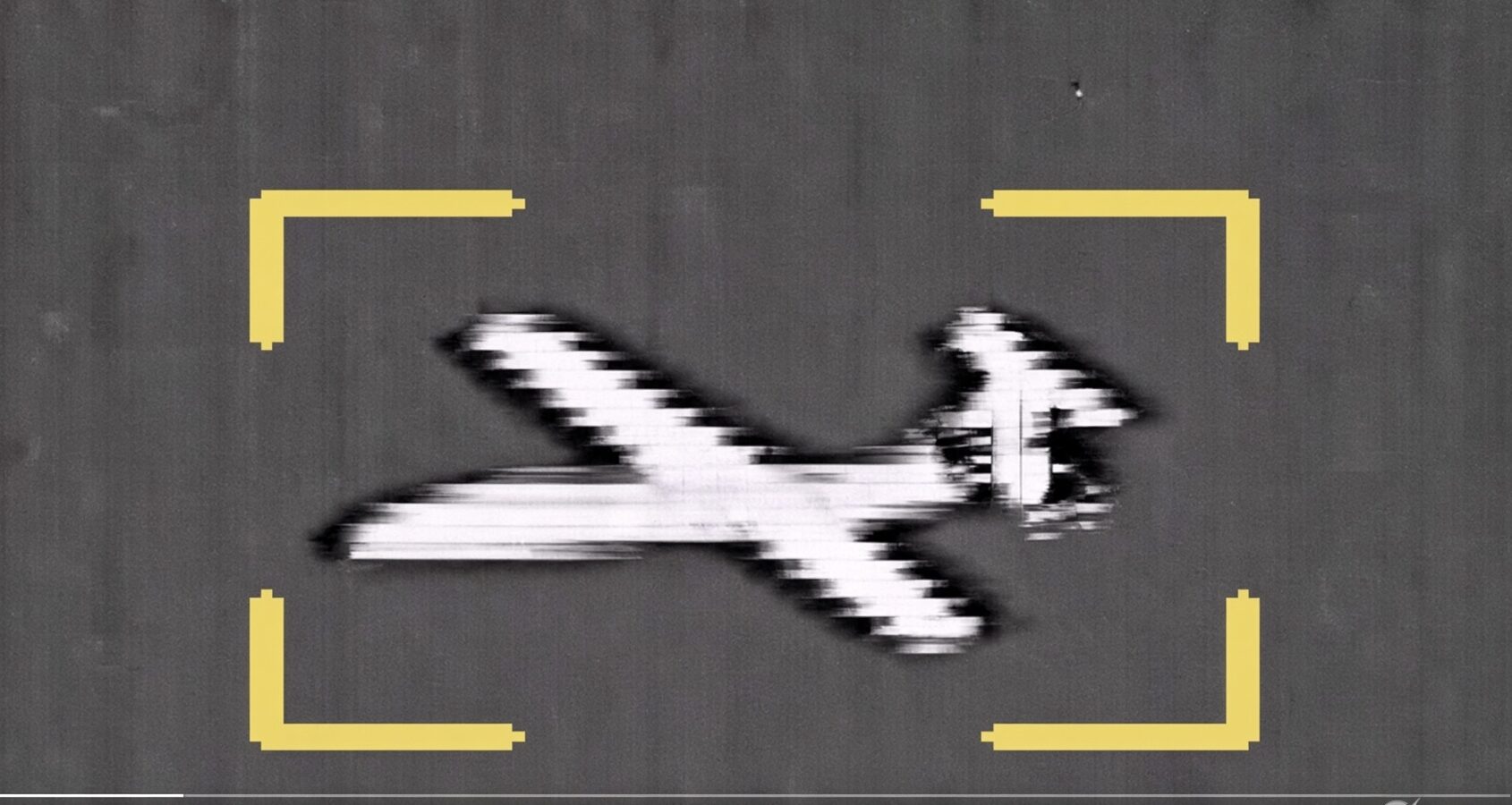
Iran’s Islamic Revolutionary Guard Corps (IRGC) Navy has claimed to have captured a US MQM-170 drone in the Strait of Hormuz. IRGC-N claimed in a statement that its electronic warfare unit took control of the drone’s guidance and control systems and brought it down.
“Fighters of the IRGC Navy’s electronic warfare unit carried out an offensive electronic warfare operation. They detected and identified an MQM-170 reconnaissance and decoy drone belonging to the ‘terrorist U.S. army’ west of the Strait of Hormuz, took control of its guidance and control systems, and brought it down intact.
The drone’s mission was to locate the Islamic Republic of Iran’s air defense systems along the Persian Gulf coastline and the Strait of Hormuz. IRGC Navy specialists recovered data from the aircraft and determined that it had taken off from the coast of one of the countries on the southern shore of the Persian Gulf.”
CENTCOM spokesman Tim Hawkins rejected the claim outright: “In the past weeks and months, the IRGC has repeatedly lied out of desperation, and today is no different.”
The MQM-170 is a low-cost, recoverable aerial target drone used by the U.S. Army and Navy for air-defense training.
It is not a high-end reconnaissance UAV comparable to systems such as the MQ-9 or RQ-170. Some variants can carry sensors, but its main role is to simulate threats. An intact capture of a target/decoy drone would still offer limited technical intelligence value compared with more advanced platforms.
Earlier, Iran claimed to have seized American drones.
“Through a coordinated, complex operation involving intelligence oversight and electronic warfare, IRGC naval forces’ personnel successfully captured an advanced unmanned underwater vehicle (UUV) belonging to the terrorist US military,” the IRGC naval forces said in a statement on the 8th September, according to state TV.
The IRGC said that the drone was “operating in the Strait of Hormuz for espionage purposes”, identifying the model as a Remus 600 autonomous underwater vehicle that was “now in the hands of the force’s specialists for data recovery”.
Earlier, as EurAsian Times reported, the IRGC, on September 8, said that they had recovered a US drone submarine at the entrance to the Strait of Hormuz.
“One of the US military’s most advanced unmanned underwater vehicles was seized by Iranian armed forces at the entrance to the Strait of Hormuz during a complex intelligence and field operation and brought into Iran, IRIB (Islamic Republic of Iran Broadcasting) said in a post on X.
Iran’s state media later officially identified the captured vessel as an Anduril Dive-LD UUV.
US Navy Captain Tim Hawkins, the spokesperson for US CENTCOM, said, “An underwater drone operated by US forces malfunctioned more than a day ago. It was surveying regional waters in support of ongoing operations. The defective drone was an older model that neither collected sensitive data nor carried any classified sonar or radar equipment. US operations in area waters continue.”
Tankers on Fire
Meanwhile, at least four tankers have caught fire after hitting mines while attempting to pass the Strait of Hormuz, which the Trump administration said was free of mines and under American control.
For instance, on 25 August, Trump posted on Truth Social: “I have just been informed by the United States Navy that all mines have been removed and/or detonated from within the International Waters of the Strait of Hormuz.
Iran has been notified that any ship or boat placing new mines will be immediately and systematically destroyed. Through Space Force, we are watching every square inch of the Strait, as we are, also, with Pickaxe Mountain and the already destroyed three other Nuclear sites. There is a Zero Tolerance policy on mine placement in full force and effect.
IRGC said in a statement: “Over the past 24 hours, three violating oil tankers exploded and caught fire after striking mines while attempting to pass through the unauthorized southern route of the Strait of Hormuz.
The vessels had switched off all their radar and navigation systems and disregarded warnings from the IRGC Navy as they attempted to leave through the unauthorized southern route. The tankers were left stranded/abandoned along the southern coast of the Strait.
The IRGC Navy states that the unauthorized route through the Strait of Hormuz is mined, and that vessel owners and crews are responsible for transiting these routes and should not pay attention to CENTCOM’s delusions/illusions on social media.
The facts on the ground will speak for themselves / will determine the outcome. Any provocative action, supported by the terrorist and invading US military’s act of mischief, that disregards the regulations governing the Strait will be met with a resolute/firm response.”
In recent weeks, Iran has reported multiple vessels striking sea mines, prompting CENTCOM to reaffirm that all mines in “primary transit routes” have been cleared.
On Thursday, Hossein Mohebi, the IRGC spokesman, challenged the claim, saying, “Prove your Hormuz mine-clearing claim with independent evidence, not statements!” in a post on X.
Arsenio Dominguez, Secretary-General of the International Maritime Organization, said: “The traffic separation scheme, the information that we have is that they still have mines. And of course, whilst the conflict is ongoing, it’s very difficult for us to use third parties to verify that it is clear of these hazards. So in the meantime, we cannot guarantee that a vessel that intends to transit that route will not be hit by a mine.”
Jakob Larsen, Chief Safety & Security Officer, BIMCO (Baltic and International Maritime Council, the world’s largest international shipping association), also highlighted the risk of mines and said: “We still consider it very risky for ships to commence transits at this point. The threat of mines in the area remains a concern immediately as well as further down the line, and mine-free routes need to be established.”
By ET Online Desk