The UK was not only a founding member of NATO but also the inspiration behind the security alliance.
In 1948, five Western European countries, Belgium, France, Luxembourg, the Netherlands, and the UK, signed the Treaty of Brussels, also called the Brussels Pact, as a mutual defense pact against possible Soviet aggression.
This was the first post World War-II mutual defense agreement directed against the Soviet Union and directly influenced the language and the structure of NATO.
This treaty was the direct predecessor to NATO and laid the foundation for the North Atlantic Alliance.
The UK Foreign Secretary Ernest Bevin played a very active and leading role in pushing for the alliance. Bevin was the main architect in bringing the Americans into a European defense pact.
In 1949, the five Brussels Pact countries invited the United States, Canada, and four other countries to join them, creating NATO with its 12 founding members.
Consequently, in April 1949, the 12 founding members signed the North Atlantic Treaty in Washington, D.C. Now, the alliance has expanded to 32 members, making it one of the world’s largest mutual defense agreements.
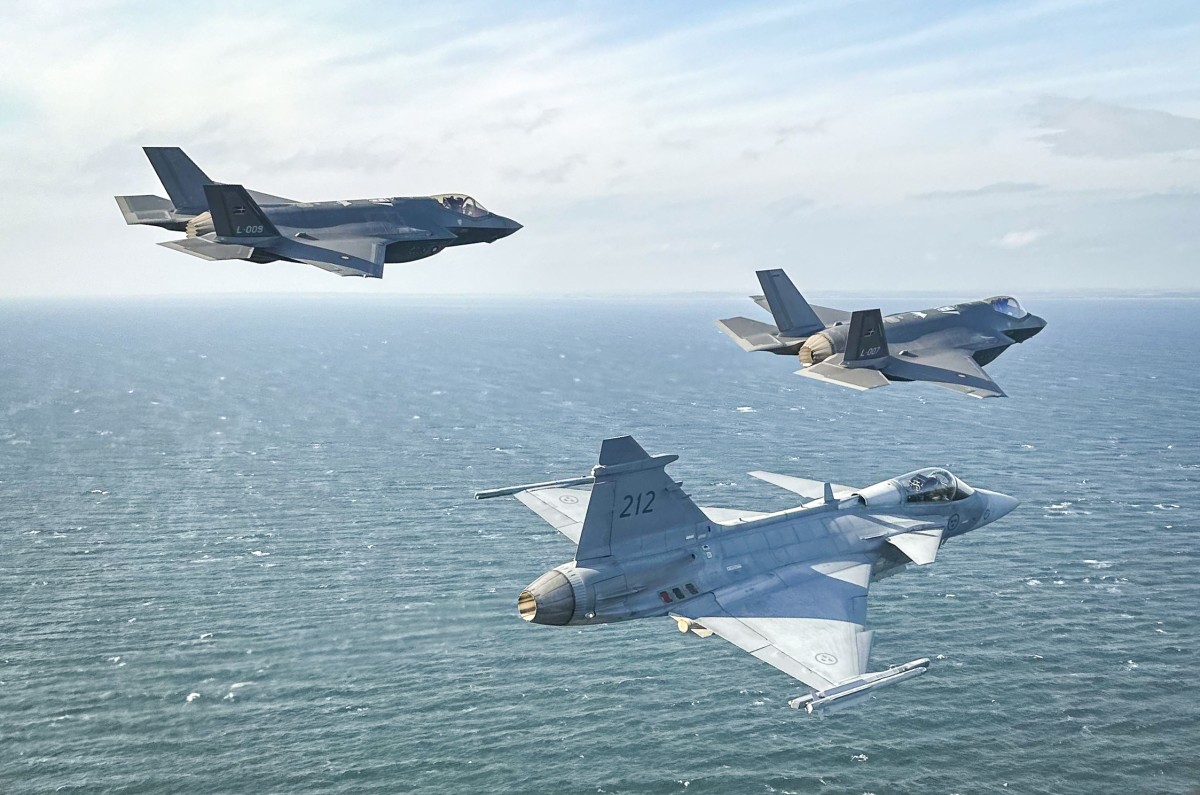
However, the UK, which was one of the founding members of NATO, has now become one of the biggest drags on the alliance as it faces new challenges and a possible confrontation with Russia.
The UK has been ranked 31st out of 32 NATO member states in a new assessment measuring how well countries are fulfilling their commitments to strengthen and modernize their armed forces, according to The Times.
“The UK is currently ranked 31st out of 32 countries on a list — which may be published by the end of the month — detailing how each country is progressing toward meeting the alliance’s capability requirements,” the report said.
The only country below the UK is Iceland, which does not have a standing military and relies on the Icelandic Coast Guard for its defense.
However, Iceland is considered to play a crucial role in NATO’s Arctic strategy.
The capability targets take into account a state’s ability to lay out a path towards hitting NATO military targets.
Britain is expected to produce a fully funded plan outlining what it can and will contribute to NATO beyond its Trident nuclear missile system.
According to the Times, this contribution will include two divisions, artillery, ammunition, and two carriers with F-35 jets and other fast jets. The plan will also detail what Britain is supposed to provide, when in the deployment timeline, and at what scale.
A government spokeswoman said: “We are the only European NATO member to commit our nuclear deterrent in full to the alliance. We have always met our NATO spending commitments and remain one of the top defense spenders in the alliance, as NATO’s third-largest cash spender on defense. The UK plays a central role across Nato missions — from air policing on the eastern flank to our carrier deployment to the North Atlantic, and steadfast contribution towards NATO’s Arctic Sentry initiative.”
The UK might be the third-largest defense spender in NATO, behind the US and Germany, but in terms of spending as a percentage of GDP, it ranks 12th out of 32 countries.
Currently, the UK spends 2.4% of its GDP on defense, which is not only lower than the NATO average of 2.76% but also well below that of countries such as Poland (4.48%), Lithuania (4%), and Latvia (3.73%).
The UK is also behind countries, such as Greece, which spends 2.85% of its GDP on defense, and the Netherlands (2.5%).
To meet its commitments to NATO, reached at the Hague last year, the UK will have to more than double its defense spending to 5% of GDP by 2035.
According to the agreement, all NATO countries will have to spend 3.5 percent on ‘core defense requirements’ and an additional 1.5 percent on wider national security and resilience by 2035.
Matthew Savill, of the Royal United Services Institute (RUSI), said the failure to match other countries’ spending growth risks undermining Britain’s position as a leader in military matters on the world stage.
“It is about political prioritization,” he said.
“We have gone from being one of the few who are meeting [NATO’s] 2 percent target to being in the middle of the pack.” This could prove to be “problematic” for the UK, he said – particularly as NATO’s 2 percent target rises to 5 percent by 2035.
“The problem is that as the target has moved up, the onus falls back upon those who see themselves as leaders to take the lead,” said Savill.
British ministers are also hoping that, following the release of a new defense investment plan, the country will be able to move up in NATO’s rankings.
However, there is a reason the defense investment plan has been repeatedly delayed: there is no consensus between the Prime Minister and the Treasury Department on how much to spend on defense and where to collect funds.
According to media reports, the UK Defense Ministry wants £18 billion (US$24.16 billion) over four years; however, the Treasury Department wants to allocate only £12 billion (US$16.10 billion).
The House of Commons Public Accounts Committee has already warned that delays in publishing the defense investment plan have undermined the UK’s credibility with its allies and made procuring the latest equipment more expensive, “hindering the government’s attempt to modernize the armed forces”.
According to British newspaper The Spectator, the capability gap between commitments and resources is of the order of £28 billion (US$37.5 billion).
Notably, the UK’s lack of budgetary commitments is also delaying the Japan-UK-Italy trilateral Global Combat Air Program (GCAP).
GCAP is a collaborative initiative between Italy, the United Kingdom, and Japan to develop a sixth-generation fighter jet. Japan is reportedly frustrated with the UK, as London’s lack of commitment to funding the strategic program is causing a multi-year delay.
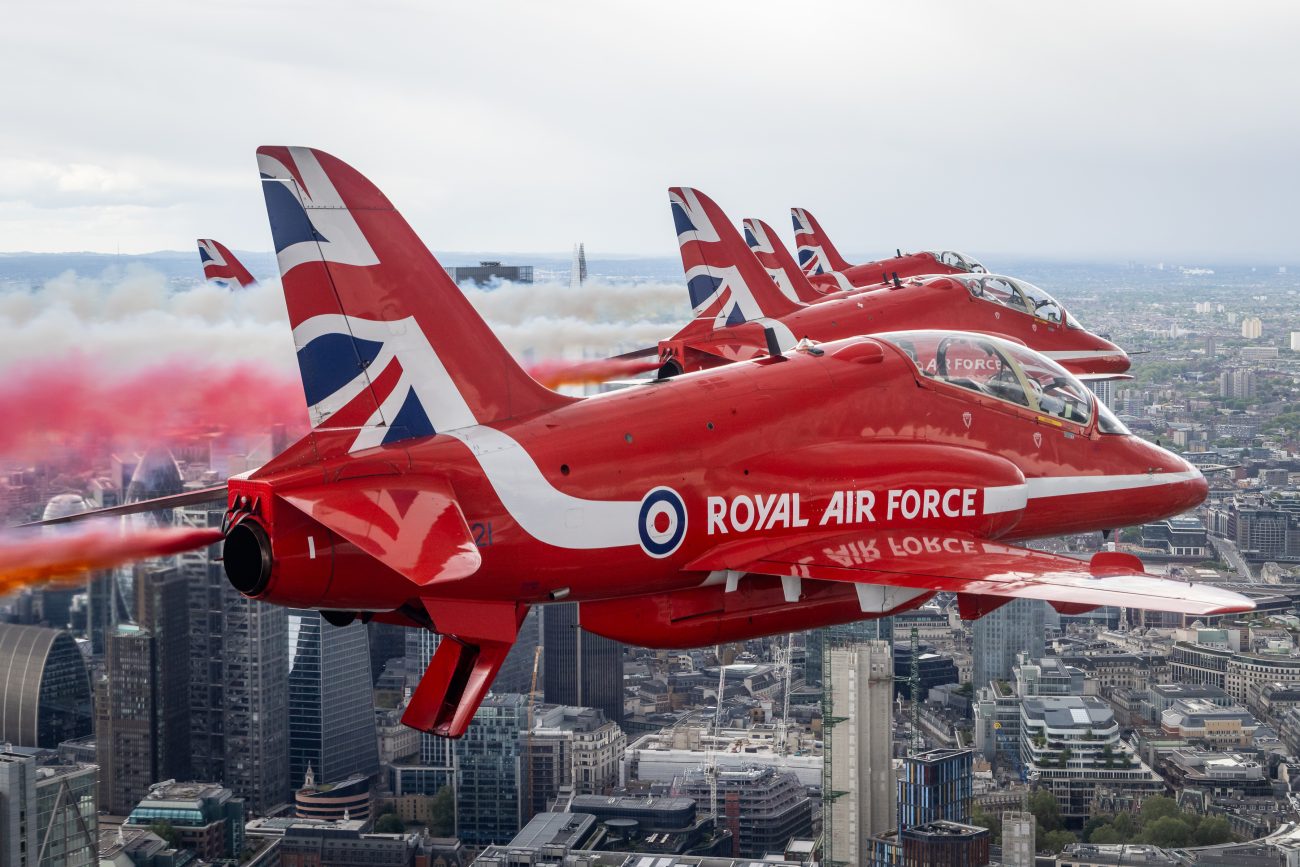
Last week, the Telegraph reported that the aircraft could be delayed by several years because of uncertainty over Britain’s defense spending plans.
The British armed forces are woefully unprepared for an intense military conflict as Europe faces one of its worst security threats in decades.
According to the Times, the Royal Navy’s entire available fleet of five nuclear attack submarines was stuck in port awaiting maintenance and repairs. A sixth, which was commissioned into the fleet, is not yet ready to deploy.
At least one and possibly two of the four Vanguard-class ballistic missile submarines, which provide continuous at-sea deterrence, are unavailable.
Similarly, the Royal Air Force has yet to put the first of its expected three Boeing E-7 Wedgetail AEW1 airborne early warning aircraft into service, while its predecessor, the E-3 Sentry, was retired five years ago.
Given the squabbles in the British cabinet, it is hard to see how the UK will provide the funds needed to modernize the British armed forces, fund the sixth-generation fighter jet, and meet its NATO commitment to spend 5% of its GDP on defense by 2035.
Despite being a founding member and key inspiration behind NATO, the UK now ranks 31st out of 32 members in meeting capability targets.
As Europe faces growing Russian threats, Britain’s failure to match its historical leadership with adequate spending and modernization risks undermining both its own security and the alliance’s strength.
- Sumit Ahlawat has over a decade of experience in news media. He has worked with Press Trust of India, Times Now, Zee News, Economic Times, and Microsoft News. He holds a Master’s Degree in International Media and Modern History from the University of Sheffield, UK.
- He can be reached at ahlawat.sumit85 (at) gmail.com