It now seems that any possible agreement between the United States and Iran is not dependent on the guarantee of Tehran’s security or the unfreezing of its assets held by Washington. Nor is it linked to US President Donald Trump’s satisfaction with the nature and pace of Iran’s nuclearization.
It is not that the above conditions are not important. But any peace agreement now has to go beyond all this if Iran has to be a party to it. The Islamist regime in Tehran is now adamant that no peace agreement is possible if Israel continues to attack its proxy Hezbollah in Lebanon.
In fact, the last round of Iranian attacks on Israel ( June 7-8) started not because the latter had fired at or bombed anything in Iranian territory, but because Iran said it was retaliating for the Israeli attacks on Hezbollah in Lebanon, a third country.
It may be noted that not long ago, Iran and its proxies – Hamas, Hezbollah, and Haiti, along with the Assad regime in Syria, constituted the self-styled “Axis of Resistance,” and it was very strong.
But then, following the Hamas attack on Israel in 2023, things changed. The subsequent decimation of the Hamas leadership in Gaza and that of Hezbollah in Lebanon, and the collapse of the Assad regime, followed by the US-Israel attacks on Iran, all this weakened Tehran’s influence in the region.
Against this background, President Trump had brokered a ceasefire between Israel and Lebanon in April, which was broken last month by Hezbollah first. With Israel resuming the counterattacks, Trump negotiated yet another ceasefire agreement last week, which, again, was violated by Hezbollah.
On June 7, Hezbollah resumed firing at Israeli towns, resulting in Israeli air attacks on southern Lebanon, the outfit’s bastion, the next day on the plea that it was acting in “self-defense”.
This background now brings us to the Iran-US talks. Here, Israel had struck Hezbollah in Lebanon, not Iran. But Iran is demanding some sort of “ right of response” in Lebanon, a third sovereign country, and what the Wall Street Journal terms “a right of veto on Israel’s self-defense”.
In other words, what this means is that by bringing “Lebanon-Israel” into a peace package, Tehran is saying that there will be no US-Iran deal unless Israel-Lebanon issues are also solved. It means that Iran’s authority in dictating what a sovereign country like Lebanon will do must be recognized by the international community.
Will it not set a dangerous precedent?
Let us see why this question is important when viewed through the prism of the United Nations Charter, international law, and diplomatic practice.
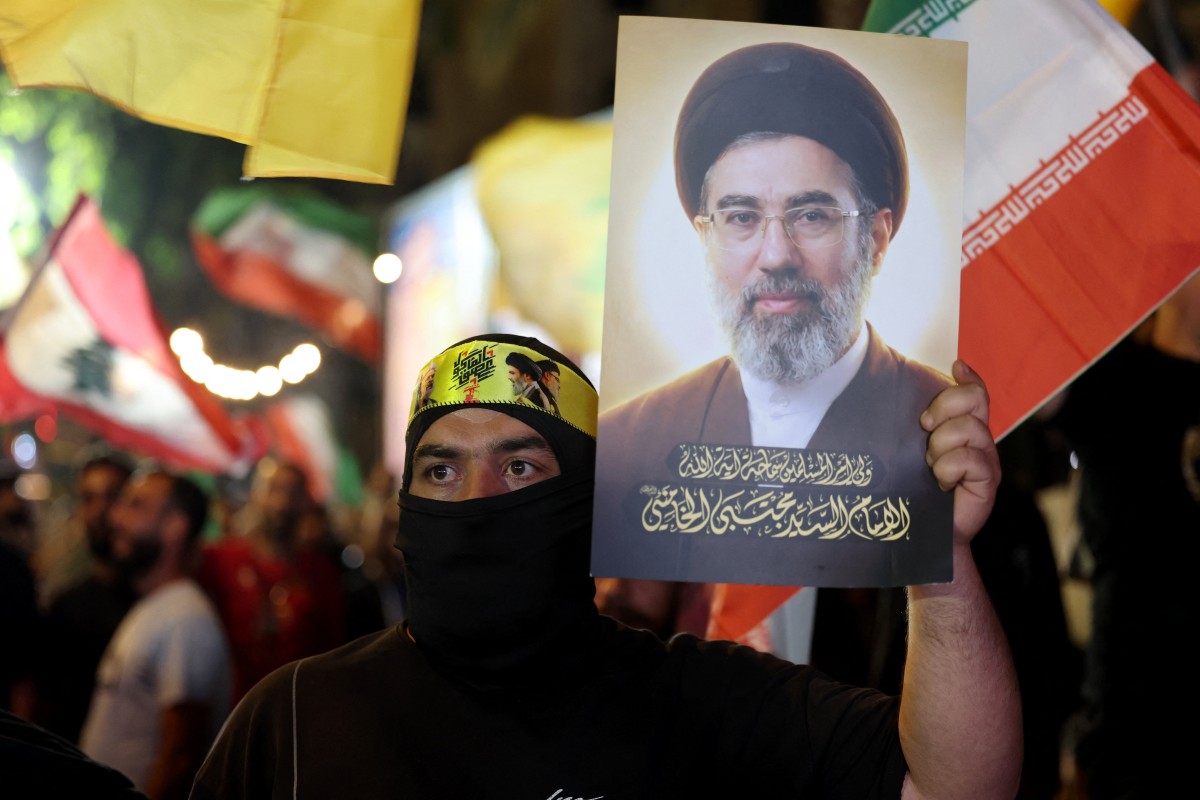
First, Iran’s policy on Lebanon undermines the principle of “sovereign consent”. Under international law, Iran has no legal right to interfere in Lebanon’s internal affairs.
Any Iranian attempt to impose conditions on Lebanon’s talks with Israel would violate Lebanon’s sovereign equality under Article 2(1) of the UN Charter. State sovereignty means Lebanon alone decides its negotiating partners and terms.
Besides, the 1970 Declaration on Friendly Relations” (officially named “the Declaration on Principles of International Law concerning Friendly Relations and Co-operation among States”), which was adopted by the UN General Assembly on 24 October 1970 as Resolution 2625 (XXV), clearly specifies that that “no State or group of States has the right to intervene, directly or indirectly, for any reason whatever, in the internal or external affairs of any other State.”
Therefore, Lebanon’s foreign policy, including bilateral or multilateral talks with Israel, is an exercise of Beirut’s sovereign prerogative. A third state may offer mediation if invited, but it cannot dictate or obstruct Lebanon’s diplomatic choices.
Iran may maintain diplomatic relations with Lebanon and express its views, but directing Lebanese policy, financing, or arming non-state actors inside Lebanon to influence government decisions, or threatening consequences for what it does with Israel, constitutes unlawful interference.
In short, if Iran can make Lebanon’s border, security, or recognition of Israel ( Tehran and its proxy Hezbollah in Lebanon challenge the very existence of Israel as a country) a condition for US-Iran deals, it implies a third state can trade away another state’s foreign policy.
That erodes Lebanon’s legal right to conduct its own diplomacy.
Secondly, Iran, acting on behalf of or for Hezbollah in Lebanon, blurs the line between state and non-state actors in diplomacy. Hezbollah is not a state and does not constitute an independent country under international law.
Hezbollah is a Lebanese political party and armed group. It holds seats in Lebanon’s parliament and has members in the cabinet, but it operates inside the territory of the Republic of Lebanon. It has no defined territory separate from Lebanon, no separate permanent population of nationals, and no general international recognition as a sovereign state.
On the contrary, the UN treats Hezbollah as a non-state actor within Lebanon. UN Security Council Resolution 1559 (2004) and 1701 (2006) call for the disbanding of all Lebanese militias and affirm that there should be “no weapons or authority in Lebanon other than that of the Lebanese State.” International law recognizes only one sovereign authority for Lebanese territory: the Government of Lebanon.
That being the case, if Iran negotiates for Hezbollah that it arms to the teeth directly, bypassing the Lebanese government, it rewards an armed non-state group with de facto state status.
And if the international community accepts that, it sets a precedent and incentivizes other states to build proxies and demand a seat at the negotiating table on their behalf. If Iran can do that for Hezbollah, then Syria, Turkey, and Saudi Arabia could claim similar rights to bargain over Iraq, Libya, or Yemen by citing their own militia links.
In other words, what Iran is demanding in its talks with the US, which essentially is a bilateral matter ( if the supposed peace treaty extends to involve Israel, then it becomes a trilateral one, something Iran may find difficult to do, as it does not believe in the existence of Israel; this is also something that President Trump cannot do as he cannot guarantee any commitment in the treaty concerning Israel without the formal consent of its government), is to extract leverage over US policy towards Israel.
It also amounts to legitimizing the trend of “creating a proxy in a conflict and then demanding concessions on it in unrelated talks”.
Thirdly, by making Israel’s actions against Hezbollah a factor in the peace accord with the US, Iran is denying Israel its right of “self-defense”, which is an inherent right of every country under Article 51 of the UN Charter.
When Israel engages in military actions that it classifies as self-defense against cross-border attacks, the legal evaluation rests on the principles of necessity and proportionality under international humanitarian law. But Iran has no standing under international law to intercede, dictate terms, or issue a legal “veto” over how Israel responds to threats emanating from Lebanese soil.
Therefore, if Iran frequently uses political rhetoric and threats of military retaliation via its proxies to deter Israeli actions, these can be viewed as geopolitical coercion divorced from international law.
Besides, if Iran can condition relations between Lebanon and Israel, it amounts to the normalization of the idea that one State can dictate another State’s security choices via pressure on a third State. That clashes with the post-1945 global order, in which each state retains control over its self-defense decisions, subject only to review by the United Nations.
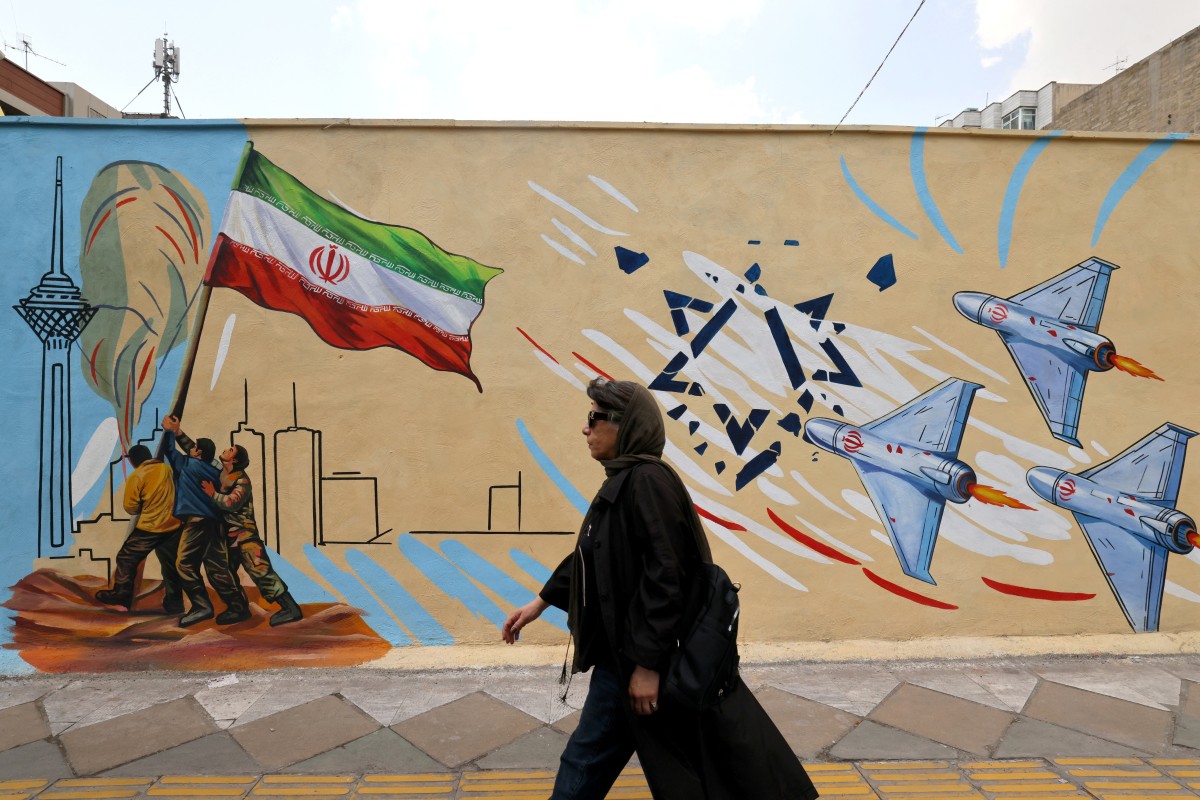
Iran’s demand looks all the more difficult to accept, as the ground reality is that Israel will never let Iran negotiate its northern border. Lebanon’s government also rejects Iran speaking on its behalf. So accepting Iran’s demand yields a deal neither Beirut nor Jerusalem will implement.
In fact, it could be argued that if President Trump agrees to Iran’s demand, it would set a precedent for other countries. It will not look absurd if Russia demands US concessions on Ukraine be tied to NATO-Baltics policy or China ties talks on Taiwan to American bases in Japan and South Korea.
However, it has to be admitted that in the Middle East, no one really cares about international law and the UN Charter. Israel is also flouting the United Nations’ resolutions that prohibit continued settlement expansion in the West Bank. Similarly, the joint US- Israeli attacks on Iran may not stand scrutiny under international law.
All told, the bottleneck for peace in the Middle East is more structural than legal. Stability there depends on some agreements or understanding between the principal adversaries of Iran and Israel, each of whom believes that time and force favor it.
Viewed thus, to expect Trump, or any American President, to legitimize what Iran dictates to Israel via its proxy is neither feasible nor desirable, as it would set bad precedents. An American President can shape incentives, but he cannot impose outcomes on either Iran or Israel.
- Author and veteran journalist Prakash Nanda is Chairman of the Editorial Board of the EurAsian Times and has been commenting on politics, foreign policy, and strategic affairs for nearly three decades. He is a former National Fellow of the Indian Council for Historical Research and a recipient of the Seoul Peace Prize Scholarship.
- CONTACT: prakash.nanda (at) hotmail.com