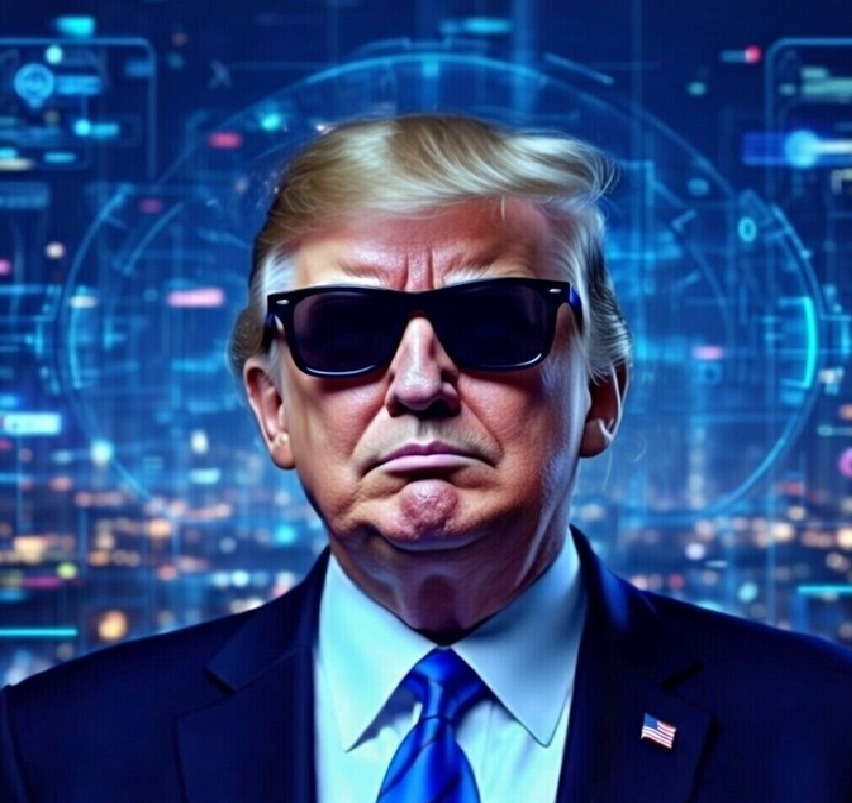
During the recent G7 summit in France, Indian Prime Minister Narendra Modi told US President Donald Trump that “Indians also lost their lives” in the Iran War, highlighting the far-reaching ramifications of the regional conflict in the Middle East.
Modi was highlighting the death of three Indian sailors in US air strikes when they were trying to exit the Strait of Hormuz, as Washington was enforcing a maritime blockade of Iran.
Lamenting the loss of life of the sailors, Modi underlined how India, while not a party to the conflict, still suffered casualties because of the war.
In fact, during the nearly 40 days of hostilities, more than 10 Indians were killed in various maritime strikes, as well as in strikes in the UAE, Saudi Arabia, Kuwait, and Qatar, while Indians were also injured in Israel.
Meanwhile, on June 22, a huge blast at a Qatar gas hub killed 13 people and injured 66 others, one of the deadliest accidents at a Gulf energy facility.
Qatar’s energy minister, Saad Al Kaabi, announced “the tragic loss of 13 lives of our people who hold Indian and Pakistani nationalities. 66 people have been reported injured and are receiving medical treatment, none of whom are in life-threatening condition”.
Later, the Indian Embassy in Doha informed that “Qatari authorities have confirmed that 12 Indian nationals have unfortunately passed away in the Ras Laffan incident”. Even among the 66 injured people, there are many Indians, once again highlighting how India is inextricably linked to the West Asian region.
Qatari authorities have confirmed that 12 Indian nationals have unfortunately passed away in the Ras Laffan incident yesterday night. We extend our deepest condolences to the bereaved families and prayers for the departed souls.
Qatari authorities have also confirmed that all…
— India in Qatar (@IndEmbDoha) June 22, 2026
Millions of Indians work in the Gulf states, and the money they send back home is the largest source of remittances for India. Furthermore, India depends on Middle Eastern states for its energy and fertilizer imports. The Gulf states are also among India’s largest trading partners.
These deep economic ties meant that India felt a significant indirect impact from the 2026 Iran war, despite not being a direct participant in the conflict.
Indian Casualties in the Iran War
As many as nine Indian sailors have lost their lives during the Iran war.
On March 1, Dixit Solanki was killed when the Marshall Islands-flagged oil tanker MKD VYOM was struck by an explosive projectile off the coast of Muscat, Oman.
Ten days later, on March 11, a senior Indian superintendent chief engineer was killed when the US-owned, Marshall Islands-flagged tanker Safesea Vishnu was hit by Iranian explosive-laden sea drones near Basra Al Zubair port, Iraq.
A few days later, two more Indian sailors, Captain Ashish Kumar and Dalip Singh, were killed when the oil tanker Skylight came under attack in the Gulf of Oman.
In late March, two additional unnamed Indian merchant mariners were reported dead across separate maritime corridor strikes.
Finally, on June 10, three Indian sailors, Patnala Suresh, Aditya Sharma, and Shivanand Chaurasia, were killed when the Palau-flagged oil tanker MT Settebello was struck by a projectile during a US military blockade enforcement operation near the Strait of Hormuz.
The death of these sailors in the Iranian and US strikes became such an emotive issue in India that PM Modi felt it important enough to raise it in front of President Trump during their bilateral meeting on the sidelines of the G7 summit in France.
The reason so many Indian sailors were caught in the crossfire was that India imports a substantial part of its oil, gas, and fertilizers from West Asia.
According to government data, India was importing nearly 91% of its crude oil requirements as of February 2026, with more than 54% of these imports coming from West Asian countries.
Similarly, nearly 60% of India’s total LNG imports came from West Asia. Qatar alone accounted for roughly 47% of India’s total LNG imports, followed by the UAE at 13.5%.
In fact, India’s reliance on Middle Eastern suppliers is far higher than that of most major LNG-importing economies.
For instance, while India imported nearly 60% of its LNG from the Middle East, China sourced about 26.5% of its LNG from the region, and Japan’s share was just 10.7%.
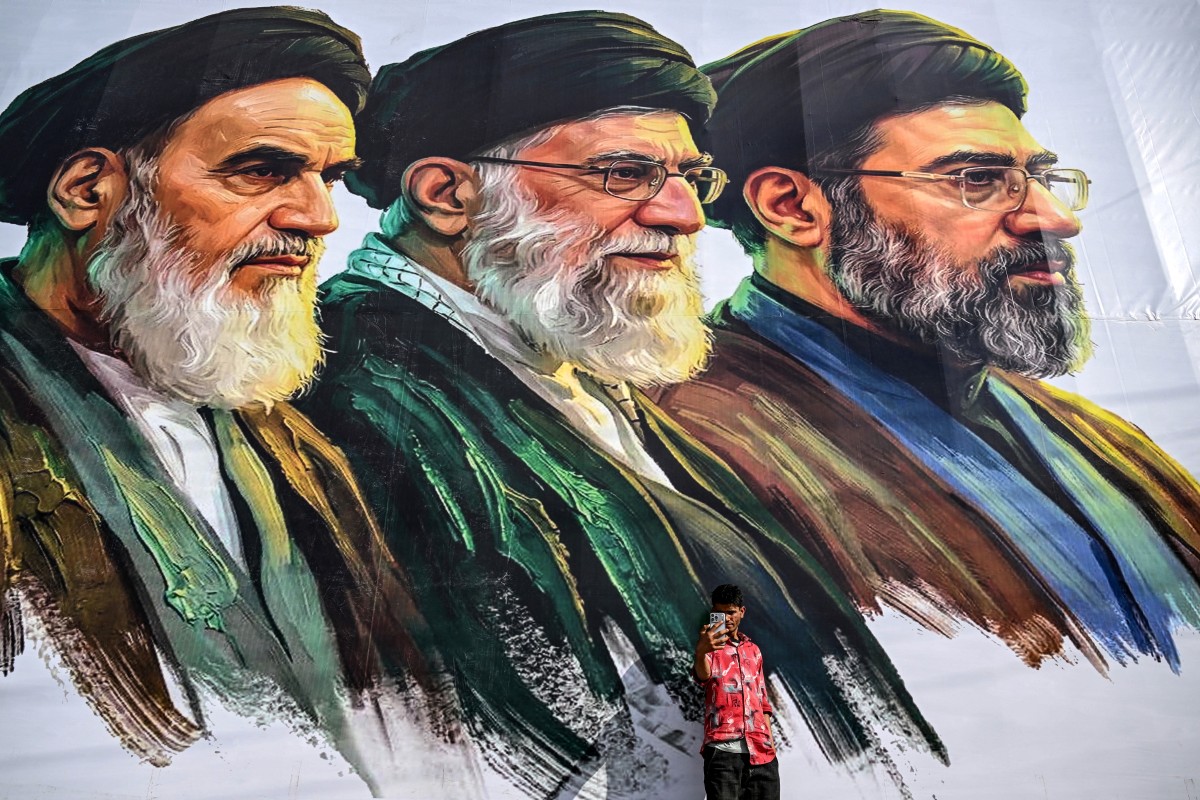
Among other Asian buyers, South Korea’s dependence stood at 35.3 percent and Thailand’s at 26.8 percent. European importers showed even lower exposure: France sourced only about 1.3 percent of its LNG from the Middle East, while the Netherlands had virtually no reliance on the region.
The Middle East also supplied nearly 40% of India’s overall fertilizer imports.
Most of these supplies are routed through the sea, and a major share of oil and gas imports comes from the Strait of Hormuz itself.
Therefore, not only were the lives of Indian sailors at risk, but India’s energy security and the resilience of its economy also stood in balance as the crisis in the Middle East unfolded.
India buys around 4.3 million barrels of crude every single day. That adds up to about US$180 billion a year. With prices now much higher, India’s oil import bill could jump by more than US$70 billion a year, according to a report by the brokerage firm Prabhudas Lilladher.
This rising oil import bill also contributed to the weakening of the Indian rupee against the dollar.
However, the Iran War did not see the death of Indians only at sea.
Many Indians also lost their lives in attacks inside Gulf countries.
For instance, on March 13, two Indian nationals were killed (and 10 others were injured) when a drone crashed into the Al Awhi industrial area in Sohar, Oman.
Then on March 18, an Indian national was killed in Riyadh, Saudi Arabia, after being struck by falling debris from an intercepted Iranian ballistic missile.
On March 24, an Indian national was killed in the UAE during an Iranian ballistic missile interception.
Another Indian was killed in Doha in late March from a trauma-induced cardiac emergency caused by nearby missile explosions.
And, on March 28, an Indian national was killed in Kuwait following a missile strike impacting a desalination plant infrastructure facility.
Therefore, Indians lost their lives in Iranian attacks in the UAE, Saudi Arabia, Kuwait, Qatar, and Oman, highlighting the large Indian diaspora in these Gulf countries.
There are currently between 8.8 million and 9.1 million Indian nationals living and working across the six Gulf Cooperation Council (GCC) states.
According to data maintained by the Ministry of External Affairs (MEA), Government of India, this constitutes the largest expatriate community in the region, comprising roughly 30% of the Gulf workforce.
The Indian population is highly concentrated in the United Arab Emirates and Saudi Arabia, which together host nearly two-thirds of all Indians in the region.
These Indians are also the biggest source of remittances for India.
In fact, India has recently received more money through remittances than through FDI.
For instance, in FY2025, India received nearly US$135.4 billion in remittances, making it the world’s largest recipient.
By comparison, while gross FDI was high, a surge in profit repatriation and disinvestments left India’s net retained FDI at just US$7.65 billion.
Therefore, personal remittances sent home by individuals are over 17 times the net foreign corporate investment remaining in the country.
The combined share of the Gulf countries in India’s total inward remittances is 38%.
Individually, the UAE is the largest Gulf contributor, bringing in 19.2% of India’s total remittances.
These huge inflows of money through remittances sent by millions of Indians who have emigrated to Gulf countries add another layer of interdependence between India and West Asian countries.
If the conflict in West Asia were prolonged, it could impact remittances flowing back to India.
Therefore, not only did Indians lose lives in the Iran conflict, but it also impacted India’s energy security, its import bill, and foreign remittances flowing back into India.
With millions of Indians working in the Gulf and remittances from the region now the country’s largest source of foreign exchange — recently surpassing FDI inflows — the stakes for New Delhi are enormous. India also depends heavily on the Middle East for most of its oil, gas, and fertilizer needs. These deep ties meant the 2026 Iran war delivered a painful indirect blow to India, even though it stayed out of the fighting. Any prolonged instability risks lives, energy security, and economic growth.
- Sumit Ahlawat has over a decade of experience in news media. He has worked with Press Trust of India, Times Now, Zee News, Economic Times, and Microsoft News. He holds a Master’s Degree in International Media and Modern History from the University of Sheffield, UK.
- He can be reached at ahlawat.sumit85 (at) gmail.com