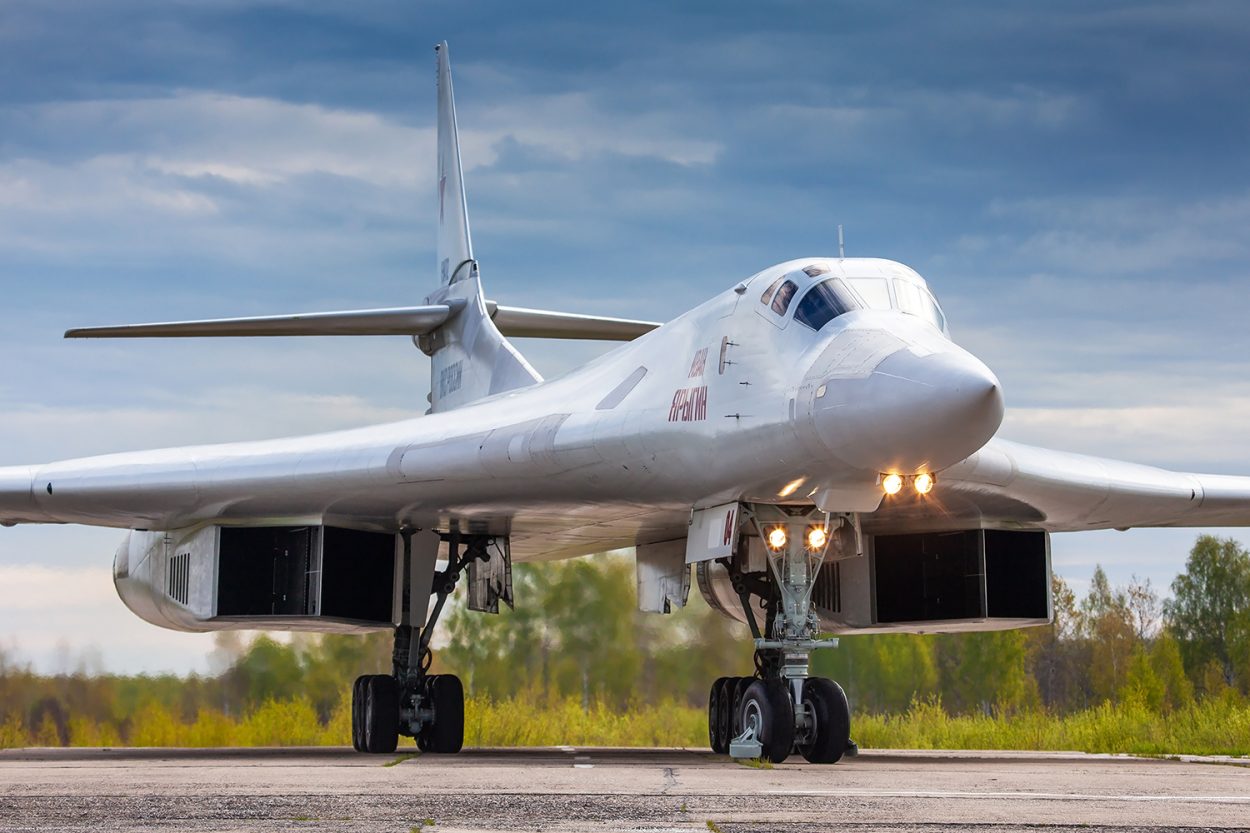


UK will deploy its Eurofighter Typhoon fighter jets to Saudi Arabia to help defend the embattled country against increasing attacks from the Houthis.
This would not be the first time the RAF would use its Typhoon jets against the Houthis.
For instance, in January 2024, as part of joint US-UK operations to protect shipping lanes in the Red Sea, RAF Typhoons operating from RAF Akrotiri in Cyprus struck Houthi military targets in Yemen with Paveway IV precision-guided bombs.
On the night of 11–12 January, the jets targeted a drone-related facility at Bani in northwestern Yemen and an airfield at Abbs used to launch cruise missiles and drones. Later, follow-up strikes hit targets near the Sanaa airfield.
No Offensive Strikes: UK
Meanwhile, the British Ministry of Defense said the deployment was part of “additional defensive military support” to Riyadh.
“The UK will fly defensive counter-air missions to support the protection of Saudi cities and critical national infrastructure against aerial attack, using RAF Typhoon fighter jets,” the Ministry of Defense said. “These aircraft will operate in a defensive role and will not conduct offensive strikes against the Houthis.”
The UK will also deploy a military transport aircraft “to support the movement of defense material within Saudi Arabia alongside UK military advisers to support Saudi staff officers”, the statement added.
“The continuing attacks from the Houthis on our ally Saudi Arabia are absolutely despicable,” said defense secretary Wes Streeting.
“The targeting of the airport in Riyadh in particular shows the lengths the Houthis are going to (to) escalate the situation in the region,” Streeting added.
A surge in Houthi attacks has led Saudi Arabia to postpone a major investment conference, undermining its efforts to draw greater foreign investment and reduce reliance on oil.
While the UK has asserted that the Typhoons will strictly be in a defensive role, the RAF has previously used its jets to attack Houthis in Yemen on several occasions.
In the defensive role, the RAF Typhoons are expected to intercept incoming Houthi aerial threats—essentially drones and cruise missiles—before they reach Saudi cities, airports, or other critical infrastructure.
The RAF is likely to employ the Eurofighter Typhoon FGR4, the most advanced version in its fleet and one of the most sophisticated Typhoon variants.
Equipped with the CAPTOR radar and PIRATE infrared search-and-track system, the jet can detect and track low-flying, small-signature targets such as drones and cruise missiles at reasonable ranges. Its Praetorian Defensive Aids Subsystem further improves survivability against enemy air defenses or electronic threats.
For these intercepts, the Typhoons are armed with beyond-visual-range Meteor missiles, with a large, approximately 60 km No Escape Zone.
Then there is the Advanced Short-Range Air-to-Air Missile (ASRAAM), which offers a high-agility option for close-range engagements against drones or missiles that penetrate closer to protected areas. It also has an internal 27-mm Mauser cannon that can serve as a last-resort weapon against very close threats, though missile intercepts are the main method.
The Typhoon FGR4 can also carry air-to-ground weapons such as Enhanced Paveway II and Paveway IV bombs, Storm Shadow cruise missiles, and Brimstone, but these are not relevant to this deployment’s purely defensive role.
In earlier operations, the RAF used Paveway IV laser/GPS-guided bombs against Houthi targets in Yemen; those strikes, however, were offensive while the UK describes the current mission as defensive.
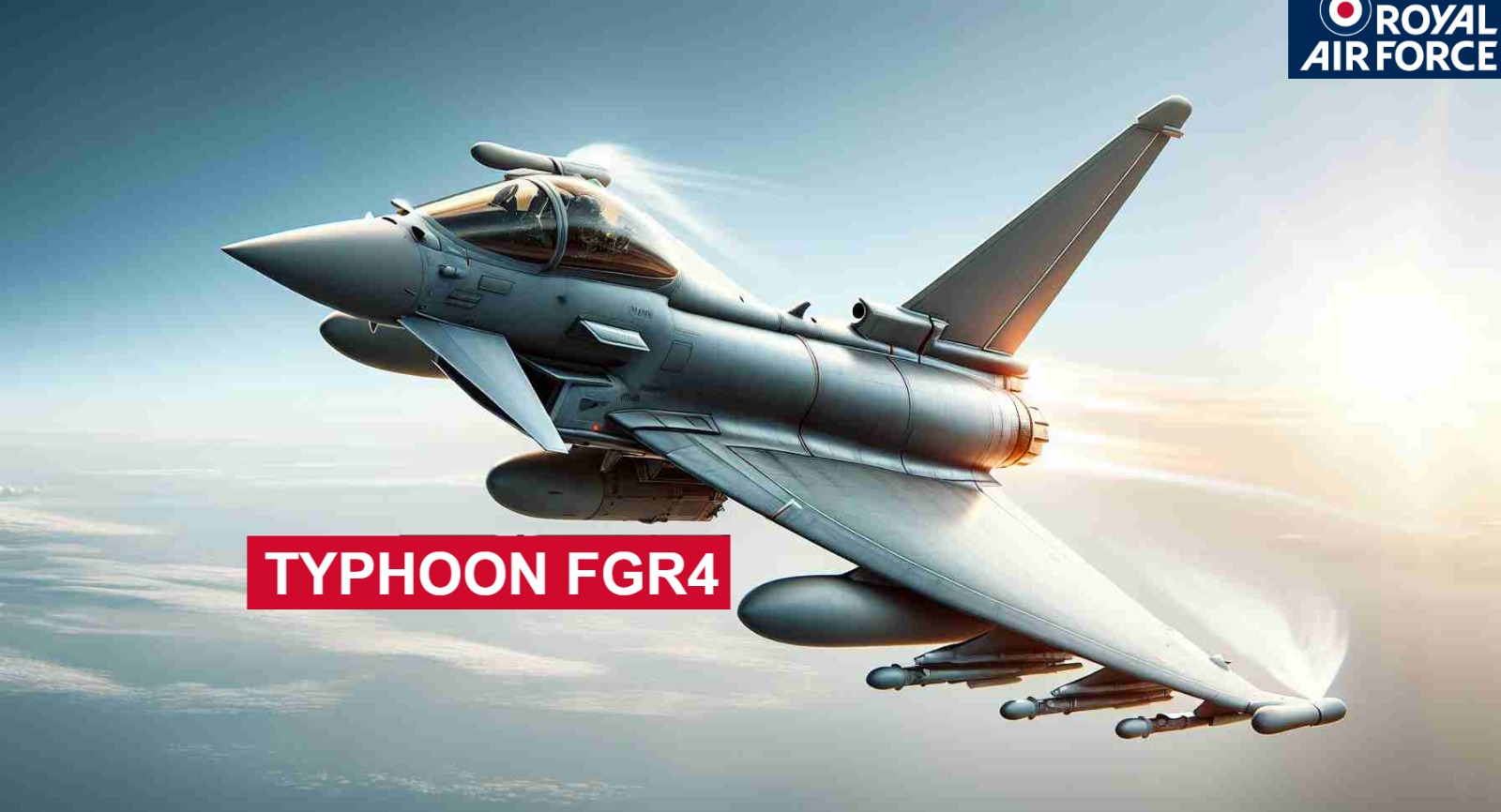
Eurofighter Typhoon FGR4
The Eurofighter Typhoon FGR4 is a multi-role variant used by the Royal Air Force.
The FGR4 designation applies to the RAF’s single-seat Typhoons upgraded to Block 5 or later capabilities across Tranches 1, 2, and 3. This single-seat fighter is optimized for air-to-air combat, precision air-to-ground missions, reconnaissance, and swing-role operations.
In May 2026, the RAF began using Eurofighter Typhoons equipped with the AGR-20A APKWS (Advanced Precision Kill Weapon System) for air-defense missions in the Middle East.
“Now in operational use by 9 Squadron, the APKWS enhances Typhoon’s versatility and enables the aircraft to respond more flexibly to evolving threats. The system strengthens the RAF’s ability to maintain persistent air defense while managing costs and resources more effectively,” the RAF said in an official statement.
“Rapid collaboration between the RAF, Ministry of Defense, and industry partners QinetiQ and BAE Systems enabled the system to move from testing to operational deployment in under two months. Successful trials, including air-to-air engagements conducted by the 41 Test and Evaluation Squadron, demonstrated the system’s effectiveness in real scenarios,” the Royal Air Force emphasized in the statement.
Compared with a typical precision-guided missile, the APKWS-guided 70mm rocket costs roughly $20,000–$30,000 per engagement, giving pilots a cheaper option while keeping higher-end missiles for more complex threats.
The deployment of RAF Typhoon FGR4s marks a further step in Britain’s defensive support for Saudi Arabia amid a rise in Houthi drone and missile attacks. The move builds on existing UK assistance, including air-to-air refueling and air-defense equipment, and comes as Riyadh seeks to shield its economy and investment plans from further disruption.
- By ET Online Desk with AFP Inputs
- Mail us at: editor (at) eurasiantimes.com