While the global media attention has been completely fixated on the fatal crash of a US B-52 Stratofortress, another Cold War era strategic bomber—the Soviet-origin Tu-22M3—crashed during a routine training flight in Siberia on June 15.
The Tu-22M3 strategic bomber plane crashed in Siberia’s Irkutsk region during a regular flight, the Russian Ministry of Defence (MoD) stated, adding that all crew members onboard the aircraft were able to eject before the aircraft crashed.
“The crew ejected. There is no threat to the pilots’ lives or health,” the MoD was quoted as saying by the Interfax news agency. ”There is no damage on the ground. The aircraft was flying without a combat load.”
Igor Kobzev, the governor of Irkutsk, stated that engine failure was the likely cause of the crash based on preliminary information, although this could not be independently verified. The governor added that all four crew members had been taken to the hospital with non-life-threatening injuries while firefighters worked to extinguish a fire at the scene.
The videos of the crash have since appeared and been widely shared on social media, showing the affected bomber in a steep nosedive, followed by a hit behind a forested hill or treeline and a thick plume of smoke billowing from the crash site. The aircraft even appears with visible flames or engine issues in some clips.
The Tu-22M3 is a modified Cold War-era strategic bomber derived from the non-variable-sweep Tupolev Tu-22 “Blinder,” which first flew on 30 August 1969. The aircraft is a supersonic, variable-sweep-wing missile carrier and a long-range strategic and maritime strike bomber that Russia has used in conflict after conflict.
It is an uncanny coincidence that the Tu-22M3 crashed on the same day as the crash of the American B-52 strategic bomber was reported, which killed all eight crew members onboard.
Unlike the B-52, though, the Tu-22M3 has been involved in several crashes in the past few years. For example, one of these aircraft crashed during a scheduled flight in the Irkutsk region last April and struck a power line.
Similarly, another Tu-22M3 strategic nuclear bomber crashed in the Irkutsk region in August 2024 during a routine flight, most likely due to a technical malfunction.
Along with the Tu-95 and Tu-160 strategic bombers, the Tu-22M3 is the mainstay of Russia’s long-range aviation. The bomber has been extensively used by the Russian Aerospace Forces (VKS) as a missile carrier to launch standoff missile strikes (using Kh-22 and Kh-32) and occasional tactical bombing against Ukraine in the ongoing war.
It is, perhaps, for this reason that these bombers have been repeatedly targeted by the Ukrainian Armed Forces in the grinding conflict. In August 2023, for instance, a drone allegedly struck the Russian Tu-22M3 Backfire swing-wing bomber based at Soltsy-2, as the EurAsian Times reported at the time.
“At around 10:00 Moscow time today, the Kyiv regime carried out a terrorist attack using a copter-type UAV against a military airfield in the Novgorod region,” the Russian MoD said in a statement at the time.
A Tu-22M3 returning from a missile attack mission was reportedly shot down by the Ukrainian Air Force and Ukraine’s Military Intelligence in April 2024. The bomber crashed in Krasnogvardeisky after being struck by a ground-based air defense system at a distance of 300 kilometers. Russia blamed the crash on a technical issue, but Ukraine claimed it was the first mid-air strike on the modernized Russian bomber.
Following that, Ukrainian forces repeatedly claimed to have hit the bomber in drone assaults on Russian airbases. In April 2025, Ukrainian Commander-in-Chief Oleksandr Syrskyi announced that a Ukrainian drone destroyed a Tu-22M3 as soon as it had landed.
Not just that, reports in the past have indicated that the Ukrainian intelligence operatives tried to persuade a Russian pilot, trained initially to fly Tupolev Tu-160 and involved in bombing operations in Ukraine, to defect along with his Tu-22M3 strategic bomber.
Therefore, it may not be an overreach to say that Russia’s fleet of Tu-22M3 has undergone significant attrition in the past few years, meaning that the latest crash comes as yet another setback to the VKS’ bomber fleet.
What Do We Know About The Tu-22M3?
Designed by Soviet Naval Aviation for long-range anti-shipping operations, the Tu-22M is a strategic and maritime strike bomber capable of supersonic speeds with variable-sweep wings. The bomber entered service in 1972, during the height of the Cold War, but its production ended in 1992, following the disintegration of the Soviet Union.
The Soviet Union produced several different variants of the Tu-22M.
The production of the first major version, the Tu-22M2, with longer wings and an extensively redesigned, area-ruled fuselage (raising the crew complement to four), twin NK-22 engines (each with 215 kN thrust), distinctive intake ramps, and a new undercarriage, began in 1972. The Soviet Union built about 211 Tu-22M2 between 1972 and 1983, as previously noted by the EurAsian Times. These bombers had a top speed of Mach 1.65 and were armed mostly with long-range cruise missiles and anti-ship missiles, typically one or two Raduga Kh-22 anti-ship missiles.
After this came the Tu-22M3.
The Tu-22M3 made its first flight in 1977, entered service in 1983, and was formally put into service in 1989. It featured wings with a larger maximum sweep, wedge-shaped intake ramps resembling those of the MiG-25, new NK-25 engines with significantly more power, a redesigned nose with a new Almaz PNA navigation or attack radar, and an NK-45 nav/attack system that enabled significantly better low-altitude flight.
Compared to the Tu-22M2, the Tu-22M3’s aerodynamic modifications reportedly boosted its range by one-third and enhanced its top speed to Mach 2.05. The Tu-22M3, the variant involved in the latest crash, has a range of around 6,800 kilometers (4,200 miles) and can carry a variety of weapons, including bombs, cruise missiles, and anti-ship missiles.
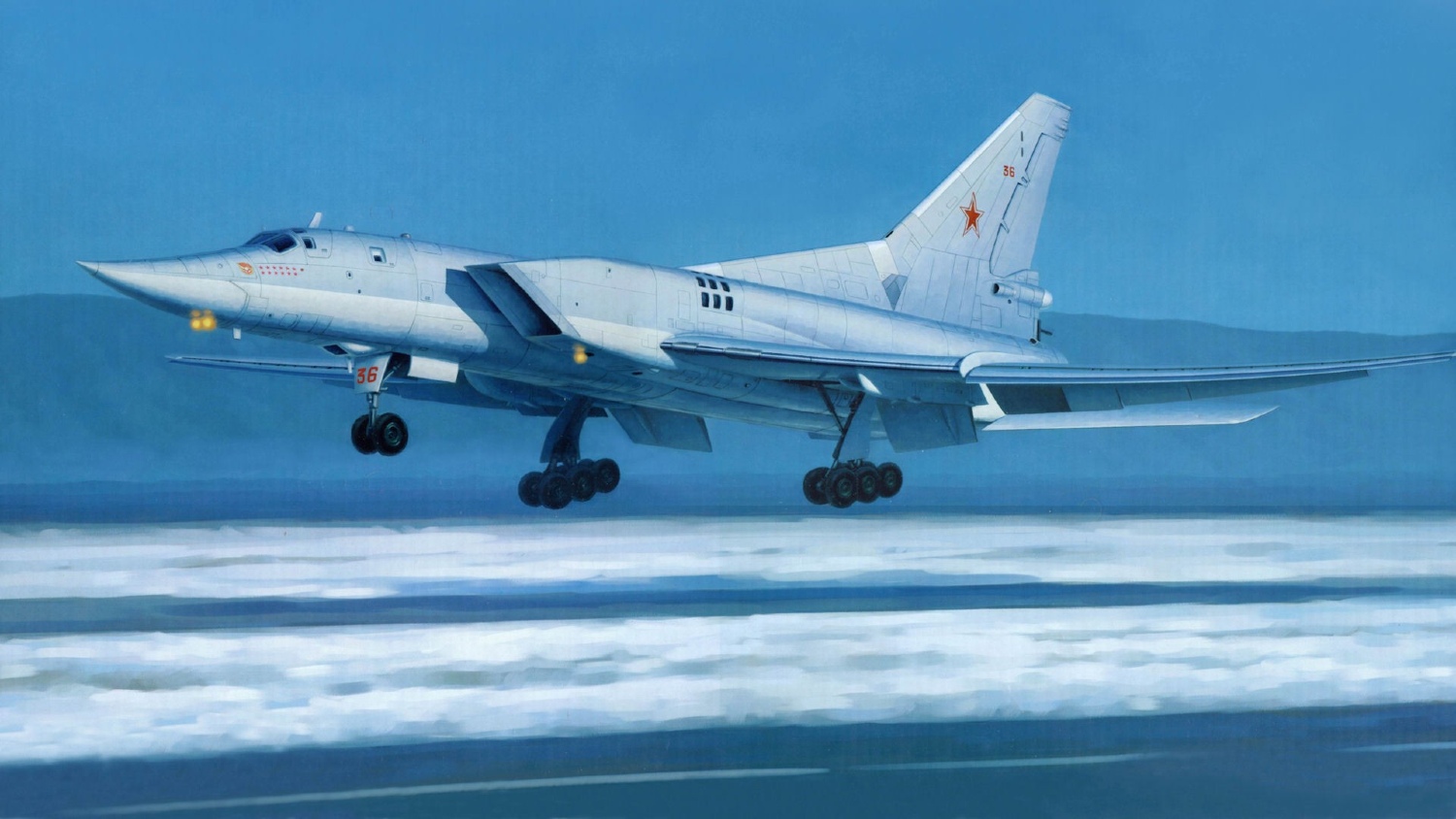
Russia primarily developed the combination of the Tu-22M3 and Kh-22 missiles to attack US aircraft carriers at a range of 1000 kilometers, staying outside the carrier group’s defensive envelope. Over the years, this aircraft has undergone several improvements, including a new sighting system and a powerful computing system, the SVP-24-22 Gefest, which replaced the NK-45 Vakhta-2 complex, as part of an attempt to make it more lethal.
Russia commenced work on the Tu-22M3M in 2016, following the completion of flight tests on the Tu-22M3 mid-life upgrade (MLU).
The Tu-22M3M reportedly integrates artificial intelligence and new avionics. “The capabilities of this aircraft are impressive and considerably surpass all similar foreign rivals. This plane has artificial intelligence,” Russia’s Long-Range Aviation Commander Lieutenant-General Sergei Kobylash was quoted as saying in 2018.
The upgraded Tu-22M3M was to receive new communications equipment based on the Su-57 fifth-generation fighter, according to a 2020 TASS report.
“The system has been developed using the communications platform created for the Su-57 fifth-generation fighter. Among its main advantages are high reliability, fast information transmission, low weight, and energy efficiency. The technical solutions laid out in creating the system help promptly build up its technical functionality by upgrading the software,” Rostec said at the time.
The upgraded Tu-22M3M was to be equipped with a variety of missiles, including the Kh-32, Kh-MT, and Kh-47M2 Kinzhal hypersonic aeroballistic missiles, which are currently carried by the MiG-31K. Moreover, the Tu-22M3M features digital radar processing, a new computer, and a navigation system, according to publicly available information.
As for the widely fielded Tu-22M3, it remains a potent standoff platform despite its age, offering speed, range, and heavy payload in a theatre-level bomber role. However, amid changing realities, the bomber now faces a host of challenges from modern air defenses, cheap one-way attack drones, and a lack of a sustained production line.
The loss of another aircraft in a crash is not a good look for the VKS.
- Contact the author at sakshi.tiwari13 (at) outlook.com
- Follow EurAsian Times on Google News