After a decade of no major incident, the B-52 Stratofortress bomber that forms the backbone of the US Air Force’s strategic long-range operations, crashed shortly after takeoff from Edwards Air Force Base (AFB) in California during a routine training mission on June 15, killing all eight crew on board.
The aircraft crashed around 11:20 a.m. local time on the airfield at the base, located in the Mojave Desert about 95 miles, or over 152 kilometers, north of Los Angeles, the US Air Force (USAF) said in a statement.
“It was tragic and unsurvivable,” Colonel James Hayes, deputy commander of the 412th Test Wing, told reporters after the deadly crash.
Colonel Hayes told reporters that the B-52 Stratofortress, the long-range bomber the US military has used since the 1950s, was on a test flight as part of a radar upgrade when the tragic incident occurred. “It took off, and immediately after takeoff, it crashed and burst into flames,” he stated, adding that emergency services responded promptly, but soon realized there could be no survivors.
The B-52 involved in the crash was the first test aircraft fitted with the Raytheon AN/APQ-188 AESA radar as part of the broader Radar Modernization Program under the B-52J upgrade, designed to keep the aircraft viable well into the future. It had been delivered to Edwards for testing in late 2025, according to reports, and was reportedly on a flight supporting the program when it went down.
😱 A B-52 strategic bomber crashed in the United States
According to reports, a B-52 Stratofortress strategic bomber crashed shortly after taking off from Edwards Air Force Base near Los Angeles.
The incident is believed to have claimed the lives of all eight crew members on… pic.twitter.com/SbI0rHCHaL
— NEXTA (@nexta_tv) June 16, 2026
Photos and videos of the incident have surfaced on social media, showing a large fire with black smoke billowing from the runway. No identifiable wreckage was visible in the aftermath of the crash, suggesting complete destruction. According to a notification from Edwards AFB, the airfield has been closed, and all inbound aircraft are being diverted.
Notably, this tragic crash comes just days after another combat aircraft—the F/A-18D belonging to the US Marines Corps (USMC)—crashed on June 13.
US Navy F/A-18 Super Hornet crashes during training flight in Washington state.
The pilot managed to eject safely before impact. There are no reports of injuries on the ground.
The cause of the crash is under investigation. pic.twitter.com/4guhfPCYYf
— Visegrád 24 (@visegrad24) June 14, 2026
Before the latest incident, a B-52H from Minot, North Dakota, assigned to the 69th Bomb Squadron, 5th Bomb Wing, overran the runway during an aborted takeoff, crashed, and burned at Andersen AFB in Guam in 2016. The aircraft’s crew, however, managed to evacuate the aircraft safely at the time, unlike the latest incident.
The B-52, also known as BUFF (Big Ugly Fat Fellow), was originally developed more than seventy years ago to confront the former Soviet Union during the Cold War. It entered USAF service in 1955 and has since participated in every major conflict the US has been part of, from Vietnam to Iraq to the latest Iran War.
Powered by eight Pratt & Whitney TF33 turbofan engines, the B-52H boasts a range of over 8,800 miles (14,162 kilometers) without refueling. The bomber still packs a heavy punch as it is perfect for overpowering or saturating targets, thanks to its capability to carry up to 70,000 pounds of ordnance, including missiles, conventional bombs, and precision-guided munitions, as previously explained in a detailed EurAsian Times report.

The B-52’s superior performance at high subsonic speeds and comparatively low operational costs have kept it in service despite the development of more advanced strategic bombers over the next few decades, such as the variable-geometry Rockwell B-1 Lancer and the stealth Northrop Grumman B-2 Spirit. The aircraft can deploy a variety of munitions and travel great distances at a reasonable cost.
As a multi-role platform, it supports nuclear deterrence, conventional strikes, and even maritime operations. Moreover, the US has launched a massive upgrade program to keep these long-range bombers in the skies and capable of taking on any enemy in a rapidly evolving combat environment, even in the face of sophisticated Anti-Access/Area Denial (A2/AD) systems put together by adversaries. The US had 76 B-52s across variants before the latest incident, according to publicly available information.
As the cornerstone of US strategic operations for more than seven decades, the B-52 has seen a lot, including the infamous Christmas Bombings against Vietnam, during which six of these bombers were shot down in a big blow to the US bomber fleet.
When Six B-52s Crashed in a Single Night
The story of the mass shootdowns of the B-52 goes back to 1972, when the United States launched Operation Linebacker II (also called Christmas Bombings), one of the most devastating aerial bombardments in history that took place during the Vietnam War, fought between North Vietnam, backed by China and the Soviet Union, and South Vietnam, supported by the United States and its allies.
Notably, the Operation Linebacker II was centered around using the B-52 bombers to drop more than 20,000 tons of bombs on North Vietnam during the Vietnam War in 1972.
The operation took place between December 18 and 29 and claimed the lives of more than 1,600 civilians, according to official records.
Over a month before the operation was launched, President Richard Nixon had won a second term in office by promising to withdraw US forces from the Vietnam War, which had grown increasingly unpopular in the country.
For most of 1972, the US was holding peace discussions with the USSR and China-backed Democratic Republic of Vietnam (North Vietnam) as part of the so-called “Paris Peace Negotiations,” and an agreement was believed to be close by October that year. However, the talks broke down on December 13, 1972, amid disagreements between the two sides.
Nixon warned the North Vietnamese authorities that failure to return to the negotiating table would have dire implications, whilst advancing plans for Operation Linebacker II.
Before December 1972, US air operations in Vietnam were limited to obstructing North Vietnamese troops’ overland approaches. However, Linebacker II was unique in that it was intended to destroy high-value targets like industries, energy plants, railroads, and vital military infrastructure to “rock the Vietnamese to their core,” as former US National Security Adviser Henry Kissinger described it at the time.
Operation Linebacker II got underway on December 18, 1972, with 129 B-52s leaving Guam and Thailand to demolish the North Vietnamese cities of Hanoi and Haiphong.
The bombing continued for the next eleven days, with a brief respite on Christmas Day to allow USAF planners to analyze the impact and for bomber crews to relax.
In his book “Vietnam’s American War: A History,” a renowned Vietnam War historian, Pierre Asselin, claims that “1600 military installations, miles of railway lines, hundreds of trucks and railway cars, eighty per cent of electrical power plants, and countless factories and other structures were taken out of commission.”
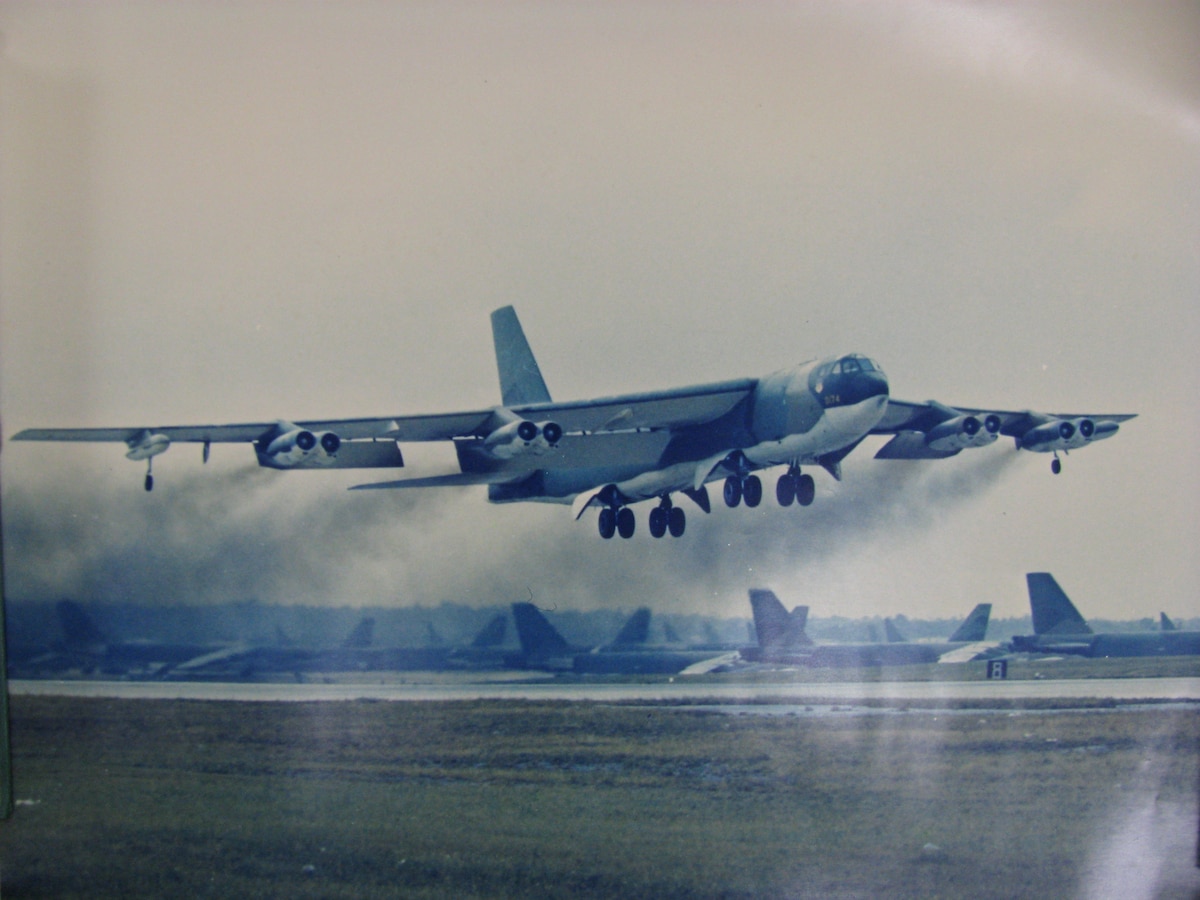
Two important factors, however, were overlooked by the American planners. One, the Vietnamese possessed a sophisticated S-75 anti-aircraft system they had secured from the former Soviet Union; and two, the USAF bomber tactics had remained largely unchanged since World War II and were not commensurate with new realities.
The S-75 Dvina high-altitude air defense systems were capable of firing a 195-kilogram bomb at speeds exceeding Mach 3 (three times the speed of sound) up to 30,000 meters. There were about 26 S-75s in North Vietnam, 21 of which were deployed in the Hanoi or Haiphong region, which also possessed a sophisticated, overlapping radar network and a high concentration of anti-aircraft artillery.
As a result, up to fifteen B-52s were shot down by the North Vietnamese anti-air missile systems, with six bombers downed in a single night.
This was a huge setback for both the US Air Force and the fabled B-52 Stratofortress, as you can read more about in a very detailed EurAsian Times report.
Notably, the stalled peace talks resumed ten days after Operation Linebacker II ended on January 8, 1973, and the Paris Peace Accords were signed on January 27, 1973.
The United States subsequently claimed that Operation Linebacker II forced the Communist Democratic Republic of Vietnam (DRV) to resume talks.
However, the bombardment and its aftermath are remembered in Vietnam as a valiant act of resistance when the Vietnamese withstood one of the worst bombing campaigns since World War II, unleashed on them by the enemy.
While the accords certainly ushered in the beginning of the end of a devastating war, the B-52 fleet took a big beating that could not be forgotten to this day.
- Contact the author at sakshi.tiwari13 (at) outlook.com
- Follow EurAsian Times on Google News