The United Kingdom lost its global empire by the mid-twentieth century – and with it, its status as the world’s pre-eminent military power.
Today, according to the Global Firepower Index, Britain ranks as the world’s eighth-strongest military, while the IMF places it as the fifth-largest economy, just marginally ahead of India.
Yet in one domain it still stands at the very top: the shadowy world of intelligence and spycraft.
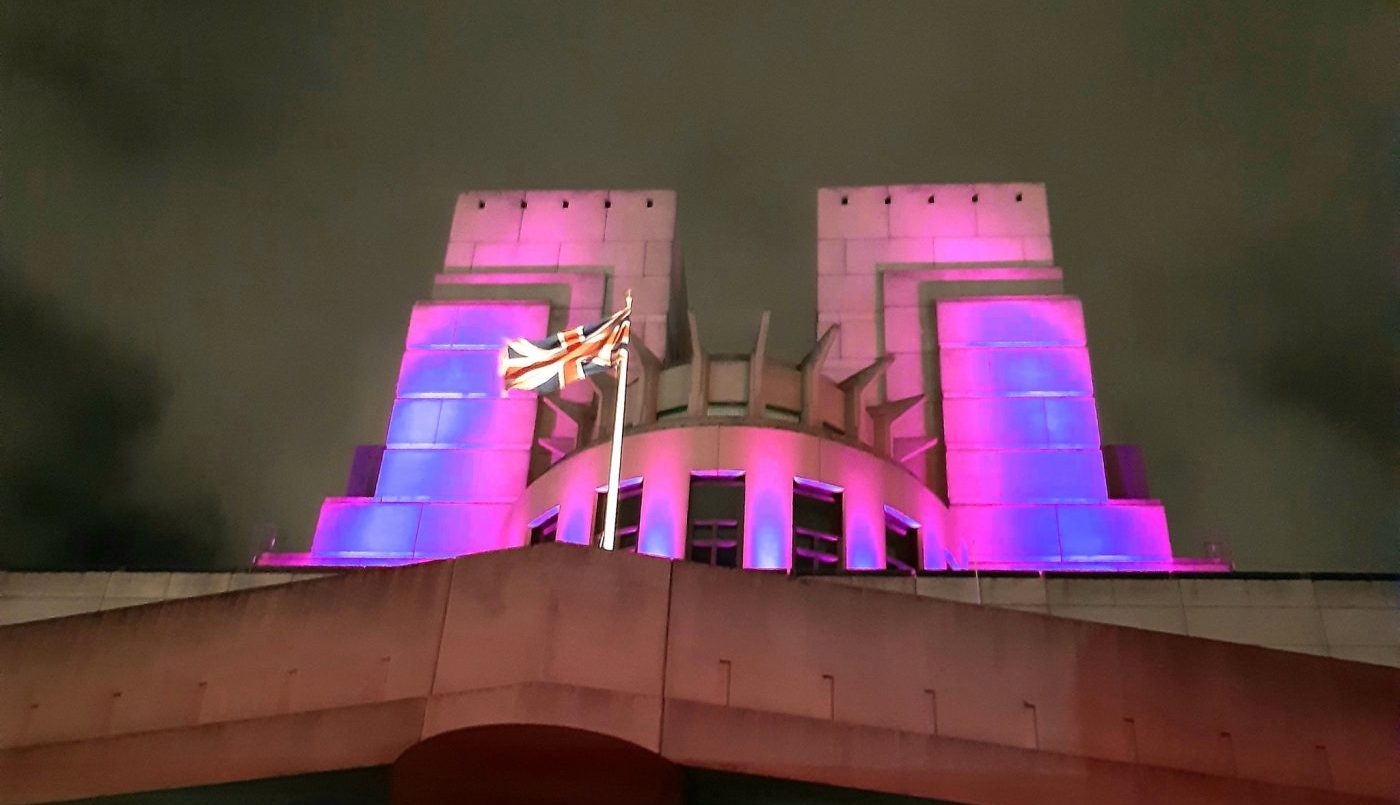
MI6, the UK’s foreign intelligence service, has been ranked as the most powerful foreign intelligence service in Europe ahead of France and the Netherlands, according to a peer review.
The British service topped a field of 25 countries, finishing well ahead of France’s DGSE in second place.
The British intelligence agency scored 251 points in the research and was commended for its expertise in recruiting high-level informants and penetrating the ruling elites in Russia, China, Iran and Turkey, according to the review by 60 professionals from 25 countries.
The review was conducted by French magazine L’Express, which contacted people in state services de renseignements (intelligence services) to rate their counterparts in the Western-allied countries.
After MI6, France’s General Directorate for External Security (DGSE) finished in second place with 169 points for its global reach and operational capability, the Times reported.
Notably, there was a gap of 82 points between first and second place, underscoring MI6’s huge lead over its continental rivals.
The Netherlands came third with 97 points. Ukraine was fourth with 77 points, and Germany was fifth with 62 points, followed by Sweden, Norway, Estonia, Poland and Denmark. Slovakia was rated the weakest.
The UK spy agency was praised for its global reach and for its long-term human intelligence (HUMINT) work, recruiting high-level sources and penetrating elites in top adversary countries, such as Russia, China, and Iran.
MI6 was also praised for its patience, often investing in developing sources for decades. The agency was also praised for its willingness to use bold tactics.
A former head of the DGSE said: “The British have the ability to play the long game, investing in sources over a 10-year horizon, somewhat like the Russians. And they have a taste for dirty tricks.”
Olivier Mas, a senior DGSE officer until 2017, pointed to recruitment as a factor.
He said “all European intelligence services draw inspiration from British methods” and noted that “the best from Cambridge and Oxford join MI6.”
As many as eight out of the last 10 MI6 chiefs attended Oxford or Cambridge.
These strengths of MI6 have practical advantages.
For instance, Britain was the first to warn Ukraine about the likelihood of the Russian invasion that began in February 2022.
London has also been one of the staunchest allies of Kyiv during the war. Less than six weeks after the Russian invasion on February 24, 2022, British Prime Minister Boris Johnson also visited Kyiv and promised Ukraine full support.
The exploits of MI6 are also recognized by the CIA, the US foreign spy agency.
Ralph Goff, a former chief of operations for Europe and Eurasia at the CIA, told the magazine: “The British are in the lead on the Ukrainian file. We are right behind them.”
Robert Gorelick, a former CIA station chief, added: “The United Kingdom has by far the strongest secret services in Europe. MI6 is extraordinary.”
Notably, last year, Blaise Metreweli became the first woman ever to lead MI6, taking over from Sir Richard Moore.
Earlier in 2022, Israel’s spy agency Mossad announced that a female officer, known only as Agent “A,” has assumed the post of Director of the Intelligence Authority (parallel to the Head of the IDF Intelligence Branch), the first woman in the history of the Mossad to hold the office.
While MI6 was praised for its human intelligence, the French spy agency DGSE was rated as one of the world’s best in counter-terrorism.
The service is renowned for its clandestine operations to “eliminate” people deemed a threat to French security. François Hollande, the former French president, spoke publicly about ordering at least 40 operations to assassinate “high value” targets in the Middle East and Africa, according to a 2017 book.
A Polish intelligence executive told L’Express: “It is the only service in continental Europe with near-global reach. They combine technical collection, human intelligence and operational action capabilities.”
A Brief History of MI6
MI6, formally the Secret Intelligence Service (SIS), was established in 1909. At that time, due to the growing fears of German espionage, Britain established its own spy service, known as the Secret Service Bureau.
It had two divisions: the Home Section, which later became MI5, was responsible for domestic security, and the Foreign Section, the forerunner of MI6.
The Foreign Section was led by Captain Sir Mansfield Cumming, a Royal Navy officer. He became the first Chief of the service and signed documents with a green-ink “C” – a tradition that continues to this day. The service is still headed by a Chief known simply as “C.”
The service got its initiation by fire just five years later during the First World War when it ran several agent networks behind German lines in occupied Europe.
After the war and German defeat, the newly-established Soviet Union became its primary theatre of operation.
Again, during the Second World War, it worked in close collaboration with American and Free French allies, and had important links to the codebreakers at Bletchley Park.
Bletchley Park was where Alan Turing and other agents of the Ultra intelligence project decoded the enemy’s secret messages, most notably those that had been encrypted with the German Enigma and Tunny cipher machines. Experts have suggested that the Bletchley Park code breakers may have shortened the war by as much as two years.
After the war, it helped establish a lasting partnership with the newly created CIA.
During the Cold War, once again, the service’s primary target became the Soviet Union and its allies.
However, its reputation suffered severe damage from the discovery of the Cambridge Five spy ring, a group of five British elite intelligence officers – Kim Philby, Donald Maclean, Guy Burgess, Anthony Blunt, and John Cairncross – who spied for the Soviet Union from the 1930s through the early 1950s. Recruited while students at Cambridge University, they leaked thousands of secret documents to the Soviets.
However, MI6 was also able to recruit some high-profile Soviet spy agency KGB agents as its informers.
For instance, a senior KGB officer, Oleg Gordievsky, became an informer for the British spy agency. Gordievsky was one of the highest-ranking Soviet moles ever handled by the West.
Over more than a decade (1974-1985), he provided MI6 with extraordinary intelligence on Soviet intentions, agent networks, and the Kremlin’s thinking. His reporting is widely credited with helping avert a potential nuclear confrontation during the 1983 Able Archer crisis when the Soviets misread a NATO exercise as preparation for a first strike.
In 1985 MI6 successfully exfiltrated him from Moscow in a daring operation, code-named Pimlico, after his cover was blown.
Recently declassified documents suggest that MI6 also provided valuable inputs to India on Sikh separatist activities and Khalistani terrorists during the early 1980s.
Since the end of the Cold War, priorities have shifted toward counter-terrorism, cyber threats, nuclear proliferation, and state actors such as Russia, China, and Iran.
MI6’s work is also credited with uncovering the global nuclear black market network developed by Pakistan’s disgraced nuclear scientist A.Q. Khan, who was clandestinely supplying nuclear secrets, blueprints, and components to many countries, including Iran, Libya, and North Korea.
However, it must be noted that due to the very nature of spycraft, often operating in shadows, many of MI6’s most daring operations remain classified and will be known only much later.
- Sumit Ahlawat has over a decade of experience in news media. He has worked with Press Trust of India, Times Now, Zee News, Economic Times, and Microsoft News. He holds a Master’s Degree in International Media and Modern History from the University of Sheffield, UK.
- He can be reached at ahlawat.sumit85 (at) gmail.com