The Yemen-based Houthi militia purportedly shot down a Saudi F-15 fighter jet. However, the fate of the two pilots aboard the aircraft remains unknown.
The Houthis claimed to have downed a Saudi Arabian F-15 (SA) on September 16, 2026, over Marib province, using a locally-made surface-to-air missile (SAM).
“The Yemeni Armed Forces, with Allah’s aid and grace, succeeded in shooting down a Saudi F-15 fighter jet while it was carrying out hostile operations in support of its military mobilizations in the airspace of Marib province,” Houthi military spokesman Yahya Saree announced in a post on social media.
Following the initial claim, the Houthis published photos of their personnel posing with the aircraft wreckage that clearly shows Saudi markings. The organization also published a video showing the exact moment of engagement.
The downed aircraft has since been identified as the F-15SA Tail N.5539, operated by the 55th Squadron of the Royal Saudi Air Force (RSAF).

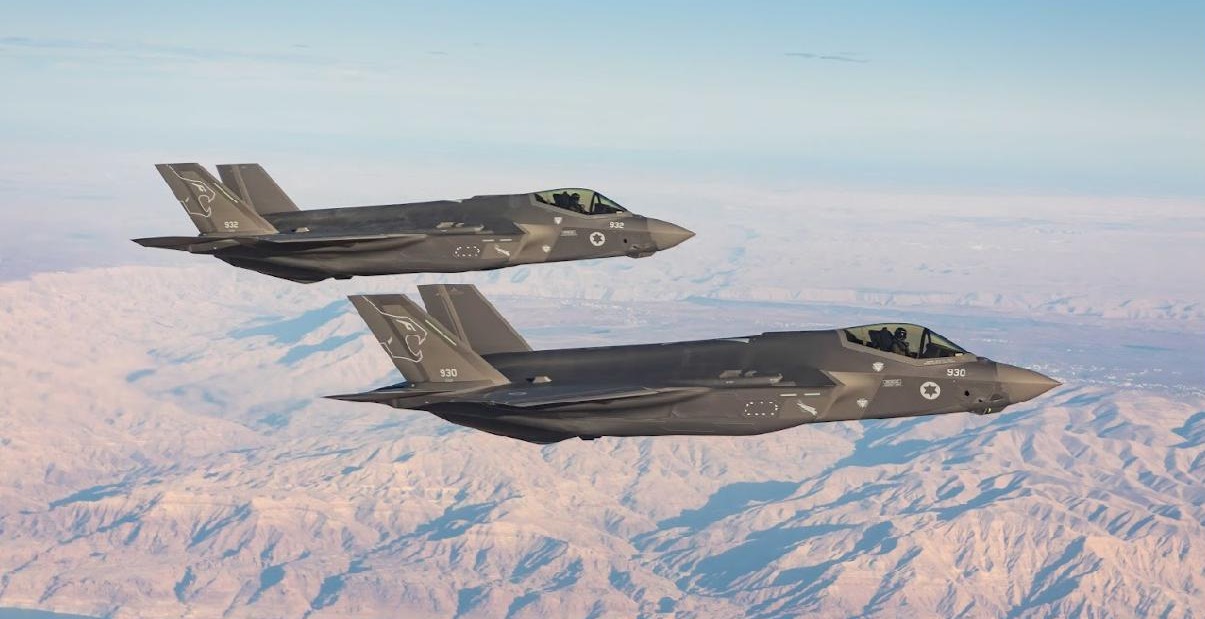
The F-15SA is equipped with a fly-by-wire system, AN/APG-63(V)3 AESA radar, Digital Electronic Warfare System (DEWS), and Infrared Search and Track (IRST) capability, and is regarded as the RSAF’s most advanced F-15 variant. It is similar to the US Air Force’s F-15EX, as EurAsian Times previously explained.
The official page for the Houthi’s military media has released the full video of what is reportedly the shoot down of a Saudi F-15 and the crash site as well. The crash site does appear to be consistent with that of an F-15. pic.twitter.com/654h05p5mz
— OSINTdefender (@sentdefender) September 16, 2026
Notably, Saudi Arabia has not officially accepted the loss of the aircraft. Meanwhile, the Houthis have not disclosed any details about the fate of the aircraft crew despite announcing the shootdown and publishing supporting media.
EurAsian Times spoke with former IAF Test Pilot Air Marshal Anil Chopra to understand the situation.
Mystery Surrounding The Fate Of F-15SA Pilots
The F-15SA is a two-seat aircraft that accommodates a pilot and the weapon systems officer (WSO).
As is customary for an aircraft of that type, the aircraft’s standard ejection system gives both crew members a realistic chance of survival if they punch out in time, but outcomes depend on altitude, speed, missile effects, terrain, injuries, and what happens after landing.
For example, the F-15E crew downed in April 2026 over southwestern Iran were able to eject, but behind enemy lines.
This triggered a 36-hour intense search and rescue operation for the Weapon Systems Officer (WSO) who went missing, leading to cascading losses for the US military. The fighter pilot was rescued quickly, unlike the WSO.
Where are Saudi Pilots?
The first scenario is that both crew members managed to eject safely and were assisted and recovered by the Saudi-backed coalition forces that the Houthis have been fighting in the country since 2015.
In that scenario, the crew likely activated their beacons, made radio contact, and a combat search-and-rescue (CSAR) effort succeeded quickly.
However, that may be a very short time frame for a successful recovery, especially since the Houthis claimed that they engaged follow-on formations of the Saudi F-15s and Eurofighter Typhoons trying to locate the wreckage of the downed F-15SA and forced them to withdraw.
The downed crew could have been recovered by the Saudi-backed forces if they reached an area that is held by Saudi-backed coalition forces or some less contested ground, or if special forces extracted them under cover. This is common when the air force retains air superiority or has pre-prepared recovery packages for contingencies.
Importantly, Yemen’s internationally recognized government forces control Marib city and the core heartland of the Marib province, which suggests that they may have been rescued.
However, neither side has published any information.
The second scenario is that both the pilot and the WSO ejected just in time, but were captured by the Houthis upon landing.
The crew could have been located by Houthi fighters or tribesmen, even before Saudi help could arrive.
In theory, Marib’s rugged terrain and the speed of the Houthi response could have favored a rapid capture. However, Houthis have remained silent on the issue, and no photos or videos of captured crew have surfaced on social media.
These high-value captures have high propaganda value for local militias like the Houthis, meaning that the theory about the capture is somewhat weak unless they are secretly negotiating with Saudi Arabia.
The third scenario is that one or both crew members of the downed F-15SA were killed in the shootdown or ejection.
It is worth considering that the impact of the missile, the resulting fire to the airframe, structural breakup, or high-speed ejection could have caused fatal injuries to one or both crew members of the F-15SA before or during parachute deployment. The wreckage photos show significant fire and fragmentation, consistent with a high-energy impact.
Moreover, parachute malfunction, landing in difficult terrain, or post-ejection injuries cannot be ruled out at this point.
The fourth scenario is that both crew members landed safely and have been missing or evading capture since.
In this scenario, the pilots and the WSO could have landed near or far from one another, then moved toward safer areas. They could be using their survival equipment and awaiting an extraction while suppressing their beacon to avoid detection by the Houthis.
In contested areas like Marib, this can last hours to days, and it is possible that both the Houthis and the coalition forces are silent on the fate of the pilots due to an active hunt.
The EurAsian Times wants to emphasize that these are speculations and a rundown of possibilities discussed with aviation experts.
Therefore, until Saudi Arabia or the Houthis release information about the crew, the status of the pilots remains unknown.
Nonetheless, it is worth emphasizing that this is the fifth F-15 combat jet downed in the Middle East in over six months.
Earlier, Iran shot down an F-15E Strike Eagle, callsign Dude 44, from the 494th Fighter Squadron of the 48th Fighter Wing, based at RAF Lakenheath, UK.
The hit was scored on April 3, 2026, using a shoulder-launched missile, marking the first confirmed loss of a manned US combat aircraft to Iranian fire over Iranian territory in the conflict.
Before that, three F-15Es were shot down in Kuwaiti airspace in a suspected case of friendly fire by Kuwaiti air defenses—most likely an F/A-18C/D Hornet—during the opening days of Operation Epic Fury, on March 1, 2026. All crew members ejected safely.
Houthis-Saudi Tensions Escalating
The recent escalation between Saudi Arabia and Yemen’s Iran-aligned Houthi rebels marks the sharpest flare-up in their long-running conflict in years, and has essentially broken a UN-brokered truce that was in place since 2022.
The fighting between the two sides intensified in early September 2026 after the Houthis launched a rapid ground offensive along Yemen’s Red Sea coast. The Iran-backed militias have since overrun the Saudi-backed Yemeni government and allied forces, capturing the strategic port city of Mocha and seizing Mayun on Perim Island and the Hanish Islands near the Bab al-Mandeb Strait, which is another critical chokepoint for Saudi oil exports.
Additionally, the organization has increased its drone and missile attacks, targeting military and energy installations in southern Saudi Arabia and impeding the kingdom’s ability to transport oil through the Red Sea. Moreover, they have declared the Bab el-Mandeb closed to Saudi oil traffic, further agitating the kingdom.
Not just that, Riyadh alleged that the Houthis had targeted the holy Islamic site of Mecca this week, describing it as a “red line” violation and an attempt to terrorize pilgrims, noting it was the first such threat in nearly a decade. However, the Yemen-based group immediately refuted the claim. “Our operations target its oil facilities and military bases, which are far removed from the sacred sites,” Saree said in response to the allegation.
Meanwhile, Saudi Arabia has launched multiple rounds of airstrikes on Houthi positions as tensions between the two sides intensify. Earlier, while announcing the downing of the RSAF F-15SA, the Houthis’ spokesperson accused Saudi Arabia of launching about 450 airstrikes.
- Contact the author at sakshi.tiwari13 (at) outlook.com
- Follow EurAsian Times on Google News