Although all eyes are currently on the debut of the F-35 Lightning II stealth fighters in the upcoming Exercise Tarang Shakti 2026 hosted by India, another noteworthy attendee in these multinational drills is the F-16 “Desert Falcon” of the United Arab Emirates Air Force (UAEAF).
India will host the second edition of its flagship multi-national exercise, Tarang Shakti 2026, from September 26 to October 12 at Air Force Station, Jodhpur, and adjoining air bases. The exercise aims to develop practical tactical solutions by immersing participants in planning and executing combined combat operations in a realistic modern battlespace.
The IAF said seven foreign air forces, including the United States, France, Germany, Australia, Bangladesh, Sri Lanka, and the United Arab Emirates, will participate with air assets, whereas about 32 countries will attend the exercise as observers.
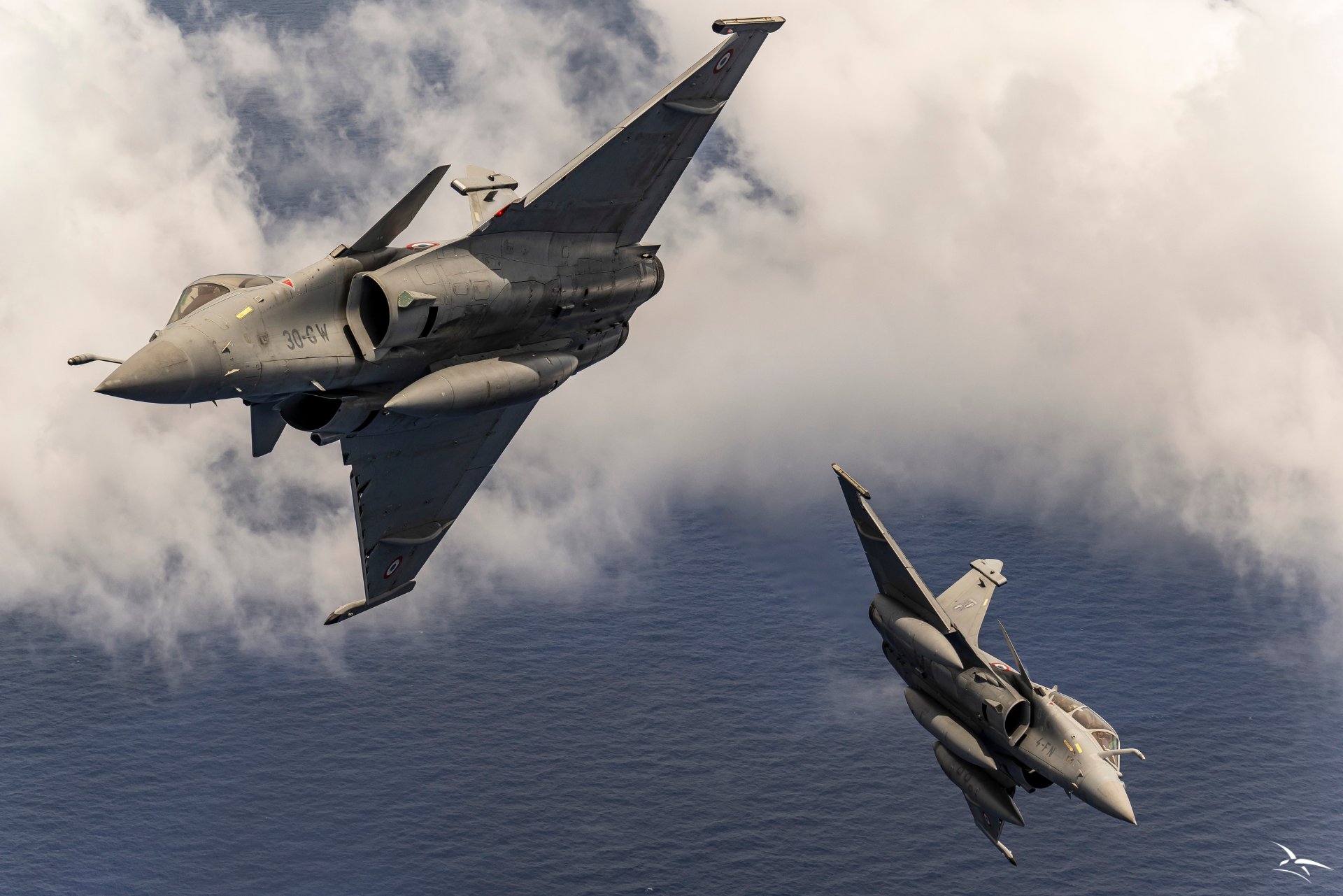
The IAF will deploy a broad mix of fighters for the exercise, including Rafales, Su-30MKIs, LCA Tejas, Jaguars, Mirage 2000s and MiG-29s. Meanwhile, foreign contingents are expected to include US Air Force’s F-35s with KC-135 tankers; French Rafales supported by A400Ms and MRTTs; UAE F-16s and a Global 6000; German A400Ms; Australian and Bangladeshi C-130s; and a Sri Lankan King Air-type aircraft.
Of these, the UAE’s F-16E/F Block 60 “Desert Falcons” stand out for operational reasons, as they will allow Indian fighters to familiarize themselves with and practice against an aircraft whose less capable variant is operated by its arch-nemesis, Pakistan.
Earlier, reports in Greek media claimed that India sought opportunities to fly against Greek F-16s during the first Tarang Shakti 2024 in exchange for Su-30MKI participation in Greece’s “Iniochos exercise,” specifically to gain familiarity with aircraft similar to those in the Pakistan Air Force inventory.
The UAEAF also participated in Phase 2 of the Tarang Shakti 2024 by deploying its own F-16 Desert Falcons. The return of these jets for the second edition will give the IAF another chance for high-quality dissimilar air combat training and interoperability practice, while strengthening the defense partnership between the two countries.
The UAE’s F-16 variant is more advanced than the standard F-16s operated by many countries. It features the Northrop Grumman AN/APG-80 AESA radar, conformal fuel tanks for extended range and endurance, an advanced electronic warfare suite, internal targeting systems, and a full suite of modern air-to-air and air-to-ground weapons.
Therefore, training with this aircraft will give IAF pilots realistic experience operating against (or with) a sophisticated 4.5-generation fighter in complex scenarios, which may even be more valuable than training against earlier-block F-16s.

At the same time, though, all F-16s share the same basic flight performance envelope, including acceleration, turn rates, energy management, and high-alpha handling. This means that training against the UAE’s high-end version will help build useful familiarity with how an F-16 flies and fights in both visual-range and beyond-visual-range regimes.
IAF pilots will gain exposure to F-16-style energy tactics, formation employment, and sensor management with broad applicability against Pakistan’s fleet. Moreover, practicing against a more capable F-16 variant is generally advantageous, as it raises the difficulty level.
For the IAF, this experience may be crucial, since the Pakistan Air Force (PAF) has deployed F-16s against India on multiple occasions and remains the backbone of its fleet, despite new Chinese jets like J-10C and JF-17 Thunder.
For UAE pilots, the exercise also offers useful exposure to the Rafale, an aircraft the Emirates is acquiring under a major 2021 contract with France.
F-35: Most Awaited Participant In Tarang Shakti 2026
Although the F-35s already landed in India for Aero Show 2025 in February last year, this is the first time that these stealth fighters will participate in a military exercise hosted by the South Asian country.
“For the first time, we are going to exercise with the F-35. It is coming. It had come to India earlier. (Then) it was part of Aero India, and then it (another UK-owned F-35 jet) got stuck in Thiruvananthapuram. Now we will exercise with it,” Vice Chief of Air Staff Air Marshal Ashutosh Dixit said at a press briefing this week.
The F-35 brings low-observable or stealth characteristics, advanced sensor fusion, networked warfare, and multi-role flexibility that no current IAF fighter fully matches.
Therefore, training with the American jet will give IAF pilots and planners practical insight into how stealth platforms are employed in contested airspace, how 4th- or 4.5-generation aircraft such as the Su-30MKI and Rafale integrate with a 5th-generation jet, and the detection, tracking, and engagement challenges posed by low-observable aircraft.
This may be particularly relevant for the IAF since China operates two different stealth fighters—the J-20 and the J-35- and Pakistan is believed to be acquiring some J-35A fighters from Beijing.
Training alongside the F-35 will allow the IAF fighter pilots to test assumptions and refine concepts in a realistic, high-end environment.
Interestingly, US President Donald Trump had orally offered the F-35 to India in a meeting last year. Vice President J.D. Vance reiterated the offer during a visit to India, although neither pitch was formally presented to the Indian Air Force.
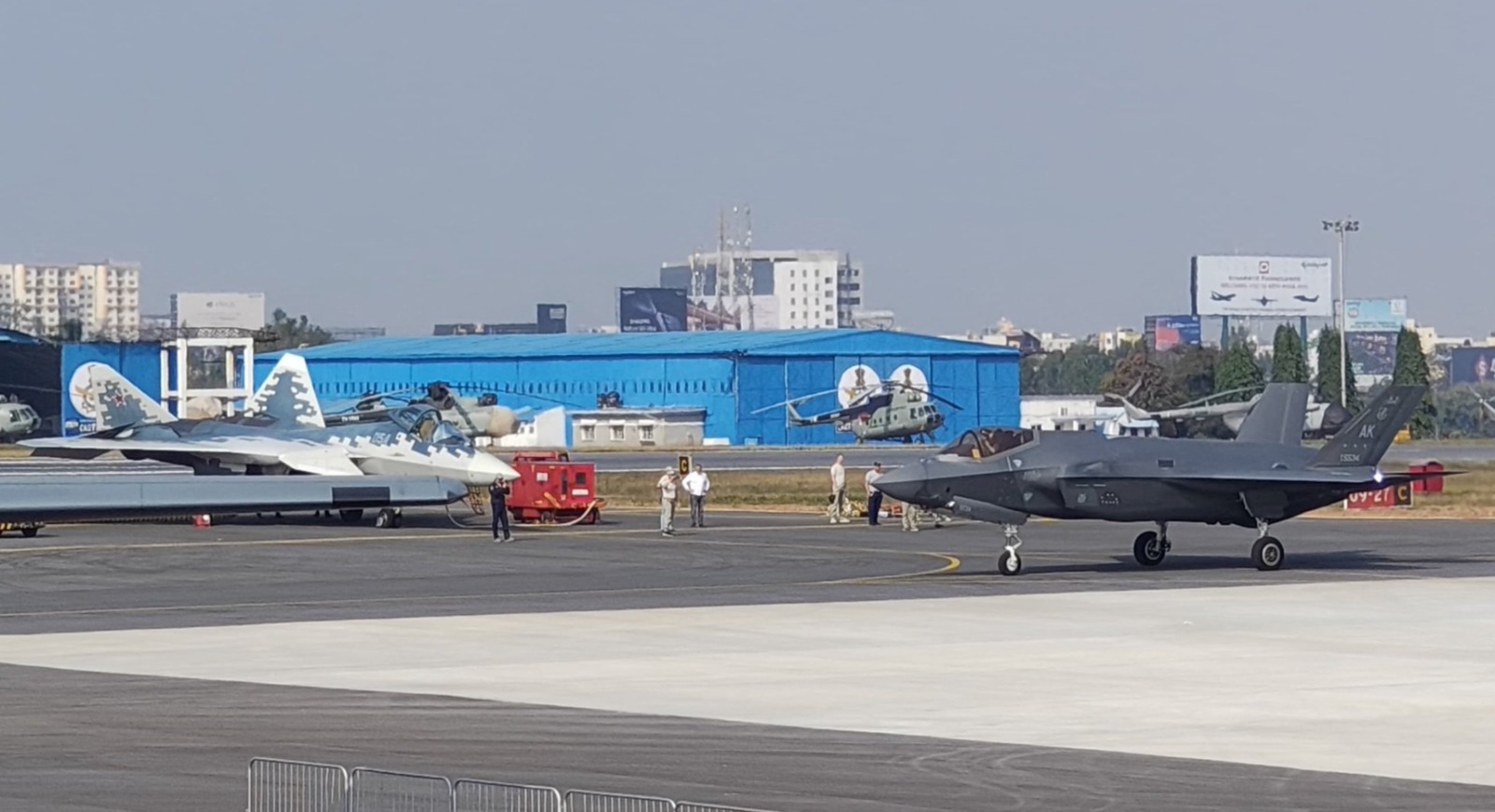
The arrival of F-35s for Tarang Shakti 2026 will mark the first time the IAF trains with a stealth fighter—a capability only countries like the US, China, and Russia currently have. India has never even conducted operational or tactical training alongside the Russian Su-57, which the IAF has also been offered.
“For many years, our operational engagement with foreign air forces was largely through bilateral exercises. We learned to operate with one partner at a time. Tarang Shakti changed that approach,” Air Marshal Ashutosh Dixit stated at the briefing, referring to the 2024 edition of the Tarang Shakti exercise. “It was an important transition from exercising primarily bilaterally to planning, operating and integrating with multiple air forces simultaneously.”
Air Marshal Dixit said the exercise is about working together, learning from one another, and preparing for the challenges of future air combat. He noted that the exercise encompasses a broad range of air operations, including recce, airlift, air-to-air refueling, counter-air, air defense, and force combat, among other extremely complicated mission sets. “We do not get Tarang Shakti to demonstrate what we already know… [but] to discover what we still need to learn,” the Vice Chief emphasized at the briefing.
He stated that Tarang Shakti 26 has three objectives: improved interoperability, stronger collaborations, and operational learning.
The participation of advanced platforms—including French and Indian Rafales, US F-35s and UAE F-16E/F Block 60s—will directly advance all three.
- Contact the author at sakshi.tiwari13 (at) outlook.com
- Follow EurAsian Times on Google News