OPED By Ambassador (R) Raghu Gururaj
As leaders gathered at the G7 in France last week, Russia was advancing a different map of the world in Kazan. The Greater Eurasian Partnership seeks to connect ASEAN, the SCO, and the EAEU into a continental network resilient to Western influence, suggesting that the next phase of global competition may be between regional architectures rather than rival ideological blocs. The construction of a Greater Eurasian Partnership linking Southeast Asia, Central Asia, and Russia will render the BRICS a mere political symbol, while Eurasia becomes the arena where power, trade, and connectivity are actually organized.
The timing of the Russia-ASEAN Summit in Kazan and the G7 Summit in France was not accidental. They were effectively parallel diplomatic stages, each projecting its vision of an emerging international order.
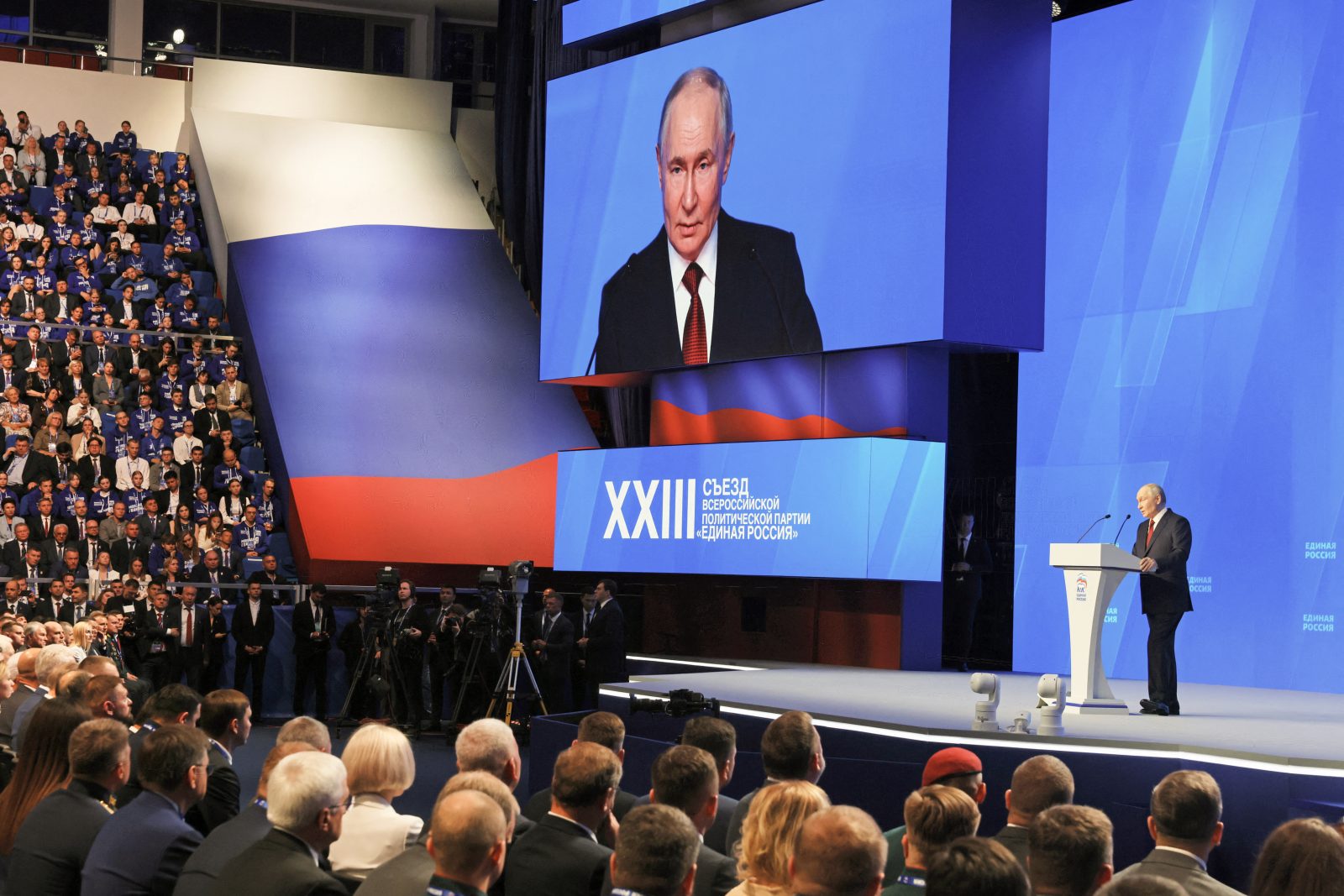
For President Putin, this was a crucial summit politically. By hosting ASEAN leaders in Kazan at the same time the G7 leaders were meeting in France, President Vladimir Putin signaled to the West that Russia was in no way insulated.
Since the Ukraine war, the West has attempted to diplomatically and economically isolate Russia. The presence of multiple ASEAN leaders in Kazan allowed Moscow to demonstrate that most Asian countries continue to engage with Russia despite Western sanctions and pressure.
Since 2022, Russia’s foreign policy has displayed a strong ‘pivot to Asia,’ with ASEAN central to this theme. Russia is also seeking new markets within ASEAN for its energy, LPG, and defense exports, while pursuing new investment channels and diplomatic partners outside the Western system.
By adopting the Comprehensive Plan of Action to implement the Russia-ASEAN Strategic Partnership for 2026-2030, Russia indicated its commitment to expand cooperation with ASEAN in key areas such as security, trade, investment, transport, technology, etc.
The joint statement on energy cooperation formalized cooperation in the oil and gas sectors, renewable energy, and hydrogen. The summit declaration’s emphasis on a multi-polar world provided Russia a platform to argue that global power should be distributed across multiple centers rather than dominated by the West.
The Joint Statement’s most vital takeaway was its endorsement of a partnership linking ASEAN with the Eurasian Economic Union(EAEU) and the Shanghai Cooperation Organization (SCO). President Putin pitched this under the “Greater Eurasian Partnership” framework, aiming to merge these regional blocs into a vast geopolitical and economic alliance designed to counter Western influence.
Greater Eurasian Partnership
Russia is envisioning a broader Eurasian architecture connecting the EAEU and SCO to ASEAN. This fits in with Moscow’s long-standing idea of a “Greater Eurasian Partnership” (GEP).
The GEP is Russia’s answer to a fundamental geopolitical problem. Russia’s traditional power stemmed from its dual influence over Europe and Asia. When the conflict in Ukraine fractured its ties with the West, Moscow had to pivot its foreign policy. Operating on the logic that Europe is temporarily out of reach, Russia has doubled down on Eurasia as its primary sphere of influence.
Predating the Ukraine war, the concept seeks to connect Russia, Central Asia, China, South Asia, Southeast Asia, and potentially Gulf states through trade, connectivity, finance, energy, and security cooperation into a single continental framework.
The emphasis is on geography and connectivity, not ideology. And within that framework, SCO and EAEU are natural building blocks, as they are Eurasian institutional platforms that Russia already has. Russia is trying to institutionalize a Eurasian architecture in which the EAEU represents economic integration, the SCO provides the security framework and strategic coordination, and ASEAN is the growth engine.
Omission of BRICS
Of particular interest was the omission of BRICS when Putin linked the idea of the Russia-ASEAN platform partnering the SCO and the EAEU. Russia views BRICS as increasingly a globally and geographically dispersed, and politically diverse, coalition rather than a regional integration mechanism.
For Russia, if the discussion is ASEAN connectivity, trade corridors, logistics, and Eurasian integration, BRICS adds little operational value.
Brazil, for example, has little connection to Eurasian integration. South Africa has little role in Eurasian transport corridors. Even India participates in BRICS partly as a Global South platform rather than a Eurasian one.
Thus, BRICS does not naturally fit the logic of the Greater Eurasian Partnership. There may also be a message to China here. BRICS is increasingly associated with Chinese economic weight, whereas the SCO is often viewed as a joint Russia-China institution. EAEU, however, remains Russia’s own project.
By highlighting SCO and EAEU rather than BRICS, Moscow is hinting that the future Eurasian architecture will be built with its own institutions and that Russia intends to remain an independent pole.
Global South and Greater Eurasia
The emerging post-Western world order is currently defined by two competing narratives. The first centers on the Global South and BRICS, both of which are pushing for a stronger voice in global governance.
The second is Greater Eurasia, which focuses on a geographically integrated super-region spanning from Europe to the Pacific. While some analysts previously believed Russia’s strategy was rooted in the broader Global South movement, the recent Kazan summit confirms a distinct shift. Moscow is increasingly prioritizing Eurasian integration and physical connectivity over sprawling political coalitions.
India’s Strategic Dilemma: The Continental vs. Maritime Split
Although India maintains membership in both the BRICS and the SCO, it is structurally isolated from the massive Eurasian landmass integration currently envisioned by Russia. Historically, India has valued BRICS as a critical platform on which it commands equal footing with Russia and China.
However, as Moscow’s priorities shift toward a tightly integrated, continental Eurasian system, India’s relative influence within the bloc risks being marginalized.
For New Delhi, deep integration into the EAEU is structurally impossible because it is not a member of the EAEU, its participation in the SCO remains limited, and its geopolitical hostility toward Pakistan physically bars India from vital overland Eurasian corridors.
While Prime Minister Narendra Modi’s attendance at Western forums like the G7 is often viewed through the lens of balancing India’s traditional ties with Russia, Moscow is busy diversifying its own portfolio. Its shifting geopolitical priorities are a potential red flag for India.
If Russia successfully cements deep economic ties with ASEAN while concurrently tightening its alignment with China and Pakistan, New Delhi can no longer rely on its historic “privileged” status in Russian strategic thinking.
Moving forward, India’s primary challenge is determining whether this emerging Eurasian architecture will materialize into a formidable economic and strategic bloc or simply remain a rhetorical Russian diplomatic project.
If this continental order gains true economic substance, New Delhi will face a defining foreign policy crossroads in the 2030s, which is either finding a way to engage with an SCO-EAEU-centered Eurasia or leaning entirely into its preferred Indo-Pacific and Middle East-Europe maritime strategies.
Today, ASEAN is being elevated into that same conversation, and Southeast Asia may become one of the most important geopolitical theaters of the next two decades, not because of military rivalry alone, but because it is the meeting point between the Indo-Pacific and the Eurasian visions of world order.
For India, ASEAN is no longer a peripheral “Look East” destination. It is becoming one of the central crossroads where competing visions of the future international system intersect. India cannot afford to be absent from that space.
- Raghu Gururaj is a former Indian foreign service officer. His diplomatic assignments include serving as Consul General to Indonesia, Singapore, Argentina, Switzerland, Saudi Arabia, and Vietnam, and as Ambassador to the Republic of São Tomé and Príncipe. Over a 35-year career, he has specialized in multilateral economic and political work, particularly during his stints in Vietnam, Singapore, Kazakhstan, and Indonesia.
- This is an Opinion Article. Views personal of the Author
- Mail the author at [email protected]
- Follow on X: @Rgururaj7