
The Russia-Ukraine War has revolutionized aerial warfare. However, no change has been as substantial and far-reaching as the widespread use of First-Person-View (FPV) drones, which reportedly accounted for over 80% of casualties in the conflict.
However, even in drone warfare, both countries are constantly innovating. Russia responded to Ukraine’s Starlink-guided FPV drones with fiber-optic drones, which are immune to jamming and electronic warfare.
Meanwhile, Ukraine responded to Russia’s widespread use of cheap Iranian Shahed-136-inspired Geran-2 drones with its interceptor FPV drones.
Amidst this constantly evolving drone warfare, Ukraine, last week, shot down an unusual Russian drone. The Russian drone appeared to be a first-person view quadcopter housed in a ring-shaped wing.
Interestingly, after Ukraine released the video of the shoot down, Russia has now publicly unveiled the KVS fiber-optic FPV drone for the first time, featuring a ring-shaped wing design.
Images of the drone were released by Oleksandr Chadaiev, CEO of the Ushkuynyk research and production company.
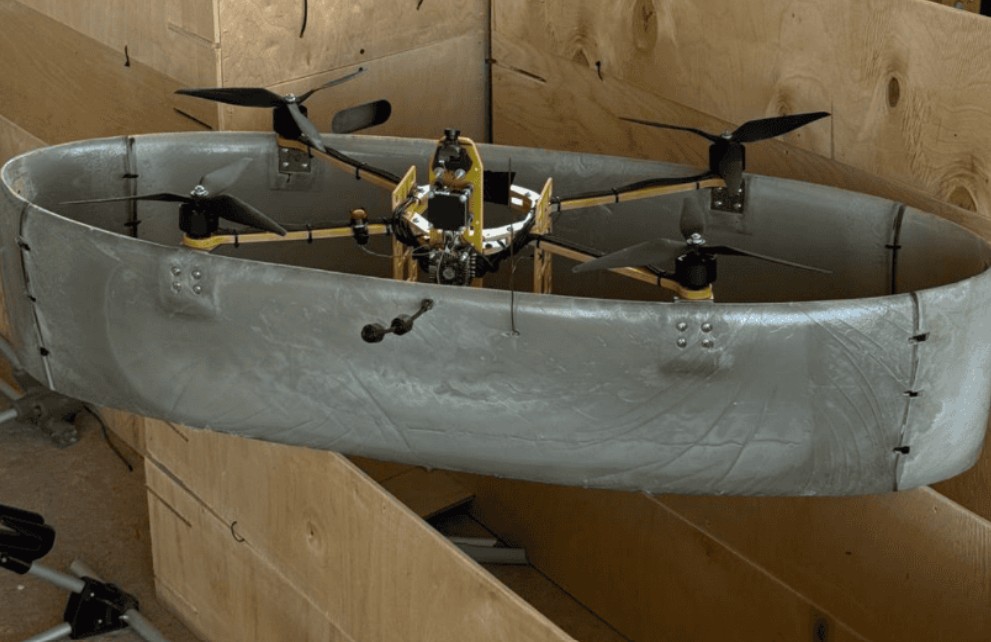
According to reports, a similar drone had been spotted as early as October 2025, but no details were available at the time. The drone uses a 10-inch frame and is designed for medium-range missions.
While not officially specified, its range is estimated at up to about 50 kilometers. Its payload is comparable to the Knyaz Vandal Novgorodsky drone, with a warhead weighing up to 3 kilograms.
According to experts, the unusual closed ring-wing design offers better lift, improved aerodynamics, and greater range and payload capacity.
While the Russian drone’s design appears revolutionary and path-breaking, it is actually inspired by a four-decade-old concept aircraft design.
Now, the technology seems to have resurfaced in Russia amid the need for drones to fly farther and carry heavier payloads.
How effective the ring-shaped wing design would be in drones, only time will tell. However, Russia’s use of such drones has definitely revived the memories of the 1980s when US aviation giant Lockheed Martin flirted with the closed-wing design for the airline industry.
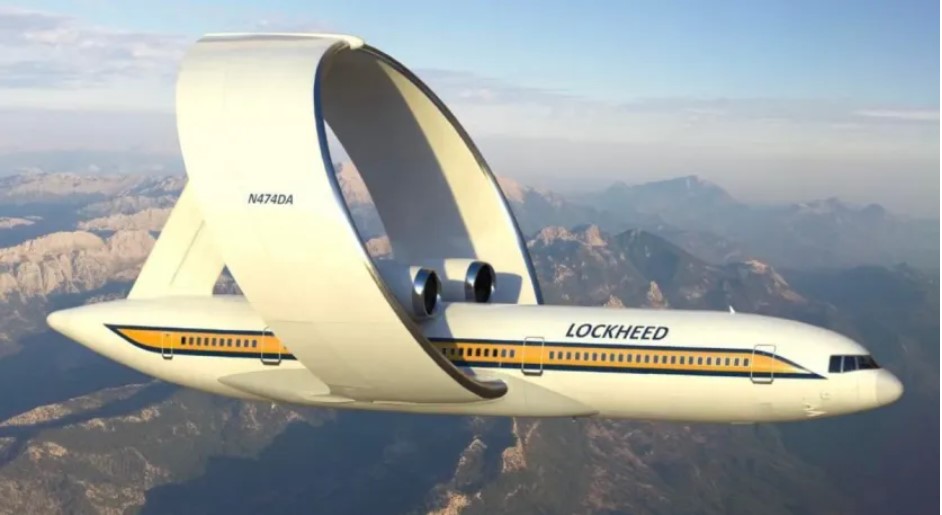
In the 1980s, aviation designers flirted with many out-of-the-box, futuristic aircraft designs. Among them was a closed-wing design that looked straight out of science fiction movies.
Instead of using two wings – one on each side – the aircraft relied on a single circular wing.
The design was promising and saved a lot of fuel; the so-called ring-wing plane was born but never flew successfully.
Lockheed Martin’s revolutionary ring-wing aircraft concept. Credits Lockheed Martin.
The Lockheed Ring Wing was designed to use less fuel, achieve smoother landings, and land on tiny runways.
The aircraft spanned a whopping 170ft, with its unique circular wing standing 75ft tall.
The circular wing, which had a circumference of 7.4 meters, featured a 27-degree arch that connected to the tail, setting this aircraft apart from conventional designs.
The aircraft was specifically designed to save fuel on short-haul commercial flights that did not require high-altitude operations.
Despite its unorthodox design, the aircraft accommodated up to 120 passengers and offered significant aerodynamic advantages.
Since the aircraft wings had no ends, forming a closed, circular loop, the aircraft offered much more lift and saved fuel. Furthermore, the closed-wing design exhibited improved stability against crosswinds.
Again, the aircraft’s narrow wings meant it could take off and land even on narrow strips, and it needed much less space for parking.
Fuel-Savings Offset By Higher Drag
Despite the many advantages of this innovative design, the aircraft never took off or completed its maiden flight, as it also had several disadvantages, chief among them being increased drag.
The closed wing generated a massive amount of drag, so the fuel saved by generating more lift was spent counteracting the drag.
Furthermore, the aircraft’s manufacturing, specifically the circular wing, was much more expensive and would have required new expertise and assembly lines.
The Inspiration Behind the Circular Wing Design
The wacky concept was made by aerospace engineer Rolo Smithers in the 1980s.
However, the design had a long pedigree, and the original idea came from some of the earliest aircraft concepts ever built in France. Some of the earliest aircraft experiments in France featured circular closed wings.
Interestingly, one of the earliest aircraft designs in France featured not one but two circular wings, one at the front and one at the rear.
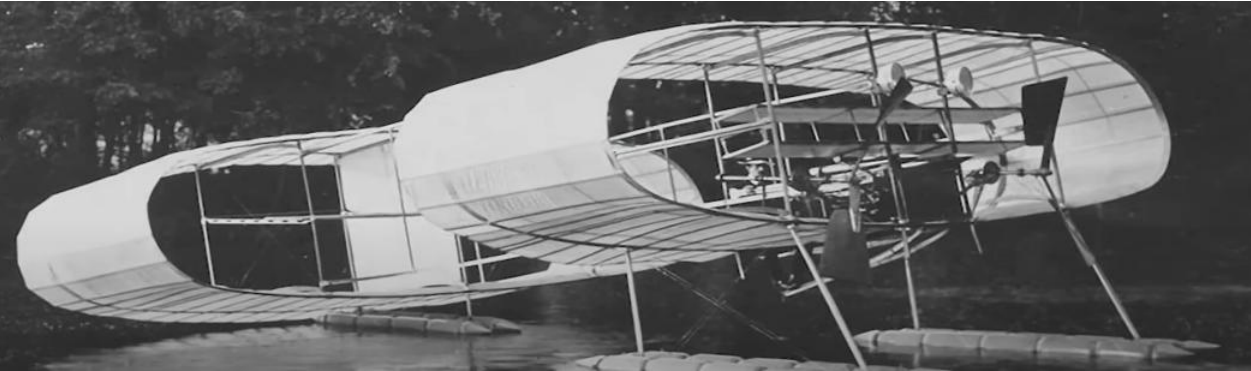
However, these initial concepts faced limitations, struggling to achieve substantial lift or flight distances. They were, in essence, experimental bunny hops rather than sustained flights.
Due to these limitations, these early designs did not take off. However, the design made a comeback in the 1980s when Lockheed Martin again tried to develop a circular-wing aircraft.
Though the design was ditched once again in the 1980s because it offered few advantages over flat-wing designs.
Now, nearly four decades later, the unusual design has once again made a comeback; however, this time in FPV quadcopter drones.
That does not mean the circular-wing design has been permanently abandoned for commercial aircraft.
Lockheed Martin hasn’t scrapped the program yet, but it probably doesn’t rank that high on its list of priorities.
For a recent research paper, multiple round-wing variants were designed using different shapes (circular, elliptical, and quadrilateral) and construction methods.
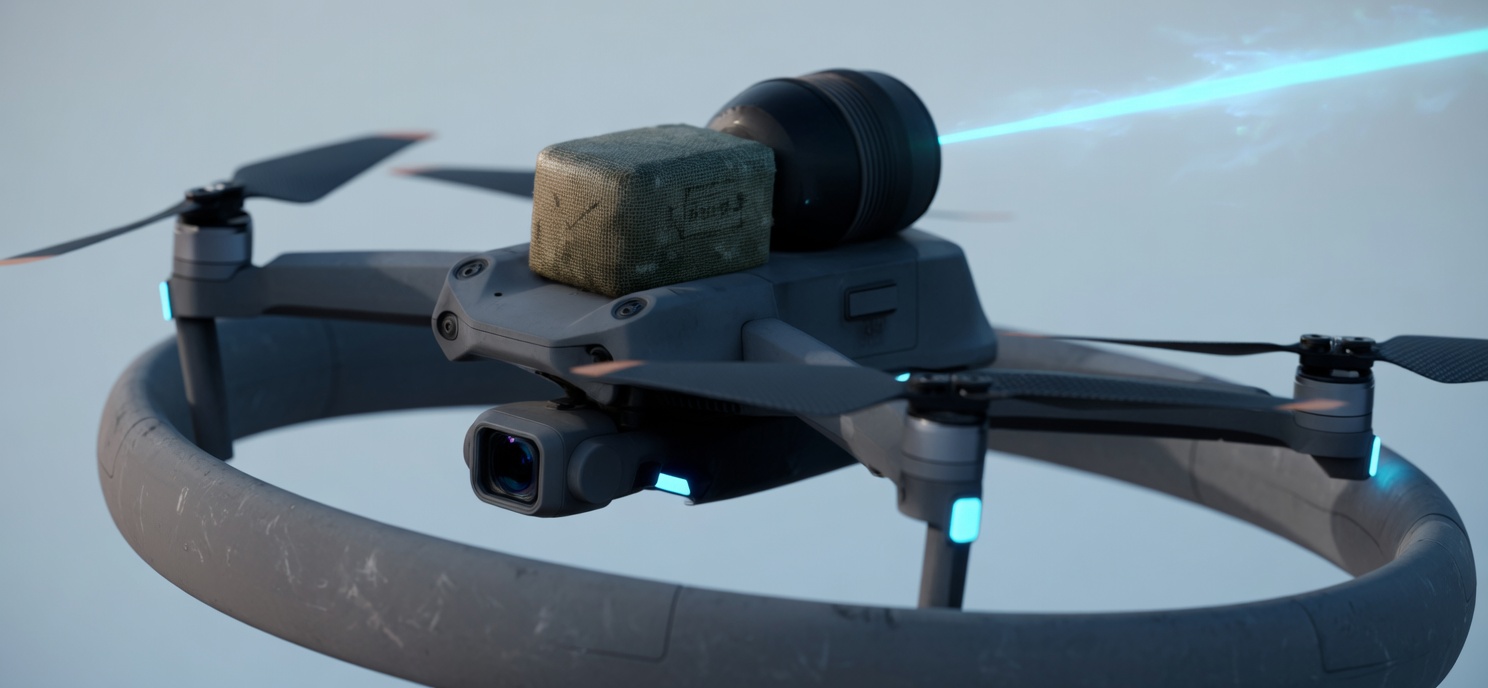
The Clark Y airfoil was used as the baseline, with simulations conducted at an airspeed of 10 m/s. Results show that specific configurations, such as reduced center thickness, tapering of the upper airfoil, and the triangle layout for fuselage integration, significantly improve lift-to-drag performance.
Among the twelve designs analyzed, several exhibited optimal aerodynamic behavior while maintaining structural feasibility. The study concluded that ring-wing designs can offer performance advantages and should be explored further in experimental prototypes.
The paper noted that in the 1980s, there were limited simulation tools to verify and improve ring-wing design; however, at this juncture, advanced simulation tools enable the design of improved ring-wing aircraft.
The paper concluded that the ring-wing concept, though first proposed decades ago, “holds immense potential for modern aerodynamics.”
“Simulation results revealed that factors such as junction design, airfoil alignment, thickness variation, and tapering significantly impact lift and drag performance. Designs with reduced central thickness and smoother aerodynamic transitions showed enhanced lift and reduced drag,” the paper noted.
However, the paper noted that while the design and simulation results are promising and offer theoretical advantages, further “structural optimization and real-world testing are essential for practical implementation.”
It would be interesting to see how successful ring-wing quadcopters are in the Russia-Ukraine War and if the design is adopted on a wide scale by both armies.
Further, it remains to be seen whether, after drones, the ring-wing design will also be adopted for commercial aircraft.
- Sumit Ahlawat has over a decade of experience in news media. He has worked with Press Trust of India, Times Now, Zee News, Economic Times, and Microsoft News. He holds a Master’s Degree in International Media and Modern History from the University of Sheffield, UK.
- THIS IS AN OPINION ARTICLE. VIEWS PERSONAL OF THE AUTHOR
- He can be reached at ahlawat.sumit85 (at) gmail.com