Canada is upgrading air defense capabilities at 5th Canadian Division Support Base Gagetown in New Brunswick as part of a broader effort to modernize the Canadian Army’s ground-based air defense (GBAD) systems. The government has reportedly pledged $172 million in infrastructure spending for the new GBAD.
Gagetown is Canada’s primary army training base and home to the Royal Regiment of Canadian Artillery School and the 4th Artillery Regiment. It serves as the “brain trust” for artillery expertise in the Canadian Armed Forces, which makes it an obvious choice to host, train on, and operate the new air defense systems.
The upgrades will purportedly support operational facilities, training, and eventual stand-up of new units focused on this capability.
The system’s procurement procedure, which could result in Ottawa spending billions more on the required equipment, has not yet been disclosed, according to the CBC report. However, the Canadian Armed Forces are reportedly using lessons learned from wars in Ukraine and Iran, with special focus on drone warfare.
“We in the air defense community have been tracking how all of this is being used,” Maj. Mark Haines, acting deputy commander of the 4th Artillery Regiment, at Base Gagetown, told the publication. “We’ve been watching all the examples and looking at them for our own development.”
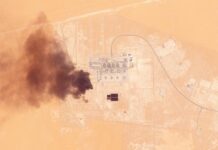
Drone warfare has gained prominence in the grinding Ukraine war, which has seen both warring parties innovating on the go and using drones for tasks ranging from ISR (Intelligence, Surveillance, Reconnaissance) to long-range strike missions, and even as interceptors. Similarly, during US Operation Epic Fury and Tehran’s retaliation, there was widespread use of one-way attack drones for conducting low-risk strikes on high-value targets.
Canadian officials and experts are also currently examining the threat posed by drones and the air defenses required to neutralize them.
Thomas Hughes, assistant professor of politics and international relations at Mount Allison University, pointed to the capability of drone swarms to overwhelm ground-based air defenses. “And so, how do we ensure that if a large number of Shaheds are used to overwhelm defense systems, can you engage multiple of them simultaneously? And if you do engage multiple simultaneously, what does that do for your defensive capability tomorrow?” he asked.
These threats have highlighted the vulnerability of ground forces in the absence of effective short- and medium-range air defense amid growing security risks.
Canada is determined to develop a modern Ground-Based Air Defense (GBAD) capability through its official GBAD project, which is part of the Defense Capabilities Blueprint. The GBAD system aims to provide tactical air defense protection for friendly forces and vital installations in both expeditionary and domestic operations.
In fact, Canada likely wants to establish a layered air defense to counter threats such as rockets, artillery, mortars (RAM), air-to-surface missiles, bombs, and Remotely Piloted Aircraft Systems.
“The Project will deliver an air defense system that will include the effector platform(s) (either guns, missiles, Directed Energy Weapon Systems, EW, or a combination thereof), munitions, a sensor suite, fire control software, and an integrated networked C4ISR system. It will also be equipped with a training and simulation system that leverages modeling and simulation to deliver realistic, immersive training,” according to the Canadian government.
Canada’s AD Capability is Oddly Insufficient
For over a decade, the Canadian Army has lacked a dedicated air defense system to shield ground forces against assault helicopters and swift jets.
Earlier, the three primary components of Canada’s air defense were the Oerlikon 35-millimeter twin-barrel cannon, the man-portable Javelin system, and the air defense anti-tank system.
The Oerlikon 35 mm twin-barrel cannon was a towed, radar-directed anti-aircraft gun system effective against low-flying aircraft and helicopters. Canada operated around 20 of these units, which were phased out over two decades ago.
The British Thales Javelin was a shoulder-launched surface-to-air missile hastily acquired for the 1991 Gulf War to replace the problematic Blowpipe. It served as a short-range, portable air-defense option until its retirement around 2005.
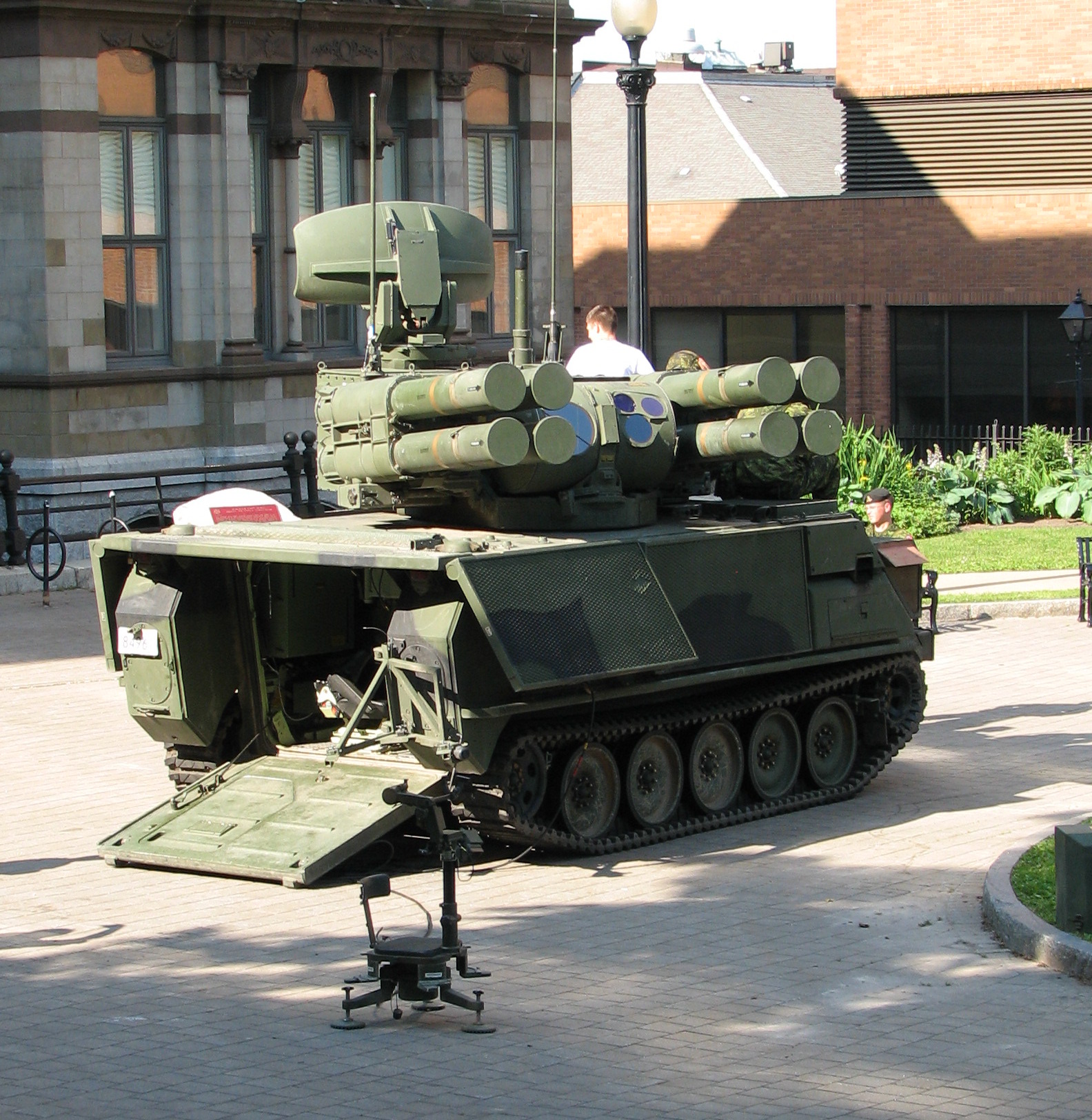
The Air Defense Anti-Tank System (ADATS) was a mobile, dual-purpose system mounted on M113 armored vehicles. Developed by Oerlikon, it fired laser-guided supersonic missiles capable of engaging both low-flying aircraft and helicopters at ranges up to 10 kilometers, as well as armored ground targets. It saw limited use and was phased out in 2012.
As explained by Stéphane Boucher, a retired artillery officer and president of the Royal Canadian Artillery Association, after the fall of the Soviet Union, the Canadian military shifted its focus to peacekeeping missions in the Balkans and then the war in Afghanistan, which meant that it no longer needed many of its ground-based air defense assets.
“We didn’t have an air defense threat that required us to have that capability,” Boucher said. “And you know, at times when budgets were limited … it probably just wasn’t a priority for the Canadian Armed Forces, so we slowly, you know, divested and went to having not much.”
However, with the Russian invasion of Ukraine launched in 2022, the threat has returned. This has necessitated the establishment of the GBAD.
The GBAD has evolved into phases, including Very Short-Range Air Defense (VSHORAD) and Short-Range Air Defense (SHORAD) layers. It is expected to support both NATO commitments and domestic needs.
To fulfill an urgent operational requirement (UOR) to protect forces in Latvia, Canada awarded a $227 million contract to Swedish defense manufacturer SAAB for RBS 70 NG VSHORAD systems in 2024, including firing units, missiles, vehicles, and support equipment, as earlier reported by the EurAsian Times.
“This capability will enable Canadian troops to defend themselves against fixed-wing aircraft and helicopters within its range, close air support aircraft, class 1 small Uncrewed Aerial Systems, and larger Uncrewed Aerial Systems. This is the first time since 2012 that the Canadian Armed Forces will have an Air Defense capability – and the first systems are expected to be delivered later this year,” the Canadian Defense Ministry said at the time.
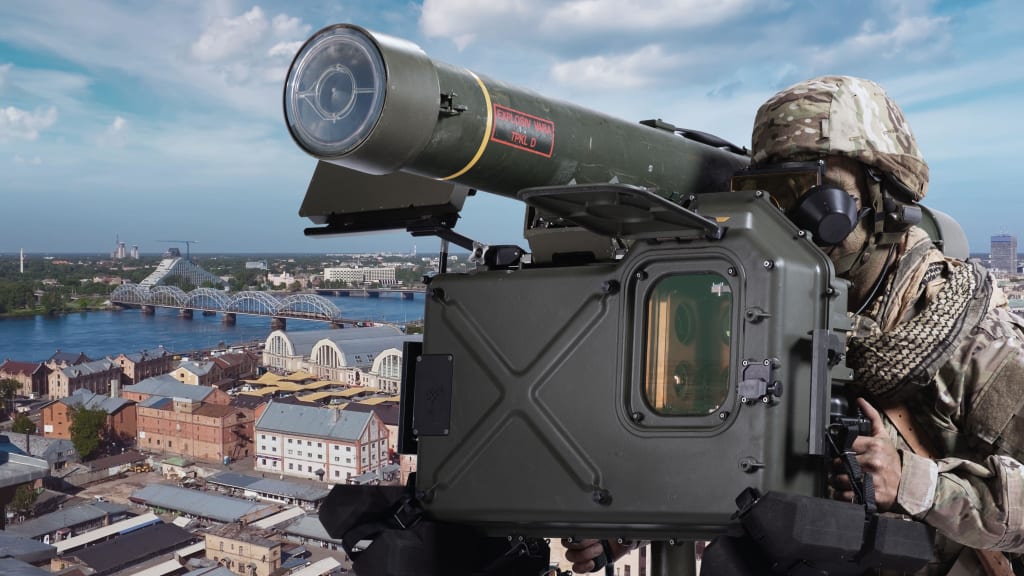
The deliveries of the Swedish system, which is highly mobile and effective against drones, helicopters, and low-flying aircraft, have already begun.
After the UOR, the three-phase GBAD follows.
The first initiative, called Uplift, is the outcome of a shift in procurement strategy that added funds to the budget in September 2024 to quickly obtain a military-off-the-shelf (MOTS) SHORAD/C-RAM (counter-rocket, artillery, and mortar) capability.
In addition, the Canadian government announced in 2024 that it will invest $46 million in the first phase of a ground-based system. At the time, the government announced that the anti-drone contract would be split among the ORION-H9 dismounted drone-gun manufacturer TRD Systems of Singapore, the omnidirectional scanner manufacturer CACI Inc. of Reston, Virginia, and the fixed-site system manufacturer Leonardo UK Ltd.
All of the equipment will be deployed with the Canadian-led NATO brigade in Latvia, the government stated. The acquisitions will fulfill the Liberal government’s commitment to bridge significant equipment shortages for troops in the field, whose goal is to deter future Russian attack in the Baltic.
The second phase of GBAD, called Enduring Phase 2, includes procurement of a battery of integrated SHORAD/C-RAM, whereas Enduring Phase 3 includes one battery of integrated VSHORAD, as noted in previous reports.
The Canadian military has not named any potential systems it could seek for the remaining two GBAD initiatives.
Analysts have identified available options globally, including the medium-range IRIS-T SLM developed by Diehl Defence in Germany; the highly modular, combat-proven short- to medium-range system NASAMS developed by Kongsberg and Raytheon; the Common Anti-Air Modular Missile (CAMM) developed by MBDA in the UK, etc.
However, these are not yet confirmed selections, as the definition phase continues, but they represent the main systems industry, and analysts have highlighted them as meeting Canada’s requirements preemptively.
Apart from this, Canada was also earlier reported to be looking to join the American “Golden Dome” initiative, as EurAsian Times reported at the time.
In May 2025, Canadian Prime Minister Mark Carney’s office confirmed that the Canadian administration was in talks with the United States about negotiating a new security and economic relationship between the two nations, which “naturally includes strengthening NORAD and related initiatives such as the Golden Dome.
It is pertinent to note that, despite collaborating on air defense with the US under the NORAD framework, Canada is not part of the US Northern Command’s ballistic missile defense system. This means that even though Canada collaborates with NORAD to monitor and identify missile threats, the ability to shoot down a ballistic missile is entirely up to the United States.
While the Canadian government has been miffed by the US over trade tariffs and diplomatic tensions, Carney reiterated interest in the Golden Dome in February 2026. “The project is under development and, if it serves Canada’s interests — and I think there are certainly many scenarios where that would be the case — we will be willing participants,” Carney was quoted as saying.
- Contact the author at sakshi.tiwari13 (at) outlook.com
- Follow EurAsian Times on Google News