Although Russia scaled back its 2026 Navy Day celebrations amid Ukrainian threats, it projected an optimistic outlook by confirming plans for the imminent launch of the Perm-class nuclear submarine armed with hypersonic Zircon missiles, and announcing substantial progress on the nuclear-capable Poseidon unmanned underwater vehicle (UUV).
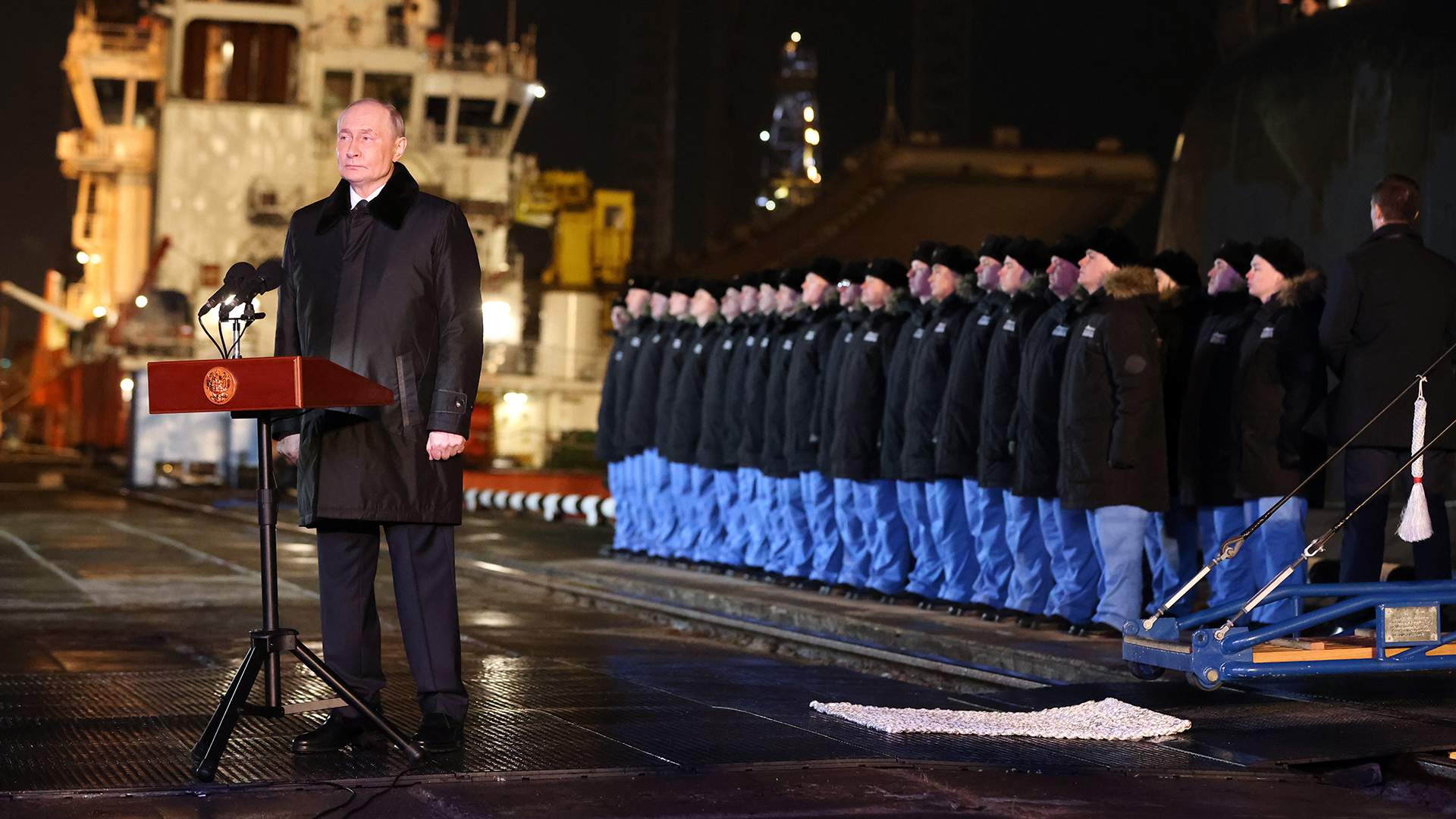
Russia scaled down the main St. Petersburg naval parade for the second consecutive year, citing security concerns over Ukrainian long-range drones. Instead, President Vladimir Putin marked the day at Navy headquarters in St. Petersburg, praising the Navy’s contribution to the war in Ukraine and the strengthening of the naval leg of the nuclear triad.
As visuals of the event surfaced online, Ukraine-based military bloggers and pro-Ukraine OSINT analysts pointed to a submarine painted on the wall visible in the video, while mocking the absence of actual warships from the parade.
“The cameraman is probably in Kolyma by now,” netizens joked, referring to Soviet-era labor camps.
Meanwhile, the Navy Commander-in-Chief of the Russian Navy, Admiral Alexander Moiseyev, presented a status report on the induction of new vessels into service. Moiseyev reported to President Vladimir Putin that 20 ships, vessels, and boats had already been commissioned in 2026, with plans for another 21 by the end of this year.
The most noteworthy of these upcoming inductions is that of the Perm-class nuclear submarine armed with the Zircon (or Tsirkon) hypersonic missile.
Russian Navy Chief Moiseyev reports to Putin:
First nuclear-powered submarine capable of carrying Zircon nuke-capable hypersonic missiles — to be commissioned by end of year.
21 more vessels to be commissioned before year-end. pic.twitter.com/OlDLUMIQva
— Sputnik India (@Sputnik_India) July 26, 2026
Perm is the fifth boat in the Yasen-M series. The keel for its construction was laid in 2016, and the submarine was launched in March 2025 in a ceremony attended remotely by Putin.
Designed by the Malakhit Design Bureau and built at Sevmash, it features a partial double-hull configuration, a rubber coating to reduce its acoustic signature, modern navigation, communication, and hydroacoustic systems, high-precision weapons, and robotic equipment. The mast housing of the Perm submarine includes a rescue chamber capable of holding the entire crew. During the launch ceremony, Putin described it as the first multipurpose submarine equipped to carry Tsirkon hypersonic cruise missiles.
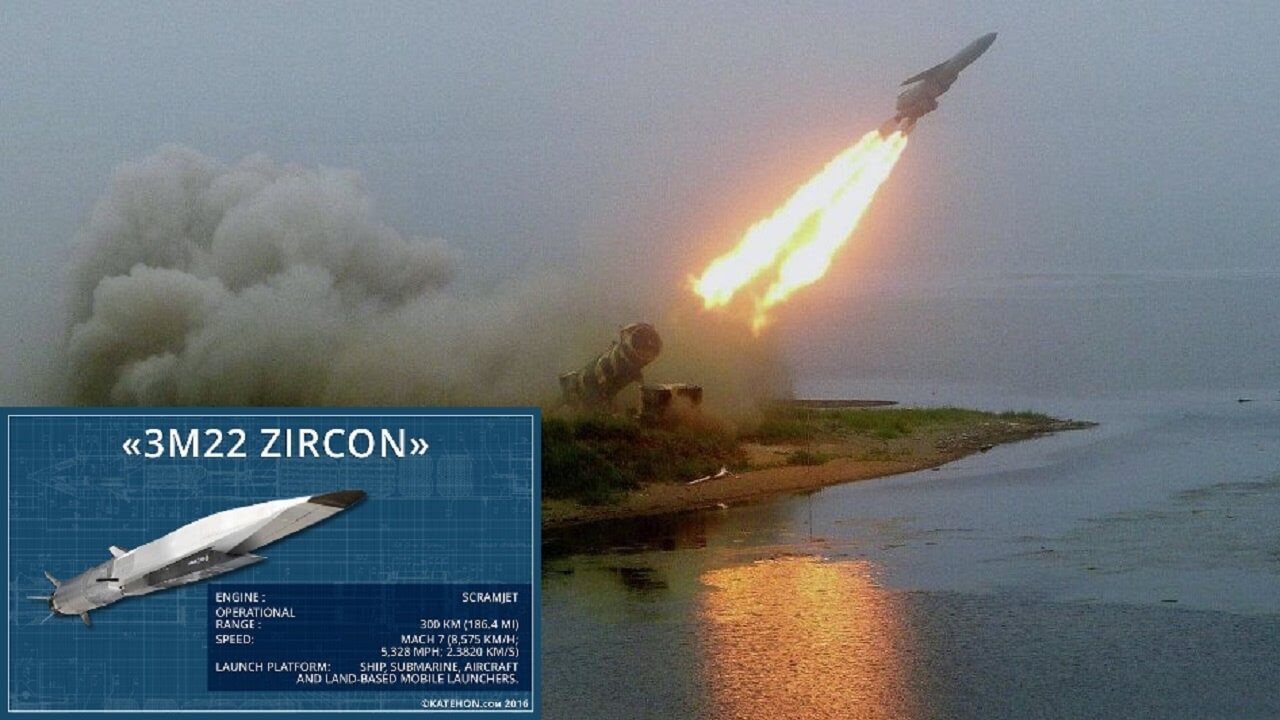
Zircon is a sea-launched hypersonic missile that Russia claims can reach Mach 8–9 and has a range of 500–1,000 km. It is intended for both anti-ship and land-attack roles
Zircon’s high speed is designed to compress defender reaction times and complicate interception compared with conventional subsonic or supersonic cruise missiles. Analysts believe that since kinetic energy is the best predictor of lethality against large surface targets, the missile’s extraordinary speed would make it a great attack vector against larger warships, such as an adversary’s aircraft carrier groups
Russian officials state that the hypersonic missile’s kinetic energy on impact will enable Russia to attack hardened, deep, and ground targets.
The missile has been used to launch devastating strikes on Ukraine on several occasions. In fact, Boris Obnosov, CEO of Tactical Missiles Corporation, earlier said in an interview with Rossiya-24 television that the missile can defeat nearly all air defense systems.
Speaking at the Navy Day event, Putin said ongoing work is improving its accuracy, noting that “its latest combat use shows that it is becoming increasingly accurate” and that few countries field comparable weapons. Additionally, he boasted that few countries in the world possess weapons like Zircon.
Experts believe the combination of the Perm submarine and the Zircon missile could prove lethal. Equipping a quiet nuclear attack submarine with Zircon would allow relatively close approaches to high-value targets, such as aircraft-carrier groups, major surface combatants, or coastal infrastructure. The launch of hypersonic missiles would, thus, leave defenders little warning and time to react.
The Perm submarine will carry a mixed load of Zircon, Oniks, and Kalibr missiles, as well as torpedoes, enabling it to switch between anti-ship, land-attack, and anti-submarine roles.
The induction of a modern Yasen-M boat would strengthen the multipurpose nuclear attack submarine force, support sea denial and power projection objectives, and complement the strategic ballistic-missile submarine force that forms part of the nuclear triad. Moreover, it would be akin to a shot in the arm for the overall combat posture, especially as Russia’s Black Sea Fleet (BSF) has been hammered by Ukraine in the ongoing war, signaling vulnerability of the Russian naval forces.
Separately, Putin announced another weapon system expected to take Russia’s underwater combat capability to another level: the Poseidon is nearing completion.
Poseidon Nearing Completion
Putin announced that the Poseidon nuclear-powered unmanned underwater vehicle (UUV) is in its final stage of development.
“As for the Poseidon we have been talking a lot about, this uncrewed underwater vehicle is at the final stage,” he said at a meeting with Russian Navy servicemen, as reported by TASS News Agency. “We are about to complete [the work on it] and put it on combat alert.”
The statement follows his October 2025 claim of a successful test in which the vehicle’s nuclear power plant was activated after launch from a submarine, as reported by EurAsian Times at the time.
During the launch, the Russian President claimed there was “no way to intercept” the drone torpedo, which could travel faster than conventional submarines and reach any continent in the world. “It is unlikely that anything similar will appear in the near future,” he noted, adding that no country could match Poseidon’s speed and diving depth.
Specific details about Poseidon remain shrouded in secrecy. However, open-source reports indicate it can carry a nuclear warhead of up to two megatons, uses nuclear propulsion for long range and endurance, and may be deployed from specialized motherships such as the Belgorod or the purpose-built Khabarovsk-class boats under construction.
Notably, the Poseidon torpedo can be remotely steered to its targets, functioning like a drone once released from the submarine.
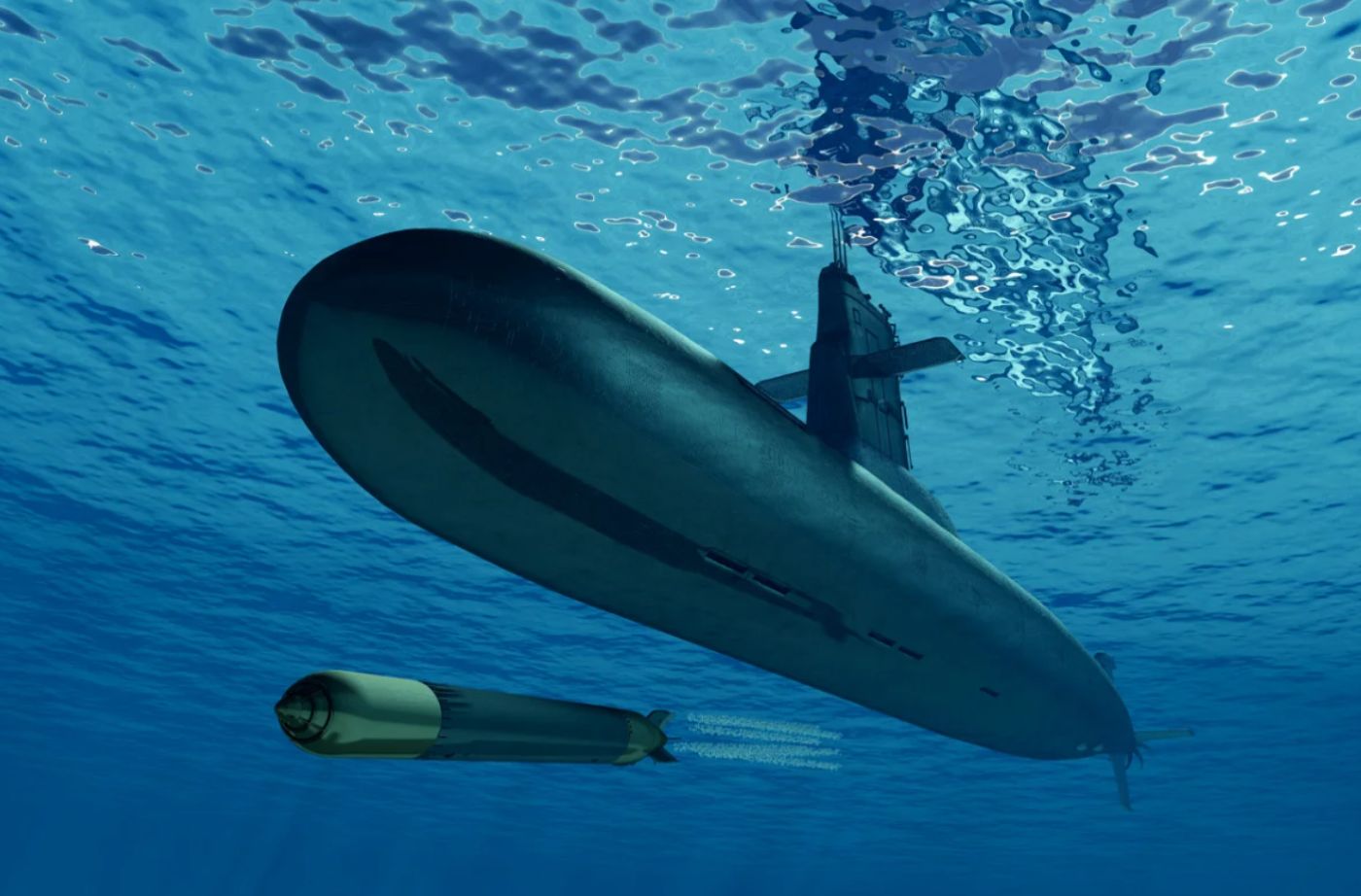
Poseidon can reportedly operate at depths of more than 1 kilometer (0.6 mile) and travel at speeds of up to 70 knots while remaining undetectable. Russian commentators have noted that its torpedoes can produce radioactive tsunamis up to 1,000 feet high, in veiled threats issued to the West amid tensions stirred by the invasion of Ukraine.
Despite dismissing these threats as a gross exaggeration, military analysts have acknowledged that Poseidon torpedoes could seriously target coastal cities, ports, naval bases, and high-value maritime infrastructure of hostile states. In fact, experts believe that it is merely a new weapon meant to enforce Russia’s nuclear triad.
“Poseidon is a doomsday weapon. It is a post-apocalypse weapon. Most importantly, it is a nuclear weapon. As such, it can serve only as a deterrent. It has no combat value. It cannot be used in wars. It can only prevent wars,” Vijainder K. Thakur, an Indian Air Force veteran and military expert, earlier told EurAsian Times.
The development of Poseidon is believed to be a hedge against advances in NATO missile defense systems and to add redundancy to the sea-based leg of the nuclear triad. Poseidon’s main potential contribution is to Russia’s strategic nuclear posture at sea, providing a hard-to-counter second-strike option and complicating adversary planning.
- Contact the author at sakshi.tiwari13 (at) outlook.com
- Follow EurAsian Times on Google News