Cheap, mobile, easily deployable, constantly adapting, and deadly accurate; that’s how US military officials are describing Iran’s new ballistic missile – Kheibar Shekan.
While ballistic missiles are relatively easy targets to shoot down (compared to Hypersonic missiles) due to their fixed trajectories, quite a few Kheibar Shekan have penetrated U.S. air defense systems in the Middle East, drawing the attention of U.S. military officials and security analysts.
According to unnamed U.S. officials who spoke with The Wall Street Journal, Iran has adapted its military tactics by utilizing Kheibar Shekan ballistic missiles to target U.S. bases across the Middle East, altering flight paths, speeds, and mid-air maneuvers to breach American air defenses.
Iran is increasingly depending on these cheap missiles to breach American defenses, using them as part of complex attacks, where they are fired along with a salvo of cheap drones and missiles with fixed trajectories, to confuse American air defenses.
These complex attacks, alongside the changes introduced to the Kheibar Shekan ballistic missiles to make them more lethal and harder to intercept, underscore that Iran is an adaptive adversary.
So what is this Kheibar Shekan ballistic missile that has become the new headache of the US military, and what makes it so lethal?
The Kheibar Shekan Ballistic Missile
The Kheibar Shekan, or Kheibar-buster, is named after a Jewish castle overrun by Muslim warriors in the early days of Islam.
In 628 CE, Prophet Muhammad himself led a military campaign against the Jewish communities living in the oasis of Khaybar.
It is a medium-range ballistic missile unveiled by the Islamic Revolutionary Guard Corps (IRGC) in 2022. It belongs to the Fateh family of solid-fuel missiles and has become one of the most advanced developments of Iran’s missile program.
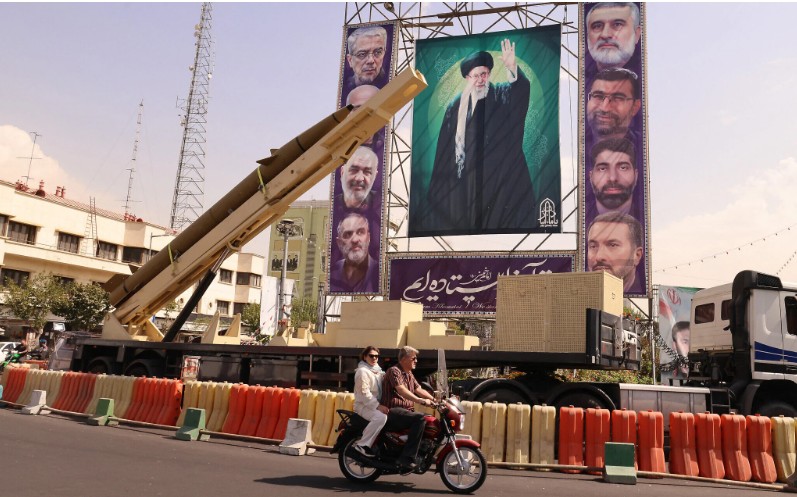
According to Iranian claims, the missile has a range of approximately 1,400 to 2400 km. This allows it to strike targets across much of the Middle East, including Israel. Furthermore, the missile travels at over 6,000 miles per hour.
It carries a 550 kg warhead in its nose section.
Unlike older Iranian liquid-fuel missiles, the Kheibar Shekan uses a solid-fuel propulsion system. This design has several advantages: missiles can be stored for longer periods in a ready state, require less time for launch preparation, and can quickly reposition after use.
This is a significant advance as Iran’s older missiles required lengthy prelaunch fueling, which in turn made their tracking and targeting by the US easier.
🚨 BREAKING – Iran's latest ballistic missile, Kheibar Shekan; stockpile of 50,000 units. Guided by BeiDou Navigation Satellite System (BDS‑3). Range: 2,450 km. Max speed: up to 19,500 km/h (approx. Mach 16). Warhead: approximately 550 kg. 🇮🇷 pic.twitter.com/E1jzHTxY9F
— IRGC (@IRGC_Press) July 25, 2026
However, Kheibar Shekans can be kept fueled and loaded onto trucks or other launcher vehicles quickly, making their targeting difficult.
For modern missile systems, rapid deployment has become an important factor. Even a precision-guided missile has limited effectiveness if its launchers are easy to detect and destroy.
Despite these advantages, the US was able to shoot them down easily because of their fixed, easily predictable flight paths.
Ballistic missiles travel into the upper atmosphere of space before plunging back down towards a target, usually at hypersonic speeds, but are not capable of maneuvering in the final phase of their flight.
This is where the Kheibar Shekan differs and becomes more lethal.
According to US military officials, in some of the Kheibar Shekans, the nose section of the missile, which carries the explosive warhead and detaches during the final phase of the missile, is equipped with a small engine that makes it capable of adjusting its flight path in the terminal phase as it nears its target. This final-phase maneuvering makes interception by air defense systems harder.
Another advantage is its cost. The cost ratio between offensive and defensive means is an important differentiator.
While Iran has not officially disclosed the cost of the Keibar Shekan, experts believe that it is significantly cheaper than the interceptors employed by the US, such as Patriots, THAAD, and the US Navy’s SM-6 interceptors.
For instance, an SM-6 interceptor missile can cost about US$4–5 million, and a PAC-3 MSE missile for the Patriot system costs approximately US$4–6 million per unit.
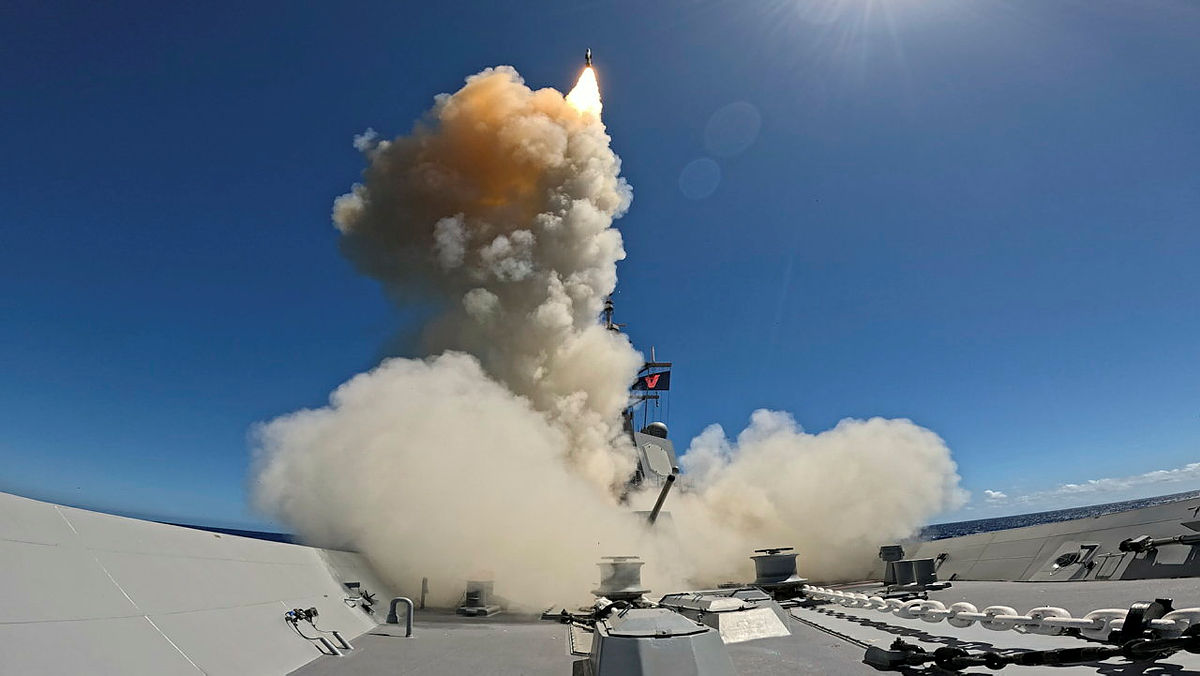
The significantly lower price tag of Kheibar Shekan creates the problem of ‘cost depletion of air defense,’ as even a successful interception would hurt the US more due to the higher cost of replacing its interceptor munition.
Additionally, according to some reports, the satellite-guided missile now uses China’s BeiDou Navigation Satellite System (BNSS), which increases its precision.
The mobility, rapid deployment, precision, final-stage maneuverability, and cost of the Kheibar Shekan make it a deadly missile.
However, the Iranian strategy of launching them alongside dozens of high-speed drones and other ballistic missiles makes their interception even harder.
According to defense and security expert Patricia Marins, Iran had a stockpile of about 2,000–2,200 Kheibar Shekan before the 12-day war, and today, after the conflict with the U.S., it still has some 1,700 missiles in its arsenal.
She further estimates that nearly a third of the Kheibar Shekan missiles have been upgraded to the BeiDou Navigation Satellite System.
“I think what it tells us is Iran is paying attention, and they’re learning and they’re looking at ways that they can get at use,” retired Army Gen. Joseph Votel, who has led the US Central Command, told the WSJ.
Iran “has seen what types of maneuvers are the most effective ones for overcoming missile defense,” said Fabian Hinz, an independent missile expert. “Every single combat use gives you some sort of data, so that’s very useful for the Iranians.”
Meanwhile, another headache for the US is its declining stockpiles of interceptors.
Declining Interceptor Stockpile of US Military
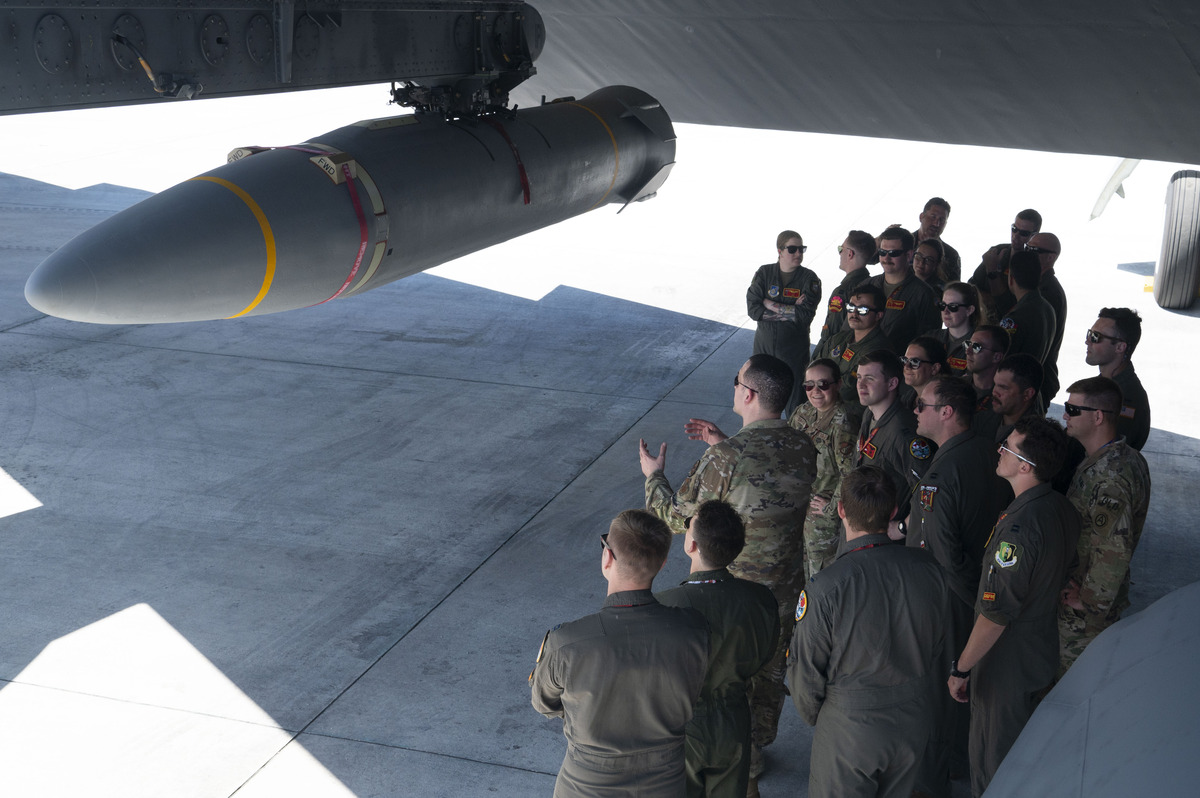
In April, in a detailed study, the Center for Strategic and International Studies (CSIS) estimated that by that time, the US had already expended nearly half of its SM-3 missiles, nearly a quarter of its SM-6 missiles, two-thirds of its THAAD interceptors, and more than half of its pre-war stock of Patriot interceptors.
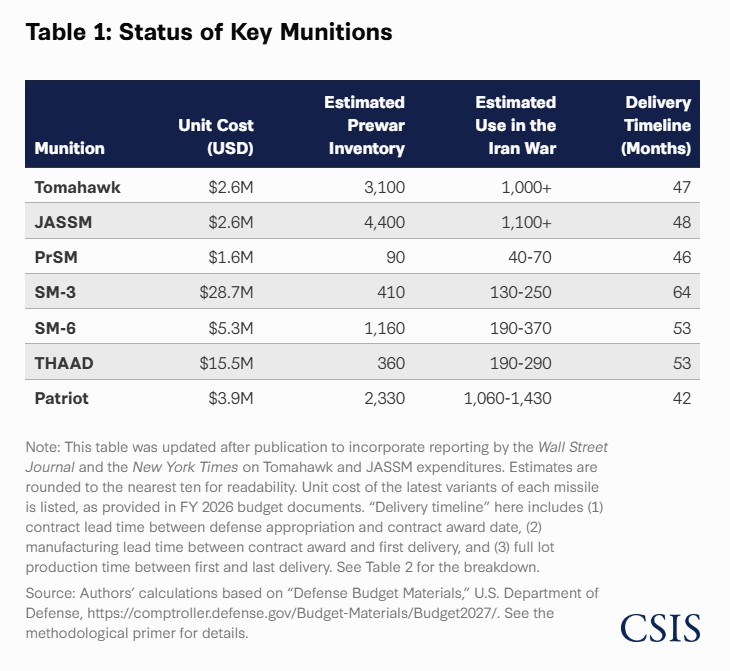
This declining stockpile of interceptors means that the US is forced to prioritize which incoming projectiles to intercept, and it is deliberately allowing some Iranian projectiles to pass through its defenses.
The U.S. military commanders have been picking and choosing which Iranian missiles and explosive-packed drones to intercept and are allowing some attacks through their defenses, amid an effort to preserve the Pentagon’s diminishing supply of weapons that block projectiles from reaching their targets, two senior U.S. officials told NBC News.
U.S. officials also said that in some cases the military deliberately allowed Iranian missiles and drones to hit U.S. bases if no personnel were stationed there.
Some defense experts have opined that this declining stockpile of interceptors was a key factor for the US to pause its airstrikes on Iran on July 27.
According to the New York Times, U.S. President Donald Trump backed away from escalating the war against Iran after advisers warned him about the risks of depleting America’s missile stockpiles.
According to officials, Washington believes that Russia and China are closely monitoring the pace at which U.S. military stockpiles are being depleted and could factor this into their planning for military actions.
However, depleting U.S. interceptor stockpiles and open acknowledgments by U.S. officials that the new Iranian strategy, combined with improved missiles such as Kheibar Shekan, is making interception even harder. This means that Tehran will bargain hard for concessions in its talks with Washington.
- Sumit Ahlawat has over a decade of experience in news media. He has worked with Press Trust of India, Times Now, Zee News, Economic Times, and Microsoft News. He holds a Master’s Degree in International Media and Modern History from the University of Sheffield, UK.
- He can be reached at ahlawat.sumit85 (at) gmail.com