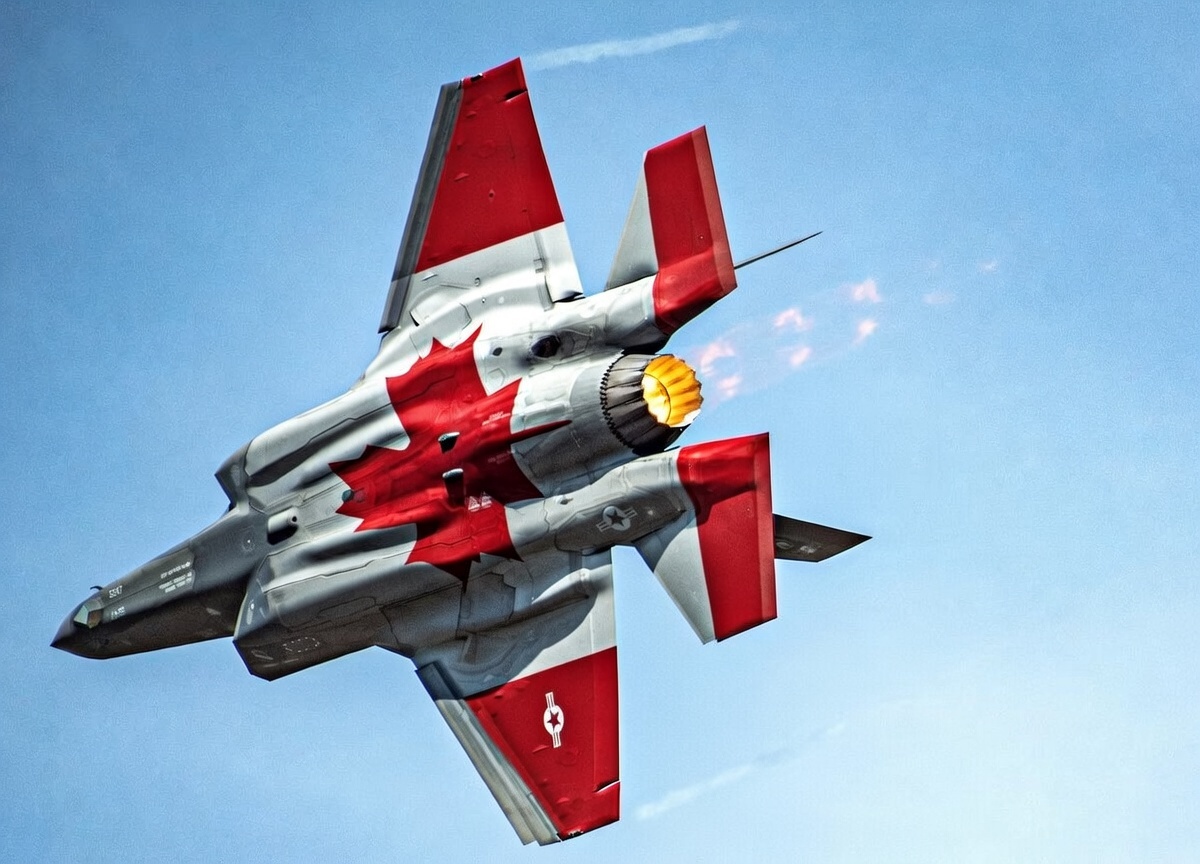


As Germany weighs a possible role in the Global Combat Air Program (GCAP), the works council at Airbus Defense and Space’s Manching plant has issued a sharp warning: joining the existing three-nation initiative is likely to fail, and Berlin should instead launch its own sixth-generation fighter program.
The employee works council for Airbus’s Manching manufacturing plant in Bavaria said Germany should reject any potential involvement in the GCAP, currently pursued by the United Kingdom, Japan, and Italy, as FlightGlobal reported.
In a statement on November 23, 2026, the group said it “called on the Federal Chancellery to immediately give the green light for the development of the next German fighter jet.”
“For the Bundeswehr to be able to deploy the system before 2040, the prototype must take its maiden flight as early as 2032,” the employee body stated. “This timeline is technically feasible – provided the government acts immediately.”
Earlier this year, Germany withdrew from the Future Combat Air System (FCAS) it was pursuing with France and Spain after months of stalemate over irreconcilable differences between Airbus (representing Germany and Spain) and French Dassault Aviation on work-sharing and design philosophy.
Since then, it has been exploring joining another program.
In fact, German Chancellor Friedrich Merz raised the possibility of joining the GCAP during his October 2026 visit to Japan, even as the British Prime Minister Andy Burnham directly invited the country to join the initiative. However, German Defense Minister Boris Pistorius said a directional decision is expected by the end of March 2027.
The Manching works council believes that joining GCAP under the existing arrangements would be a strategic mistake.
“The employee representatives categorically rejected joining the British-Italian-Japanese fighter jet program, deeming this approach doomed to failure,” it stated. Its principal concern is that Germany would become a junior partner in someone else’s fighter program, spelling a demise of the country’s own aviation industry.
The intervention highlights a notable internal difference. While the works council has taken an absolute position against GCAP, Airbus corporate management has remained more flexible.
Following the FCAS collapse, Michael Schoellhorn, head of Airbus Defense and Space, said the company remained open to joining forces with Britain, Italy, and Japan for the GCAP, provided Germany secured a significant share of the work and leadership.
“What we’re ready to do is to join something or to build something where we have a significant portion of the work and the leadership. That’s currently being explored,” he said.
The Manching workforce, or the people most affected by the next step, by contrast, see any late entry into the already structured program as structurally flawed.
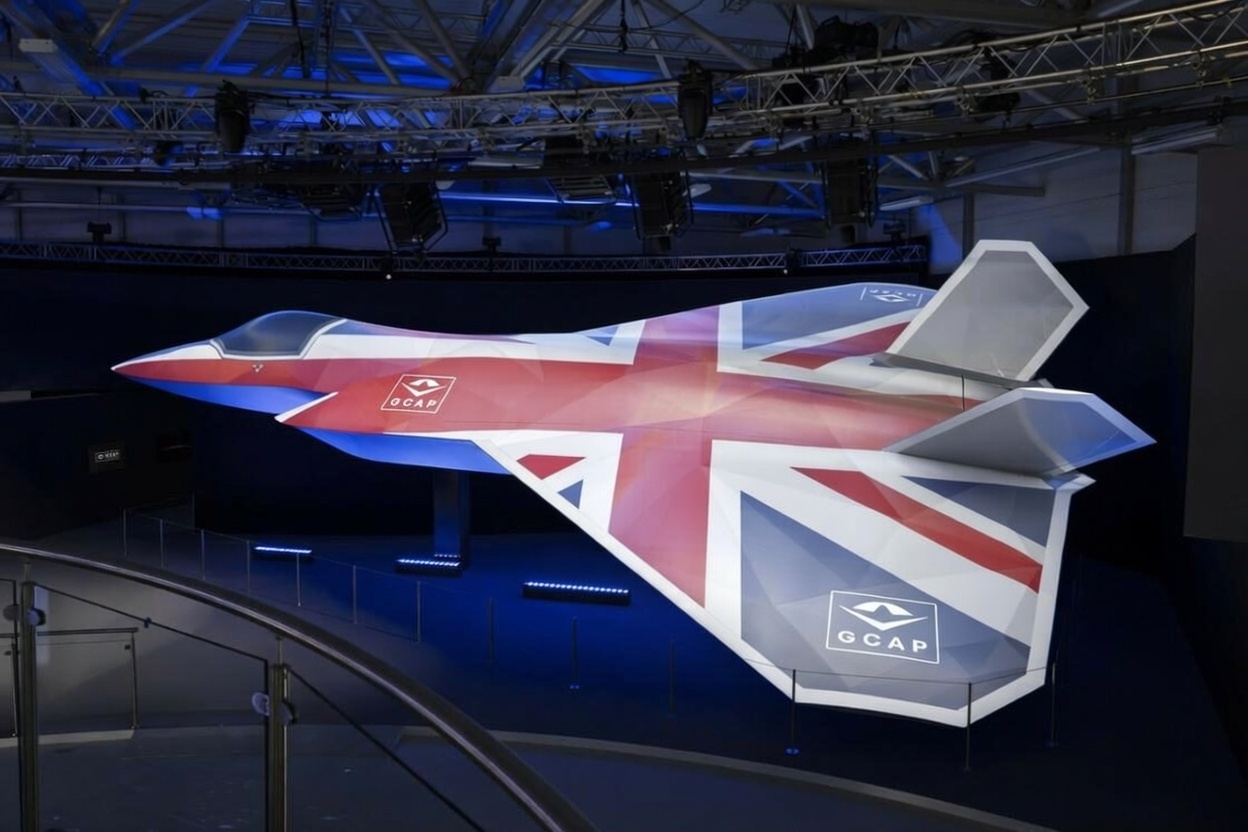
Doomed To Fail, Workers Group Say
GCAP is led by the industrial joint venture “Edgewing,” composed of Leonardo (Italy), Mitsubishi Heavy Industries (Japan), and BAE Systems (the UK), and is tasked with designing and developing the next-generation aircraft and related systems.
The three founding parties have defined the program’s industrial structure, negotiated responsibilities, and established the framework for aircraft development. They are now set to develop the aircraft as they work to meet the 2035 rollout deadline.
Adding a major new full partner now risks delaying that schedule and diluting the industrial shares already allocated, which is why countries like Italy have proposed an observer role for Germany, as the EurAsian Times recently reported.
This would, however, significantly downgrade its position within the GCAP and deprive it of control over aircraft design, limited input on architecture, and major industrial work related to the aircraft.
In fact, even a full membership would not automatically guarantee Germany an equal industrial position, and Berlin may be expected to contribute substantial funding while receiving a comparatively limited share of development and manufacturing responsibilities.
“We should not repeat the political mistakes made during the fighter jet development with France,” Manching works council chairman Thomas Pretzl has warned.
Germany withdrew from the joint Next Generation Fighter (NGF), the centerpiece of the FCAS, after becoming disgruntled with Dassault’s push for dominant control over the aircraft’s development and workshare. Both Airbus and the German government viewed French leadership of the NGF as unfair, arguing it would sideline German industry, limit technology transfer, and leave it with little meaningful role or industrial return.
However, with a GCAP entry now under consideration, Airbus workers fear that joining the trilateral program at this stage could create another situation in which Germany has insufficient influence over the program.
The program’s industrial terms are already established among BAE Systems, Leonardo and Japan’s industrial partners. Germany was not involved in defining the original operational requirements. Joining now would mean renegotiating within an existing structure rather than shaping one from the outset—the precise dynamic that, in the works council’s view, doomed the collaboration with France.
Apart from industrial influence, the Manching works council is concerned about the time available to preserve Germany’s domestic combat-aircraft development capabilities. The works council says a prototype must make its maiden flight in 2032 if the Bundeswehr is to introduce the system before 2040. The timeline has been described as technically achievable, but only if the government acts immediately.
“If the Chancellor’s office continues to hesitate, the purchase of further US [Lockheed Martin] F-35 jets is imminent,” it warns. “This would spell the end for German military aviation. “Politicians must act immediately, otherwise another industry in Germany will die.”
The Airbus Defense and Space facility at Manching employs about 6,500 people. It is an important center for German military aircraft development and the final assembly of the Eurofighter Typhoon.
However, the Eurofighter cannot remain the foundation of German combat-aircraft manufacturing indefinitely. As production eventually declines and the aircraft approaches the end of its operational life, the country will need a successor program to sustain its engineering, manufacturing and technological capabilities.
Without a new fighter-development initiative, Germany risks losing expertise accumulated over decades in aerodynamics, aircraft structures, propulsion integration, flight-control systems, mission systems and military aircraft certification.
In the long run, this would mean that jobs for skilled engineers and technicians would dry up. Thus, they argue that Germany needs its own next-generation fighter program to preserve this industrial ecosystem.
Workers Call For Germany’s Own Fighter Program
“Instead, a swift national agreement is needed that remains open to future expansion. This would allow other countries and manufacturers to easily join the project at a later date if necessary,” the council stated, exhorting the country to pursue its own initiative that would benefit its industry.
The council’s proposed approach is to establish a national development framework immediately, giving German companies control over the program’s initial architecture, industrial responsibilities and technological priorities.
Earlier, Germany was believed to be considering an alternative model: forging a new partnership with Sweden and Spain to develop its sixth-generation fighter.
Michael Schoellhorn told the Swedish newspaper Dagens Industri in May 2026 that he looked forward to working with Sweden and Saab on a new next-generation fighter.
If it took this route, it would gain industrial influence and an equal partnership from the start, better alignment with continental European operational needs, and a more balanced industrial starting position than it would get in the already-established GCAP.
The three nations could form a joint venture between Airbus and Saab, possibly utilizing Saab’s Gripen E as a baseline or technological stepping stone while creating a new aircraft. Having developed the Eurofighter Typhoon and Saab Gripen, respectively, both sides bring vast combat aircraft development experience that would be valuable to the program.
It could also provide a framework for developing an aircraft around European operational requirements, rather than trying to fit Germany’s requirements into an existing program designed primarily around British, Italian and Japanese priorities. Moreover, bringing Spain into this partnership would give Airbus continuity and likely stronger bargaining power within the grouping, as the EurAsian Times explained in a detailed report earlier.
Such a partnership would, however, depend on the political and industrial willingness in the three countries. The partners would need to establish governance structures, align requirements, agree funding shares, define intellectual property rules, and negotiate work-share from scratch. This could slightly push the timelines. Nevertheless, the proposal has gained attention within German defense circles.
A report on an internal German Defense Ministry assessment said it encouraged exploring cooperation with Sweden and Spain rather than immediately committing to the GCAP.
Speaking about the need to develop Germany’s own fighter, Christian Moser, a member of the local Parliament and a voice amongst many Airbus workers, said, “After the failure of FCAS with France, we now need a German consortium to develop the sixth-generation fighter jet,” adding that “Germany must be able to shape its own security and must not become dependent on others for key technologies.”
He also noted that “Until the new jet flies, the Eurofighter must be further developed,” adding that “This will preserve the capabilities in Manching and provide the air force with modern technology.”
The statement does not represent Airbus’s official position. It does, however, solidify the workforce’s view at one of Germany’s most important combat-aircraft sites.
- Contact the author at sakshi.tiwari13 (at) outlook.com
- Follow EurAsian Times on Google News