

The Pentagon has once again criticized Canada for not doing enough to defend North America, slamming its prolonged review of the F-35A jets. Interestingly, Ottawa has previously rejected or paused several other US arms purchases as it seeks to reduce dependence on its southern neighbor.
In a fact sheet, the Pentagon rebuked Canada on several complaints, including inadequate defense spending, poorly maintained military equipment, low operational readiness, fighter-jet delays, and the absence of a credible long-term defense plan.
The US Defense Department argued that Ottawa had not made the difficult choices necessary to modernize its armed forces, improve military preparedness, and meet its NATO obligations. “Canada’s defense shortfalls speak for themselves,” the fact sheet stated, adding that “Canada must get serious and focused.”
Notably, this unusually blunt language reflects Washington’s growing impatience with allies that it believes are not contributing sufficiently to collective security.
After meeting NATO’s previous goal of spending 2% of GDP on defense, Canada had joined its NATO allies in pledging to attain 5% of GDP by 2035, including related security investments.
However, the latest budget documents reveal that while overall defense and security spending is projected to reach 4.1% of GDP by 2027–2028, only about 2.6% of GDP would go toward core defense, with the remaining 1.5% coming from broader security-related investments. This distinction is crucial because the NATO commitment requires countries to raise core defense spending to 3.5% of GDP.
In addition, the Pentagon has questioned the timing and credibility of Ottawa’s spending plans. It has accused the world’s second-largest country of delaying the largest spending increases until after the 2029 federal election and of failing to produce a sufficiently detailed, fully costed strategy to meet NATO’s 5% commitment.
In May 2026, Elbridge Colby, the Pentagon’s strategy head, suspended the US-Canada defense advisory group, saying Ottawa had not fulfilled its military obligations.
Another major complaint in the Pentagon’s fact sheet concerns the operational readiness of Canada’s armed forces and the implications of existing capability gaps for continental defense.
The US Defense Department said Pete Hegseth was “laser-focused” on modernizing Canada’s armed forces and argued that Canada’s shortcomings were effectively shifting more of the continental defense burden onto American taxpayers.
Canada and the US share responsibility for continental defense through NORAD and other bilateral arrangements. However, Canada’s inability to deploy forces when needed may shift the burden to the US military, which has been pressing allies to take more responsibility for their own defense.
More importantly, though, the fact sheet criticizes Canada for sitting on the review of its purchase of 88 F-35A Lightning II fighters for over a year.
“Since March 2025,” the Pentagon fact sheet noted, “Ottawa has been reviewing its decision to procure 88 F-35s to replace its aging fighters and is considering a mixed fleet that will compound existing personnel shortfalls.”
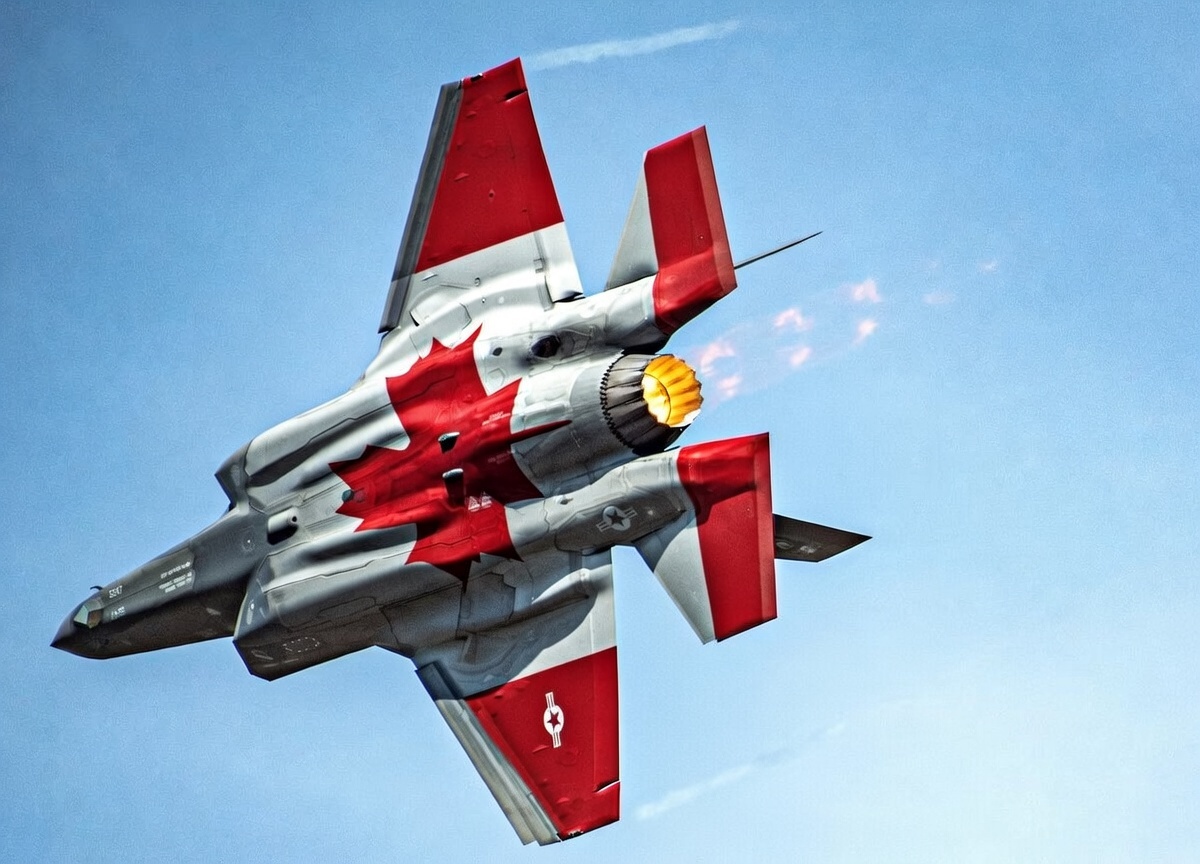
Canadian Prime Minister Mark Carney put the F-35 purchase under review in March 2025 amid rising trade and political tensions with the Trump administration. Canada is actively exploring Saab Gripen E/F jets.
While Canada has yet to make a final call, the Pentagon believes Ottawa already faces a military personnel shortage, and adding a second aircraft type could stretch its workforce even further. The concern may have stemmed from the fact that operating two different fighter fleets requires two parallel systems of pilots, technicians, training, maintenance, spare parts, and infrastructure.
Despite the latest US rebuke, Canada has openly voiced the need to modernize its military and bolster its defense while weaning itself off reliance on the United States.
For decades, Ottawa considered purchasing American military equipment a relatively straightforward decision because of the close ties, common military standards, and extensive defense-industrial integration between the two giant neighbors.
However, President Trump’s increasingly confrontational approach prompted Canadian policymakers to reconsider the risks of putting all eggs in the American basket.
Canada: Moving Away From The United States?
Canada’s pursuit of what the Carney government describes as greater defense sovereignty extends well beyond the F-35 program.
Earlier this year, for example, Canada reportedly paused the acquisition of 16 U.S.-made UH-60M Black Hawk helicopters. Manufactured by Sikorsky, a Lockheed Martin unit, the UH-60Ms were intended to replace aging CH-146 Griffon helicopters that have supported Canada’s special operations units.
The acquisition had already received US State Department approval and was progressing toward congressional notification when Ottawa put the program on hold, as EurAsian Times previously reported.
The decision came shortly before Canadian and US trade negotiations collapsed. Later, the government and defense industry sources attributed the pause to both the deteriorating trade relationship and a broader review of prospective US military acquisitions.
In July 2026, the Canadian government canceled the second phase of its open competition for the Light Utility Vehicle (LUV) program to exclude foreign bidders.
At the time, the Public Services and Procurement Canada (PSPC) issued a notice stating that the federal government intends to “transition to an updated procurement approach.”
The cancellation came even as six bidders—including two from the United States and four from Canada—had already been identified.
The PSPC notice said modifying the program would help strengthen Canada’s defense industrial base, particularly as Ottawa intended to invite a smaller group of Canadian suppliers to participate in a revised procurement process rather than continue the original competition.
In May 2026, Prime Minister Mark Carney announced Saab as the preferred supplier for the country’s future airborne early warning and control (AEW&C) capability.
The Swedish company’s GlobalEye aircraft was selected over the American Boeing E-7 Wedgetail, which had also been considered for the requirement.
“With a suite of advanced sensors and mission systems, Saab’s GlobalEye will be a key resource for the Canadian Armed Forces to detect and deter threats across the Arctic,” Carney said at the time.
GlobalEye is built on the Canadian-made Bombardier Global 6000/6500 business jet, and Saab has proposed extensive Canadian participation, including aircraft conversion, mission-system integration, engineering collaboration, research and development, and long-term maintenance support.
Ottawa later defended its decision, citing potential employment benefits, with the program expected to support thousands of jobs locally.
The selection of GlobalEye is noteworthy because Canada is seeking to strengthen its Arctic surveillance capabilities while reducing its reliance on American platforms.
Canada’s diversification strategy also extends into the increasingly important domain of satellite communications.
The Canadian Department of National Defense has been exploring alternatives to relying heavily on SpaceX’s Starlink satellite network for Arctic and military communications, with a greater emphasis on developing sovereign or domestically controlled capabilities.
To this end, Ottawa-based defense technology company Dominion Dynamics has reportedly signed a C$2.2-million agreement with Canadian satellite operator Telesat.
The collaboration seeks to develop durable, transportable satellite antennas that can connect soldiers and unmanned military aircraft to Telesat’s planned Lightspeed low-Earth-orbit satellite constellation.
More recently, Canadian defense procurement officials signaled a freeze on expanding contracts with US software firm Palantir, citing data sovereignty concerns and looking to replace its military analytics services with Canadian providers.
Experts caution that the agreements could leave Canada dependent on vital technology from a foreign corporation and expose Canadian military data to US authorities.
However, Ottawa has not abandoned American defense suppliers altogether. Canada continues to acquire US-made military equipment where American platforms offer hard-to-replace capabilities or where interoperability with US forces is important. For example, it proceeded with 26 Lockheed Martin HIMARS, signing the purchase agreement in January this year.
- Contact the author at sakshi.tiwari13 (at) outlook.com
- Follow EurAsian Times on Google News