As the QUAD FMs met in New Delhi on 26 May, Japan’s parliament passed legislation on 27 May to establish a new National Intelligence Council and a National Intelligence Bureau. This represents the most consequential restructuring of Japan’s intelligence infrastructure since 1952.
The strategic landscape of the Indo-Pacific is shifting, marked by Japan’s transition from a pacifist bystander to a proactive security provider.
The visit of PM Sanae Takaichi in late April to Australia and Vietnam and the Philippines Presidential visit to Japan in May underscores this evolution, signaling a move beyond the historical “Fukuda Doctrine” of economic cooperation toward a more robust, defense-oriented engagement with ASEAN.
Under the Takaichi administration, Japan is operationalizing its National Security Strategy by utilizing the newly minted Official Security Assistance (OSA) and Reciprocal Access Agreements (RAA) to build a resilient security architecture. The greater Japanese willingness to export defense equipment is adding substantive elements to this approach. Japan’s revised Three Principles on Transfer of Defense Equipment and Technology and its implementation guidelines seek to contribute to regional peace and stability.
The contours of this relationship are defined by several distinct models of engagement: operational integration, technological partnership, strategic capacity building, and industrial collaboration.
The Philippines is at present a close partner in Japan’s defense strategy for the ASEAN region. This partnership has evolved beyond diplomatic memoranda into substantive defense engagement, primarily through the RAA framework. The RAA has changed the Japan-Philippines partnership by permitting the mutually acceptable deployment of troops. These aspects have been war-gamed in recent high-quality war situations practiced between the Philippines and the Japanese navies, including anti-ship missile platforms.
Japan is now ready to transfer high-tech and non-defensive defense items, including the Abukuma-class destroyers and patrol aircraft for maritime surveillance. This marks a shift from Japan’s traditional, conservative stance on arms exports and will enhance the surveillance capabilities of the Philippine Navy and Coast Guard in the South China Sea.
Even though the Philippines is more responsive to Chinese acts of aggression, giving Japan clearer circumstances to engage with, what they ultimately do together will emerge as a template for Japanese defense collaboration, particularly in the maritime security and surveillance segment.
With other regional countries imperiled by Chinese threats, unlike the Philippines, the Japanese partnership with Singapore is better structured and is led by software, not the export of military hardware.
The Japan-Singapore Defense Partnership looks more at precise interoperability. Both countries have held multifaceted exercises, focusing on submarine rescue efforts, enhanced R&D in cybersecurity, and deeper engagement in military-related medicine.
This brings the Japan SDF into a partnership with Singapore’s technologically advanced military, which is often seen as a model for high-technology security partnerships with similarly endowed countries. The Singapore-Japan partnership focuses particularly on grey-zone security challenges, HADR in urbanized settings, and the protection of digital infrastructure.
The Japan-Indonesia partnership is a third model that builds on the strengthening of the defense industrial complex, which could help Indonesia achieve greater reliance on its domestic capabilities. At the base of this plan is the possible joint development of the Mogami class frigate, which Japan is producing for Australia and possibly others.
If Japan intends to build this class of frigates at Indonesian shipyards, it will shift its perception from a seller of military equipment to a partner in a military-industrial complex. The Mogami-class frigates are reportedly suitable for the ASEAN naval organization because they are highly automated, reducing the demand for well-trained personnel in military automation.
If Indonesia succeeds in this partnership, it could quickly navigate the long journey of managing large-deck naval ships by tailoring the Japanese naval doctrine to its requirements. The transfer of technology and manufacturing capacity is valuable for Indonesia as it seeks to upgrade its minimum essential force while maintaining its strategic autonomy in a contested region.
Vietnam, which has a policy of ‘Four No’s’ and a tenuous yet balanced relationship with China, wants to engage with Japan but has more anxieties than the other ASEAN partners. In this case, PM Takaichi has pursued the expansion of the Defense Partnership more quietly, focusing on maritime domain awareness.
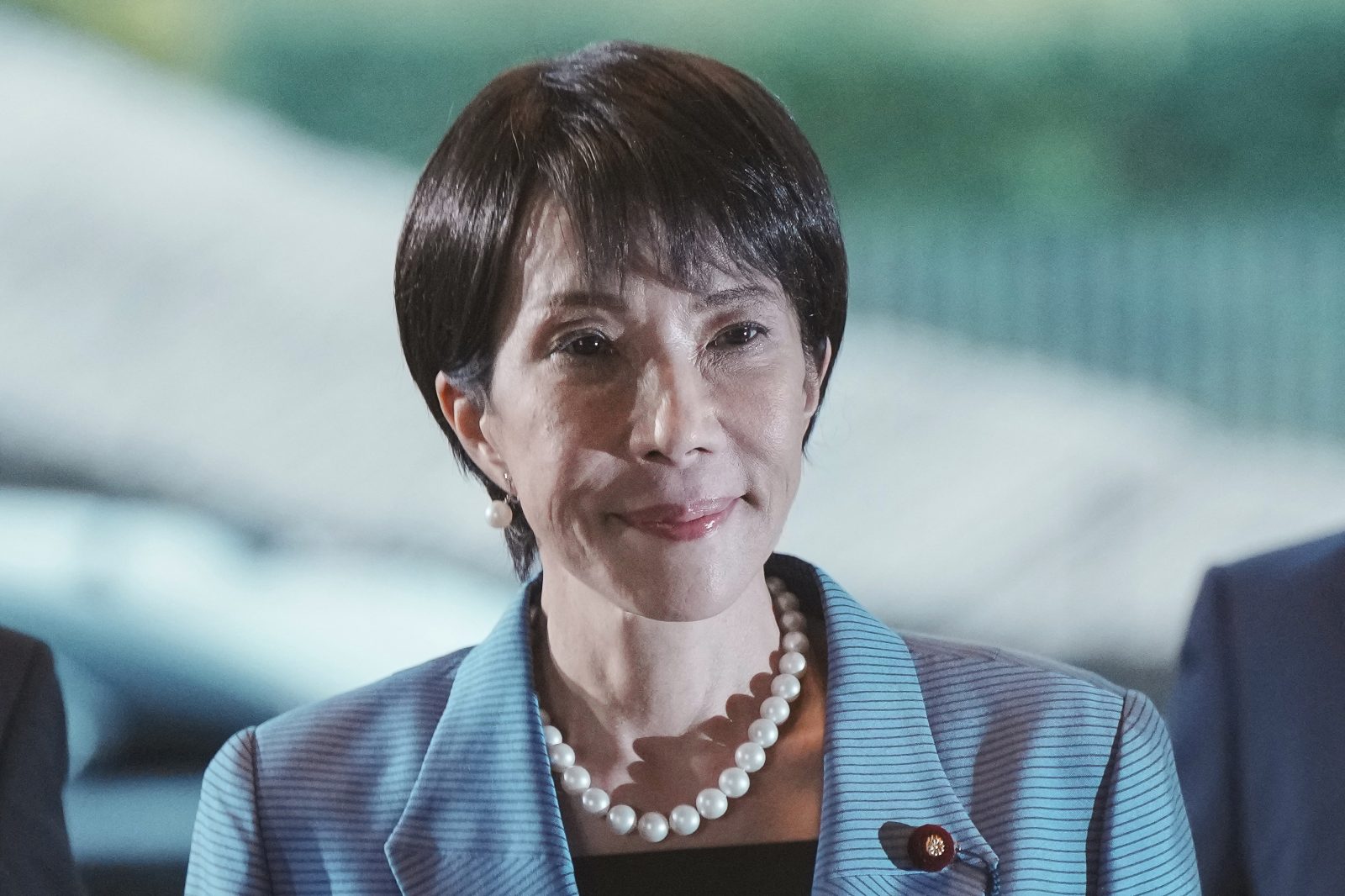
For Japan, Vietnam is the crux of securing regional supply chains and maritime stability. Through its OSA, Japan is now providing non-lethal equipment and training to the Vietnam Coast Guard, which helps Vietnam patrol its EEZ, where it faces challenges from China.
Without a clear military partnership, Japan reduces Vietnam’s risk of a Chinese response in its contested areas by providing support. This twin-track approach with Japan permits Vietnam to increase its defense preparedness without, hopefully, causing much anxiety in China, with whom it has important economic ties.
Malaysia is an important partner for similar defense engagement for Japan. There are suggestions that Malaysia should also seek high-quality naval assets. under Japan’s OSA, including coastal surveillance radars and maritime patrol aircraft, both of which will help reduce operational blind spots in the Strait of Malacca and the South China Sea.
Such augmentation would allow Malaysia to improve its maritime surveillance, strengthen its strategic partnership with Tokyo, and better patrol its EEZ in the SCS, which is contested by China but could then become a shared interest for Japan. Malaysia’s EEZ is important to Japan’s energy security, as ships from West Asia pass through this part of the South China Sea.
A major question for Japan is how to ensure that its forward steps in defense cooperation with individual ASEAN countries do not divide ASEAN into pro-Japan and other segments.
The Takaichi plan would therefore seek to include pro-Chinese countries such as Laos and Cambodia in enhanced defense engagement, with a primary focus on nontraditional threats, including HADR (Humanitarian Assistance and Disaster Relief), demining, and climate change. This would bring Japan, which pursues the free and open Indo-Pacific (FOIP), into countries that are entirely on the mainland and would not be seen as pursuing a mainly military coalition with some ASEAN countries.
If Japan emphasizes human security and development assistance in the Mekong region, it will be seen as better suited to the varied requirements of ASEAN countries. While Japanese ODA has been well-entrenched in ASEAN, emphasizing infrastructure and poverty alleviation, the rise of the OSA in the new forward steps toward defense engagement cannot be ignored.
The OSA is providing defense equipment and capability-building for the defense forces of friendly ASEAN countries. Currently, this has evolved into a platform for building a common regional defense network across the Philippines, Malaysia, and Vietnam, all of which use Japanese coastal radar systems and maritime surveillance capabilities. This ‘standardized language’ of maritime security eases the sharing of information and joint exercises undertaken by Japan with several ASEAN countries.
The parameters of Japan’s defense partnership with ASEAN countries are not necessarily confined to assistance: the resilience factor is built into them. Japan is ready to provide hardware and interoperability systems, as well as legal frameworks to support ASEAN member states. In reciprocity, Japan obtains a partner network committed to Japan’s favored international rules-based order, and, if effective, could generate a buffer zone from the first island chain to the large Indonesian archipelago.
The Takaichi visit to Australia and Vietnam, and the visit by the President of the Philippines, provided clarity that Japan is now ready to be part of building Indo-Pacific security arrangements, keeping ASEAN as its important core and thus respecting its centrality.
By such action, which is also pursued by India, for instance, Japan wants to contribute to the autonomy of ASEAN states, so that they do not necessarily have to choose between the US and China, but can develop their strategic autonomy in real terms in an increasingly difficult world.
At the 2026 Shangri-La Dialogue in Singapore, Japanese Defense Minister Shinjiro Koizumi committed to regional peace and stability. He rejected accusations of “new militarism” leveled against Japan and asserted that Tokyo remains strictly committed to a peaceful, defensive path.
- Gurjit Singh is a former Ambassador to Germany, Indonesia, and Ethiopia; ASEAN; and the African Union Chair; a member of the CII Task Force on Trilateral Cooperation in Africa; and a Professor at IIT Indore.
- This is an Opinion Article. Views Personal of the Author
- Follow the author on Twitter (Now X)