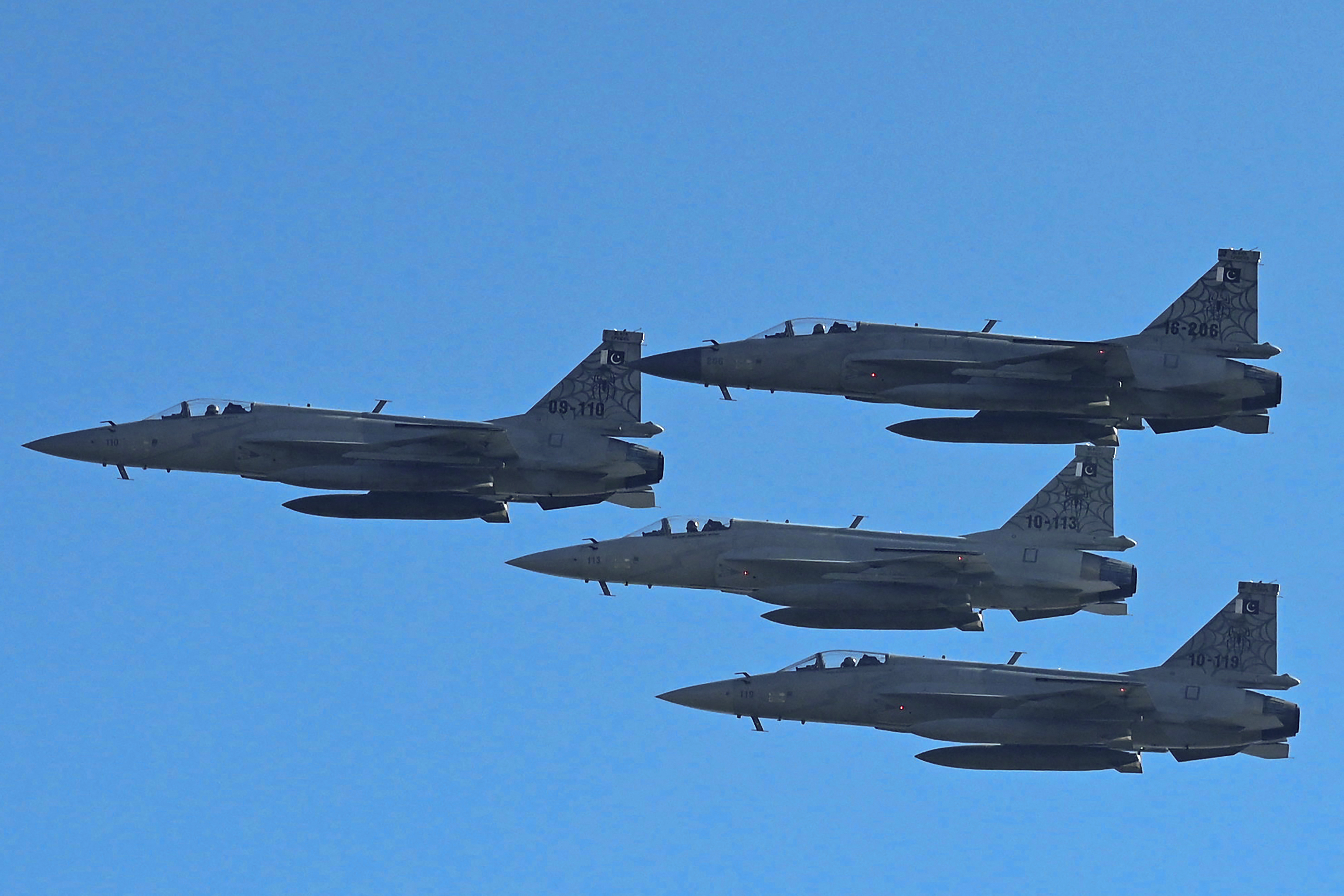
During the four-day war between India and Pakistan in May 2025, New Delhi exploited Pakistan’s lack of geographic depth, striking as many as 11 air bases across the country’s length and breadth.
Pakistan’s elongated, narrow shape leaves it with minimal territorial depth. Pakistan’s maximum east-west width is approximately 1,125 km (700 miles) at its widest point, meaning that most of the country lies within the strike range of India’s long-range missiles.
In the aftermath of the war, Prime Minister Narendra Modi himself highlighted Pakistan’s lack of geographic depth and its implications for the country’s military. Terrorists “will not have even one inch of space to hide,” Modi warned, adding that “no place will be safe for terrorists, not even under Pakistan Army’s shelter.”
Pakistan’s geographic vulnerability was also juxtaposed with India’s geographic advantages, including a larger landmass and greater territorial depth.
India’s maximum east-to-west width is approximately 2,933 km (1,822 miles), more than double that of Pakistan’s.
Pakistan is acutely aware of this imbalance.
During a private dinner in Tampa, Florida, in August 2025, Pakistan Army Chief Asim Munir issued strong warnings to India, saying that during the next conflict, Pakistan would target India from east to west. His remarks were meant to convey to New Delhi that it should not get any misplaced sense of security due to its larger landmass.
In fact, since the May 2025 war, Pakistan has tested multiple long-range missiles, including Abdali, Fatah-4, Taimoor, and Fatah-II.
However, there is another way by which Islamabad can turn India’s strategic advantage into its strategic vulnerability. Indeed, Ukraine is already demonstrating to the world how a country’s size can become its strategic vulnerability.
Ukraine’s Deep Strikes Inside Russia
In February 2022, when Russia launched its full-scale invasion of Ukraine, Moscow enjoyed a key advantage over Kyiv.
While Russia’s long-range missiles could reach every part of Ukraine, the longest-range ballistic missile in Kyiv’s arsenal was the Soviet-era OTR-21 Tochka-U (SS-21 Scarab B), which had a range of only 120 km.
Therefore, Ukraine was unable to target most of the Russian cities.
Much to Kyiv’s dismay, it soon discovered that even Western countries were not keen on transferring it long-range missiles capable of striking deep inside Russia.
The US flirted with the idea of transferring Tomahawk cruise missiles to Ukraine, and Germany considered transferring the Taurus cruise missile; however, both countries balked in the end for fear of provoking Moscow.
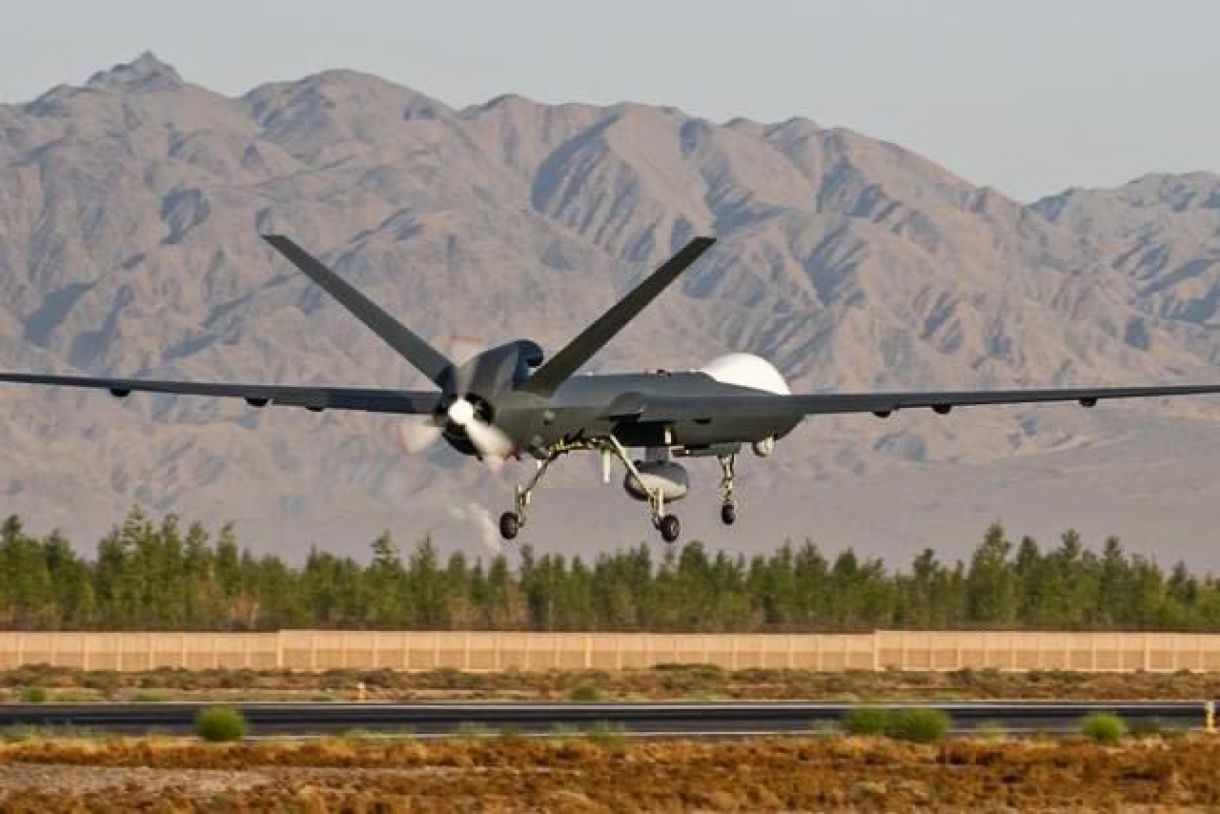
Ukraine has recently started using its newly inducted FP-5 Flamingo cruise missile, which has a range of 3,000 km; however, Kyiv’s weapon of choice for striking deep inside Russian territory has been long-range drones.
Following the three-day ceasefire between Russia and Ukraine (May 9-11), both countries set new records for drone launches in a single day, clearly indicating that Moscow and Kyiv used the ceasefire to stock up on drones.
Russia launched a record-breaking barrage of 1,567 attack drones over a two-day period between May 13 and May 14, 2026. Ukrainian President Volodymyr Zelenskyy confirmed that this relentless assault, accompanied by dozens of missiles, continued almost uninterrupted to overwhelm air defenses.

Ukraine, in turn, launched its largest overnight drone attack on Moscow in more than a year on 16-17 May, launching over 600 drones and killing at least four people in Russia.
Ukrainian forces hit multiple Russian military targets, including a Tor air defense system in Belgorod, a Yastreb counter-battery radar, communications nodes in Donetsk and Zaporizhzhia, oil terminals, and logistics depots in Crimea and Kherson.
Ukrainian drone strikes reportedly also destroyed a rare Beriev Be-200 amphibious aircraft and a Ka-27 helicopter at Yeysk airbase, along with a Tor-M2 system and ammunition storage facilities. The attack also included hundreds of drone attacks in Moscow, killing three people in the Russian capital and setting off huge fires.
Notably, Moscow is not only over 600 km from the Ukrainian frontline but also one of the most well-defended sites in all of Russia, with the greatest concentration of air defense systems.
Ukraine has now demonstrated an ability to strike deep inside Russia in a sustained manner.
These precision strikes, conducted thousands of kilometers deep inside Russia and far from the frontline, demonstrate five critical capabilities: superior intelligence gathering, long-range drone technology exceeding 1,000 km, and advanced guidance systems — including AI-powered navigation in GPS-denied environments, high-bandwidth satellite connectivity, and low-latency first-person-view (FPV) control for terminal-phase accuracy.
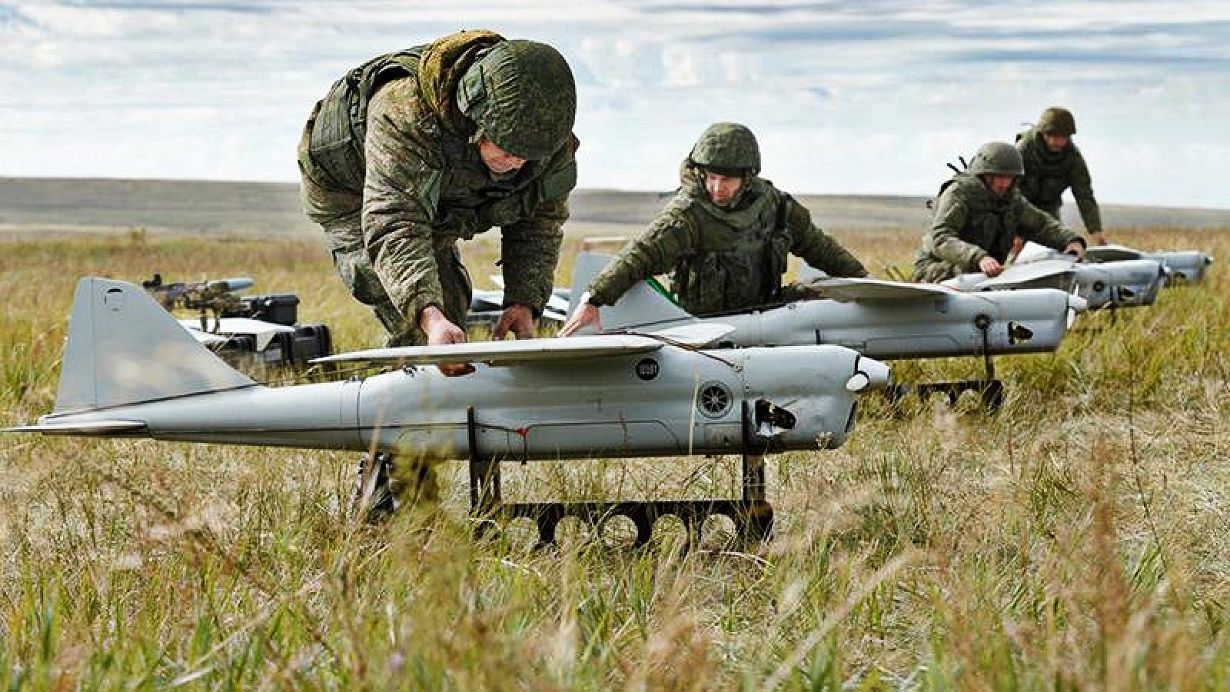
According to a defense commentator, former Indian Air Force fighter pilot and an EurAsian Times columnist, Vijainder K Thakur, “Slow-flying Ukrainian drones penetrate deep into Russian territory using nap-of-the-earth (NOE) flight profiles and evasive routing to avoid air defenses and visual detection.”
“They reportedly use the Starlink low-latency communications network for remote piloting when required, and GPS for navigation. Whenever GPS or Starlink signals are denied, the drones temporarily revert to AI-based autonomous machine-vision navigation. After flying hundreds — sometimes over a thousand — miles, they are remotely piloted into their targets with pinpoint accuracy.”
To execute these long-distance strikes, simply having long-range drones is not sufficient.
Ukraine also needs real-time intelligence for safe routing, which is provided by Western space and airborne-ISR assets, military-grade GPS, and Starlink signals for low-latency connectivity.
Many of the Ukrainian drones are now seen flying with Starlink terminals.
This satellite connectivity allows a remote drone operator to control a drone on the front lines or even hundreds of kilometers inside Russia, while he sits at a safe location somewhere deep inside Ukraine.
During Operation Spiderweb last year, Ukraine demonstrated how this strategy could be exploited to devastating effect. Ukraine smuggled drones inside Russia, and then remotely flew these drones into Russian strategic bombers.
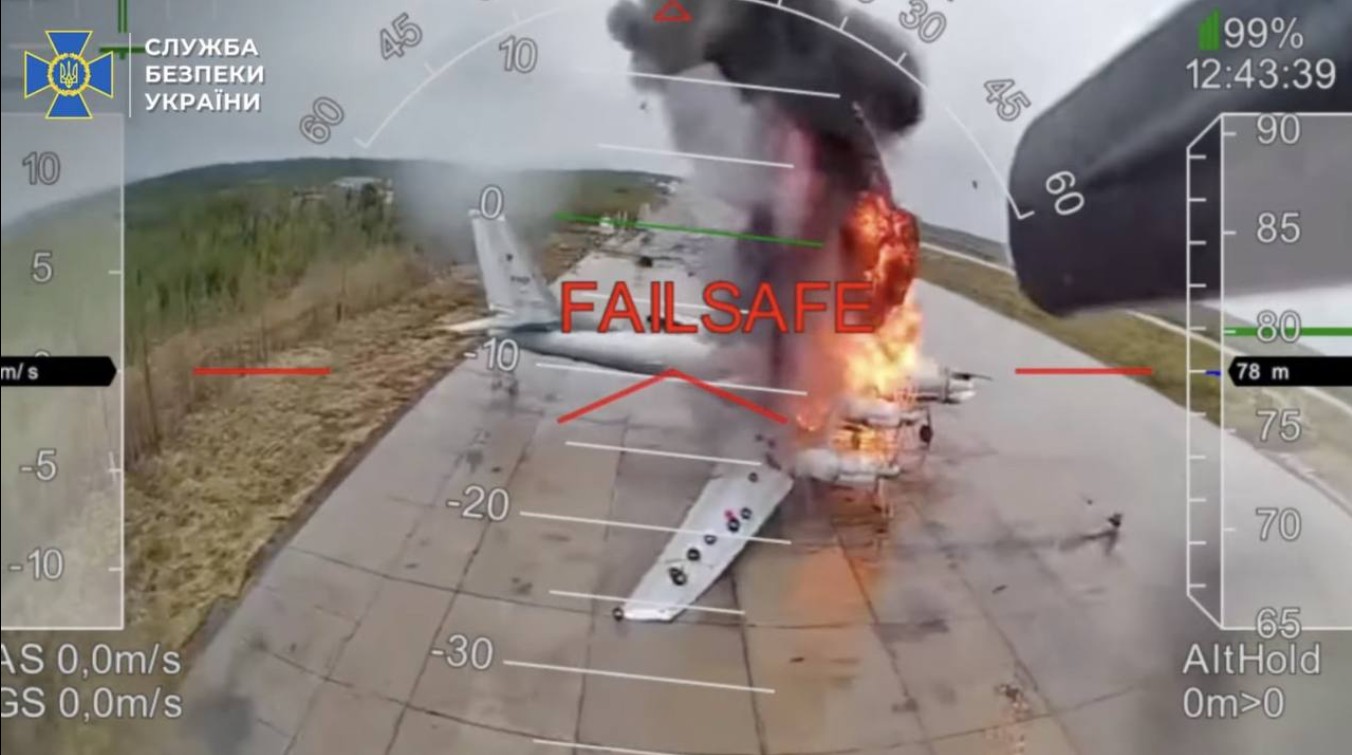
Israeli company XTEND, whose systems are widely used by the IDF, has demonstrated that its FPV drones can be flown from another continent despite significant latency.
The American drone MQ-9 Reaper could be controlled from virtually anywhere in the world.
Therefore, with low-latency satellite connectivity, distances and larger landmasses have become irrelevant. Even a country that lacks long-range precision missiles could strike its enemies from thousands of miles away.
Iran also used its drones to hit Israel, which is nearly 2,300 km away from Iran.
Ukraine also showed how a country’s larger landmass could be used against it, turning it into a strategic vulnerability. The larger the landmass, the greater the area that needs protection by air defense units. On the contrary, the smaller a country is, the easier it is to defend with multi-layered air defense networks.
This is why Israel could be defended better against incoming drones and missiles than a country as large as Russia.
Ukraine exploited Russia’s larger size to create yawning gaps in the deployment of air-defense assets. Ukrainian drones used unconventional and evasive routes to reach Moscow unnoticed.
For a country the size of Russia, it is practically impossible to defend the complete airspace with a network of air defense assets.
Furthermore, by using nap-of-the-earth (NOE) flight profiles, the drones could even penetrate airspace well defended by air defense units.
India needs to study the Ukrainian strategy minutely and draw the right conclusions from it.
In the next India-Pakistan conflict, Pakistan is more likely to use long-range drones for deep strikes inside India.
Pakistan could employ long-range stealth drones, flying them in NOE profiles, using unconventional routes to penetrate Indian airspace, leveraging Chinese ISR assets for real-time updates on Indian defensive measures, navigating via BeiDou satellite signals, and remotely piloting them for terminal-phase guidance via China’s low-latency communications satellites.
While the strategic thinking in Indian defense and security circles is dominated by Pakistan’s possible acquisition of China’s latest J-35A stealth fighter jets, it is the long-range drones connected to low-latency Chinese communication satellites, and navigating via BeiDou satellite signals, that present a much more potent threat to India.
More crucially, this strategy could turn India’s geographic advantage into its strategic vulnerability.
Furthermore, while India is planning to buy five additional S-400 air defense batteries, no amount of air defense coverage can provide foolproof security against such a threat. For now, India must quickly devise a strategy to counter such threats.
- Nitin holds a double master’s degree in Journalism and Business Management from the University of Glasgow. He has over 20 years of global experience in Marketing & Communications, Journalism, and Digital Marketing, and has worked & traveled widely across Europe, the Americas, and Asia. Nitin is the Editor of the EurAsian Times.
- THIS IS AN OPINION ARTICLE. VIEWS PERSONAL OF THE AUTHOR.
- He can be reached at editor (at) eurasiantimes.com