As part of Beijing’s ambitions to send humans to the Moon by 2030, China successfully launched its crewed Shenzhou-23 spacecraft aboard a Long March 2F rocket from the Jiuquan Satellite Launch Center on May 24 and completed a rapid automated docking with the Tiangong space station just hours later.
China is “steadily” building operational experience for “sustained occupation” of its Tiangong space station, and year-long missions are an important step towards future lunar and potentially deep-space ambitions, Richard de Grijs, an astrophysicist and professor at Macquarie University, said.
The main challenges will involve long-term effects on humans, including bone density loss, muscle wasting, radiation exposure, sleep disturbances, behavioral and psychological fatigue, Richard de Grijs said.
It appears a new Cold War is unfolding, one where the stakes are dramatically higher, and the battlefield now extends to the Moon and beyond. However, unlike the Cold War space race, this race has no defined finish line. Rather, the modern-day space race is characterized as an enduring competition for long-term strategic positional advantage in space.
In this high-stakes race to dominate space, the United States and China are the primary contenders. Any meaningful advantage in this competition will grant them the power to shape global norms, standards, and legal frameworks in outer space for decades — if not centuries — to come.
To dominate this space race, the US must put boots on the moon, establish a military base there, and capture territory, argues a provocative new policy paper by the Mitchell Institute.
The paper warns that despite the presence of treaties like the 1967 Outer Space Treaty that bans weapons of mass destruction in orbit and forbids all military activities, such as weapons testing and bases, on the Moon and other celestial bodies, the competition for control of lunar resources and territory will likely reach a “tipping point, at which time the modern-day space race could turn into conflict.”
“The anarchic nature of the Moon combined with China’s record of belligerent use of hard power yields a predictable future where United States lunar interests are put at risk,” the paper warns.
To counter this, it is time for the United States to commit the time, consideration, actions, and resources needed to prevail in this contest, it suggests.
“When territorial conquest, the potential for economic gain, and national interests overlap, societies seek to establish favorable norms and standards and do so using various degrees of hard power. Accordingly, hard Power will ultimately matter in this new space race.”
However, for this objective, the US will have to overturn nearly 70 years of a consistent national space policy that separates NASA’s civil from military space activities under Title 10, as well as Washington’s almost 60-year stance as a champion of the 1967 Outer Space Treaty (OST) that prohibits territorial claims and military occupation of the moon and other celestial bodies.
The paper is based on two premises.
First, the country that wins this space race will define the global norms in space for decades, and that space domination will translate into tangible power benefits on Earth as well. Also, the exploitation of lunar resources is a critical first step toward future habitation of space.
Secondly, China’s civilian lunar research program is a ruse for military occupation of the lunar surface. Beijing, the paper warns, will likely extend its “belligerent” behavior on Earth for territorial expansion to the moon as well.
The paper recounts how Beijing has enforced its expansive territorial claims in the South China Sea, which have no basis in international law, by using military means.
“These activities will predictably extend to space habitation and lunar exploration,” it said.
China’s approach towards the Moon and the space beyond is best characterized by a speech given by China’s former General Director of lunar exploration missions, Ye Peijian.
“The cosmos is an ocean, the Moon is the Diaoyu Islands…If we can go, but don’t go, future generations will condemn us. Once others…have occupied, no matter how much you wanted to go, you couldn’t.”
In other words, China views success in the space race, including lunar habitation, as a means of controlling territory and the corresponding logistics routes — a Chinese Silk Road through space.
These Chinese actions will put future American space security at risk.
“China’s military-led human space flight progression is positioning the People’s Liberation Army to achieve strategic advantage in lunar access, infrastructure, and resources,” Kyle Puma, Mitchell Institute senior resident fellow for space studies, said.
Puma is not only the author of the paper but also a former Space Force colonel.
The paper also warns that the US is currently trailing China in the current Space Race.
“The United States should not underestimate the threat simply because it is not yet a highly visible one. China is a burgeoning space power, so much so that they stand a very real shot at winning the current race.
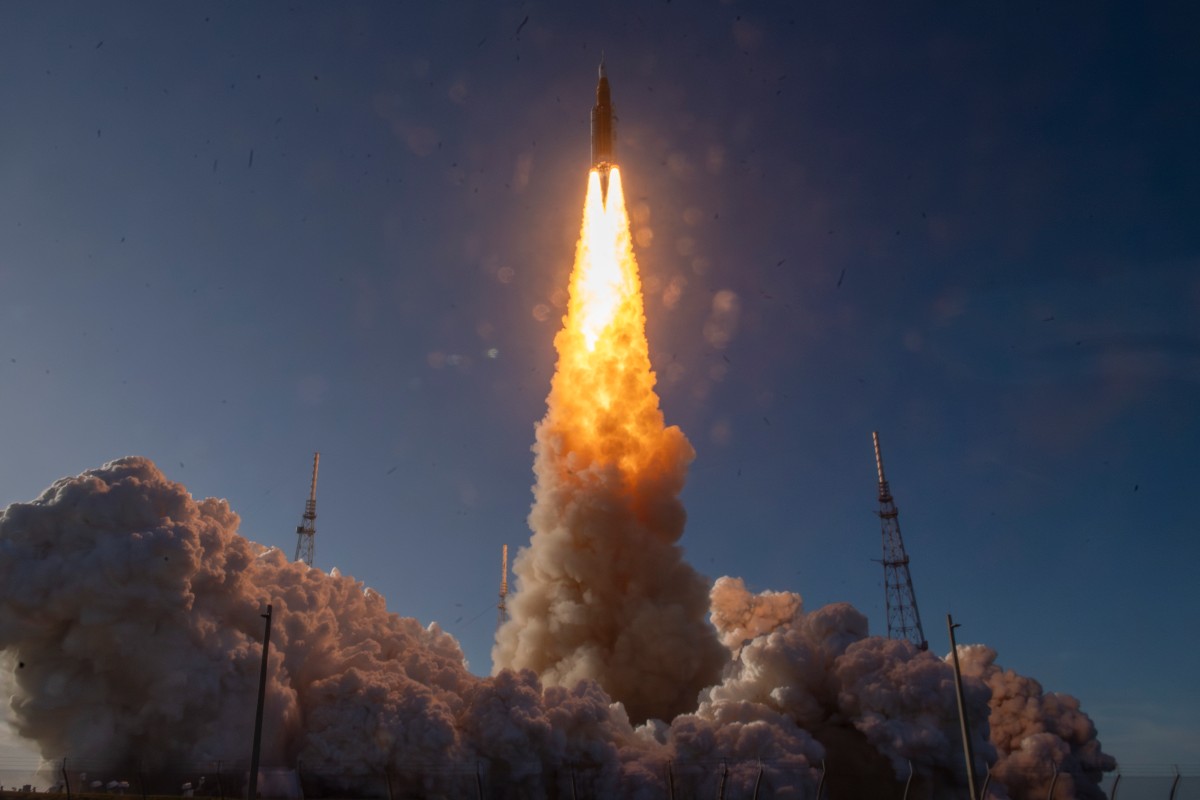
“They have created an aggressive strategy and are achieving their stated goals on time. The United States, by comparison, has repeatedly slipped schedules by several years for key space exploration objectives.”
The authors warn that, for China, space and moon exploration is “an extension of its territorial ambitions,” and that it does not follow the neat separation between the civilian and military realms that the US does.
In the US, the US Space Force pursues space superiority using remotely operated unmanned systems, while NASA oversees human spaceflight.
This dichotomy presents its unique challenges.
If some day, the paper warns, Chinese Taikonauts decide to challenge American interests by endangering civilians on the Moon or elsewhere extra-terrestrially, the US will not be in a position to resist these attempts, since the US Space Force has no trained soldiers in space and NASA astronauts are neither trained nor legally empowered (under Title 10) to use weapons to protect US interests.
“This would be akin to asking the merchant marines to execute the duties of a warfighting Navy — the lack of training, equipment, and legal authorities would impair the necessary actions for national security.”
The solution, the paper suggests, is to launch a military human spaceflight program under the aegis of the US Space Force.
“A military human spaceflight program will be crucial to establish and secure a strategic positional advantage in space, particularly as it pertains to the Moon… This will require properly trained, organized, and equipped Guardians in space who are empowered with Title 10 authorities,” it said.
The paper also compared the US’s changing attitude toward the space race with the Soviet Union during the 1960s and 1970s, and its ongoing attitude toward the space race with China.
“The U.S. understood it was in a major, must-win national security competition in its first space race with the Soviet Union. While the Soviet Union’s launch of Sputnik and additional early LEO achievements propelled them ahead of the United States, the nation engaged in a whole-of-nation effort to win the bigger contest—One focused on the Moon,” it said.
This dedicated national effort meant that not only did the US become the first country to land humans on the Moon, but it also remains, to this day, the only country to have done so.
However, in the wake of this tremendous achievement, the nation quickly lost interest in the space program, and the Nixon administration canceled the last three Apollo lunar missions.
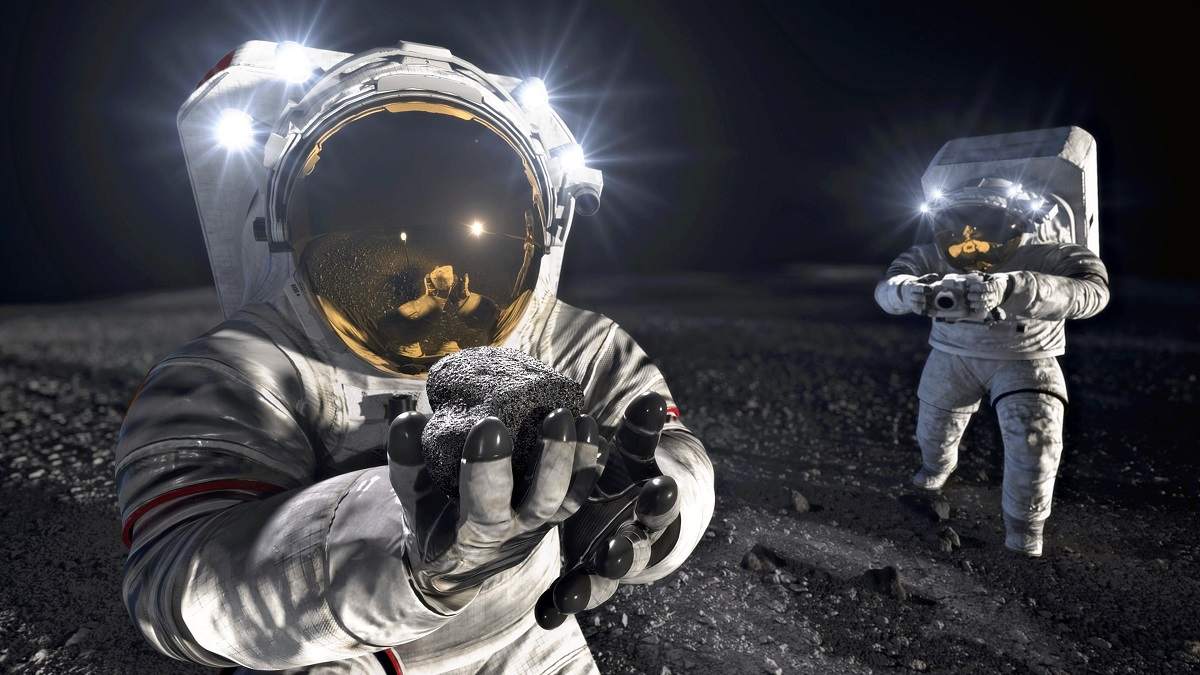
When the Soviet Union abandoned its manned lunar mission ambitions, the US also lost interest in the Space Race, since there was no longer any risk of losing an existential competition.
Ever since, the US space ambitions have been floundering. China, however, has clarity about its space ambitions and is progressing steadily, the paper warns.
To rectify the imbalance, a military human spaceflight program led by the U.S. Space Force is needed for the United States to sustain an ability to defend its national security interests in space over the long term, the paper recommends.
In other words, the US must plan to send trained US Space Force soldiers, rather than civilian astronauts, to the moon, and consider establishing military outposts in Space to defend US national security interests and counter China’s military maneuvers.
- Sumit Ahlawat has over a decade of experience in news media. He has worked with Press Trust of India, Times Now, Zee News, Economic Times, and Microsoft News. He holds a Master’s Degree in International Media and Modern History from the University of Sheffield, UK.
- VIEWS PERSONAL OF THE AUTHOR.
- He can be reached at ahlawat.sumit85 (at) gmail.com