In addition to the Su-57 stealth fighter, the Su-30MKI upgrade, additional S-400 IADS, and the Pantsir-SM1 short-range missile system, India and Russia have reportedly also renewed negotiations for a follow-up lease of an Akula-class nuclear submarine and the Voronezh M strategic radar.
Sources in the know reportedly told The Print that Russia has submitted proposals for a strategic submarine and radar.
Strategic Submarine Offer
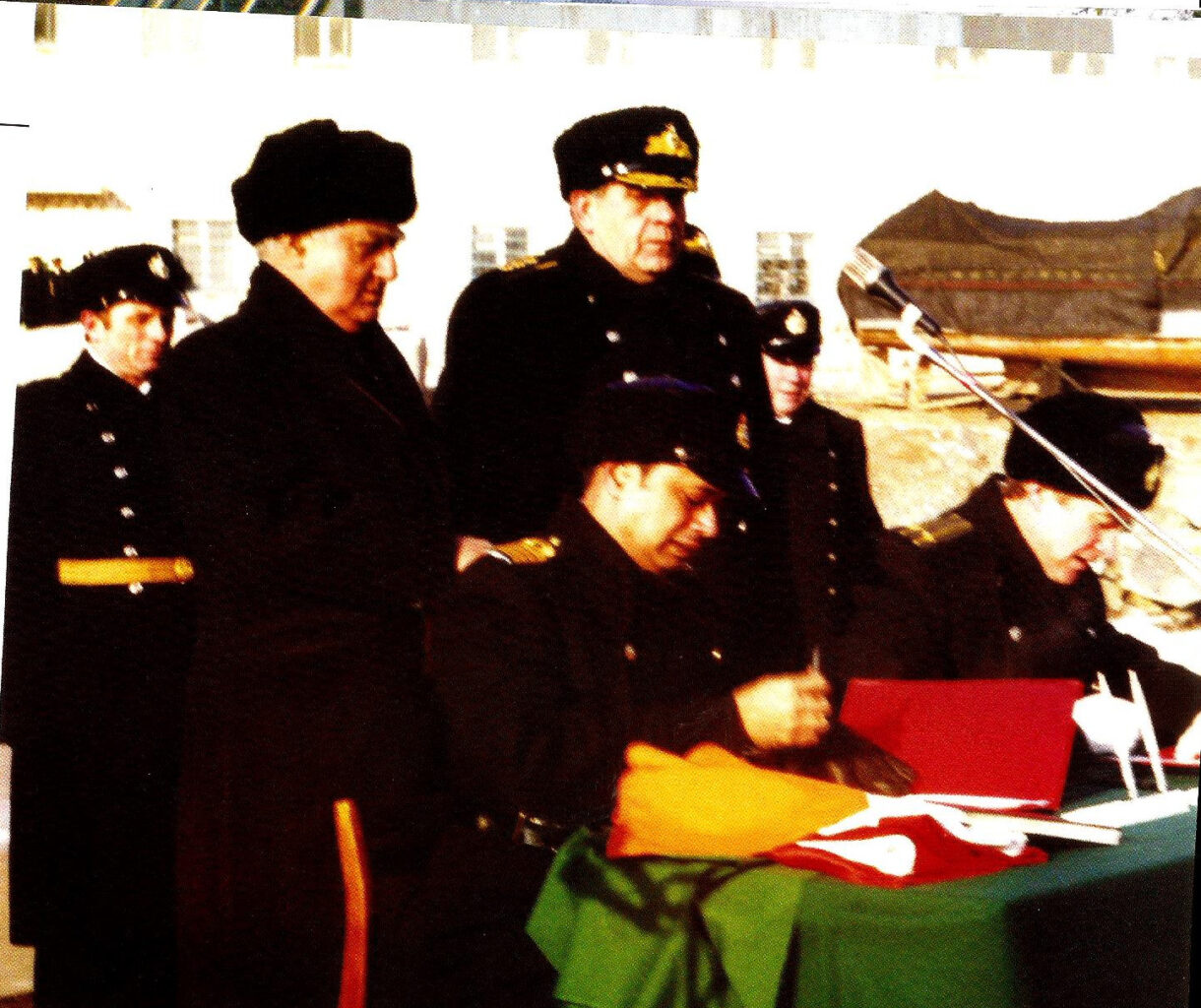
India had earlier leased the Akula-class submarine Nerpa for 10 years. The lease began on December 29, 2011, at the Bolshoi Kamen shipbuilding facility in the Primorye region (Far East), where the Nerpa was based. The boat was commissioned into the Indian Navy as INS Chakra in April 2012.
The submarine met with an accident in October 2017, when its sonar dome was damaged while entering harbor in Visakhapatnam.
Russian specialists fabricated replacement panels at their facility in Russia and brought them to Visakhapatnam for installation on the leased boat.
In 2019, India considered extending the lease but reportedly opted not to, citing the submarine’s condition.
India instead negotiated a fresh lease deal in 2019 itself for another Akula-class submarine named K-391 Bratsk. Delivery of the K-391 has slipped from earlier targets to 2028 due to refurbishment delays.
In December 2025, Bloomberg and NDTV had wrongly reported that India and Russia had signed a fresh ~$2 billion lease deal. India’s Press Information Bureau had fact-checked the claim and flagged it as misleading. No additional pact was concluded in late 2025.
The Print report likely also refers to the existing lease agreement, not a fresh Russian offer.
However, notably, around 2015, the IN had expressed interest in leasing a Yasen-class submarine as a follow-up to INS Chakra.
Strategic Radar Offer
In December 2024, India and Russia were reportedly finalizing a deal to install a Russian Voronezh ballistic missile attack early warning radar at Chitradurga in Karnataka.
Negotiations to acquire the Almaz-Antey-developed radar for $4 billion were reportedly advanced.
Voronezh Radar System
The Voronezh radar system can detect and track ballistic missile launches and stealth aircraft, and provide situational awareness of space objects.
These radars use phased-array technology, which allows rapid electronic beam steering, making them more efficient and less mechanically complex than older systems such as the Dnepr and Daryal radars. They are noted for their compact size, lower energy consumption, and shorter construction time than previous generations.
The Voronezh system’s strategic importance lies in its ability to cover vast areas. Key installations spread across Russia can cover Europe, Asia, and North America. This network provides Russia with a comprehensive shield against potential missile threats, ensuring national security through early detection and warning.
Types of Voronezh Radars
The Voronezh radars come in several variants, including Voronezh-M, Voronezh-DM and Voronezh-SM, each tailored for specific detection roles or improved performance.
Voronezh-M (VHF band): Optimized for detecting objects at long ranges but with relatively lower resolution. The radar is optimized to provide initial warning of medium- and long-range ballistic missiles.
Voronezh-DM (UHF band): Offers better resolution and tracking accuracy for smaller targets.
Voronezh-SM (L-band) and Voronezh-VP (planned upgrades): Enhanced capabilities for precision tracking and clutter rejection. The Voronezh-VP radar, which can track incoming ballistic missiles and even low-flying targets such as cruise missiles from great distances, provides the Russian Armed Forces with ample time to react.
The “VP” version combines both VHF and UHF for enhanced capabilities.
Data Fusion
The different Voronezh radars can work in unison as part of an integrated Missile Attack Early Warning System to generate a comprehensive radar picture of potential missile threats and space activity.
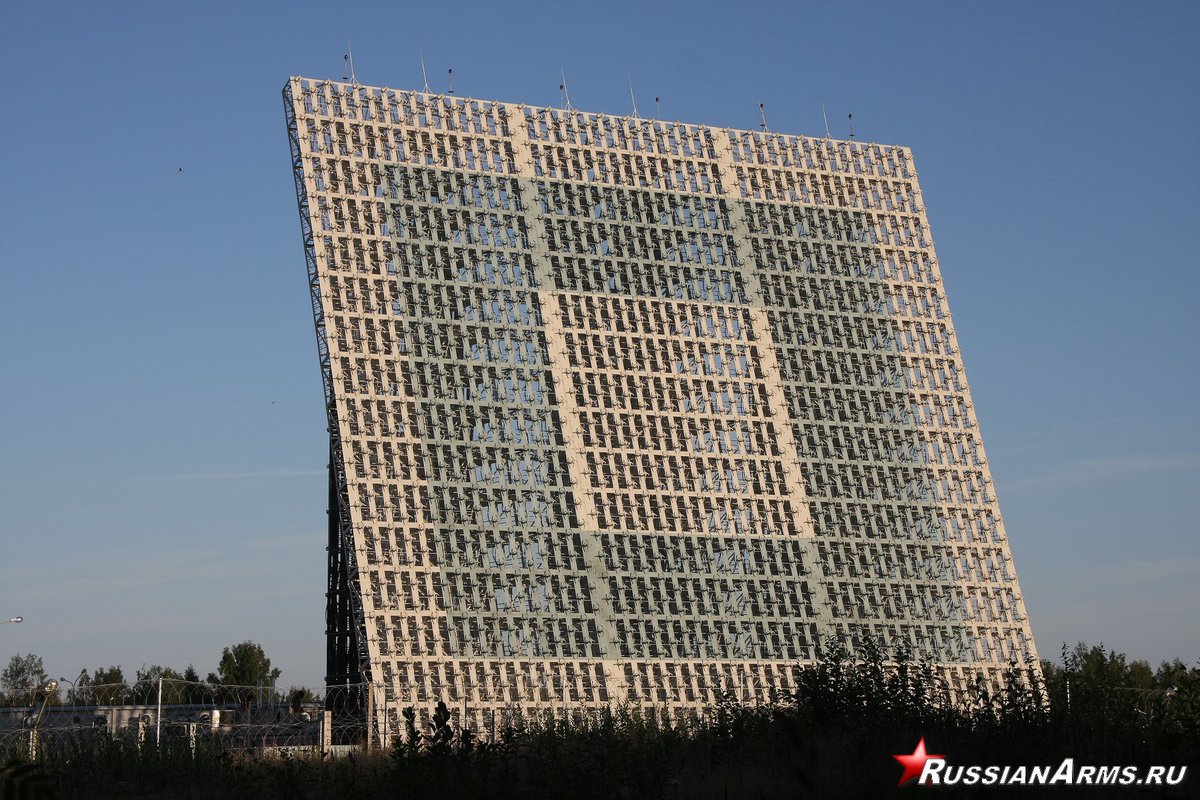
Each Voronezh radar operates independently, monitoring its assigned sector. The data collected—such as target trajectories, speeds, and classifications—is transmitted to a central processing hub.
The central system fuses this information with data from other radars, satellites, and sensors to create a unified, real-time radar picture of the entire monitored region.
Voronezh radars are strategically positioned to ensure overlapping fields of view, providing redundancy and improving detection accuracy.
Chitradurga Installation
It is likely that the radar proposed to be installed at Chitradurga is a Voronezh-M radar. Operating from Chitradurga, it would provide early warning of missile attacks from both China and Pakistan.
Russia has strategically placed Voronezh-M radars to monitor potential threats from Europe, Asia, and North America, providing critical early-warning information to the Russian Space Forces.
Voronezh-M radars are currently deployed in the Leningrad Region, Irkutsk Region and Altai Territory (Barnaul).
A Voronezh-M system is under installation in the Orenburg Region (Orsk).
Sensor Fusion
Working in unison, the three types of Voronezh radars can provide a credible counter-stealth capability.
The IAF needs counter-stealth detection and tracking capability because China has deployed stealth fighters and drones in large numbers, and Pakistan is set to acquire J-35A stealth fighters from China.
Multiband radars such as the Voronezh types and the Russian Nebo (Sky) series can detect and track stealth aircraft by fusing data from three radars, each operating in VHF (decimetric), UHF (metric), and L-band (centimetric) bands. The VHF system performs initial detection and cues the UHF radar, which in turn can cue the L-band or other centimetric-wavelength radar.
India may later acquire and install Voronezh-DM and/or Voronezh-SM systems closer to its borders with Pakistan and China and integrate them with the Voronezh-M system at Chitradurga. Alternatively, it could integrate locally developed UHF and L-band radars with the Voronezh-M.
Local Manufacture
According to Sunday Guardian sources, at least 60 percent of the system will be manufactured by Indian partners, which number over 50 and include startups.
The project is expected to generate substantial employment across the country.
On the Indian side, LRDE (Electronics and Radar Development Establishment), part of India’s DRDO (Defense Research and Development Organization), is handling the project.
Conclusion
India contracted the lease of a Russian SSN to replace INS Chakra in 2019, and the lease will start as soon as Russia hands over the submarine after refurbishment.
India’s quest for a credible missile and stealth-aircraft tracking capability is logical and urgent. The Russian Voronezh-M radar can give India formidable ballistic missile defense and counter-stealth capability.
Notably, Russia is the only country India can realistically turn to acquire the two strategic capabilities it seeks.
- Vijainder K Thakur is a retired IAF Jaguar pilot, author, software architect, entrepreneur, and military analyst.
- Views Personal of the Author
- Follow the author @vkthakur