With India-China border tensions back in the news over border skirmishes, the Indian Air Force (IAF) Chief said the PLA Air Force (PLAAF) “has a larger overall inventory” but that “its operations against India are constrained by the geography of the Tibetan Plateau.”
Explaining China’s vulnerability, Air Chief Marshal Singh said that the Tibetan Plateau’s “high-altitude airfields reduce payload, range and turnaround times.”
However, he said the IAF does not face these constraints. “The IAF, by contrast, operates from lower-altitude, all-weather forward air bases with full payload and shorter response times.”
Turnaround time is the time fighter jets take to refuel and rearm; response time refers to scramble, the urgent, high-speed mobilization and takeoff of fighter jets in response to an immediate air-defense threat.
In the 1962 India-China War, the Tibetan Plateau’s geography favored Beijing.
Tibet’s flat, arid terrain aided road construction, army mobilization, and logistics, and gave Beijing a high-altitude advantage, while the steep, rugged mountains and dense forests on the Indian side made road construction and troop movement challenging.
However, any future conflict between the two countries is likely to involve the Air Force, and both countries are ramping up their air bases near the contested Line of Actual Control (LAC), the de facto border between India and China.
The same altitude that gave Beijing an advantage during the 1962 land war could limit its aerial operations.
Indian vs Chinese Forward Air Bases Near the LAC
Air Chief Marshal Singh said the IAF operates from “lower-altitude, all-weather forward air bases,” which offer several advantages compared with Tibet’s high-altitude air bases.
The reality, however, is more nuanced, as some of India’s forward air bases in Ladakh sit at altitudes comparable to, or even higher than, China’s main Tibetan plateau bases.
India also operates the world’s highest airstrip at Daulat Beg Oldi (DBO), at an elevation of 5,064 meters. DBO, however, is not an air base but only an unpaved, gravel-and-sand-earth advanced landing ground (ALG), suitable only for certain kinds of aircraft, such as heavy-lift C-130J Super Hercules aircraft and rotary-wing helicopters.
For reference, USAF’s Hill Air Force Base in Utah sits at 1,460 meters, making it one of the highest major US Air Force bases.
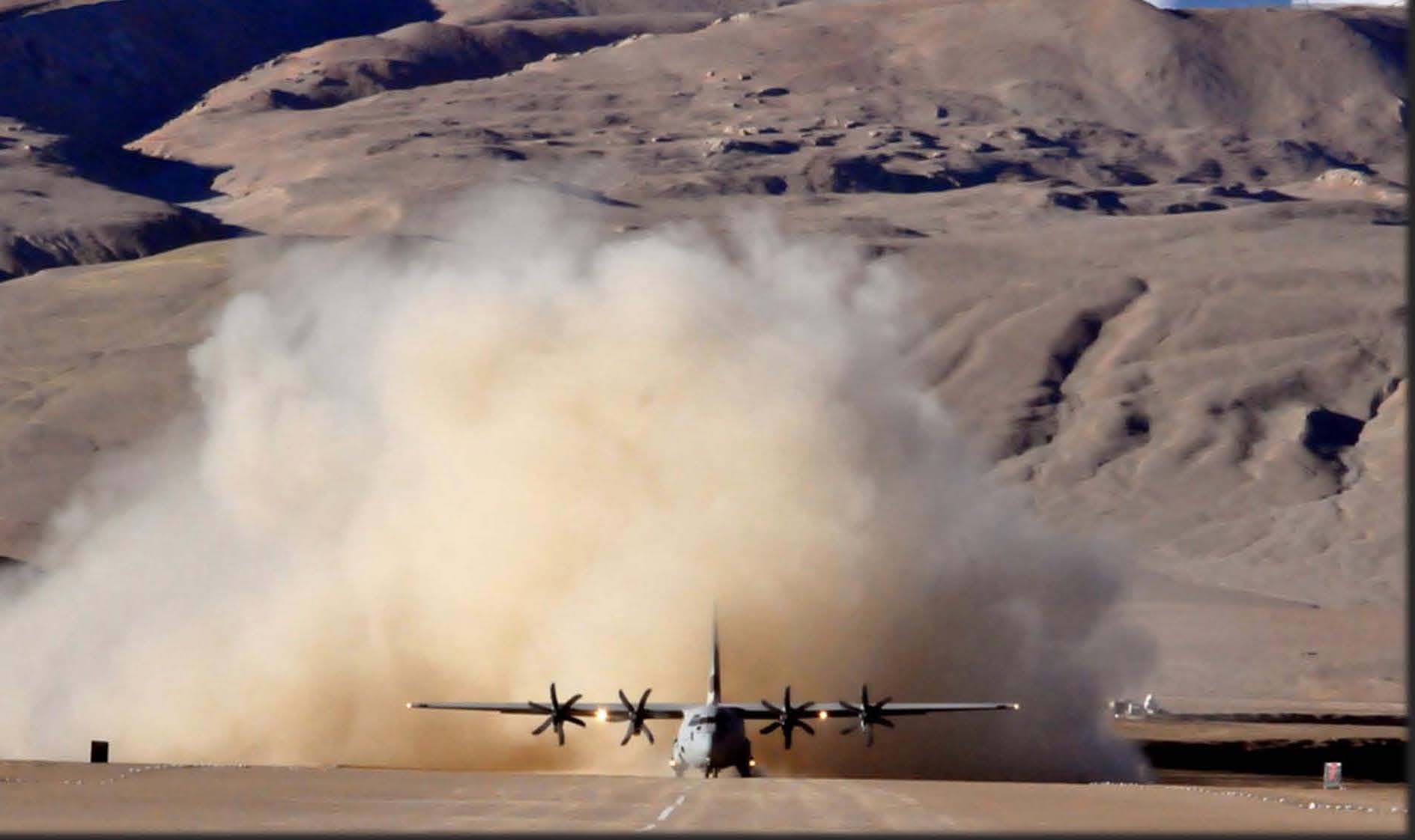
Similarly, Chushul ALG sits at an elevation of 4,267 meters.
The Nyoma Air Base, a newly upgraded frontline military airfield in eastern Ladakh commissioned last November, sits at an elevation of 4,175 meters. The Nyoma Air Base is just 23 to 35 kilometers from the Line of Actual Control (LAC) with China.
The IAF also operates the Fukche Advanced Landing Ground (ALG), another critical high-altitude tactical military airfield. Located in the Demchok sector of eastern Ladakh, it sits just 2.5 kilometers from the LAC with China, at an altitude of approximately 4,176 meters above sea level.
The Leh airfield, IAF’s main logistics base in Ladakh, sits at 3,256 meters.
These forward airstrips, ALGs, and airfields are comparable in altitude to some of China’s forward air bases in Tibet, such as Ngari Gunsa (4,274 meters), Shigatse Tingri (4,317 meters), Qamdo Bamda (4,334 meters), and Shigatse Peace (3,782 meters).
India’s advantage comes from its low-altitude bases, such as Ambala, Bhatinda, Sirsa, Hasimara, and Chabua. These bases are near sea level and within 500 kilometers of the LAC; however, given the vast expanse of the Tibetan plateau, the PLAAF’s rear air bases in the plains are much farther away and have limited utility when operating near the LAC.
For instance, Hasimara Air Base in West Bengal, home to the IAF’s Rafale Falcons Squadron, is about 150 kilometers from the LAC and sits at an elevation of just 104 meters. In comparison, China’s Shigatse Peace Air Base, nearly 100 kilometers from the LAC, sits at an elevation of 3,782 meters.
Similarly, Chabua Air Base in Assam is about 100 kilometers from the LAC and sits at an elevation of 112 meters above sea level. In contrast, the Qamdo Bamda air base in Tibet is equidistant from the LAC but sits at an elevation of over 4,000 meters.
The Ambala Air Base in Haryana, home to the IAF’s second Golden Arrows Rafale squadron, is about 500 kilometers from the LAC and sits at an elevation of 275 meters. However, the Lhasa Gonggar air base in Tibet is about 200 kilometers from the LAC but sits at an elevation of 4,275 meters.
The IAF’s Bathinda and Sirsa air bases are also about 500 kilometers from the LAC and sit at around 100 meters above sea level.
This means IAF warplanes can operate at full capacity with maximum payload and have shorter response and turnaround times, unlike the Chinese PLAAF.
The thinner air in Tibet nearly cripples PLAAF jets as they cannot operate with their full weapons payload.
Additionally, IAF bases in the plains remain operational year-round, whereas Chinese air bases in Tibet face limited operability during the harsh winter season.

Who Holds the Edge?
However, given the widening gap between the IAF and the PLAAF’s inventory, one could argue that Beijing has already neutralized the IAF’s geographic advantage.
The IAF is currently at a historic low in maintaining fighter squadrons. India currently has around 29 fighter squadrons, compared with a sanctioned strength of 42.5. Meanwhile, China’s PLAAF already has more than 1,800 combat aircraft, including nearly 300-500 fifth-generation stealth J-20 fighters.
Air Chief Marshal Singh’s remarks are no revelation and have circulated in Indian policy circles for over six decades.
In fact, during the 1962 Sino-Indian War, Prime Minister Jawaharlal Nehru’s decision not to use air power against Chinese forces remains one of the most enduring criticisms of his leadership.
Critics argue that had India used its Air Force, New Delhi could have turned the tide in its favor.
During the war, the IAF deployed only helicopters and transport crews to serve forward pickets in the then North East Frontier Agency (NEFA) and Ladakh.
The IAF’s use in offensive operations was considered but rejected for fear of escalation.
Many analysts argue that in 1962, the IAF had both qualitative and quantitative superiority over the PLA Air Force.
At that time, the IAF had nearly 22 combat squadrons and over 500 aircraft. The IAF’s mainstays included the Hunter Mk-56 fighter-bomber, Gnat interceptor, French-built ground-attack aircraft such as the Mystere and Toofani, Canberra bomber-reconnaissance jets, and the Vampire ground-attack jet.
Meanwhile, the PLA Air Force (PLAAF) operated the MiG-15, MiG-17, MiG-19, and medium-range IL-28 bombers.
India’s intelligence agency, the Intelligence Bureau (IB), cautioned that if India deployed the IAF for offensive operations, then in return, the PLAAF could bomb Indian cities, such as Kolkata (then Calcutta).
However, it did not account for the fact that PLAAF aircraft could reach targets in India only if they operated from airfields in Tibet, where high altitudes severely restricted their weapon-carrying capacity.
In contrast, IAF fighters could have carried full weapon loads from airfields in the plains of Assam and Punjab.
General B.M. Kaul, the commander of IV Corps in NEFA, alleged in his memoirs – The Untold Story (1967) – that the IAF was not used in close support of the Army.
Neville Maxwell, correspondent of The Times (London) in 1962, in his book India’s China War, says: “The government had decided that tactical air support with bombers on ground attack must be ruled out for fear of Chinese retaliation against Indian cities, especially Calcutta. Considering the terrain in NEFA and the limitations of the IAF, it is doubtful whether its intervention in a tactical role could have had much effect.”
However, many people still believe Nehru committed a blunder by overestimating the PLAAF’s capabilities and not paying attention to the geographic limitations the Tibetan Plateau imposed on Chinese aircraft operations.
- Sumit Ahlawat has over a decade of experience in news media. He has worked with Press Trust of India, Times Now, Zee News, Economic Times, and Microsoft News. He holds a Master’s Degree in International Media and Modern History from the University of Sheffield, UK.
- He can be reached at ahlawat.sumit85 (at) gmail.com