Does a non-nuclear state developing nuclear-powered submarines raise questions about global nuclear non-proliferation and result in strategically inflammatory situations?
This question is said to have assumed fresh significance following the revelation by IAEA (International Atomic Energy Agency) Director General Rafael Grossi during the IAEA Board of Governors meeting in Vienna on September 7 that South Korea “has formally notified the Secretariat of its intention to start consultations with the Agency on an arrangement pursuant to Article 14 of its comprehensive safeguards agreement (CSA).”
Article 14 of the CSA allows a country to use nuclear material for non-nuclear military purposes, such as nuclear-powered naval propulsion, under an arrangement with the IAEA.
Seoul has “reiterated its commitment to fulfill its obligations under the Nuclear Non-Proliferation Treaty (NPT), the CSA and the Additional Protocol” and has provided the agency with the relevant declarations, Grossi said, adding that he looks “forward to the continuation of our consultations in the same spirit of transparency.”
Under the NPT, non-nuclear-weapon states are prohibited from using nuclear material for nuclear weapons purposes and are required to accept IAEA safeguards to verify that their nuclear activities remain peaceful. Korea has a CSA with the IAEA as part of its nonproliferation obligations.
Grossi hopes a solid agreement between Korea and the IAEA will alleviate any proliferation concerns related to Seoul’s nuclear-powered submarine project.
Seoul has set a goal of launching its first nuclear-powered submarine in the mid-2030s and deploying it with the Navy in the late 2030s.
But South Korea is not alone among the non-nuclear countries working toward possessing nuclear-powered submarines.
Australia is partnering with the United States and United Kingdom as part of the AUKUS initiative to acquire conventionally armed, nuclear-powered attack submarines (SSNs). And calls in Japan for an SSN capability are growing.
In fact, Korean scholar Dr Jamie Kwong, in his recently published paper titled “In Pursuit of Nuclear-Powered Submarines: Australia, South Korea, And Japan,” has placed all three programs in a single comparative frame. According to him, a naval nuclear sea change is underway in the Indo-Pacific.
A fourth major non-nuclear country is also developing nuclear submarines. Brazil is building Latin America’s first nuclear-powered submarine, the Hull of Alvaro Alberto, at the Itaguaí naval complex near Rio de Janeiro. Built with French assistance, the submarine is expected to be completed in the early 2030s.
For 70 years, nuclear propulsion at sea was a club of five — US, Russia, UK, France, China (and later India). All six are nuclear-weapon states. If North Korea’s claim of possessing an SSN is true, one can understand that it is a nuclear-weapon power. That firewall now seems to be gone, with four major non-nuclear powers at the threshold of joining their club.
In fact, reports say Canada, which gave up its attempts in the 1980s, is considering reviving the program to build SSNs. Even Argentina is said to be studying options for nuclear-powered submarines.
So the question is not whether the club will expand, but how fast and with what consequences.
It is worth noting that a nuclear-powered submarine does not mean that it is nuclear-armed. It carries conventional torpedoes and cruise missiles, but it goes faster, farther, and stays submerged longer than a traditional diesel-electric submarine. It makes its own oxygen and water, never needs to surface, and can sustain 25+ knots submerged for months. With more maneuverability than a diesel-powered submarine, an SSN can better track, survive, and hold against an adversary’s boats.
Seeing greater threats from China, Russia, and North Korea in the Indo-Pacific, SSN advocates argue this capability can enhance a non-nuclear state’s ability to deter threats to its national security.
Australia asserts that its future SSN fleet will enhance its ability to “deter aggression and contribute to stability in the Indo-Pacific. SSNs are important for defending Australian maritime interests and strengthening conventional deterrence, Canberra argues, adding that they constitute “a blue-water capability” that may be especially relevant for Australia given its geography.
South Korea points out that SSNs strengthen deterrence against North Korean nuclear submarine threats by advancing Seoul’s deterrence and enhancing its punishment capabilities. In the wake of North Korea unveiling a nuclear-powered, missile-armed submarine in December 2025, which can hide in the Sea of Japan and threaten the entire Korean peninsula, South Korea’s strategic elites argue that only SSNs can provide a “highly survivable deterrent” and counter Pyongyang’s threats.
Proponents of Japanese SSNs also cite their deterrence value in calling for a program, particularly amid China’s naval expansion in the region. Augmenting Japan’s existing diesel submarine fleet with SSNs, they argue, could “maximize deterrence,” as the boats’ endurance and speed would give Tokyo greater operational flexibility. Relatedly, many advocates cite the acquisition of nuclear-powered submarines by Japan’s neighbors as further reason for Tokyo to acquire its own capability.
Brazil’s motive is similar but South Atlantic in nature. Its National Defense Strategy states that denying access to the South Atlantic and protecting the Amazon and Blue Amazon — 4.5 million sq km of maritime zone with oil — requires a submarine that can cross the Atlantic without refueling and stay submerged under surveillance. For Brasilia, SSN is about being a global power.
As pointed out earlier, a nuclear-powered submarine does not mean that it is armed with nuclear weapons. But some critics say a country with an SSN is prone to make nuclear weapons. After all, Brazil ran a secret program to build nuclear weapons during its military dictatorship in the 1970s and 1980s. The civilian government officially ended and dismantled this program in 1990.
Article 21 of the Brazilian Constitution restricts all nuclear activity strictly to “peaceful purposes”. But then, the point here is that Brazil does have the capacity to go nuclear.
Similarly, the EurAsian Times explained once that there is substantial support among South Koreans for nuclear weapons (around 70% in opinion polls). There exists a powerful school of thought in South Korea that argues that without nuclear weapons, it will become a slave of a nuclear North Korea.
In brief, nuclear critics point out that SSNs can contribute to a state’s nuclear weapons latency. Indigenously enriching uranium for the boats’ reactors may subsequently advance a state’s ability to develop nuclear weapons at some future date. And since non-nuclear states are legally permitted to remove nuclear material from international monitoring for use in an SSN, there is an even greater risk that a state could pursue an SSN program as cover for illicit nuclear weapons activities.
Against this background, it is worth noting that until AUKUS was signed among Australia, the US and the UK in 2021, Article 14 of the IAEA Comprehensive Safeguards Agreement — which allows a non-nuclear-weapon state to withdraw nuclear material from safeguards for “non-proscribed military activity” like naval propulsion — had never been used.
Now, Australia and South Korea both have CSAs with the International Atomic Energy Agency that permit them to develop SSNs. Article 14 of their respective CSAs allows for the use of nuclear material in a “non-proscribed military activity.”
This provision allows them to remove nuclear material from traditional safeguards mechanisms and use it as fuel for submarine reactors.
There are different paths to using nuclear material to build SSNs. Australia’s path uses weapons-grade HEU — 93-97% enriched. Because US and UK naval reactors are fueled with HEU, Australia never needs to refuel. It is really very convenient for a non-nuclear state with no enrichment. But it means transferring a huge quantity of weapons-grade material that will then be outside IAEA safeguards while at sea, courtesy of the Article 14 arrangement.
Brazil’s path uses low-enriched uranium (LEU)—under 20%, similar to civilian power plants —enriched domestically under IAEA safeguards, then fabricated into fuel. Fuel fabrication needs special arrangements to protect the secret design, but safeguards maintain continuity of knowledge. IAEA has said it will suspend safeguards only on material actually in military use, not on enrichment.
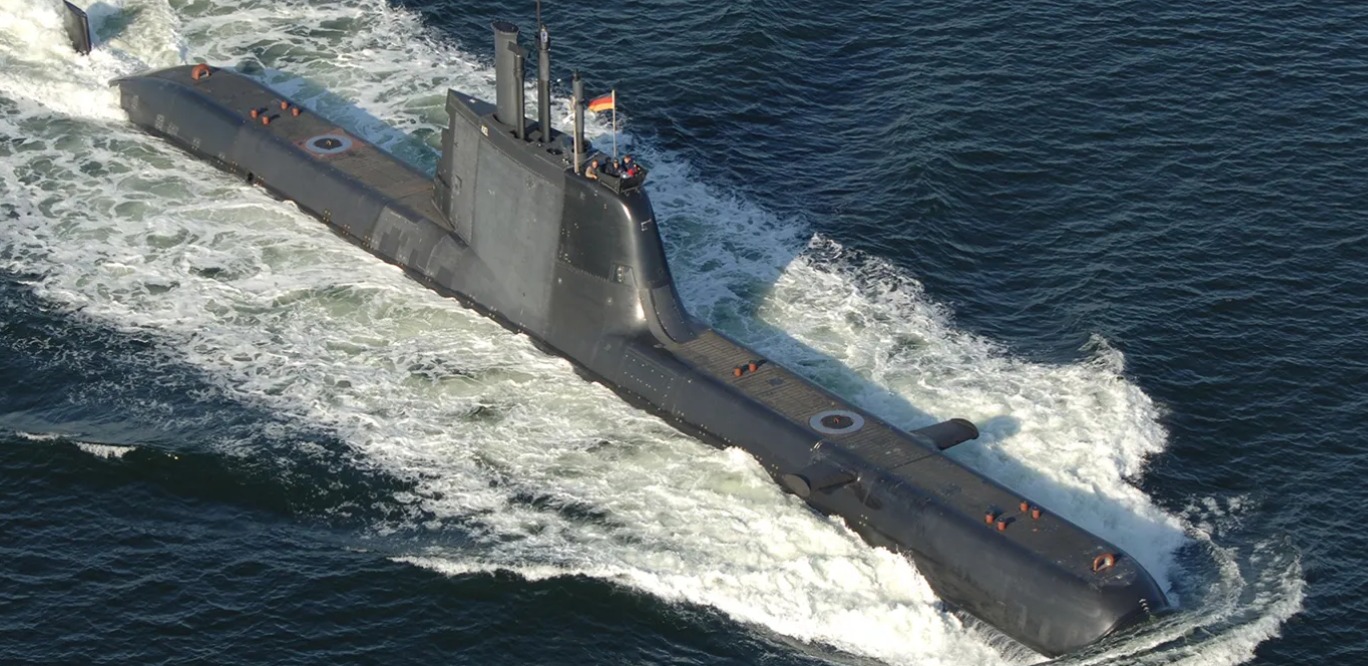
South Korea seems to be on a middle path. It has discussed with the IAEA small modular reactors with 19.5% high-assay LEU that could be adapted for naval use. Apparently, Seoul has a dubious enrichment history; in 2004 it was revealed that Korean scientists had enriched uranium without declaring it to the IAEA.
As a result, the IAEA now emphasizes transparency. That is why, at a press conference in June, Grossi said that a solid agreement between Korea and the IAEA should alleviate any proliferation concerns related to Seoul’s nuclear-powered submarine project.
Overall, from a nonproliferation perspective, LEU is less risky, but it requires refueling infrastructure and more frequent dockings, exposing technology. HEU is proliferation-sensitive but operationally simple. The US State Department says that AUKUS will set a “precedent of the highest possible level of safeguards,” but China has argued that AUKUS violates the spirit of NPT.
So much so that Tariq Rauf, the former Head of Verification and Security Policy Coordination at the International Atomic Energy Agency, did exactly warn that the IAEA Board of Governors should revoke Paragraph 14 of the comprehensive safeguards agreement.
In an analysis following the 2021 announcement of the AUKUS security partnership, Rauf argued that invoking this clause to facilitate Australia’s acquisition of nuclear-powered submarines risks opening a “Pandora’s box” of nuclear proliferation.
However, the IAEA lacks the legal mandate to prohibit non-nuclear-weapon states from building or acquiring nuclear-powered submarines, because the NPT permits the non-explosive military use of nuclear material.
As a result, nuclear propulsion is no longer equated with nuclear weapons. It is being reframed as a conventional strategic mobility tool for middle powers who live in big oceans and amid dangerous neighborhoods.
- Author and veteran journalist Prakash Nanda is Chairman of the Editorial Board of the EurAsian Times and has been commenting on politics, foreign policy, and strategic affairs for nearly three decades. He is a former National Fellow of the Indian Council for Historical Research and a recipient of the Seoul Peace Prize Scholarship.
- CONTACT: prakash.nanda (at) hotmail.com