Besides being accused of harboring Iranian aircraft to shield them from US-Israeli attacks, Pakistan has also been accused of running a coordinated anti-Israel campaign to sour ties between Washington and Tel Aviv.
Although Pakistan has repeatedly been lauded by US President Donald Trump for brokering a ceasefire with Iran (which was also accepted by Israel) and mediating peace talks, the dynamic between Israel and Pakistan remains strained.
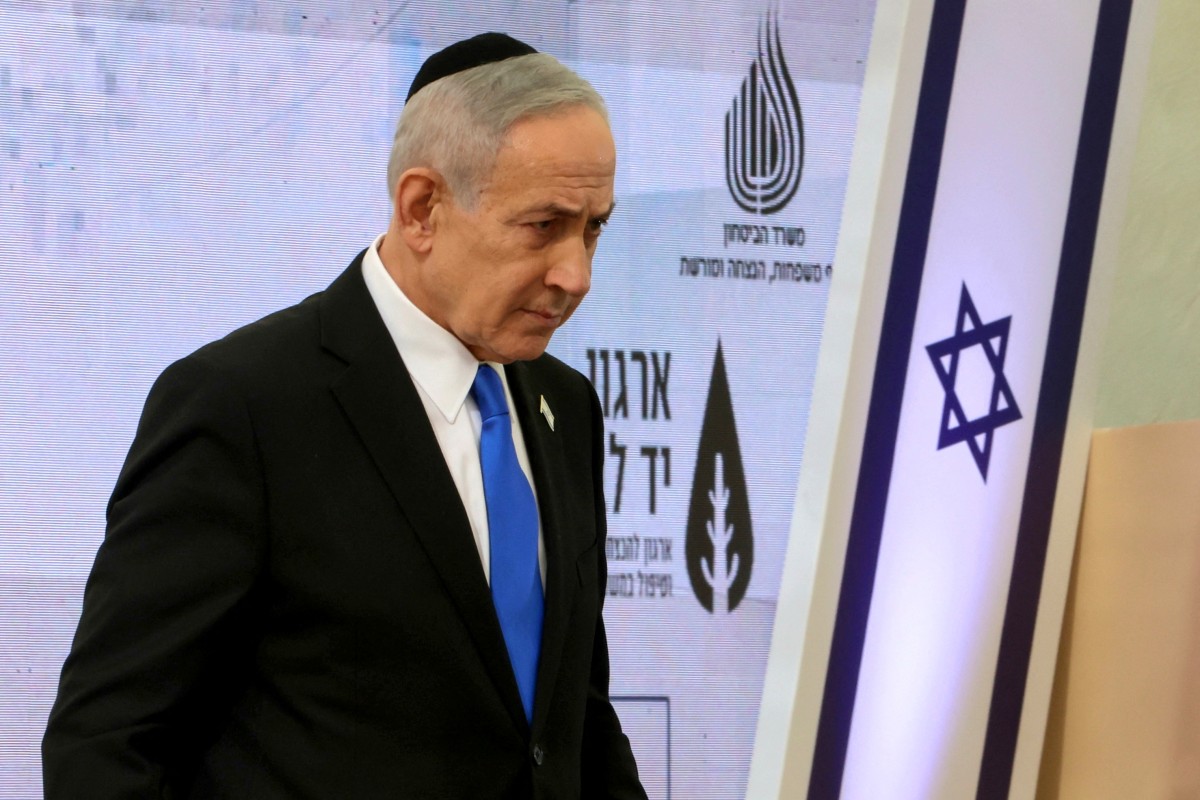
Speaking at an interview with CBS News, Israeli Prime Minister Benjamin Netanyahu accused foreign bot farms with links to Pakistan of fuelling anti-Israel sentiment among young Americans in a campaign on social media. The influential Israeli leader, who has managed to curry favor with major global actors, alleged that his country was left exposed in an online battle that he described as the “eighth front” in the interview.
Netanyahu alleged that some foreign actors were manipulating social media platforms to weaken public support for Israel in the United States and cause a rift in the time-tested US-Israel alliance.
Citing an example, Netanyahu said, “You hear a text message, ‘I’m a red-blooded Texan. I always supported Israel, but I can’t stand what they’re doing. I’m turning against Israel, “And then, you trace the address to some basement in Pakistan.” “That’s something that has hurt us badly,” the Israeli Prime Minister added.
When asked whether Israel was losing the battle on social media, Netanyahu stated that there had been evident attrition in support among younger Americans. However, in the same vein, he attributed the erosion to a coordinated disinformation campaign on social media rather than to organic opinions. “We have seen the deterioration of the support for Israel in the United States almost 100% with the geometric rise of social media,” he said.
He further went on to say that some (unnamed) ’authoritarian states’ and organized online networks were deliberately trying to manipulate public discourse in America through “bot farms” and “fake addresses,” not just with an aim to discredit Israel but also to fracture American society.
“They’re not only attacking Israel. They’re attacking America. They’re trying to create ruptures within America. Not only between America and Israel [but] between Americans and Americans,” he said.
Not just that, he alleged that foreign influence operations had infiltrated American universities and academic curricula.
He was probably referring to protests against Israel’s war in Gaza, which has reportedly left 70,000 people dead. Additionally, Israel’s attack on Lebanon, the war on Iran, and its bombings in Syria have all attracted global criticism and mobilized American youth.
Pakistan has never officially recognized the state of Israel, and all Pakistani passports include the inscription that the document is valid for travel to all countries around the world, except Israel. In fact, it has followed a consistent anti-Israel policy, voted against Israel in the United Nations, and maintained a streak of harsh criticism of Tel Aviv’s actions.
“Israel is evil and a curse for humanity,” Pakistan’s Defense Minister Khawaja Asif said on X while condemning Israel’s bombing of Lebanon that killed scores of civilians last month. “First Gaza, then Iran, and now Lebanon, bloodletting continues unabated,” he added.
In response, Netanyahu’s office said Asif’s remarks were akin to calling for Israel’s destruction. “Pakistan Defense Minister’s call for Israel’s annihilation is outrageous,” Netanyahu’s office said in a statement. “This is not a statement that can be tolerated from any government, especially not from one that claims to be a neutral arbiter for peace.”
Both countries remain at odds despite being close partners of the United States since the end of the Cold War. However, this may be the first time that Netanyahu has so ferociously accused Pakistan of running an online shadow war against Israel, targeting the youth of the United States.
Before this, India, Pakistan’s biggest rival and a close partner of Israel, had accused Islamabad of indulging in disinformation and social media manipulation.
“Pakistani media outlets and bot-driven troll farms circulate manipulated visuals for anti-India propaganda, with the ISPR coordinating these efforts, aided by diaspora influencers, various Chinese social media accounts, and Turkey’s public broadcaster, TRT World. Pro-Pakistani media outlets such as Qatar’s Al Jazeera network and Turkey’s Anadolu also provide support,” states ORF, a New Delhi-based think tank.
During Operation Sindoor, India accused social media accounts linked to Pakistan of launching a coordinated disinformation and propaganda campaign to smear the Indian Armed Forces and control the narrative. “Pro-Pakistan social media handles and even influential political figures are deliberately spreading fake news, fabricating stories of miraculous military victories and heroic retaliation that simply do not exist,” India’s Press Information Bureau (PIB) said at the time.
The Pakistan Air Force claimed it had downed five Indian fighter jets, including the French-origin Rafale multi-role aircraft, using PL-15E air-to-air missiles fired from the J-10CP. These claims, presented without any evidence, were then amplified by online bots whose origins could only be traced to Pakistan.
The move, according to experts, was aimed at lending legitimacy to the unverified claims by employing repetition.
Pakistan was not condemned for running an Anti-India campaign. In contrast, it was rewarded by Trump for going along with the narrative that the US President stopped the four-day war between India and Pakistan—a claim that has been repeatedly refuted by New Delhi.
Pakistan’s Mediator Role Under The Scanner
Pakistan’s role as a mediator between the US and Iran has come under fire after a report in CBS News claimed that Pakistan allowed Iranian military aircraft to use its airfields, probably in an attempt to protect them from potential US attacks. The report stated that Iran sent multiple aircraft, including an Iranian Air Force RC-130 tactical transport aircraft, to Pakistan Air Force Base Nur Khan, days after the ceasefire came into effect on April 8.
Additionally, the report stated that Pakistan had arranged for an Iranian civilian aircraft to be stationed in neighboring Afghanistan.
Pakistan quickly responded to the CBS report, categorically rejecting the claims, as recently reported by the EurAsian Times.
“Pakistan categorically rejects the CBS News report regarding the presence of Iranian aircraft at Nur Khan Airbase as misleading and sensationalized. Such speculative narratives appear aimed at undermining ongoing efforts for regional stability and peace, “Pakistan’s Ministry of Foreign Affairs (MoFA) said in an official statement. “The Iranian aircraft currently parked in Pakistan arrived during the ceasefire period and bears no linkage whatsoever to any military contingency or preservation arrangement.”
However, the reports have already created discontent and suspicions among US lawmakers and officials.
Commenting on the report, US Republican Senator Lindsey Graham said, “If this reporting is accurate, it would require a complete reevaluation of the role Pakistan is playing as mediator between Iran, the United States, and other parties. Given some of the prior statements by Pakistani defense officials towards Israel, I would not be shocked if this were true.”
Graham is seen as one of the most influential figures in Trump’s circle.
“I don’t trust Pakistan as far as I can throw them. If they actually have Iranian aircraft parked in Pakistan bases to protect Iranian military assets, that tells me maybe we should be looking for somebody else to mediate. No wonder this damn thing is going nowhere,” Graham said later.
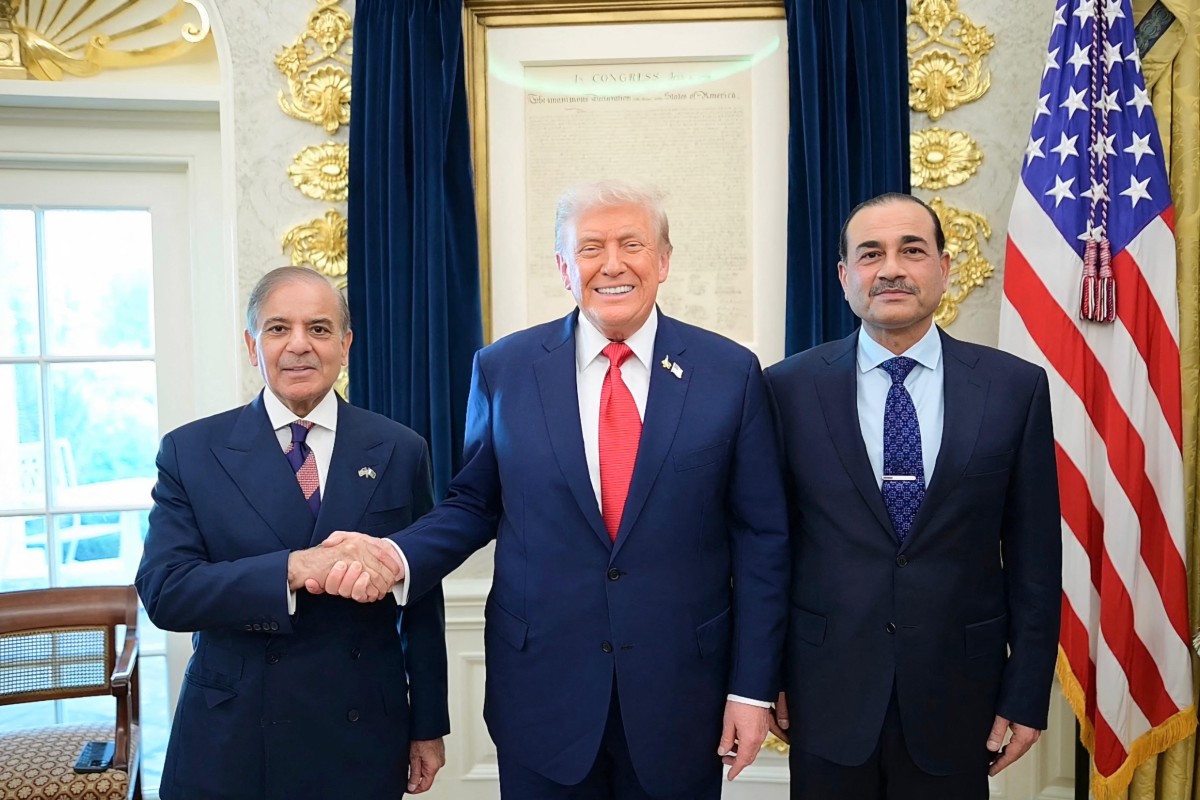
Intriguingly, the whole episode has had little effect on Trump’s perception of Pakistan, who clarified that he was not reconsidering Islamabad’s role as a mediator. “They’re great. I think the Pakistanis have been great. The field marshal and the prime minister of Pakistan have been absolutely great,” Trump told reporters, referring to Pakistan’s Army Chief Field Marshal Asim Munir and Prime Minister Shahbaz Sharif.
However, it has done little to calm the nerves in the administration.
Subsequently, another report quoted some officials in the Trump administration as saying that Pakistan had been putting forth “a more positive version of the Iranian position with the US than what reflects reality.” Further, the officials questioned whether Islamabad was even “aggressively conveying Trump’s displeasure.”
- Contact the author at sakshi.tiwari13 (at) outlook.com
- Follow EurAsian Times on Google News