The USA will remove Iran’s stocks of highly enriched uranium, regardless of the outcome of its talks with Tehran, US President Donald Trump said.
“And we will go with them, or without them. But we won’t have people shooting at us. Now, if we don’t make a deal, then we’re going to take them out militarily very harshly. And we’ll wait till we do that before we go, in which case we’ll have safety either way. If we make a deal that now we’re friendly, we’ll all go together. It’ll be our equipment. We’ll take it out and destroy it, whether it’s on-site or whether we take it off-site.”
Earlier, as EurAsian Times reported, the possibility of a high-risk ground operation to remove Iran’s highly enriched uranium (HEU) is reportedly gaining ground in both Washington and Jerusalem.
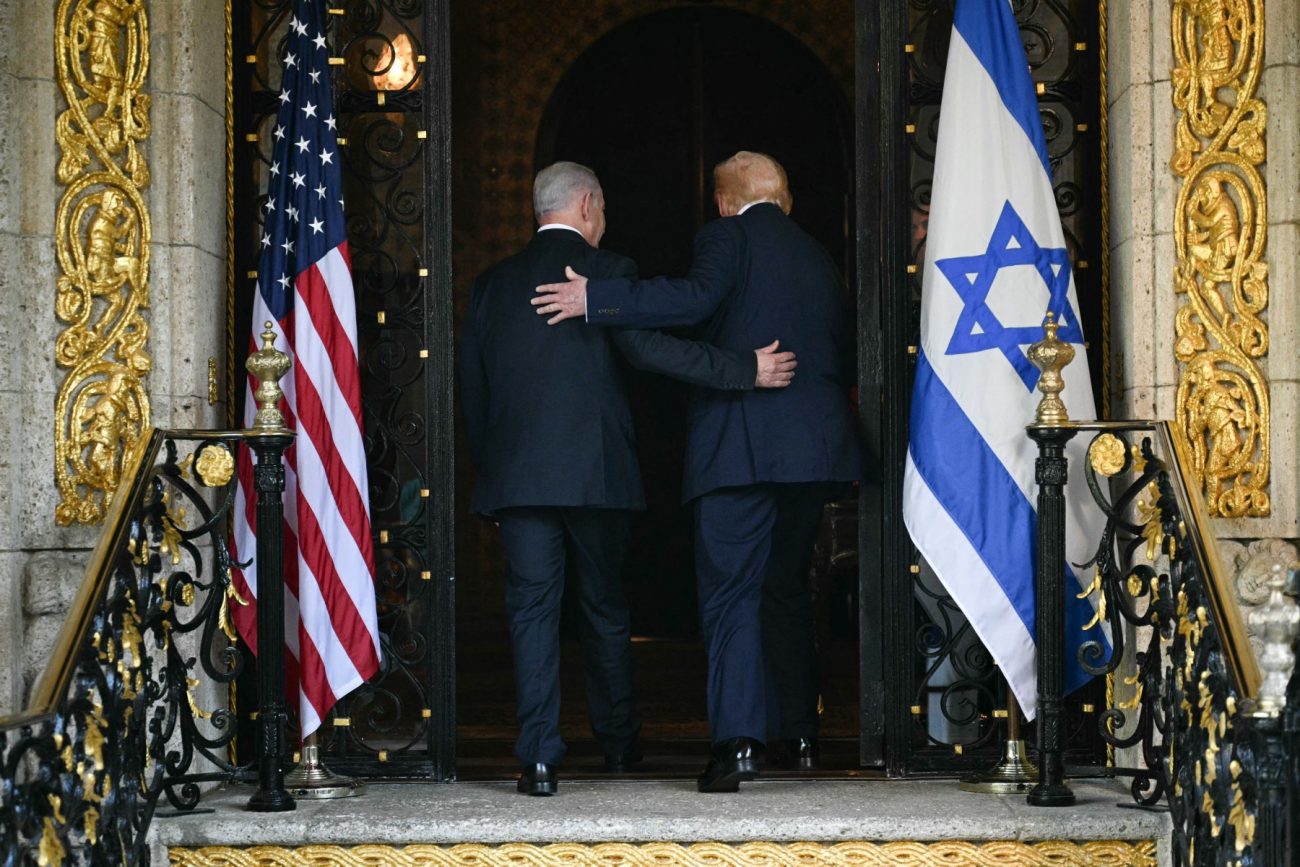
Earlier, President Donald Trump and Prime Minister Benjamin Netanyahu have alluded to the possibility of sending special forces into Iran to seize its enriched Uranium stockpile.
Trump had earlier warned that U.S. forces are watching the Iranian nuclear site closely and will kill anyone or anything that gets close to it. “We’ll get that at some point… We have it surveilled. I did a thing called Space Force, and they are watching that… If anybody got near the place, we will know about it — and we’ll blow them up,” Trump said.
Meanwhile, in an interview with 60 Minutes, Netanyahu was much more direct in his comments.
Asked how Israel and the US can secure the Iranian HEU, Netanyahu stated: “You go in, and you take it out.”
“With what? Special forces from Israel, special forces from the United States?” the interview host asked Netanyahu.
“Well, I’m not gonna talk about military means, but what President Trump has said to me, ‘I want to go in there.’ And I think it can be done physically. That’s not the problem. If you have an agreement, and you go in, and you take it out, why not? That’s the best way.”
Q: How do you envision the highly enriched uranium will be removed from Iran?
Netanyahu: You go in and you take it out.pic.twitter.com/mUmIeFoOFV https://t.co/9iJ5vn84hT
— Poshan wamutu (GMUIPE) (@PoshianW) May 10, 2026
On May 11, Axios reported that the Israeli government “wants Trump to order a special forces operation to secure Iran’s enriched uranium stockpile.” “Israeli officials say Trump is hesitant to order such an operation because it is highly risky,” the report added.
At the same time, there is no alternative to a ground operation after the attempt to destroy the Iranian Uranium stockpile by ground-penetrating munitions failed last year. In June 2025, the US launched 14 MOP GBU-57 … from seven B-2 Spirit bombers at four suspected Iranian nuclear sites.
In June 2025, the US launched 14 MOP GBU-57 Massive Ordnance Penetrator bunker-busting bombs from seven B-2 Spirit stealth bombers at Iranian nuclear sites, primarily Fordow and Natanz, as part of Operation Midnight Hammer.
However, as per US intelligence reports, the strikes failed to destroy the Iranian stockpile.
Iran is estimated to possess over 440 kg of uranium enriched to 60% purity, a level that is a short technical step from weapons-grade 90%. This stockpile, often stored at secure sites like Isfahan, is sufficient to theoretically create more than 10 nuclear warheads if further enriched.
Furthermore, the US-Iran War can not end unless Washington secures the Iranian HEU, making the high-risk ground operation in Iran inevitable.
As political leaders in Washington and military analysts at the Pentagon weigh the extraordinary risks of inserting special US and Israeli forces deep into Iran, a sobering yet relevant fact is that such operations to secure or extract nuclear material are not without precedent.
In fact, in the past eight decades, the United States has successfully led multiple covert and semi-covert missions to remove highly enriched uranium (HEU) or other weapons-grade nuclear material from vulnerable or unstable locations.
Operation Alsos (1944-1945)
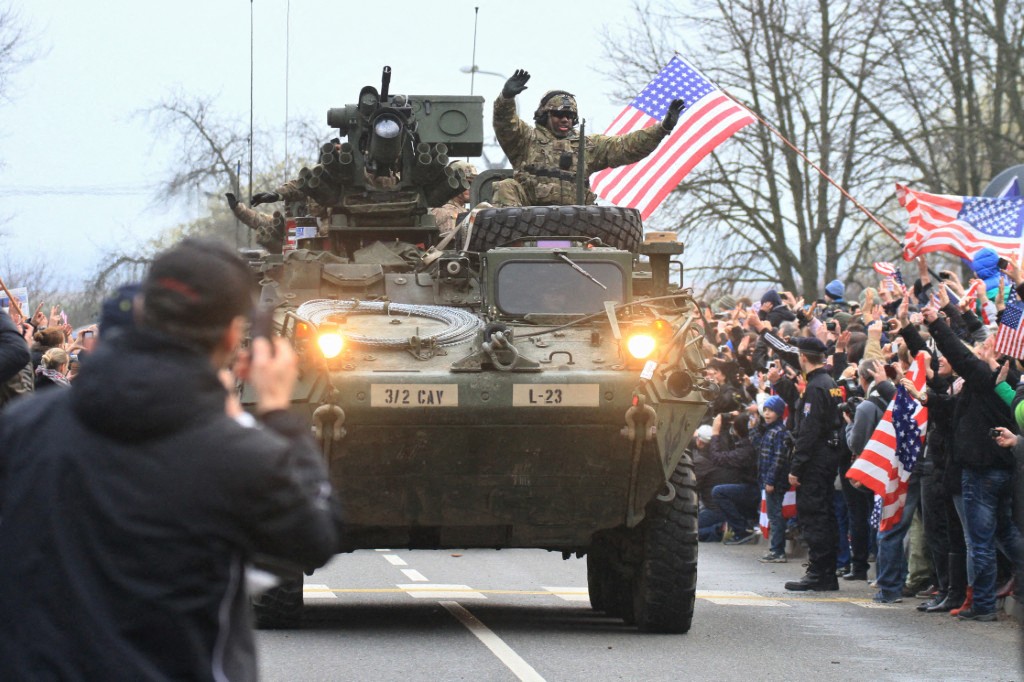
During the Second World War, the Allied forces landed in Normandy, France, in July 1944 and gradually moved towards Germany after liberating France and Italy.
Meanwhile, from the east, the Soviet Red Army was advancing towards Berlin after liberating Poland in July 1944.
Although the United States, Britain, and the Soviet Union were wartime allies against Nazi Germany, an intense rivalry developed between the Western Allies and the Red Army to be the first to reach Berlin.
Whoever captured the German capital first would secure not only a larger and more prestigious occupation zone, but also exclusive early access to the remnants of Nazi Germany’s secret nuclear program, its scientists, and its uranium stockpiles.”
It is worth noting that in 1944, the US was already working on its Manhattan Project to develop atomic bombs; however, the US was still waiting for a breakthrough.
Meanwhile, it was widely believed that Germany was years ahead of the rest of the world in developing an atomic bomb.
After all, uranium had been split for the first time in Nazi Germany in 1938, and German physicists such as Werner Heisenberg and Carl Friedrich von Weizsäcker were regarded as leaders in their field.
In 1944, the US started Operation Alsos, as part of Operation Manhattan, to send scientists, spies, and military officials to Europe along with its advancing army, with a two-fold objective: To get updated information on the progress of the Nazi atomic program and to capture German nuclear assets, uranium, heavy water reactors, and German scientists, before the Soviets could.
“There could be no question but that American troops must be the first to arrive at this vital installation (German nuclear sites), for it was of the utmost importance to the United States that we control the entire area that contained the German atomic energy activities…I was forced to initiate some drastic measures to accomplish our purpose,” Alsos mission leader General Leslie Groves was said to have said.
The Alsos mission entered Germany on February 24, 1945.
The Alsos teams seized over 1,100 tons of uranium ore from a salt mine near Stassfurt, heavy water, prototype reactors, thousands of research documents, and key German scientists associated with the nuclear program, before the Soviets arrived.
These nuclear assets were first transferred to the UK. However, much of it was ultimately diverted or used to support the US Manhattan Project.
In July 1945, nearly one year after starting Operation Alsos, the US conducted its first nuclear test in July 1945, and within one month of that test, the US used the atomic bomb in Japan.
Project Sapphire, 1994
In 1991, after the disintegration of the Soviet Union, there were renewed fears of nuclear proliferation.
One of the most vulnerable sites was the Ulba Metallurgical Plant in Ust-Kamenogorsk, Kazakhstan, which housed nearly 600 kg of highly enriched uranium, enough for roughly two dozen nuclear bombs.
The HEU was at risk of theft or diversion. There were also fears that countries like Iran and North Korea were interested in this HEU.
To secure this 600 kg of HEU, the US formed a 31-person Nuclear Emergency Search Team, which included specialists from the DOE and the Pentagon.
The team flew in secretly on a C-5 Galaxy aircraft.
The team spent more than four weeks (from October to November 1994), repackaging the material in extreme secrecy under harsh conditions, then airlifted it out to the Y-12 plant in Oak Ridge, Tennessee, for down-blending into low-enriched uranium under IAEA safeguards.
While the project was a joint effort between the United States, Kazakhstan, and the International Atomic Energy Agency (IAEA), it was still carried out covertly to avoid alerting other world powers.
The success of Project Sapphire bolstered the confidence of the US political leadership and military planners, who proved that a global nuclear menace could be neutralized by packing it up, loading it onto C-5 transport aircraft, and winging it 9,900 kilometers to the safety of American soil.
“The big lesson is we can solve the problem if we can move that material out of the country,” former US diplomat Andy Weber recalled. Had Tehran managed to get that material in the early 1990s, it would already have “a nuclear arsenal.”
However, the crucial difference is that in 1994, the Kazakhstan government was fully on board and had given consent to the US to secure the Uranium.
However, replicating this success in a hostile country with considerable military capabilities and a strong will to fight, and where the HEU is buried deep in the mountains, will be a high-risk proposition.
Similarly, in 2003, the US removed 55,000+ lbs of documents/components, including uranium hexafluoride, complete P-2 centrifuges and parts from Pakistan’s A.Q. Khan network, nuclear weapon design information, and 13–17 kg of highly enriched uranium fuel.
However, here too, the operation was conducted by the US forces with the full consent of the Libyan government, which in 2003 had agreed to dismantle its nuclear/chemical/ and biological weapons program.
Meanwhile, even as the US political and military leadership weighs its options to conduct a joint operation in Iran to remove its Uranium stockpiles, the US successfully removed nearly 13.5 kg of enriched Uranium from the shutdown RV-1 research reactor near Caracas, Venezuela, on May 10, with the help of the Venezuelan government and the International Atomic Energy Agency (IAEA).
In a joint effort with the Venezuela and IAEA support, the United States has safely removed and transported all remaining enriched uranium (about 13.5 kg, enriched to just above 20% U-235) from the shutdown RV-1 research reactor near Caracas. pic.twitter.com/2A6rqj0tFe
— Open Source Intel (@Osint613) May 10, 2026
The IAEA said in a statement that the Uranium had been “safely and securely transported by land and sea” to a facility in South Carolina after “a complex and sensitive operation.”
These precedents show that it is possible to secure and safely remove highly enriched Uranium from a foreign country to a safe location in the US or some third country.
However, the key variable is that in Kazakhstan, Libya, and Venezuela, the local government authorities were on board and had consented to the US operation.
Though Operation Alsos involved removing nuclear assets from a hostile country during an active war situation, that operation took place more than eight decades ago.
All military analysts are warning that, despite these historical precedents, repeating such an operation in Iran is fraught with risks and can end in a disaster for the US.
However, since both Trump and Netanyahu have made the Iranian Uranium stockpile a key pillar of their war goals, and Tehran is unlikely to agree to hand over its Uranium, it is challenging to see what other options the US and Israel have, except putting ‘boots on the ground’.
- Sumit Ahlawat has over a decade of experience in news media. He has worked with Press Trust of India, Times Now, Zee News, Economic Times, and Microsoft News. He holds a Master’s Degree in International Media and Modern History from the University of Sheffield, UK.
- Article Updated with New Information
- He can be reached at ahlawat.sumit85 (at) gmail.com