Israel has often stunned the world with its ability to pull off unbelievable covert intelligence operations behind enemy lines.
From the daring 1960 abduction of Nazi war criminal Adolf Eichmann in Argentina to Operation Wrath of God, where Mossad agents hunted down the perpetrators of the 1972 Munich Olympic massacre across Europe and beyond, its history is filled with audacious missions behind enemy lines that have become the stuff of legend.
However, in the last two years, Israel has executed a string of such operations that have not only revived its mythic reputation but also pushed the boundaries of modern intelligence warfare.
While the sophisticated pager explosions that crippled Hezbollah in 2024 impressed many, Israel’s latest exploits in the war against Iran are so audacious that they will redefine what’s possible in clandestine operations for decades to come.
For it is one thing to infiltrate your enemy’s ranks; it is quite another to operate secret warehouses in your adversary’s territory and use them to cripple the enemy’s air defense networks before launching opening air strikes.
That’s what happened in June 2025 during the 12-day war. Before Israeli jets pounded Iranian military installations, Mossad agents who had set up secret bases inside Iran, launched drone and missile attacks on Iranian air defense assets from inside Iranian territory.
Before Israeli jets penetrated Iranian airspace, the first line of the Iranian air defense network was already obliterated by Mossad agents from within Iran.
According to reports, Israel had deployed over 100 foreign agents in Iran before the start of the 12-day war in May 2025 and smuggled hundreds of heavy missiles and drones into the country to neutralize Iranian air defense systems before launching its air strikes.
A few months after the operation, Mossad even released videos of its agents operating behind enemy lines in Iran.
Unprecedented footage released by the Israeli Mossad, showing its spy agents preparing precision strike-systems on Iranian soil. pic.twitter.com/ZuKN4NEs3c
— Ariel Oseran أريئل أوسيران (@ariel_oseran) June 13, 2025
After the ceasefire, Iran swooped down on these suspected agents and warehouses. In August 2025, Iranian police announced that they had arrested 21,000 “suspects” for sabotage.
“There was a 41% increase in calls by the public, which led to the arrest of 21,000 suspects during the 12-day war,” police spokesperson Saeid Montazerolmahdi said. Dozens of suspected spies were also executed by Iran.
Tehran thought it had cleaned the Israeli spy network inside Iran; however, in 2026, Israel stunned Iran once again.
In March 2026, Iranian officials claimed that Israel was operating warehouses inside the country and using them to launch drone strikes on countries friendly to Tehran, such as Azerbaijan and Turkey, to isolate Iran and turn West Asian countries against Iran.
The Mossad carried out the attacks using a deep network of agents and logistics already established inside Iran, two Iranian sources told the Middle East Eye.
And now, reports are emerging that during the war, Israel operated a full-fledged secret military base inside Iraq, without the knowledge of the Iraqi government, and used this base to launch air strikes inside Iran.
In fact, when Iraqi authorities finally became aware of the secret military base and sent a military convoy to evict Israeli agents from it, Israel even launched strikes on the military convoy to protect its base.
Secret Israeli Military Base In Iraq
Israel set up a clandestine military outpost in the Iraqi desert to support its air campaign against Iran and launched airstrikes against Iraqi troops who almost discovered it early in the war, people familiar with the matter, including U.S. officials, told the Wall Street Journal.
Israel built the installation, which housed special forces and served as a logistical hub for the Israeli air force, with the knowledge of the U.S. just before the start of the U.S.-Israeli war against Iran, the newspaper said. It also included search-and-rescue teams positioned to assist any downed Israeli pilots, it said.
However, no Israeli fighter jet was downed during the war. When a US Air Force F-15 fighter jet was shot down, and two USAF pilots were stranded inside Iran, Tel Aviv offered its help in the rescue mission.
The US forces, however, rescued the two pilots themselves, and Israel launched air strikes to aid the operation.
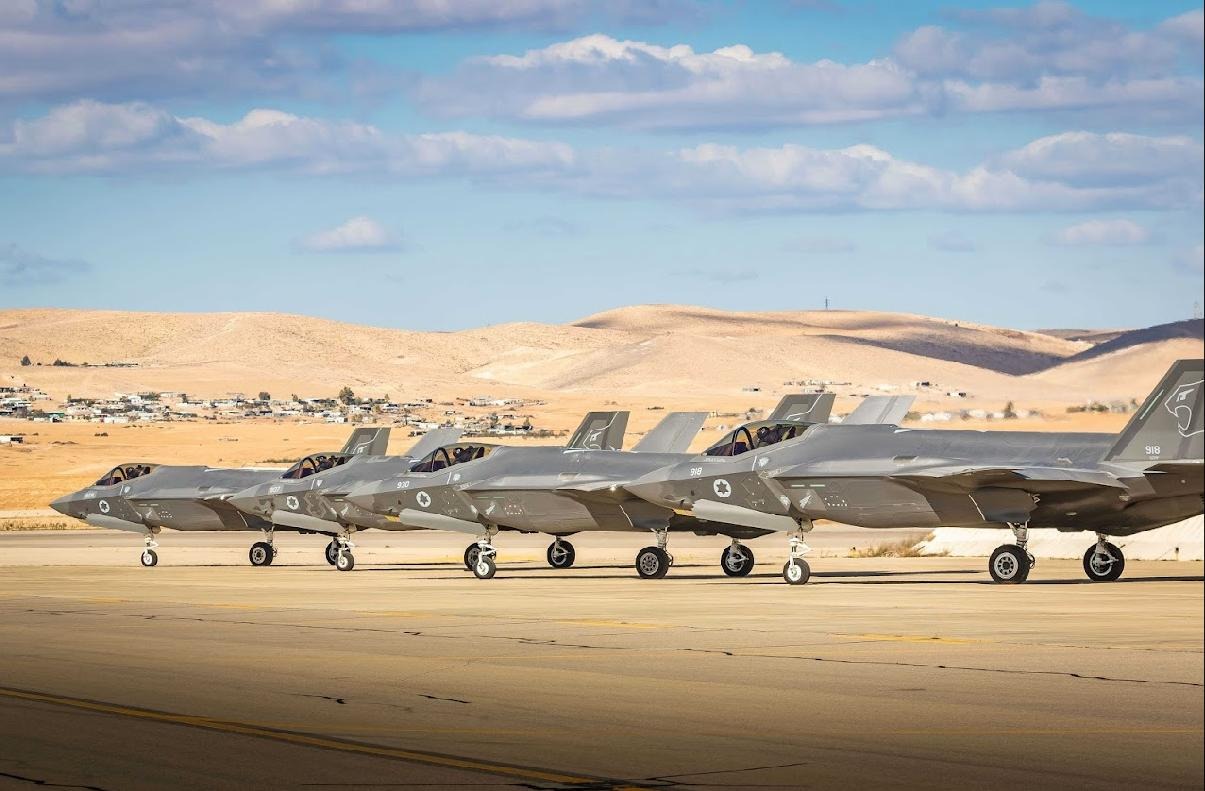
The secret Israeli base in Iraq was almost discovered in early March. Iraqi state media reported that a local shepherd reported unusual military activity in a remote part of the country, including helicopter flights.
The Iraqi government sent troops to investigate; however, Israel responded with airstrikes.
The airstrikes left at least one Iraqi soldier dead, forcing the Iraqi government to release a formal condemnation.
“This reckless operation was carried out without coordination or approval,” Lt. Gen. Qais Al-Muhammadawi, deputy commander of the Joint Operations Command, a central security body, told Iraqi state media in comments about the attack in March.
Furthermore, Iraq filed a formal complaint with the UN.
In its complaint, Iraq said the attack involved foreign forces and air strikes, attributing it to the US.
However, the US was not involved in the attack, sources told the WSJ.
The air strikes were mentioned and discussed in Iraqi and Arab media at the time, with analysts speculating about the identity of the attackers.
Later, the Iraqi authorities sent two more units from the Country’s Counter Terrorism Service to join the search of the area.
The soldiers found evidence of military activity in the area, though the Israeli military had left the place by then.
“It appears there was a certain force on the ground before the strike, supported from the air, operating beyond the capabilities of our units,” Muhammadawi told state media.
Israel has so far made no comments on the story. Though reports of a secret Israeli military base in Iraq explain how Israel sustained its extensive air campaign over Iran, a country that is more than 1,000 miles away from its borders.
Furthermore, Israel operates a limited fleet of seven aging Boeing 707 (Re’em) air refueling tankers, which were not enough to support its extensive bombing campaigns over Iran.
During the 40-day-long war, Israel conducted thousands of raids and strikes against targets in Iran.

President Trump at the Israel Museum. Jerusalem May 23, 2017
The military base in Iraq allowed Israeli forces to get closer to their target.
The military base was set up in a remote part of the western Iraqi desert, which is sparsely populated.
In the first Gulf War in 1991, the US also set up a military base in the same area to launch operations against the forces of then-Iraqi dictator Saddam Hussein.
Meanwhile, the Islamic State terrorists had also used the area in the past to set up their camps in this region.
Interestingly, Israeli authorities had alluded to the secret military operations during the war.
In March, the head of the Israeli Air Force, Tomer Bar, issued a letter to his servicemen.
“These days, fighters from special units of the air force are conducting special missions which could ignite the imagination,” said Bar.
Clearly, the audacity to successfully build warehouses and even secret military bases in a hostile country, smuggling hundreds of drones and missiles, and even operating aircraft and helicopters from these bases, without the knowledge of the local government authorities, will rewrite the rules of what is achievable in clandestine operations behind enemy lines.
Israel never fails to surprise its well-wishers and shock its detractors.
-
- VIEWS PERSONAL OF THE AUTHOR.
- He can be reached at editor (at) eurasiantimes.com