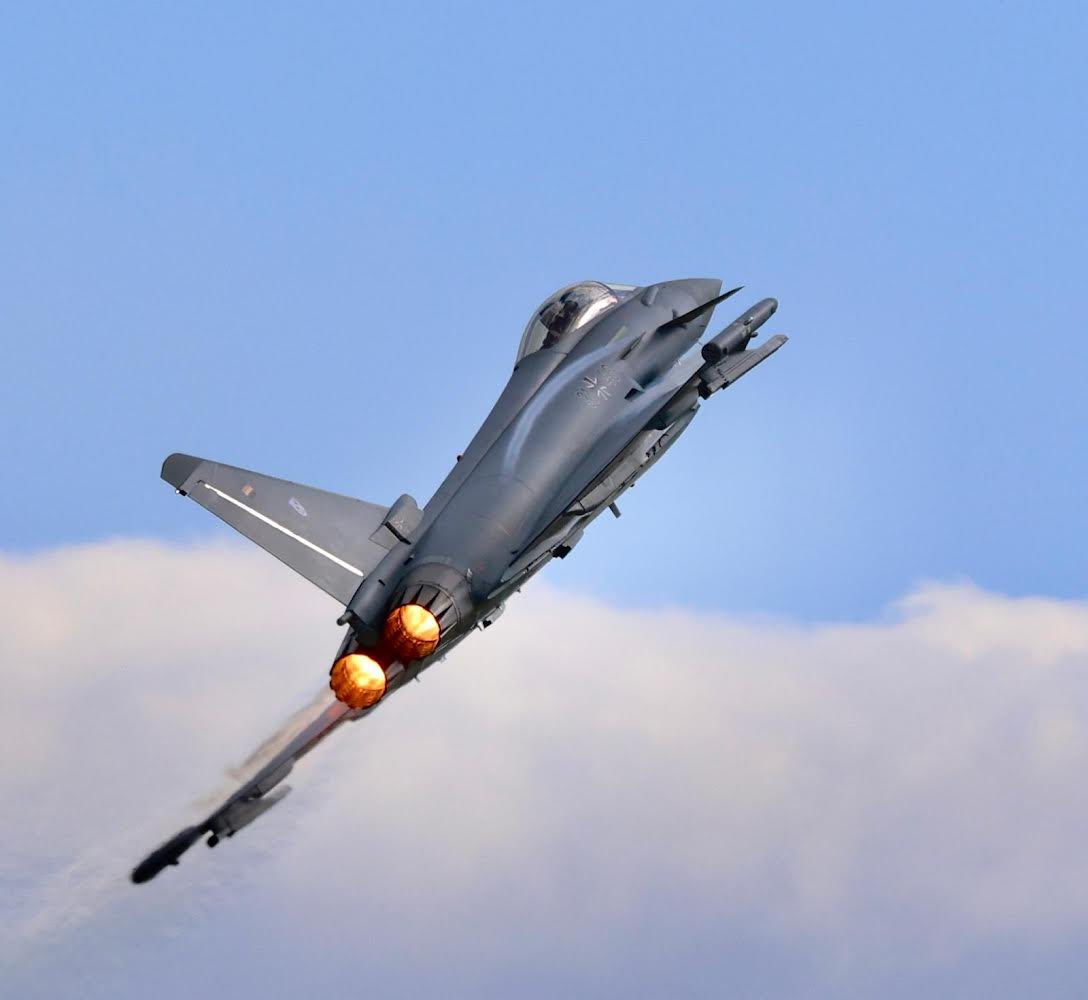
The greatest mistake in the US foreign policy is not a war. It is a choice. Its name is Pakistan.
This is not the failure of one administration. It is the failure of Washington, which returned time and again to the same illusion: that regional order could be built on a state that offers access, channels, and generals on call, even if it does not offer reliability.
In every generation, Pakistan made the same offer. Shield our conduct, and we will manage your crisis.
In every generation, the USA bought it.
Even in spring 2026, Pakistan was again being treated in Washington as a credible regional partner and a channel to Tehran. Trump extended a ceasefire with Iran at Islamabad’s request. The pattern was not ending. It was being reaffirmed.
The root of the error lies in the 1950s.
In 1954, the United States signed a mutual defense assistance agreement with Pakistan. In the same year, Pakistan joined SEATO, and in 1955, the Baghdad Pact, later CENTO. The logic was operational, not moral.
India was too autonomous. Pakistan was easier to use. That is how the American preference was formed: not for the sounder state, but for the more usable one. Washington chose access over institutions and obedience over stability.
India was an almost continuous democracy from independence onward. Its only interruption was the Emergency of 1975 to 1977, a 21-month period of severe damage to civil liberties and competitive politics, followed by democratic restoration. Pakistan was never a democracy with one interruption. It was, and remains, a fragmented civilian order under military dominance. Even now, it holds competitive elections, yet the army still shapes elections, governments, and policy. America faced a choice between institutions and generals. It chose generals.
In 1971, ambiguity ended. Operation Searchlight, launched by the Pakistani army in East Pakistan, opened a campaign of mass killing, persecution, and systematic rape, driving millions of Bengalis into India. Inside the US government, the Dhaka cable stated plainly that genocide was the right word. Nixon and Kissinger did not recoil. They tilted toward Pakistan because Yahya Khan was their channel to China. The rule was set there: if Pakistan is useful enough, Washington will swallow a massacre.
What looked like pragmatism was a security failure. In the 1980s, the US returned to Pakistan through Afghanistan. Again money. Again arms. Again immunity.
The 9/11 Commission later recorded that Pakistan’s officer corps viewed the Taliban as a useful asset for securing strategic depth in Afghanistan. America financed a system that treated actors aligned with American aims as instruments against those aims. It outsourced a battlefield to a state with its own design.
Even when Washington identified the danger, it did not hold the line. Assistance was suspended under the Pressler Amendment in 1990. Sanctions followed the nuclear tests in 1998. After 9/11, the restrictions were lifted.
In 2004, George W. Bush designated Pakistan a Major Non-NATO Ally. Pakistani violations were temporary. American rehabilitation was permanent. By then, policy had hardened into habit.
The habit delivered the reverse of what Washington said it wanted. It wanted a partner against terror and got Abbottabad, where Osama bin Laden was found and killed near a Pakistani military academy, amid deep American distrust of the ISI. It wanted nonproliferation and got the A. Q. Khan network, a turnkey source for nuclear equipment and expertise.
It wanted strategic stability, and by December 2024, Pakistan’s long-range missile program had come to pose an emerging threat to the United States. Washington cultivated a partner that became a threat.
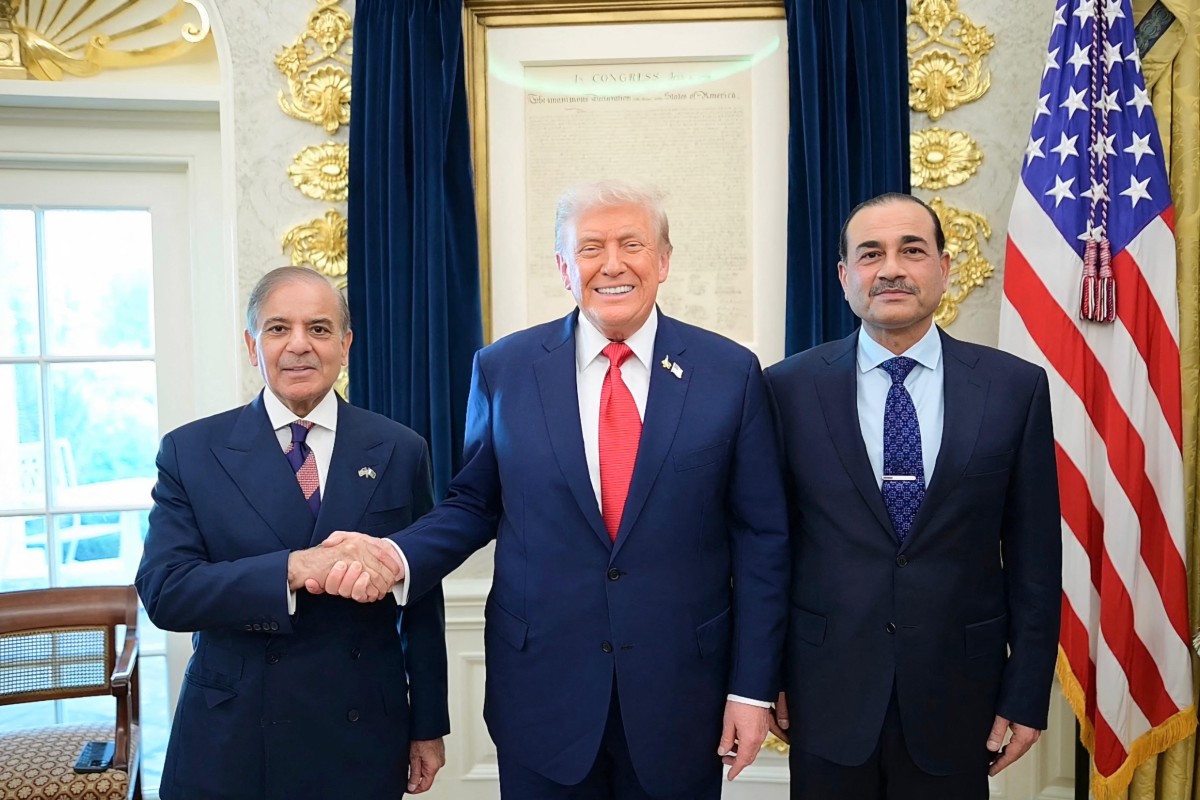
By 2025, even Washington was speaking more clearly. Pakistan had to bring the perpetrators of the Mumbai and Pathankot terror attacks to justice. Its territory could not be allowed to be used for cross-border terrorism.
Ties with Delhi had to deepen because India was essential to regional security, including through the Quad. Washington now spoke the language of India. It still acted on the Pakistan reflex.
Operation Sindoor in May 2025 exposed the gap. After the Pahalgam (Kashmir) massacre that killed 26 people, mostly tourists, Washington still urged Pakistan to cooperate with India against the terrorists. The moment India used force, the American conversation shifted from culpability to restraint. It moved quickly into mediation toward a ceasefire.
India later made clear that the approach had come from Pakistan’s military operations branch, and stated in Parliament that Pakistan had asked for the ceasefire. American neutrality in such a case creates false symmetry between the democracy that was attacked and the regime from whose territory the threat emerged. Neutrality here is not balance. It is a reward.
Trump adds another layer of risk. The line between president and businessman is far thinner under Trump than it was under his predecessors. By 2025, fresh conflict-of-interest concerns were already surfacing around his ventures, including his crypto ventures.
In January 2026, Pakistan signed a memorandum of understanding (MoU) with a company linked to World Liberty Financial, the family venture associated with Trump, to explore using a dollar-backed stablecoin. Bribery need not be proven. Exposure is enough. Pakistan now knows it can speak to Trump in two registers: strategy and dealmaking.
Turkey is not Pakistan. The temptation in Washington is the same. A state with military value, institutional weakness, and a leader who is politically convenient invites hesitation in Washington.
Trump praised Erdogan back in the Trump Towers Istanbul years, called him a friend, and lauded his leadership. In 2025 and again in April 2026, his envoy, Tom Barrack, spoke of personal trust between the two men, of possible movement on sanctions tied to the S-400, and even of a possible Turkish return to the F-35 program.
Utility, personal access, and business blur state judgment. That is how the next mistake is made.
If the United States had treated Pakistan as what it is, a civilian system under military tutelage, with a history of coups, a troubled nuclear program, long ties to terror proxies, and a systematic willingness to play a double game, it would not have rehabilitated it after every violation.
It would have constrained it, distanced it, conditioned it, and preferred India far earlier, a democracy with institutional continuity, institutional depth, and a stake in order.
That would not have made South Asia simple. It would have made America more coherent and more credible. Instead, Washington returned to the same expedient and got the same result: less American national security, more dependence on Islamabad, and less ability to distinguish between a partner and an extortionist.
That is why the greatest mistake in American foreign policy has a name. Pakistan.
- Shay Gal works with governments and international institutions on strategy, risk, and security decision-making in high-stakes environments.
- This is an Opinion Article. Views Personal of the Author
- He tweets at: @ShayGal84