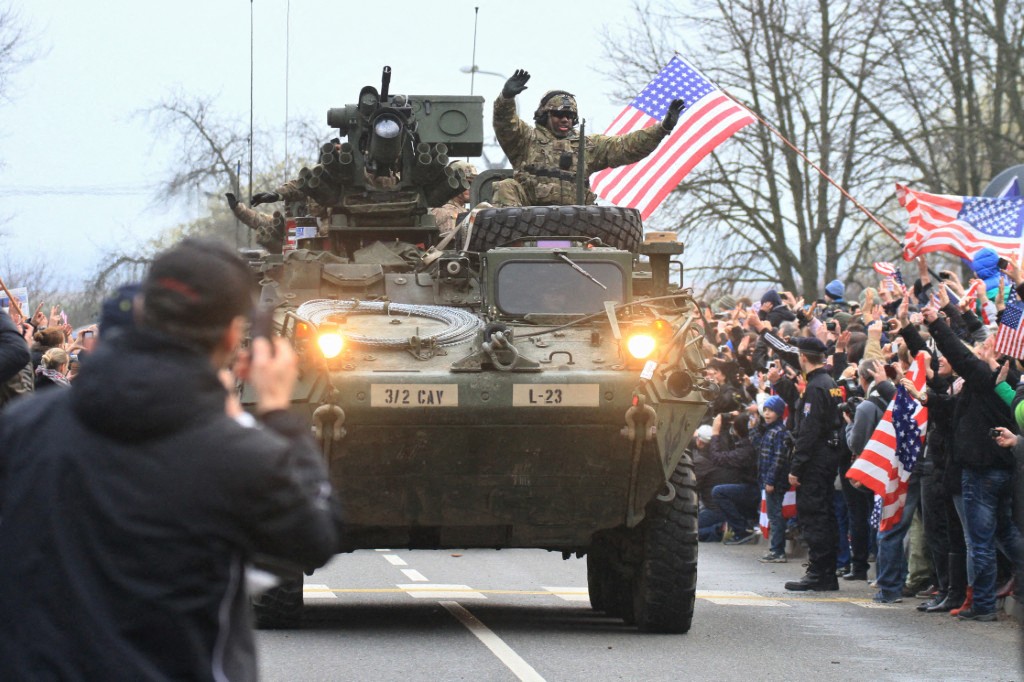
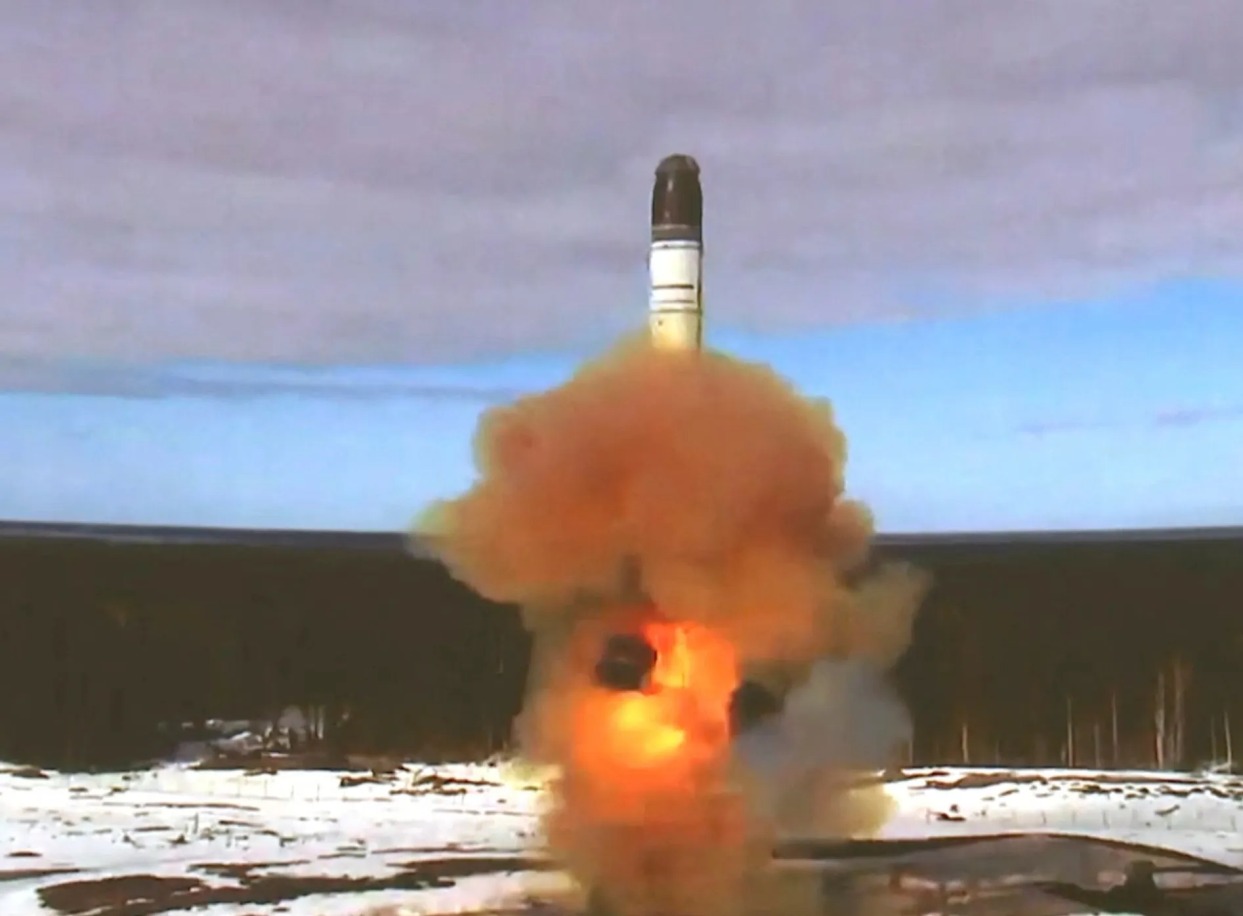
Russia has tested the “most powerful missile system” Sarmat ICBM that is capable of carrying nuclear warheads, months after the last treaty with the US limiting their nuclear arsenals expired.
“This is the most powerful missile system in the world,” claimed Russian President Vladimir Putin after receiving a report of a successful launch of Sarmat, an intercontinental ballistic missile (ICBM).
The Sarmat — dubbed Satan 2 by Western analysts — is among Russia’s next-generation missiles that Putin has called “invincible,” and which also include the Kinzhal and Avangard hypersonic missiles.
He said the missile could carry a warhead more than four times more powerful than anything Western militaries possessed, adding that Sarmat would be on “combat duty” by the end of this year.
Put said it was capable of traveling 35,000 kilometers (22,000 miles).
Even though Moscow and Washington agreed to reestablish high-level military dialogue shortly after New START expired, there were no immediate signs of renewing or prolonging it.
US President Donald Trump has repeatedly pressed for a new treaty to include China, whose arsenal is growing but still significantly smaller than those of Russia or the US, but Beijing has publicly rejected the pressure.
Trump had been mostly silent on Russian calls to extend New START, which was signed in 2010 and imposed the last restrictions on Moscow and Washington after decades of agreements dating from the Cold War.
“This truly unique weapon will strengthen the combat potential of our armed forces, reliably ensure the security of Russia from external threats, and make those who, in the heat of aggressive rhetoric, try to threaten our country, think twice,” Putin had said earlier in 2022.
The Sarmat missile made its first launch on April 20, 2022, from the Plesetsk Cosmodrome in the Arkhangelsk region. Following the successful test, President Putin highlighted the missile’s technological superiority and unprecedented capabilities in modern warfare.
However, despite these assertions, the missile’s development has faced delays and testing challenges. Initially, Russian officials projected that the Sarmat would be ready for deployment by 2018 to replace the Soviet-era SS-18.
Yet deadlines have continuously been postponed. The Kremlin later set a target for the missile’s combat readiness by the end of 2022, but this deadline was not met either.
In June 2023, Putin declared that the Sarmat would be deployed “soon,” though without specifying a timeline. By September 2023, Roscosmos chief Yuri Borisov claimed that the Sarmat strategic complex had entered combat duty.
However, in October, Putin announced the completion of the missile’s development, noting that only administrative steps remained before large-scale production and deployment to active service.
In February 2024, Putin again assured that the heavy ICBM would soon be deployed on combat duty, yet recent events have cast doubt on the missile’s reliability.
In September 2024, a test of the RS-28 Sarmat ended in a catastrophic failure. Satellite images showed severe damage to the Plesetsk Cosmodrome and fires around the test site.
With Agence France-Presse Inputs