Malaysia is seeking alternative suppliers of naval missile systems after the collapse of a deal with Norway, a top defense official said on Thursday.
Malaysia signed a deal worth around $145 million with Norway’s Kongsberg Defense & Aerospace for NSM anti-ship missiles and launchers in 2018 to arm the Royal Malaysian Navy’s Maharaja Lela-class Littoral Combat Ships (LCS).
However, Norway’s Foreign Ministry recently announced that it had tightened rules on its sensitive defense technologies, restricting exports primarily to NATO allies and NATO’s partners.
Additionally, it announced that it was canceling export licenses for the naval missile system to Malaysia because Malaysia was neither a NATO member nor a close partner under the newly formulated criterion.
Oslo says the move has not intentionally targeted Malaysia, but Kuala Lumpur is still seeking over $257 million in compensation from the Norwegian company involved in the deal.
The program is the Malaysian Navy’s long-delayed effort to build a class of modern, stealthy surface combat vessels as it strives to upgrade its fleet. The LCS program, first approved in Malaysia in 2011 with an initial contract worth six billion ringgit ($1.5 billion), was planned for six vessels.
The deal, which had been plagued by allegations of mismanagement and rising costs, was relaunched in 2023 following a government review, with the number of ships reduced to five.
Delivery of the first vessel, expected in August, has been pushed back to December due to delays in equipment deliveries and ongoing rework, according to officials cited in local media.
But Khaled, referring to the Norwegian deal, said: “The Ministry wants to provide a guarantee that this development does not reflect preparedness for operations.” “Assets and weapons systems are in place to carry out the responsibility to defend the sovereignty of the country’s waters,” he said.
The Defense Ministry has reportedly shortlisted four countries as potential suppliers of a replacement anti-ship missile system for the Littoral Combat Ships. According to Khaled, the candidates are Türkiye, South Korea, and two unspecified European nations.
Officials are evaluating replacement options against strict technical and operational criteria. Malaysia wants full compatibility with the Littoral Combat Ships’ existing French-built Combat Management System (CMS).
The Maharaja Lela-class vessels are based on the French Gowind design and already integrate several French subsystems; any new missile must interface seamlessly with the CMS without requiring extensive, costly software modifications or lengthy recertification processes.
Another essential requirement is range. Malaysia is believed to be seeking a system capable of approximately 300 km, which would provide a meaningful improvement over the original Naval Strike Missile and allow the ships to engage targets from a safer standoff distance in the South China Sea.
Cost-effectiveness, realistic delivery timelines, and overall ease of integration — including physical launcher fit, logistics support, and crew training — are also being closely assessed to avoid further delays to the already long-overdue LCS program.
Separately, the United States has assured Malaysia that it remains open to supplying a suitable missile system as a potential alternative. This offer, conveyed during recent bilateral defense engagements, has been welcomed by Kuala Lumpur as it provides an additional option while the Defense Ministry continues to evaluate proposals from Türkiye, South Korea, and two European countries.
What is the Naval Strike Missile
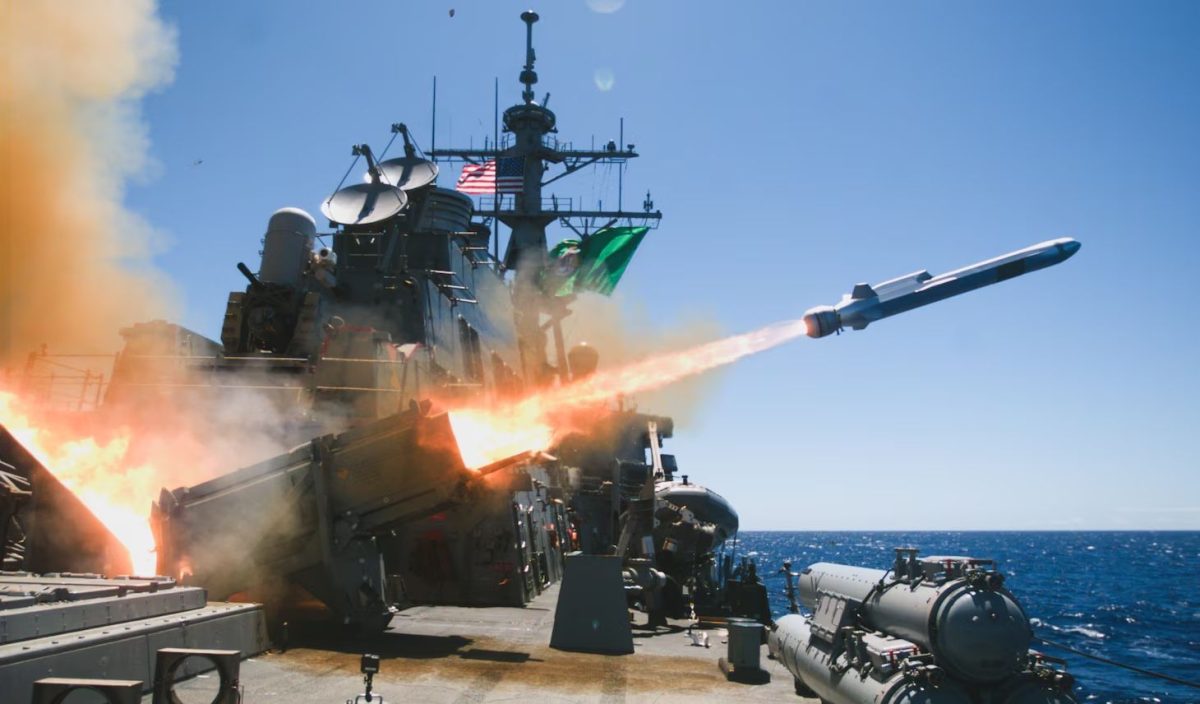
The Naval Strike Missile is a stealthy, precision-guided, long-range strike weapon that can hit land- or sea-based targets over a range of 185 to 300 kilometers. It is widely regarded as a fifth-generation weapon due to its low observability, advanced seeker, and multi-platform flexibility, which allow it to be launched from a ship-based canister or a truck-mounted system for ground or coastal defense.
The NSM has consistently been in the news for its soaring popularity among countries seeking a lethal anti-ship weapon amid rising challenges from adversaries like China and Russia. The ship-mounted NSM is currently in use by Norway, Australia, the Netherlands, Poland, the United Kingdom, and the United States. Additionally, Poland and Romania deploy the NSM as a shore-launched system.
Meanwhile, the US Marine Corps also uses the system as a component of the Navy-Marine Expeditionary Ship Interdiction System, or NMESIS.
The NSM’s Autonomous Target Recognition (ATR) enables the missile to precisely detect and engage the pre-designated target. The weapon automatically distinguishes between the intended target and other objects using an internal database of sample ship types, which makes it precise and much less vulnerable to electronic warfare tactics and defenses.
The NSM has very good maneuverability due to its high thrust-to-weight ratio and airframe design. The missile is completely passive, has remarkable sea-skimming capabilities, and is expected to easily breach the enemy’s air defenses due to advanced terminal maneuvers.
By giving the ship the over-the-horizon assault option, the NSM enables the crew to track and destroy incoming anti-ship missiles from a safer distance.
Notably, the seeker is impervious to radio-frequency electronic warfare jamming because it is passive, and its erratic motions during the terminal phase of the flight further complicate interception attempts.
The NSM was designed with a reduced radar signature to attack close to the surface in sea-skimming mode, essentially below the aperture of many ship-based radars. The missile is propelled to its target at high subsonic speed by a turbojet sustainer engine after being launched by a solid rocket booster, which is jettisoned upon burnout.
This enables the multipurpose blast or fragmentation warhead to carry out its function, which, in the case of a ship target, entails striking the ship at or close to the sea line.
The NSM excels in littoral, or near-shore, and distributed operations, providing credible sea-denial capability from mobile launchers or smaller warships. Its appeal lies in its proven performance, low-observable features, multi-platform flexibility, and integration with Western systems—making it attractive for nations modernizing to counter peer adversaries with strong anti-access/area-denial (A2/AD) capabilities, as was the case with Malaysia.
With AFP Inputs