Japan has become the latest entrant to the exclusive club of countries that possess the Tomahawk cruise missile.
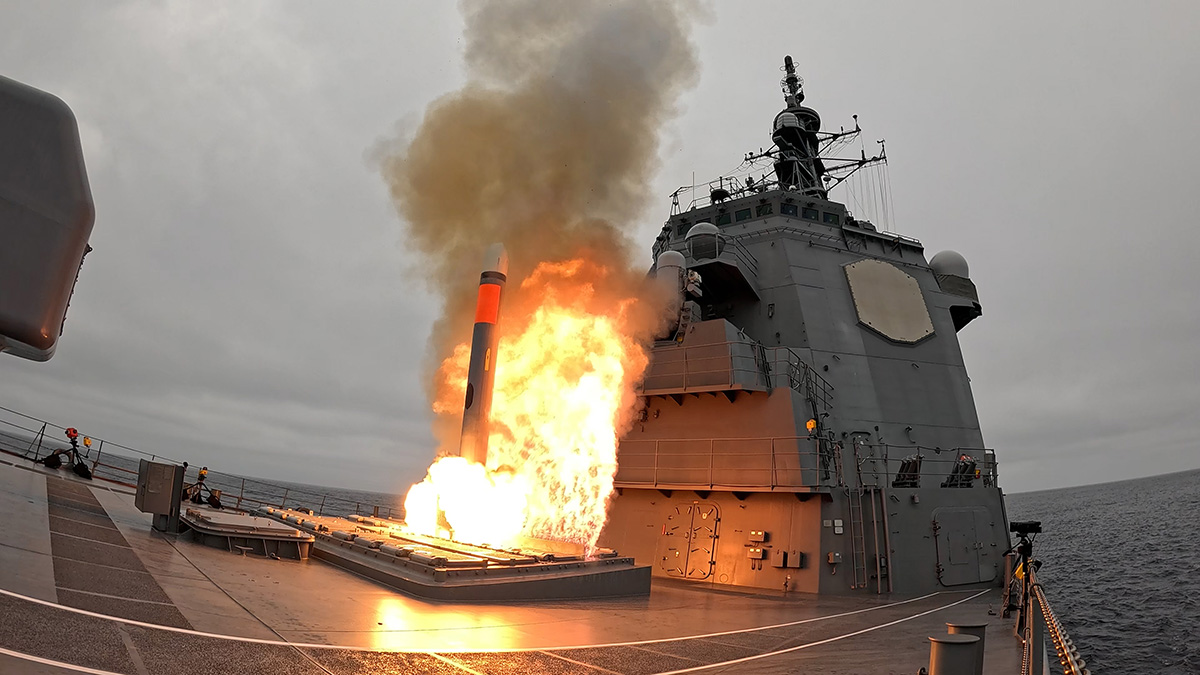
Japan’s Ministry of Defense (MoD) announced on July 30 that the Japan Maritime Self-Defense Force (JMSDF) had test-fired a Tomahawk land-attack cruise missile from one of its warships, the Aegis guided-missile destroyer JS Chokai (DDG-176), for the first time.
The test was conducted on June 29 in the Pacific Ocean with US Navy’s support. It followed the March 2026 announcement by the Acquisition, Technology & Logistics Agency that Chokai had completed the necessary upgrades to fire long-range standoff missiles.
With the launch, Japan became the third nation (apart from the United States) to fire a Tomahawk from a surface combatant—after Australia and the Netherlands—and the fourth overall, following the United Kingdom, which has launched the missile only from submarines. The successful test marks a major step in Tokyo’s effort to field a credible long-range conventional strike capability.
The MoD verified that the missile reached its intended target and that the ship and crew successfully carried out the launch sequence. It did, however, conceal certain information, such as the precise location in the Pacific, the number of missiles fired, the range attained, the target’s specifics, and the missile variant used.
Historic moment as JS Chokai becomes the first JMSDF warship to live-fire a Tomahawk Land Attack Missile. We can expect a torrent of state media commentaries from you-know-who proclaiming the impending end of the world with Japan’s remilitarism. https://t.co/zXXalHYluW pic.twitter.com/wT1rHAP2V7
— Collin Koh 🇸🇬🇺🇦 (@CollinSLKoh) July 30, 2026
Chokai is expected to return to Japan around September 2026, indicating that the Tomahawk capability will be deployed in the volatile Indo-Pacific region.
Japan plans to equip all eight of its Aegis destroyers—two Kongō-class, two Atago-class, and two Maya-class— with Tomahawks. Modifications will be carried out gradually on ships based at Yokosuka and Sasebo.
Additionally, Japan is also building two Aegis System Equipped Vessels (ASEVs), due to enter service in fiscal years 2027 and 2028, respectively. Officials have stated that these ships will not have Tomahawk launch capability upon entry into service, though they are designed for future integration.
Tomahawk forms a central part of Japan’s effort to develop “standoff defense capabilities” in response to a more demanding regional security environment vis-à-vis China, which is widely seen as a potential aggressor amid unprecedented military expansion.
Moreover, it aligns with Japan’s 2022 National Security Strategy, which officially recognized “counterstrike capabilities” as a self-defense measure.
Japanese officials consider the Tomahawk as a deterrent: by holding an aggressor’s launch sites and supporting infrastructure at risk, Japan aims to make any attack on it far more costly and less likely to succeed.
Having said that, the Tomahawk missile is viewed by experts as an interim solution adopted by Japan until indigenously developed options, such as the Type 12 and other long-range missiles, are ready for induction.
Defense By Offense: Japan’s Tomahawks are Here
Japan’s test-firing of Tomahawk has formally heralded the country’s transition from a purely defensive posture to one that includes credible long-range counterstrike stand-off capabilities. This aligns with Japan’s push to strengthen its long-range strike capabilities to deter China, which has steadily expanded its military presence in the East China Sea.
Tokyo regards China’s rapid buildup of missile forces and naval power, together with its assertive actions around the Senkaku Islands (administered by Japan but claimed by China and Taiwan), as Japan’s greatest strategic challenge. Moreover, the Japanese leadership fears that the country could get dragged into a China-Taiwan conflict triggered by the PLA’s invasion of Taiwan, due to its geographic proximity.
Speaking at a news conference earlier, Japanese Defense Minister Shinjiro Koizumi exclaimed that the new capability would be “of great significance for reducing the possibility of an armed attack on Japan itself,” potentially referring to regional rivals such as China. “To defend against incoming missiles while preventing further armed attacks, Japan must possess the capability to launch an effective counter-attack – a counterstrike capability. Long-range missiles can be used for this counterstrike capability.”
The Tomahawk cruise missile is primarily designed to strike high-value, heavily defended land targets, such as command centers, airfields, and critical infrastructure.
With a range of approximately 1,600 kilometers, Tomahawks launched from the western Pacific or waters around Japan can cover all of North Korea and reach deep into eastern China, as well as parts of Russia’s Far East. This essentially gives Japan the ability to strike missile launch sites, air bases, command-and-control nodes, logistics hubs, and amphibious staging areas from outside an adversary’s defensive envelope.
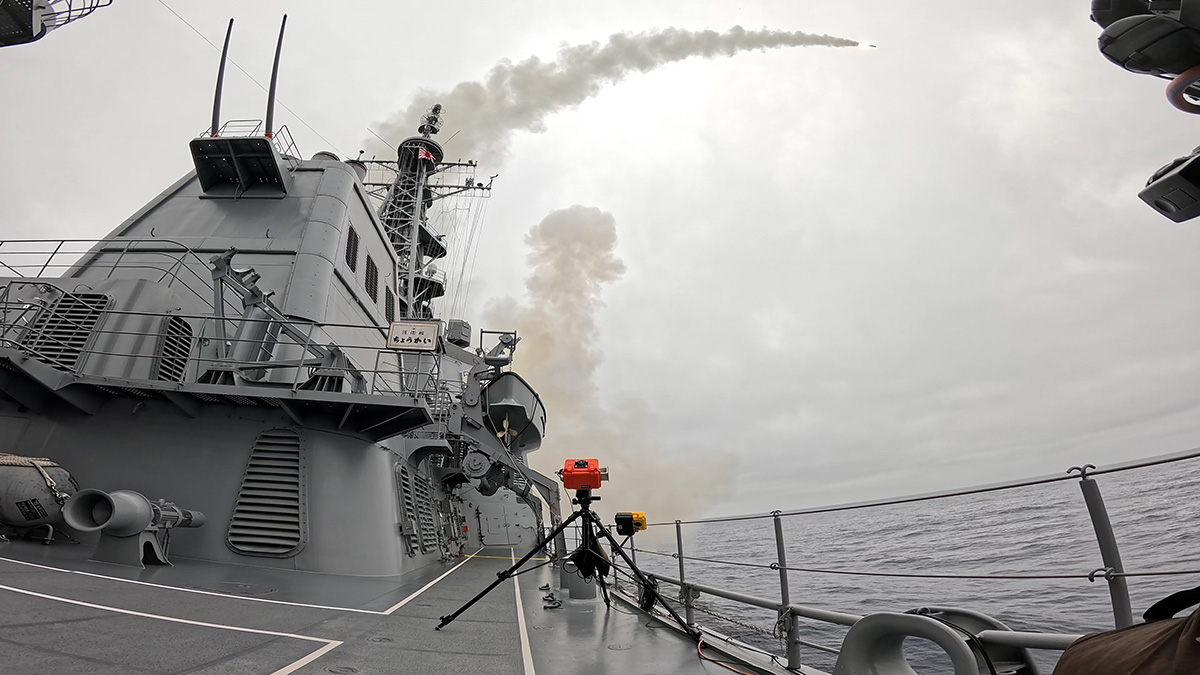
Unlike fixed land-based platforms, sea-based launch platforms are mobile, making missiles more difficult to preempt. The Tomahawk features in-flight retargeting via data links, enabling more adaptive responses during a potential conflict.
With the integration of Tomahawk, Japan can impose costs on the aggressor’s rear-area infrastructure rather than solely defending against the first wave of missiles or ships. This supports “deterrence by denial”, making invasion or sustained attack harder, and “deterrence by punishment”, threatening meaningful retaliation—both of which were earlier missing from the Japanese military’s inventory and philosophy.
Tomahawks will operate alongside ground-launched systems such as upgraded Type 12 missiles and Hyper Velocity Gliding Projectiles, as well as air-launched weapons including the Joint Strike Missile carried by F-35s.
Together, these systems will form a layered, distributed long-range fires network that complicates adversary planning and raises the cost of aggression.
Fielding the Tomahawk will deepen interoperability with the United States while reducing Japan’s exclusive reliance on US forces for deep-strike missions, thereby enhancing Tokyo’s self-reliance as a security actor, which it has been desperately seeking for some time.
China is likely to be wary of Japan’s possession of Tomahawk, particularly since the missile has already proved its efficacy in combat multiple times, most recently in the Iran war. Previous reports suggested that the US military fired over 850 Tomahawk missiles, a number that may have swollen by now as hostilities continue
Beijing has consistently opposed Japan’s defense buildup as provocative and had strongly criticized the deployment of the Mid-Range Capability system in Japan, which can also launch Tomahawks, earlier this year.
- Contact the author at sakshi.tiwari13 (at) outlook.com
- Follow EurAsian Times on Google News