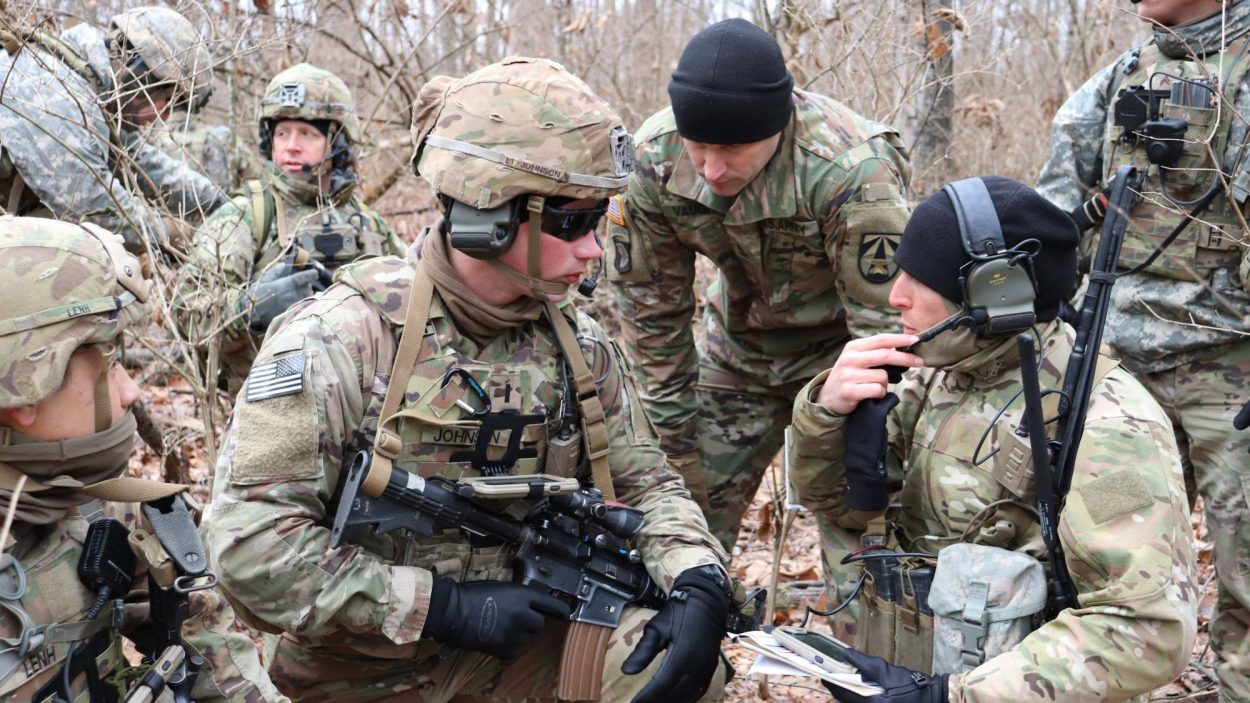
As the Iran war intensifies again, the top U.S. commander in the Middle East has warned that cellphone videos and images shared online by American soldiers could help Iran attack U.S. bases, and some service members may soon be ordered to surrender their phones.
Admiral Brad Cooper, head of U.S. Central Command (CENTCOM), raised the concern in a previously unreported letter dated July 28.
He said Iran was gaining real-time data into the success or failure of its missile and drone strikes by monitoring news reports and online content that included “reactions, photos, and footage from the cellphones of our troops.”
“The direct, unavoidable cost of this open-source intelligence could be measured in the lives of American service members and civilian residents in targeted Gulf countries,” Cooper wrote. He urged forces to “redouble our focus on operational security” but stopped short of recommending specific measures in the memo.
According to Reuters, some US troops stationed in Jordan have already been notified their phones will be seized in the coming days. More comprehensive restrictions are possible across the tumultuous region because of operational security concerns.
Cooper cited one specific example in the letter: a video captured on a service member’s Meta smart glasses and posted on Instagram during an Iranian missile and drone attack. The footage showed where and how the individual evacuated to a bunker. Without such publicly available material, Cooper said, Iran would struggle to determine whether its weapons had missed by tens of meters, struck an empty tarmac or hit a populated facility, thanks in part to U.S. electronic jamming and other battlefield tactics.
“Iran knows the weapons were fired; however, their forces do not know if they missed by 50 meters, hit an empty tarmac, or successfully struck a crowded facility,” he wrote.
“Detailed lists, descriptions, and analyses of what was hit, openly published by news outlets, are essentially performing Iran’s Battle Damage Assessment (BDA) for them, free of charge.”
Public disclosures of strike details, he added, could serve as “an immediate green light” for secondary, more devastating follow-up attacks.
The warning comes as the conflict that began in late February has killed 18 U.S. troops and wounded more than 600, according to official figures.
On July 13, the Financial Times reported that mobile phone networks across the Middle East had been targeted by a wave of cyberattacks aimed at locating American forces and contractors around the same time as U.S. and Israeli strikes on Iranian positions.
CENTCOM spokesman Captain Tim Hawkins confirmed the authenticity of Cooper’s letter, describing it as “a general reminder to our service members on the importance of maintaining operational security.” He declined to discuss specific protective measures.
Meanwhile, the US military conducted a “heavy wave of strikes” against Iran on Thursday in retaliation against Tehran targeting American bases in Jordan.
US President Donald Trump had vowed to hit Iran “hard” after Tehran launched missiles at Jordan.
American forces “successfully completed a heavy wave of strikes against Iran”, and struck dozens of Islamic Revolutionary Guard targets including military command centers, US Central Command (CENTCOM) said.
In Iraq, the joint US-Saudi air operation followed attacks by “terrorist militias loyal to Iran” on its oil facilities. The US military said logistics and weapons sites belonging to an Iran-aligned group were targeted in the strikes.
Iraq’s Hashed al-Shaabi alliance said the attacks killed at least 20 of its members. It condemned a “dangerous escalation” against an “official security institution”.
Two Hashed officials said five Iranian advisors were among those killed.
Iraq slammed the US-Saudi strikes and said it rejects “all acts of aggression, regardless of the party responsible or the justifications presented”.
The Ministerial Council for National Security said it would “confront any violation of Iraq’s sovereignty, and prevent any source from using Iraqi territory to threaten neighboring states”.
According to Fox News, however, Trump said the strikes were “coordinated with the Iraqi government”.
The strikes follow growing US pressure on Iraq to disarm pro-Iran groups. Earlier this month, Prime Minister Ali al-Zaidi visited both the US and Iran.
With AFP Inputs