


British shipbuilder Babcock is pitching one of its well-known frigates to the US Navy, which recently changed policy to welcome foreign warships from allies as part of its push to rebuild the “arsenal of freedom” at pace.
Babcock is offering its Arrowhead 140 design, which is the parent of the Royal Navy’s Type 31 Inspiration-class frigate, to the US Navy.
The company has already held initial talks with Pentagon officials about the offer and, according to British media reports, is poised to file an expression of interest (EoI) by the end of October.
“Of course we’re interested. We have a world-class frigate, close links to the U.S. and U.S. industry. It would be insane for us not to respond,” Sir Nick Hine, head of Babcock’s marine business and a former Second Sea Lord, was quoted as saying by The Telegraph earlier.
According to reports, the largest military shipbuilder in America, Huntington Ingalls Industries (HII), will be part of this plan. The two companies are reportedly exploring a deal that may allow the US to manufacture the Arrowhead 140 under license.
The offer is imminent, as US President Donald Trump issued a national security memo in August 2026 that allowed the Navy to acquire foreign ship designs and build some warships overseas amid delays, cost overruns, and limited shipyard capacity in the US.
Under the new model, foreign shipbuilders must invest in or take a majority stake in a US shipyard and build subsequent ships in the US after the first two overseas-built vessels.
This means that if Babcock wins a contract, the US will build most of its ships in its own shipyards, with the British company providing design and engineering technology.
This comes as the US Navy seeks to expedite the acquisition of smaller surface combatants after canceling the troubled Constellation-class in November 2025.
The US Navy currently has no dedicated frigates in service.
Following Trump’s waiver, the US Navy is reportedly considering frigate designs, including Japan’s FFM Mogami-class guided-missile frigate, South Korea’s Chungnam-class guided-missile frigate, and Turkey’s Istanbul-class guided-missile frigate. This means that if Babcock files an official pitch, the US would have four designs to choose from.
Notably, Babcock and the US submarine industrial base already have a solid working relationship. For example, Babcock’s facilities have been producing tactical missile tube assemblies for General Dynamics Electric Boats since at least 2014 as part of the “Common Missile Compartment” shared by the US Navy’s Columbia-class ballistic missile submarines and the Royal Navy’s Dreadnought-class.
At the same time, Babcock’s partnership with HII has grown stronger through industrial collaboration.
While the prospect of the US Navy selecting a British ship design looks promising for ties between the age-old allies, the UK has little precedent for offering its own ships to the United States, long regarded as the world’s most advanced maritime power. In fact, a major historical naval transfer between the two countries went the other way in the 1940s.
On September 2, 1940, the-then US President Franklin D. Roosevelt announced the destroyers-for-bases deal with Great Britain.
Under the deal, the US transferred 50 of its aging destroyers to the United Kingdom. In return, Britain leased eight bases in the Western Hemisphere to the United States for 99 years. At the time, the United Kingdom was fighting to survive the Battle of Britain and repel a potential German invasion, while the United States remained at peace.
The deal followed British Prime Minister Winston Churchill’s request to the US for a loan of 50 destroyers to defend the English Channel against German invasion.
Under the deal, the US transferred 50 aging Caldwell, Wickes, and Clemson-class destroyers to the UK after extensive correspondence.
This agreement marked the beginning of the Anglo-American alliance during the war.
Following the deal, Churchill declared in the British Parliament that “these two great organizations of the English-speaking democracies, the British Empire and the United States, will have to be somewhat mixed up together in some of their affairs for mutual and general advantage”.
Against this background, the imminent offer to the US Navy from a British firm represents a significant departure in historical approaches.
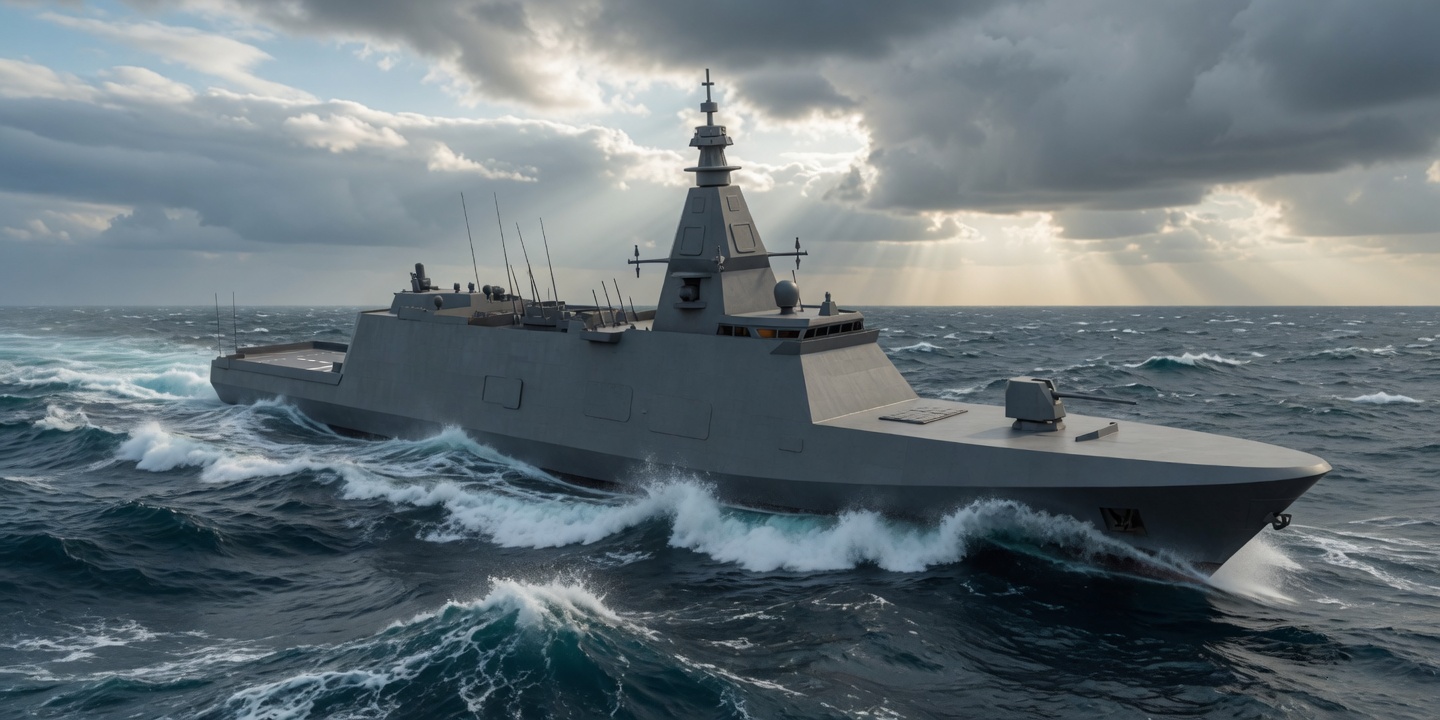
What Do We Know About Arrowhead?
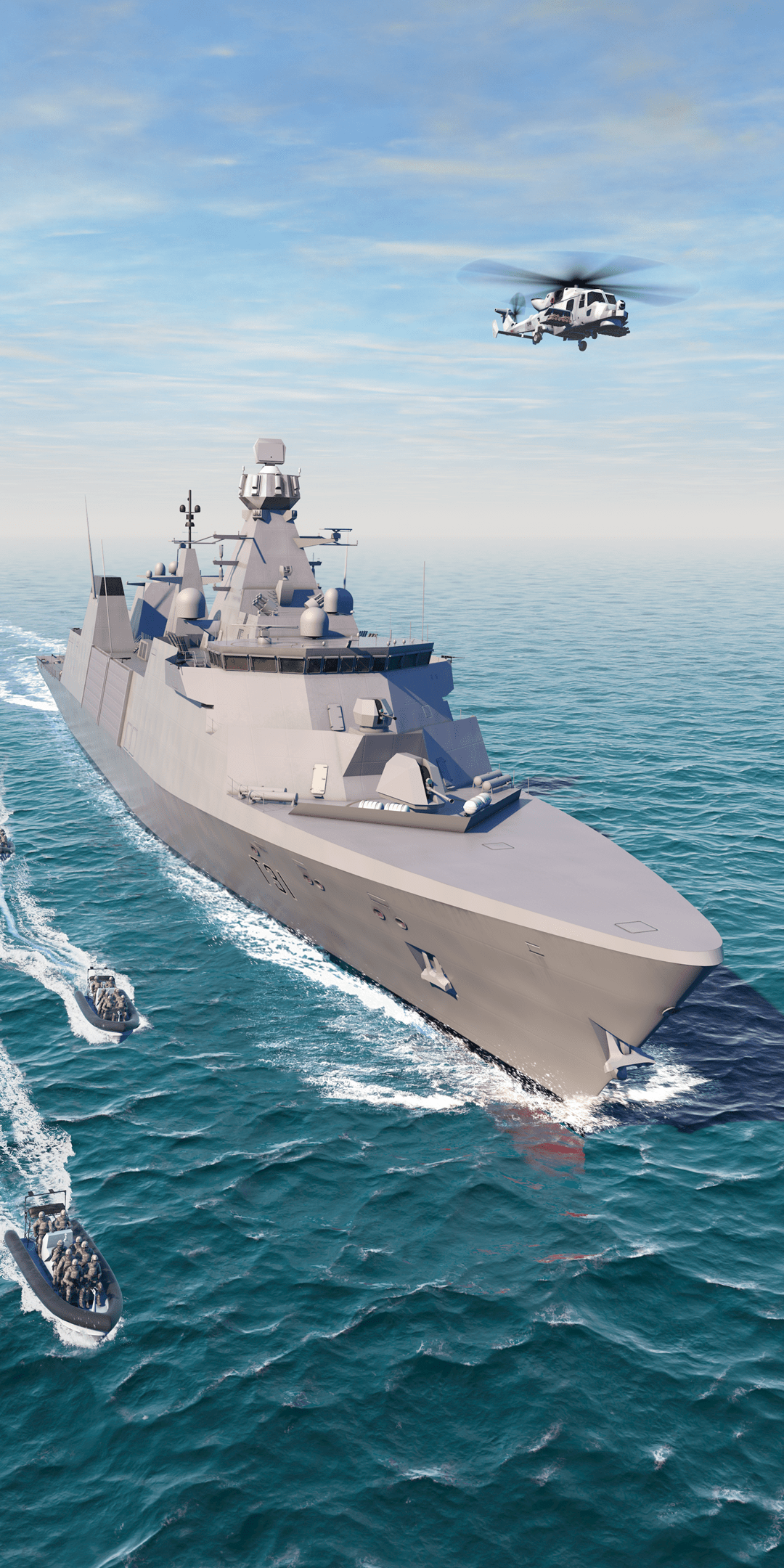
Arrowhead 140, for one, has already been marketed to Poland and Indonesia, and is now being pitched to Chile. The Arrowhead 140 has a baseline length of around 455 feet, a beam of 65 feet, and a displacement of about 5,700 tons.
The ship can reach more than 28 knots and has a baseline endurance of about one to two months. It has a large flight deck and hangar, and multiple large, dedicated boat bays for rigid-hulled inflatable boats (RHIBs), Unmanned Aerial Vehicles (UAVs), and other craft.
The ship’s open architecture and generous internal volume allow different weapon, sensor, and mission-system fits without major structural changes.
The ship is a general-purpose warship capable of surface warfare, escort, and maritime security operations. It can be outfitted with a medium-caliber gun up to 127 mm, secondary guns of 40 mm caliber, a vertical Launch System with provision for up to 32 cells, anti-ship missiles, close-in weapon systems, a combat management system, 3D air or surface search radar, electro-optical sensors, hull-mounted sonar, and also offers options for towed-array or variable-depth sonar. However, it is highly configurable, and the armament can be modified to meet the customer’s requirements.
Despite these attributes, the British offer carries a significant caveat: the Royal Navy’s Type 31 program, which is based on Arrowhead 140, remains unproven in operational service.
The Type 31 was envisioned as a vessel intended to provide the Royal Navy with five relatively affordable general-purpose frigates to replace older Type 23s in lower-threat presence roles. Designed for modularity, long endurance, and a range of missions, from maritime security to escort duties, the class remains mired in delays and cost overruns, with Babcock and the British Defense Ministry facing skepticism from critics.
The class’s lead ship, HMS Venturer, was launched in 2025 and is currently being fitted out, while the second ship, HMS Active, has been rolled out. The keel of the third, HMS Formidable, was laid in December 2025, and steel has been cut on the fourth. The program still has momentum on paper, but timelines have slipped, and delays continue. For example, the first two ships still need a Capability Insertion Period after initial delivery, including installing Mk 41 vertical launch systems, further delaying operational capability.
The British Ministry of Defense (MoD) has grown increasingly vague about in-service dates, and cost pressures continue to cloud the outlook for the later ships of the class.
Babcock declared a £140 million charge against the program in May 2026 because rework on HMS Venturer and HMS Active was higher than anticipated due to design modifications and out-of-sequence build activity early in the project. Needless to say, late outfitting corrections are more difficult and costly than those made in the build hall.
More recently, the MoD confirmed ongoing inflationary pressures, particularly on labor and the wider supply chain. The British Defense Minister Luke Pollard went so far as to say that the program’s affordability “remains under review,” and any budget changes will follow standard processes.
Observers are also questioning whether the baseline Type 31 will be sufficiently capable for the roles expected of a modern general-purpose frigate, as well as cost and schedule. The design is intended to be affordable, modular, and to perform presence tasks, but key systems such as the Mk 41 vertical launch cells are planned to be inserted later rather than as a day-one fit, and the initial anti-submarine warfare sensors have been described as limited compared with specialized peers or some earlier Type 23 general-purpose frigates.
The ships have faced familiar British procurement challenges, including inflation, supply-chain strain, and changing requirements, and critics warn they risk entering service as among the more lightly armed frigates of their generation.
Therefore, Babcock is now offering the world’s most advanced navy a capability that has yet to prove itself within the Royal Navy.
At the same time, however, a deal with the US would be the much-needed endorsement for the Arrowhead 140 and the Type 31 program. This success would let Babcock and the Ministry of Defense argue that the design is mature and flexible enough to meet the US Navy’s exacting standards, providing a powerful counter to domestic critics who question the ship’s capability and the program’s delivery track record.
However, if the US chooses another design on offer, given strong interest in designs from allies like Tokyo and Seoul, it may make things much harder for Type 31 proponents at home.
- Contact the author at sakshi.tiwari13 (at) outlook.com
- Follow EurAsian Times on Google News