A quiet drone revolution is under way in the Indian military.
Long viewed as a lumbering institution slowed by bureaucratic procurement, the Indian Army, the world’s largest volunteer force, has moved with unusual speed to absorb first-person-view and kamikaze drones.
China, according to its military bloggers and experts, claims that it is not waiting for India to harvest the advantage and is already working on a counter-revolution.
Even as the Indian Army is training thousands of its soldiers in drone warfare and the first Indian FPV systems reach frontline units, the PLA is already fielding the counter: 3-D printed, mass-produced, cheap interceptor drones, along with a host of counter-drone technologies, such as dense electronic warfare, laser interceptors and high-powered microwave (HPM), intended to blunt the very cost-asymmetry New Delhi hoped cheap drones would achieve.
As India prepares to spend billions of dollars on cheap drones and train hundreds of thousands of soldiers in drone warfare, New Delhi must also reckon with the dense interceptor wall China is already building along the 3,488-km Line of Actual Control (LAC).
Indian Army’s ‘Eagle in the Arm’ Strategy
The Indian Army has rapidly scaled investment in FPV (first-person view) drones since 2025, implementing on the ground the lessons from the Russia-Ukraine War, as well as the 2025 India-Pakistan War, where Islamabad used thousands of cheap Turkish and Chinese drones.
Notably, the Indian Army has embedded drone capability at the battalion level instead of keeping it at higher headquarters.
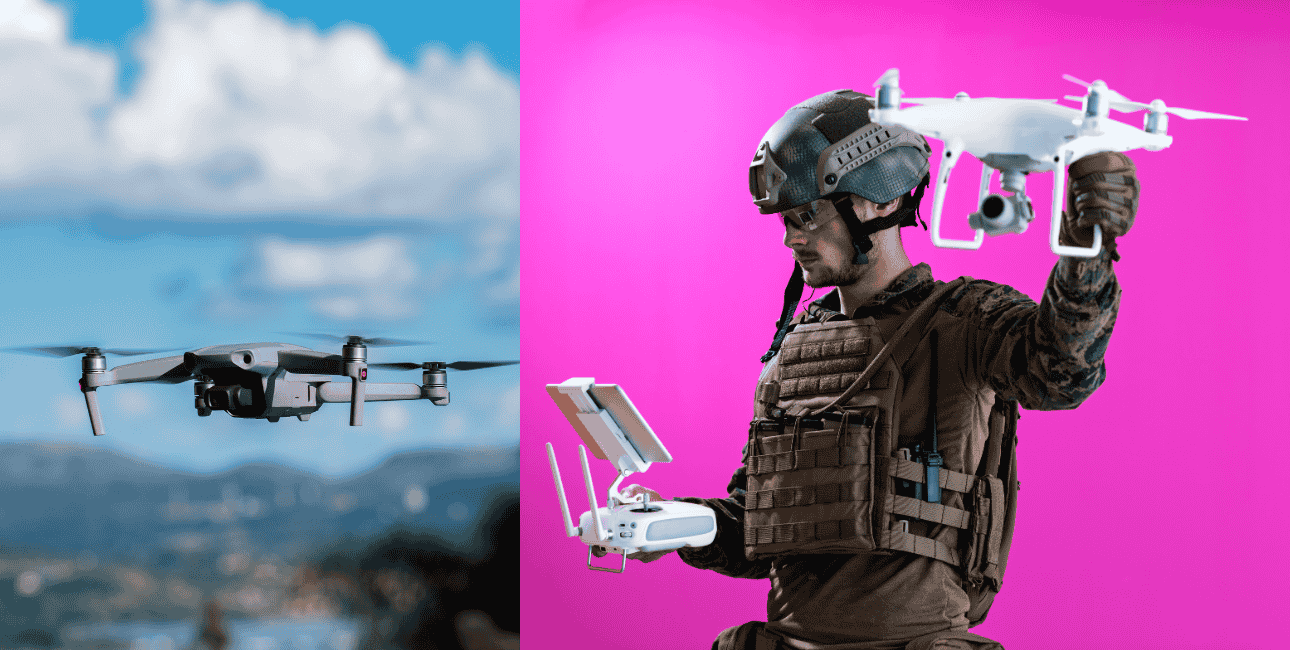
Already, each one of the Indian Army’s (IA) nearly 400 infantry battalions now has a specialized Ashni drone platoon. Each platoon has 20-25 specially trained soldiers. These platoons operate a mix of FPV attack drones, loitering munitions, and logistics drones.
Now, the IA is extending the same drone model to its armored regiments and artillery units. The stated goal is 8,000–10,000 drones per corps and, eventually, a drone available to every soldier – a strategy termed ‘Eagle on the Arm’.
The IA has already established dedicated drone battle schools.
At the same time, while procuring thousands of drones, India is also license-producing kamikaze drones and loitering munitions, such as Israeli Harop and Heron UAVs, and supporting the development of domestic drone-producing companies under the ‘Atmanirbhar Bharat’ (self-reliant India) initiative.
Indian drone companies such as InsideFPV, Drone Acharya, and IG Drones have won massive orders from the IA and have already delivered hundreds of drones.
IG Drones, for instance, already has a capacity to produce 200 drones every day. Its drones were also used in Operation Sindoor.
The IA is also deploying these Ashni platoons along the LAC.
However, even as India is moving quickly in drone warfare, China is already building an interceptor wall to cancel the advantages New Delhi hoped to achieve through the cost-asymmetry advantage of drone warfare.
The Economics of Intercepting Drones
Traditional air defense systems, such as Patriot, THAAD, Arrow, or S-400, even when highly effective against aircraft and ballistic missiles, struggle against low-flying small drones.
These high-end air defense systems were designed to intercept ballistic missiles.
Furthermore, with the advent of drone warfare, the economics of intercepting incoming projectiles have shifted.
A Shahed drone, used extensively by both Iran and Russia, costs around US$ 35,000. In comparison, a Patriot PAC-3 missile interceptor used to bring it down could cost about US$4.1 million, according to estimates by the Center for Strategic and International Studies (CSIS).
Similarly, a THAAD interceptor costs about US$12 million.
This creates a cost asymmetry of 85-1 every time a Patriot interceptor is used to bring down a Shahed drone.
Even when these interceptors shoot down incoming drones, the structural cost mismatch means that in a long-term war of attrition, they will bleed the country.
This creates a structural need for cheap, mass-produced interceptor drones that can reverse the cost-asymmetry advantage of drone warfare.
However, it took Ukraine four years to invent and start mass-producing cheap interceptor drones. After four years of continuous drone onslaught, Kyiv has finally fielded multiple interceptor drones, such as Sting (developed by Wild Hornets), Skyfall, and Merops, that cost anywhere between US$ 1,000 and US$ 15,000, thereby reversing the cost advantage of Russia’s Geran drones.
According to the former commander-in-chief of the Armed Forces of Ukraine, drones account for 70% of its interceptions against Russia’s Shahed strikes.
China, meanwhile, seems to have reached that point in three years, and without the war.
China’s Interceptor Wall
At the recent Shenzhen drone fair, various Chinese companies showed their 3-D printed interceptor drones.
Notably, many of these companies are startups that forayed into this space only a year ago, and now they are already mass-producing and exporting cheap interceptor drones, the Financial Times reported.
Wen Ting, founder of Shenzhen Weichuan Model Equipment, said his company began developing interceptors in October and was already selling “several thousand” a month, including to Russia and Middle Eastern countries such as the UAE.
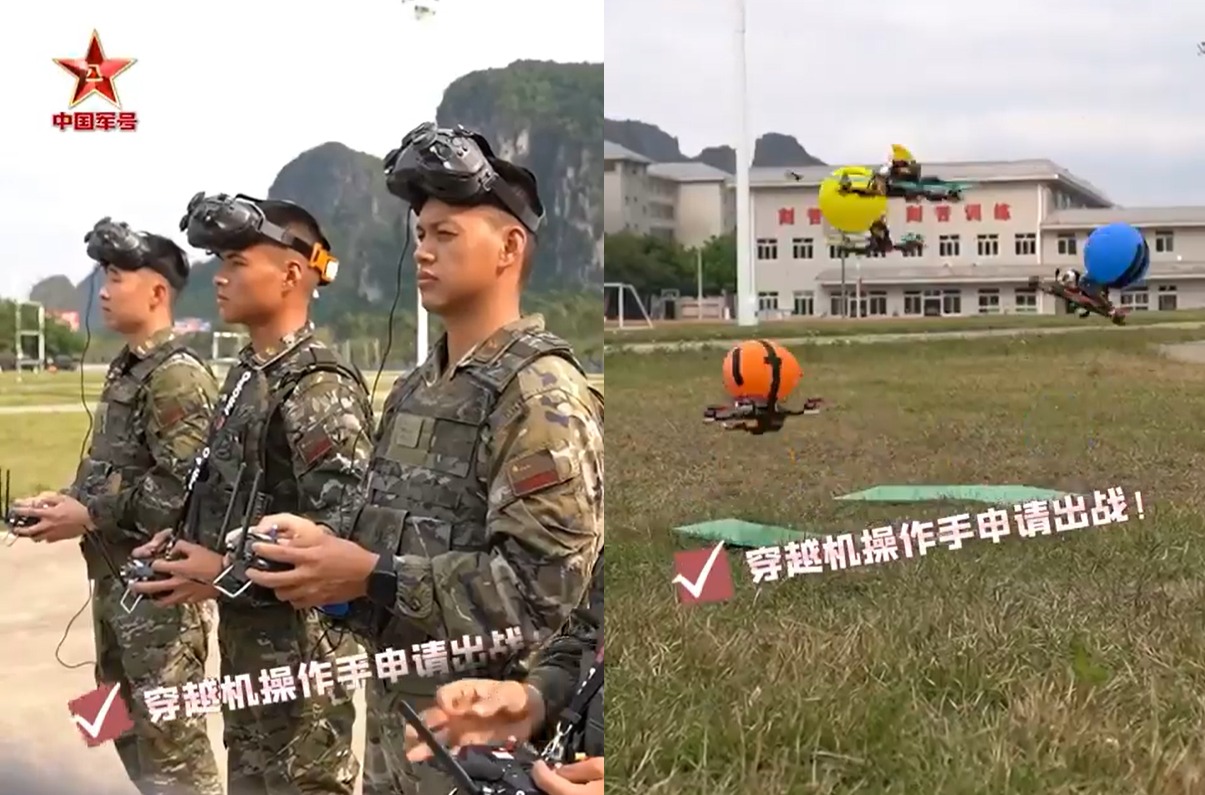
Chinese producers said advances in artificial intelligence have improved the systems’ accuracy over the past year, with some interceptors capable of speeds well above 300 kmph.
Most of the systems displayed in Shenzhen were small, 3D-printed rockets with four wings and electric motors. They fitted cameras and guidance modules to their noses. These interceptor drones cost RMB 10,000 to RMB 20,000 (about US$1,500 to US$2,900) each, while versions without automatic guidance systems were considerably cheaper.
Chinese company Shengying Technology said that it has started mass production of a new interceptor drone called the H-07.
According to Shengying Technology, the interceptor is designed to engage fixed-wing targets, delta-wing aircraft, and multirotor UAVs.
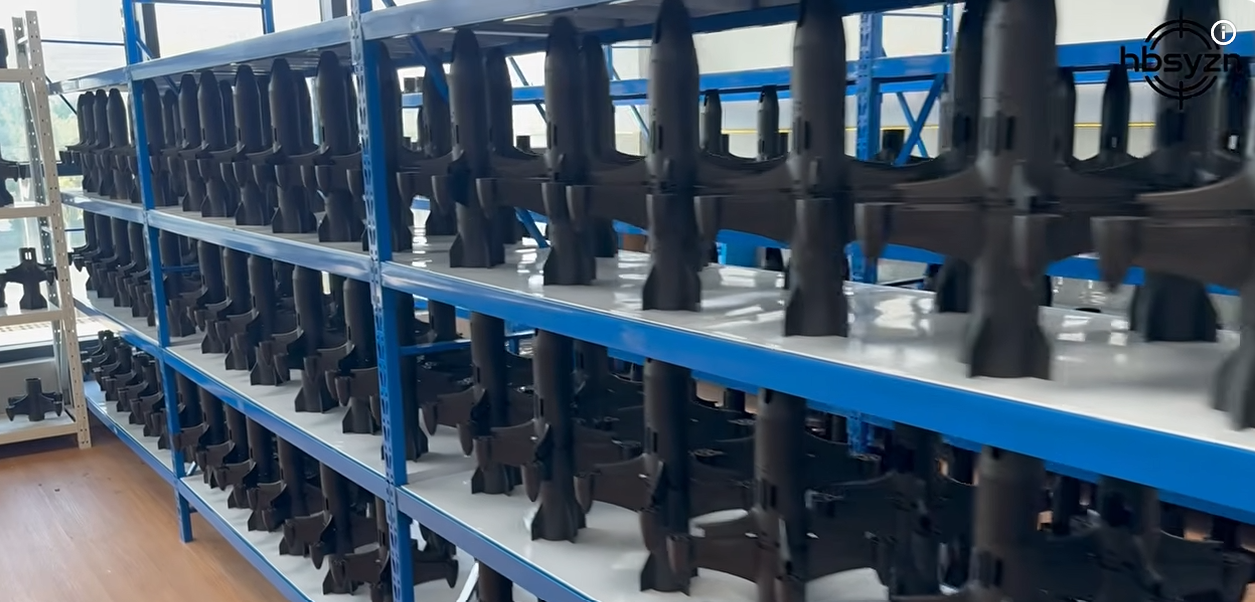
The drone has a 7-inch frame and can be launched from the ground or from a handheld launcher. It can reach a maximum speed of 320 km/h.
The H-07 uses the YOLO machine-vision tracking algorithm to detect and track targets.
However, the proliferation of such companies raises the question of how China is moving so quickly in this niche market.
The answer lies at the industry level.
In the global consumer drone market, China’s DJI holds over 70% of the market share.
From brushless motors to flight-control chips, from composite materials to AI vision modules, China has a mature, inexpensive, high-volume supply chain for all core components.
While for Russia and Ukraine, inventing and mass-producing drones was a wartime necessity, China already has a fully developed industrial base and supply chains for drone manufacturing. So, for China, mass-producing interceptor drones is simply a matter of assembling a few readily available parts.
Drones and drone interceptors share over 90% of components.
So, for a country with a fully developed industrial base and drone-manufacturing supply chains, mass-producing cheap interceptor drones is relatively easy once it develops the technology.
According to an article in local Chinese media, Beijing has already started deploying these interceptor drones to its frontline troops in Xinjiang, along the LAC.
According to the article, China’s mature drone industrial base means that all the money, time, and resources India is investing in drone warfare will be useless.
Advantages of drone warfare have been “validated in the Russia-Ukraine conflict, but the Indian army has overlooked a crucial variable—neither Russia nor Ukraine possesses a mature, standardized anti-drone system, while we do,” it said.
“The Indian FPV threat remains on paper, while we have already deployed countermeasures to the front lines. When the enemy achieves combat capability, they will find themselves facing a wall that has already been built,” it added.
However, developing interceptor drones can not fully negate the threat posed by drones.
Even in the Ukraine War, while Ukrainian interceptor drones had a claimed interception rate of over 90% against older propeller-driven models, their interception rates drop dramatically against newer jet-powered drones.
Newer jet-powered Russian drones can reach speeds of 500-600 km/hr, making them much harder to intercept.
As interceptor drone technology evolves, drones will improve as well. Jet-powered drones, AI-integrated drones, and drone swarms will make the game much harder for interceptor drones.
Both technologies are still evolving. It is too soon to make judgments that the advent of interceptors will make drone warfare obsolete.
- Sumit Ahlawat has over a decade of experience in news media. He has worked with Press Trust of India, Times Now, Zee News, Economic Times, and Microsoft News. He holds a Master’s Degree in International Media and Modern History from the University of Sheffield, UK.
- He can be reached at ahlawat.sumit85 (at) gmail.com