Tensions between Afghanistan and Pakistan are escalating after the Pakistani military bombed Afghanistan, which reportedly killed 36 people, most of them civilians. The Taliban responded with counter-operations targeting militants in Pakistan’s border provinces.
Pakistan claimed the Taliban forces “launched four rudimentary drones across the border in Balochistan… the hostile aerial platforms were immediately picked up by Pakistan’s robust air defense network”.
The Afghan defense ministry posted on X that it had carried out “airstrikes” in Balochistan and northwest Khyber Pakhtunkhwa province, which it said caused casualties among Islamic State (IS) group members.
Meanwhile, Pakistani commentators, security analysts, and research scholars at various think tanks believe that this troika of India, Israel, and Afghanistan is behind all the secessionist movements in the country.
They allege the war-like situation between Afghanistan and Pakistan is a direct result of this “unholy alliance”.
In their hypothesis, India would provide the funding and industrial capacity, Israel would supply the technology and intelligence, and the Taliban would contribute the fighters to target Pakistan.
The Conspiracy Narrative
For instance, speaking on Radio Pakistan, Defense Analyst Dr. Abdullah Gul said, “Attacks on Pakistan from Afghanistan started with Modi’s Israel visit, so these attacks are part of a greater agenda prepared by Israel and India in collaboration with the Afghan Taliban regime. As per the agenda, they kept Pakistan engaged with Afghanistan so they could easily target Iran.”
Similarly, Najam Sethi, a prominent Pakistani media personality, said on a news show that the Taliban are serving as a proxy for Israel and India against Pakistan.
Najam Sethi a senior analyst claims that Taliban are serving as proxy for Israel and India against Pakistan, with the involvement of US ambassador in India. If true, it suggests we aren't the next target, Israel already initiated a war against us. https://t.co/0QUx9Hdhh1
— Iffat Hasan Rizvi (@IffatHasanRizvi) February 28, 2026
Brig (Retd) Ghazanfar Ali Shah also said, “There is an India-Israel nexus, RAW and Mossad, their directors and entire teams are present in the Indian Embassy in Kabul, planning their operations and allocating targets to respective terrorist organizations.”
Pakistani news channel ‘Capital TV’ recently ran a talk show, titled ‘India, Afghanistan & Israel Alliance Against Pakistan.’
Another Pakistani TV channel, Geo News, ran a report: “Indian, Israeli, Afghan Nexus: A Growing Threat to Global Peace?”
Similarly, an academic paper published in March 2026, titled “The India-Israel-Afghanistan Strategic Nexus: Intelligence Cooperation, Counter-China Containment, and Pakistan’s Security Dilemma,” explores the topic in the context of intelligence sharing and threats to Pakistan.
“The growing rivalry among great powers, technological change in warfare, and securitization of infrastructure and connectivity initiatives have all served to reform the new security landscape in the region. In this evolving structure, states are increasingly turning to adaptable, problem-based, and, in many instances, discrete alignments to protect national interests.
“The most promising and least studied phenomenon in this regard is the increasing convergence of India, Israel, and Afghanistan. Although the states are geographically varied, politically diverse, and have immediate security priorities, these states have common areas of interest in the scope of militancy and instability in the region,” the paper argued.
Pakistan’s Defense Minister Khawaja Asif has also alleged that India is secretly supplying Israeli-made drones to Afghanistan, hidden inside medical aid boxes. Not one to be restrained by his own wild theories, Asif went further and suggested that the Iran War itself was part of an Indo-Israeli agenda to encircle Pakistan.
“Despite Iran’s readiness for an agreement, a war has been imposed upon them, and its agenda, orchestrated by the Zionists, includes bringing Israel’s influence right up to Pakistan’s border,” Asif said in a lengthy post on X.
“The joint single point agenda of Afghanistan, Iran, and India will then be enmity towards Pakistan, making our borders insecure, surrounding us with enemies from all sides, and turning Pakistan into a vassal state,” he said in the post.
These statements show that narratives alleging collusion between India, Israel, and Afghanistan against Pakistan enjoy considerable traction in Pakistan, resonating with media commentators, defense analysts, and even senior government figures.
Historical Irony
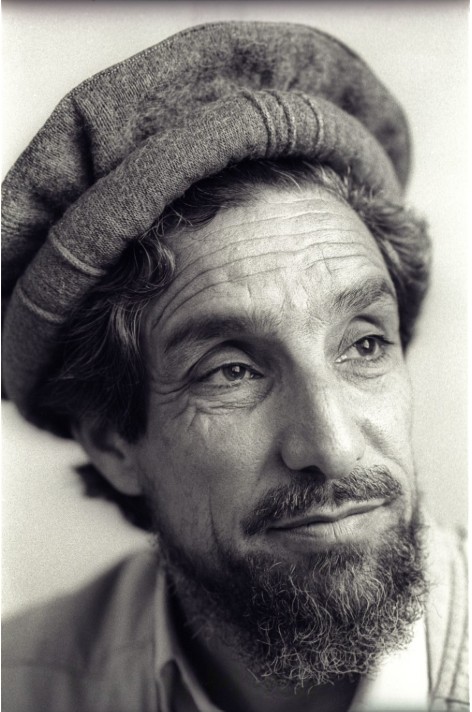
During the mid-to-late 1990s, as the Taliban rose to power in Afghanistan, India and Russia supported the anti-Taliban Northern Alliance, which was based in the Panjshir Valley of northern Afghanistan and led by Ahmed Shah Massoud. In contrast, Pakistan provided arms, funding, and training to the Taliban.
After the Taliban captured Kabul in 1996, it took several anti-India measures, including providing refuge and logistical support to the hijackers of Indian Airlines Flight IC 814 in Kandahar in December 1999. The Taliban allowed the hijackers to operate from Afghan soil and facilitated the release of three militants, including Masood Azhar, in exchange for the passengers.
Again, during the US involvement in Afghanistan from 2001 to 2021, India consistently supported the Afghan national unity government, while Pakistan provided a safe haven to the Taliban fighters.
When the Taliban again captured Kabul in August 2021, Pakistan felt triumphant. Shortly after, Pakistan’s then-ISI chief, Lt. Gen. Faiz Hameed, visited Kabul. He was photographed at the luxury Serena Hotel in Kabul, calmly sipping tea.
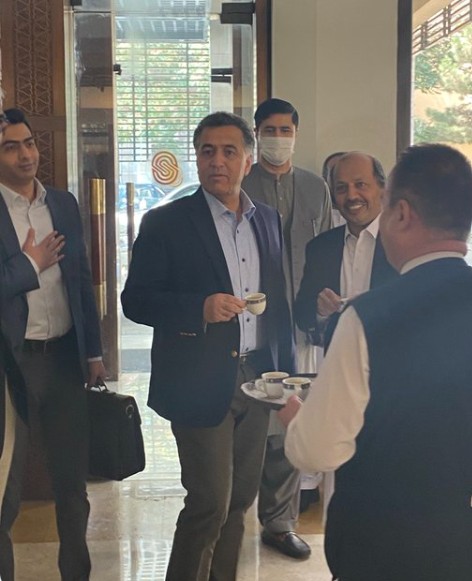
The image quickly went viral. Many saw it as a powerful visual symbol of Pakistan’s deep involvement with the Taliban and its rapid move to reassert influence in Afghanistan.
Pakistan has always used the Taliban as a proxy to turn Afghanistan into its strategic depth against India. Now, after years of supporting the Taliban, it is nothing short of ridiculous for Islamabad to claim that the Taliban is India’s proxy.
The reasons for Pakistan’s border clashes with Afghanistan are well known to everyone.
Roots of the Current Afghan-Pakistan Conflict
Afghanistan (including the Taliban) has never recognized the Durand Line, a colonial legacy that is the border between the two countries and which divided the traditional Pashtun lands into two parts.
However, disregarding Taliban sentiments, Pakistan is fencing the nearly 2,640-km-long Durand Line, in the process dividing tribes and families that have lived together for centuries.
Further inflaming the situation, since 2023, Pakistan has forcibly expelled over a million Afghan refugees from its territory.
Another reason for border clashes was the Taliban’s refusal to accept its role as a junior partner to the ISI, Pakistan’s spy agency.
Notably, the first major clashes between the Taliban and Pakistan took place in October 2025 when the Taliban foreign minister, Amir Khan Muttaqi, was visiting India.
The Pakistani air strikes on Afghanistan were widely interpreted as sending a not-so-subtle message to the Taliban that if it goes off script, then Islamabad will not hesitate to use the stick against it.
The banned militant group Tehrik-e-Taliban Pakistan (TTP) has released the footage of attack on military posts in dogar area of Kurram district.
Telegram- https://t.co/BATDqYgoyW pic.twitter.com/3iiOnxeR6x— InsurgentZone (@InsurgentZone_) June 29, 2026
The Propaganda Playbook
By alleging an “unholy alliance” between Hindu India, Jewish Israel, and the Taliban, Islamabad hopes to discredit the Taliban’s Islamic credentials and portray it as a proxy of anti-Muslim forces in the region.
This approach aligns with Islamabad’s broader efforts to rebrand the militant groups it once nurtured, portraying them not only as un-Islamic but as enemies of Islam itself.
Under the same strategy, since last year, Pakistan has started referring to Tehreek-e-Taliban Pakistan (TTP) militants as “Khwarij belonging to Indian proxy Fitna al Khwarij.”
In August 2024, Pakistan’s Federal Ministry of Interior issued a notification describing the Tehreek-e-Taliban Pakistan (TTP) as “Fitna al-Khawarij.”
On night 7/8 August 2025, movement of a large group of khwarij, belonging to Indian proxy Fitna al Khwaraj, who were trying to infiltrate through Pakistan-Afghanistan border, was detected by the security forces in general area Sambaza, Zhob District of Balochistan.
Own troops… pic.twitter.com/kNneEMrZrW
— DG ISPR (@OfficialDGISPR) August 8, 2025
The notification said that the TTP has distorted the image of Islam under the guise of religion. It further clarified that the term “Kharij” will be used alongside the names of these terrorists to expose their true identity.
The notification emphasized that the TTP has irrevocably damaged Islam and that these terrorists have no genuine interest in the religion.
According to the notification, titles such as ‘Mufti’ and ‘Hafiz’ were not to be used for individuals associated with terrorist outfits, and in all correspondence and documents, the term “Khariji” was to be used.

Who Are The Khwarij?
The term Khawarij means “renegades” and comes from the Arabic word for “those who left”.
It refers to a group of Muslims who were initially followers of the fourth caliph of Islam, Ali Bin Abi Talib.
Ali was the cousin and son-in-law of the Prophet Muhammad. This group, later known as the Khawarij, opposed Ali and broke away from him. They excommunicated Ali and subsequently killed him as they claimed that he did not rule by God’s laws.
“Khawarij were believed to be the first Muslim group to practice the excommunication of believers (takfir) and legitimize violence against those whom they deem infidels.”
The decision to use ‘Khwarij’ instead of TTP served two purposes for Pakistan.
One, Pakistan tried to show that the TTP movement has nothing to do with Islam. Instead, by calling them ‘Khwarij,’ meaning “those who left,” Islamabad highlighted that the TTP is harming the cause of Islam.
Secondly, by giving the TTP a new name, Islamabad underplayed Pakistan’s deep role in the financing, aiding, and arming of the group.
There is a remarkable similarity between Pakistan’s strategy to call TTP ‘Khwarij’ and ‘Fitna-al-Hindustan,’ and terming the Taliban as proxies for India and Israel.
Both are aimed at discrediting the Islamic credentials of these groups, while at the same time blaming India for the existence of these groups, whereas, in reality, Pakistan itself financed, armed, and supported these groups for decades.
Joseph Goebbels, the Nazi minister of propaganda, is best remembered for his ‘Big Lie Theory.’ “If you tell a lie big enough and keep repeating it, people will eventually come to believe it,” suggested Goebbels.
Adolf Hitler expressed a similar sentiment in his 1925 book Mein Kampf, where he accused Jews and Marxists of using it as a propaganda tactic: “The great masses of the people… will more easily fall victim to a big lie than to a small one.”
Hitler argued that ordinary people are less likely to suspect massive falsehoods because they themselves would not tell lies of such scale.
Of late, Pakistan seems to be borrowing tools straight from the Nazi propaganda playbook.
It believes that by calling TTP ‘Fitna-al-Hindustaan’ and Taliban as Indian proxies, the world will forget Islamabad’s deep involvement in the creation of such groups, and it can portray itself as a victim of terrorism and a bulwark against fighting religious extremism in the region.
Pakistan, however, has no one to blame but its own policies for the terrorism, secessionist movements, and deteriorating relations with Afghanistan.
Putting new labels on these groups will not solve Pakistan’s existential struggles.
- Sumit Ahlawat has over a decade of experience in news media. He has worked with Press Trust of India, Times Now, Zee News, Economic Times, and Microsoft News. He holds a Master’s Degree in International Media and Modern History from the University of Sheffield, UK.
- VIEWS PERSONAL OF THE AUTHOR.
- He can be reached at ahlawat.sumit85 (at) gmail.com