Indian airlines have reportedly expressed interest in up to 200 Russian Il-114-300 and SJ-100 aircraft, Vadim Badekha, the head of the United Aircraft Corporation (UAC), said in an interview with the Russian news agency TASS.
“India was the first to show serious interest in our aviation equipment. We participated in Wings India, where we showcased the SJ-100 and Il-114-300. Indian airlines have expressed demand for the Il-114-300 and SJ-100; we are talking about 100-200 aircraft,” he said.
Earlier, Badekha told journalists that the production of the first “Superjet” aircraft in India could begin in three years.
Badekha called the production rate of “Superjets” in India of 20-40 units per year a “good pace,” and overall, he estimated the potential of the Indian and nearby markets at 200-300 aircraft.
Earlier, as EurAsian Times reported, India’s Hindustan Aeronautics Limited (HAL) signed a Memorandum of Understanding (MoU) with UAC to produce the Sukhoi SJ-100 civil commuter aircraft in India.
India’s civil aviation sector is projected to require approximately 2,200 new commercial aircraft over the next 10 years (2025–2035) to support fleet expansion and replacement amid surging passenger demand.

The historic pact that will pave the way for the domestic manufacturing of a civil airliner in India was signed in Moscow on October 28.
This could be the first time a complete passenger aircraft is manufactured in India.
Russia’s Su-75 Checkmate Prototype Now Under Construction, First Flight Targeted for 2026: UAC Chief
The last such project carried out in India was HAL’s production of AVRO HS748, which started in 1961 and ended in 1988. HAL was permitted to build the HS 748 under license, allowing it to make 89 aircraft, of which 72 went to the Indian Air Force and 17 to the national flag carrier, Indian Airlines.
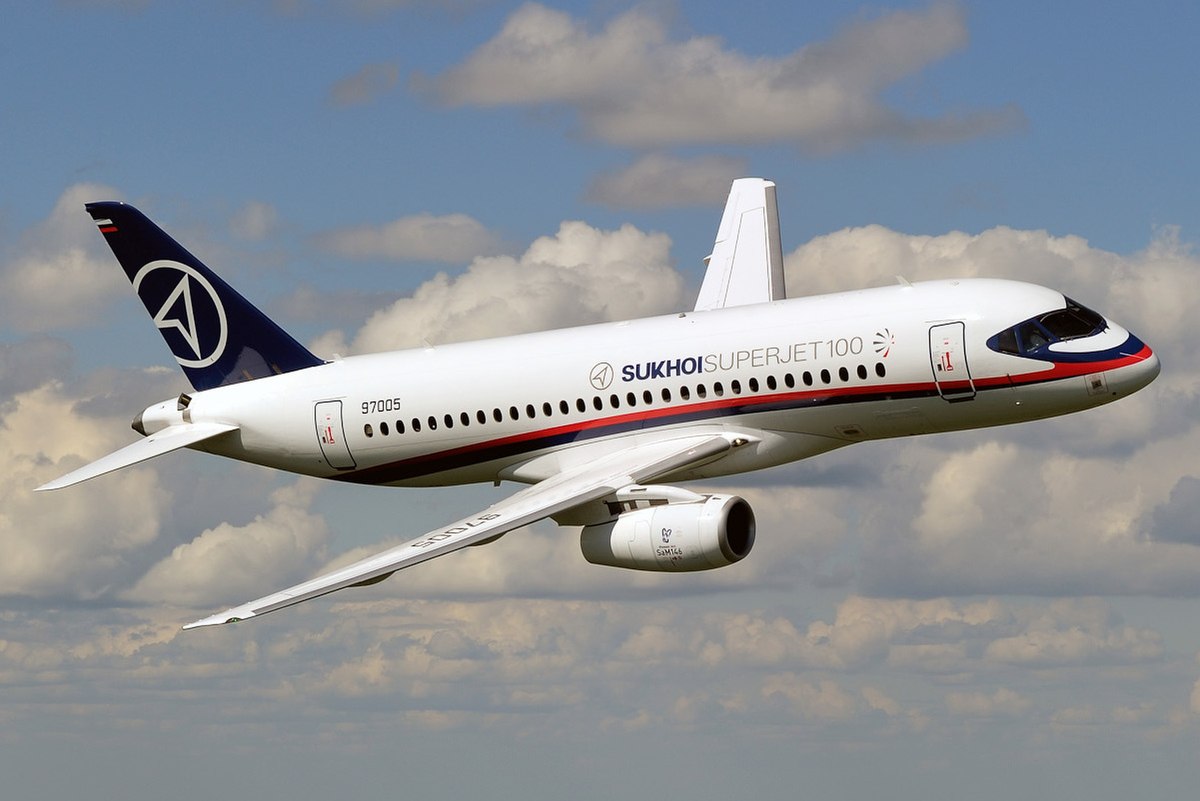
Sukhoi SJ-100
Currently in service with more than 16 commercial airlines, the SJ-100 is a twin-engine, narrow-body aircraft. Over 200 such aircraft have already been produced.
According to the HAL statement, “SJ-100 will be the game changer for short-haul connectivity under the UDAN Scheme in India. Under this arrangement, HAL will have the rights to manufacture SJ-100 aircraft for domestic customers.”
“This collaboration stands as a testament to the mutual trust and long-standing partnership between HAL and UAC,” the companies said in a statement. “It marks a new milestone in India’s journey towards becoming self-reliant in civil aircraft production.”
According to HAL’s estimates, over the next ten years, the Indian aviation sector will require more than 200 jets for regional connectivity alone.
The passenger jet is a relative newcomer to the civil aviation market.
The aircraft made its first flight in May 2008 and entered service in April 2011. The jet has a seating capacity ranging from 87 to 108 seats. In 2013, the jet received its first international order from Mexican carrier Interjet, which ordered 22 aircraft.
So far, over 230 aircraft have been constructed with 16 airlines flying the SJ-100. Of these, nearly 180 are flying within Russia, and almost 40 have gone to international customers, including Armenia, Thailand, and Kazakhstan.
IL-114-300
Earlier, UAC signed a preliminary agreement to supply six Il-114-300 turboprop aircraft to Indian startup Flamingo Aerospace. The deal was announced at the Wings India 2026 air show in Hyderabad, where the Il-114-300 made its international debut with SJ-100.
The Il-114-300 is an upgraded version of the Soviet-era Il-114, specifically designed for short-haul flights to serve smaller airports across the country and boost regional connectivity. The aircraft can carry up to 68 passengers and has a range of about 1,500 km.
Flamingo Aerospace plans to deploy the turboprops on domestic routes in India. It meets India’s push to expand air connectivity under the UDAN scheme. The pact also includes a roadmap for the potential localization and development of aviation capabilities in India, building on Russia-India cooperation in civil aviation.
UAC is positioning the Il-114-300 as a competitor to Western turboprops such as the ATR 72, targeting markets seeking trustworthy, low-cost aircraft that are less dependent on foreign supply chains. The aircraft completed key certification flights earlier this year, and serial production in Russia has escalated to meet domestic requirements.
- By ET Online Desk
- Mail us at editor (at) eurasiantimes.com