Iran’s Fars News Agency, which is affiliated with the Islamic Revolutionary Guard Corps, quoted a security official as saying that the UAE should immediately evacuate airports in Dubai and Abu Dhabi, as well as the ports of Fujairah and Jebel Ali, if the US attacks Iranian civilian infrastructure.
Meanwhile, Mohammad Marandi, a media member of Tehran’s negotiating team in Pakistan, wrote on X that if US President Donald Trump continues to target civilian infrastructure, the Islamic Republic will retaliate by attacking the vital infrastructure of his supporters.
Marandi wrote that the Kuwaiti government has paid the price for these attacks, and if this trend continues, the people of the UAE should distance themselves from potential targets.
Earlier, Kuwait stated that Iran struck a power and water plant as well as an oil facility, accusing it of targeting civilian infrastructure
“Another electricity and water distillation plant was targeted by a hostile attack that led to a fire erupting in one of the plant’s components,” Kuwait’s Ministry of Electricity and Water said in a statement.
The strike was the second on a Kuwaiti power and water plant in as many days, with the first on Friday also causing a fire and damage.
Saturday’s attacks sparked two blazes at separate locations that left several firemen and a worker injured, Kuwait’s fire service added.
“The repeated targeting of these vital facilities reveals a systematic hostile approach targeting civilian sites and vital infrastructure that endangers the lives and safety of civilians,” the foreign ministry said.
The country’s national carrier said air traffic at Kuwait International Airport had been temporarily suspended due to rocket and drone attacks, forcing most flights to be rescheduled.
Iran has stepped up attacks on Kuwait and Bahrain in recent days, both of which host major US military installations.
Drones targeted “aircraft shelters and parking areas, fuel storage tanks of the US military at Sheikh Isa Air Base, as well as several connecting bridges in Bahrain”, the Iranian army said.
UAE Worst Hit
The UAE has been the hardest hit during Iran’s retaliation against the US and its allies in the Middle East.
The US and Israel launched a coordinated military operation, “Operation Epic Fury,” against Iran on February 28, 2026.
Touted by US President Donald Trump as a preemptive strike to dismantle Iran’s nuclear program, ballistic missile arsenal, and military leadership. As the operation began, explosions rocked Tehran and other Iranian cities, targeting nuclear sites like Natanz and Fordow, missile production facilities, naval assets, and key command centers, among other high-value targets.
Iran’s Supreme Leader, Ayatollah Ali Khamenei, was killed in the operations.
Iran retaliated almost immediately with “Operation True Promise IV”, triggering a region-wide escalation. It launched missiles, drones, and other attacks on Israel, including Tel Aviv and Jerusalem, US bases in the Gulf region, and civilian or economic sites in the Middle East.
Washington maintains a substantial military presence in the UAE. This includes the Al Dhafra Air Base, which is the primary and most important US military facility in the UAE, hosting the US Air Force’s 380th Air Expeditionary Wing and supporting reconnaissance, intelligence gathering, combat air operations, fighter deployments, airborne early warning aircraft, tankers, drones, and surveillance missions across the region.
Additionally, there is Jebel Ali Port in Dubai, UAE, which is not a formal military base but is the busiest US Navy port of call in the wider Middle East. It is a major commercial deep-water harbor capable of berthing aircraft carriers and other large vessels. In fact, the US Navy ships frequently visit for logistics, resupply, and transit.
Due to its strategic importance in US operations, economic ties to international trade, and proximity to Iran, the UAE became one of Iran’s main targets.
In the first 72 hours of Operation Epic Fury, Iran reportedly launched more than 400 ballistic missiles and around 1,000 drones across the Gulf, several of them aimed at the UAE.
In response, the Emiratis used US-supplied THAAD (Terminal High Altitude Air Defense) and Patriot surface-to-air missiles to intercept the biggest aerial onslaught in its history.
To avoid detection, the Iranian attackers reportedly used a “mosaic defense” strategy that combined ballistic missiles with swarms of inexpensive drones, such as the Shahed-136 suicide variant, in decentralized launches from movable platforms such as trucks disguised as civilian vehicles.
This overwhelmed defenses through sheer volume, with Iran sustaining a high tempo for days before tapering due to alleged depletion in stockpiles.
The first wave targeted Al Dhafra Air Base near Abu Dhabi, a key US hub, with ballistic missiles and drones, with smoke rising over the capital as seen in the visuals flooding social media on February 28, 2026.
On March 1, 2026, Dubai came under attack. Reports noted that a drone swarm had hit near Palm Jumeirah, igniting a fire in a luxury hotel. Additionally, the blasts in a residential building that reportedly injured four were confirmed by the Dubai Media Office.
The same day, the UAE indefinitely closed the Dubai International Airport after drone interceptions littered runways with wreckage, stranding tens of thousands of travelers.
Iranian missiles also targeted the Jebel Ali Port, a global trade chokepoint, causing fires that disrupted shipping. Additional barrages also hit energy infrastructure, briefly halting operations at ADNOC facilities and Amazon data centers.
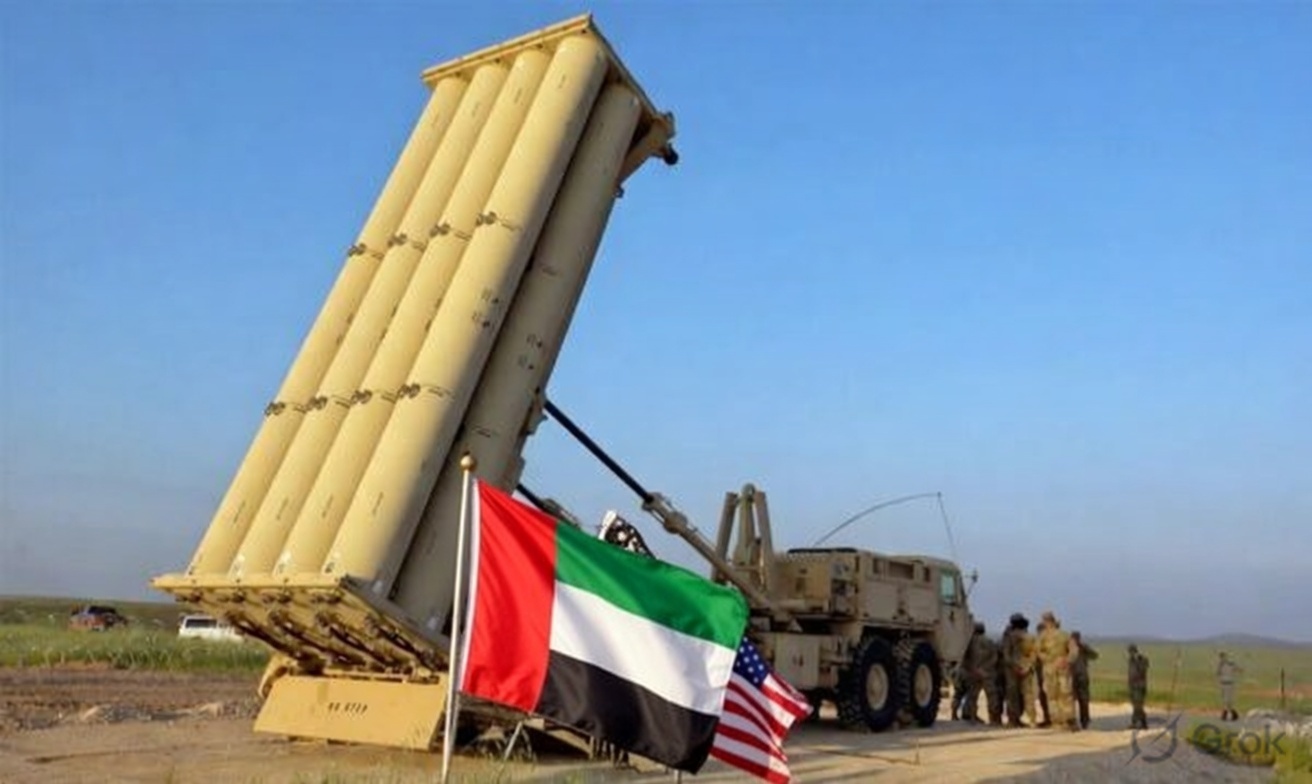
THAAD systems conducted multiple engagement cycles, achieving an interception rate of about 85%, but Emirati officials have allegedly admitted to “challenges with low-flying drones.”
Since then, the volume of attacks on the UAE territory has decreased, but the precision has risen sharply. According to Emirati estimates, the total number of projectiles targeting UAE assets exceeded 1,000. This has not only created a dangerous situation across the country but also hurt its economy and tourism.
France deployed Rafale fighter jets over the UAE to defend its own military bases against rising Iranian threats, as reported by the EurAsian Times.
Iran launched more than twice the missiles and around 20 times as many drones toward Gulf states compared to Israel, according to data released by the Israeli Institute for National Security Studies on March 4, with the UAE and Kuwait bearing the brunt.
- By ET Desk with AFP Inputs
- Follow EurAsian Times on Google News