If anything, China’s welcoming the sudden decision by Papua New Guinea (PNG) on July 16 to close “immediately” Taiwan’s representative trade and economic office in Port Moresby sends a message not only to Taiwan but also to Australia, New Zealand, and the United States.
The US said it was “deeply concerned” by reports that Papua New Guinea has ordered the closure of Taiwan’s representative office in the country, adding it was part of Beijing’s intimidation campaign.
In fact, there are reasons to believe that this development in the PNG is linked to China conducting a submarine-launched ballistic missile (SLBM), a weapon designed for nuclear war, in the South Pacific on July 6, the day Australia and Fiji signed two historic treaties in Suva – the Vuvale Union and Ocean of Peace Alliance, binding the two countries to mutual defense obligations, security cooperation, and economic ties.
Security experts saw the Chinese test as a clear warning by Beijing of its intent to challenge any effort by Australia or the US to strengthen regional ties in Oceania, particularly any that counters Chinese efforts for forward influence or even a military presence.
Papua New Guinea is a Pacific island country north of Australia that recognizes Beijing but has maintained unofficial economic ties with Taiwan so far, something that many countries, including India and the US, have done, following the diplomatic framework of the “One-China” policy.
Obviously, Taipei has been surprised by PNG’s unilateral decision, which it views as having been made under Chinese pressure and without prior consultation. After all, PNG is a critical pillar of Taiwan’s energy diversification, supplying 1.2 million tonnes of LNG annually. In 2025, PNG (6%) and Australia (38%) together supplied 44% of Taiwan’s LNG from south of the equator.
Geographically, the PNG-Taiwan route bypasses volatile chokepoints such as the Strait of Hormuz and the Strait of Malacca, offering a highly resilient energy corridor. However, Taiwan’s growing diplomatic exclusion and the closure of its economic office in PNG could undermine this security. Beyond trade, this maritime corridor serves as a vital alternative route for commercial shipping, military logistics, and undersea infrastructure in the event of a South China Sea conflict.
Besides, the PNG-Taiwan LNG route extends far beyond bilateral trade, serving as a vital link within a broader Pacific network of energy sea lines. Spanning the Coral, Bismarck, Solomon, and Philippine Seas, this corridor approaches the First and Second Island Chains.
During a South China Sea or Taiwan contingency, these waters offer a crucial alternative route for commercial shipping and military logistics. Furthermore, this maritime zone is indispensable for regional military mobility, digital connectivity, and undersea infrastructure.
Viewed thus, the development in PNG is a Chinese warning to the US, Australia, Japan, the Philippines, and Pacific Island countries as well. Understandably, on July 18, the US criticized PNG’s order closing the Taiwan office. A State Department spokesperson described the decision as “another example” of Beijing intimidating Taiwan and countries that support its international participation. The spokesperson termed such pressure an attempt to undermine countries’ right to decide whether to cooperate with Taiwan.
The spokesperson said Beijing’s actions also threatened international peace and prosperity, adding “Taiwan is a reliable, democratic, and like-minded partner whose international ties brought significant benefits to people in countries including Papua New Guinea”.
Incidentally, China is PNG’s largest trading partner among Pacific island nations. Bilateral cooperation focuses heavily on energy, mineral resources, and infrastructure development. China remains a significant provider of development assistance to Papua New Guinea, which includes deploying regular Chinese medical teams and conducting humanitarian naval missions.
At the same time, PNG has a security treaty with Australia. The “Pukpuk Treaty” (formally the Papua New Guinea–Australia Mutual Defense Treaty) is a landmark security and defense agreement signed on October 13, 2025. Under this, PNG requires consultation over third-party activities that could affect its implementation.
“Best Year” for CIA, China Collection Doubled: U.S. Spy Chief Hails Human Intel Despite AI Push
In the case of closing the Taiwan office, PNG apparently did not consult Australia, even though the decision, as pointed out above, has long-term strategic implications.
The EurAsian Times had once discussed how countries like New Zealand and Australia are increasingly uncomfortable with China’s security drills in this part of the Pacific Ocean and with China’s conclusion of a series of economic and security agreements with the Pacific Island nations. Over the last decade, and with accelerating intensity since 2019, China has expanded its presence across the South Pacific.
From Honiara to Tarawa, from Port Vila to Suva, Beijing has combined infrastructure investment, wooing the elites, security agreements, and diplomatic pressure into a single coherent strategy. While presented as development assistance for small island developing states, this campaign carries a powerful and deliberate message for audiences in Canberra, Wellington, Taipei and Washington.
The first element of China’s strategy is the systematic dismantling of Taiwan’s diplomatic space. The Pacific was long one of Taiwan’s last strongholds of formal diplomatic recognition. In 2019, Beijing scored a double breakthrough when both the Solomon Islands and Kiribati switched recognition from Taipei to Beijing within a week of each other. The methods were instructive.
In both cases, there were promises of massive infrastructure, budget support, and development funds that Taipei could not match. In the Solomon Islands, the switch was followed by a reported $500 million package. In Kiribati, it involved support for upgrading airstrips on Kanton Island and other strategic atolls.
Beijing is showing that it can erase Taiwan’s international personality. China’s actions convey to the people of Taiwan that it can afford to buy while their space shrinks year by year.
As of now, Taiwan retains only three Pacific allies: Palau, Tuvalu, and the Marshall Islands. But all three are under intense pressure from Beijing.
When Kiribati or Nauru or the Solomons switch, Taiwan loses more than a flag on a map. It loses a voice that would speak for it at the Pacific Islands Forum, it loses landing rights, it loses maritime cooperation, and it loses the psychological reassurance that it is recognized as a legitimate member of the international community.
The second feature of China’s South Pacific strategy is security normalization with the island nations, conveying, as pointed out above, unmistakable messages to other littoral countries, including the US. For instance, the April 2022 China-Solomon Islands security framework agreement allows Chinese naval vessels to dock, logistical replenishment, and the deployment of Chinese police and armed forces at Honiara’s request to maintain social order. Since then, Beijing has built on this template. Chinese police advisers and equipment have been deployed to the Solomons, Kiribati, Vanuatu and Samoa under the banner of internal security training.
Syria Emerges “Unexpected Winner” From Strait of Hormuz Blockade as Gulf States Plan To Bypass Iran
Of course, China does not have any full-fledged military bases in these countries. But by obtaining access to these countries, legal cover, and a permissive environment, its commercial port with a Chinese state-owned operator, a police training center with a small permanent security liaison, and an airstrip that can receive a Y-20 transport aircraft in a humanitarian emergency, China could alter America’s strategic calculations in any crisis involving Taiwan or any other country in this part of the world.
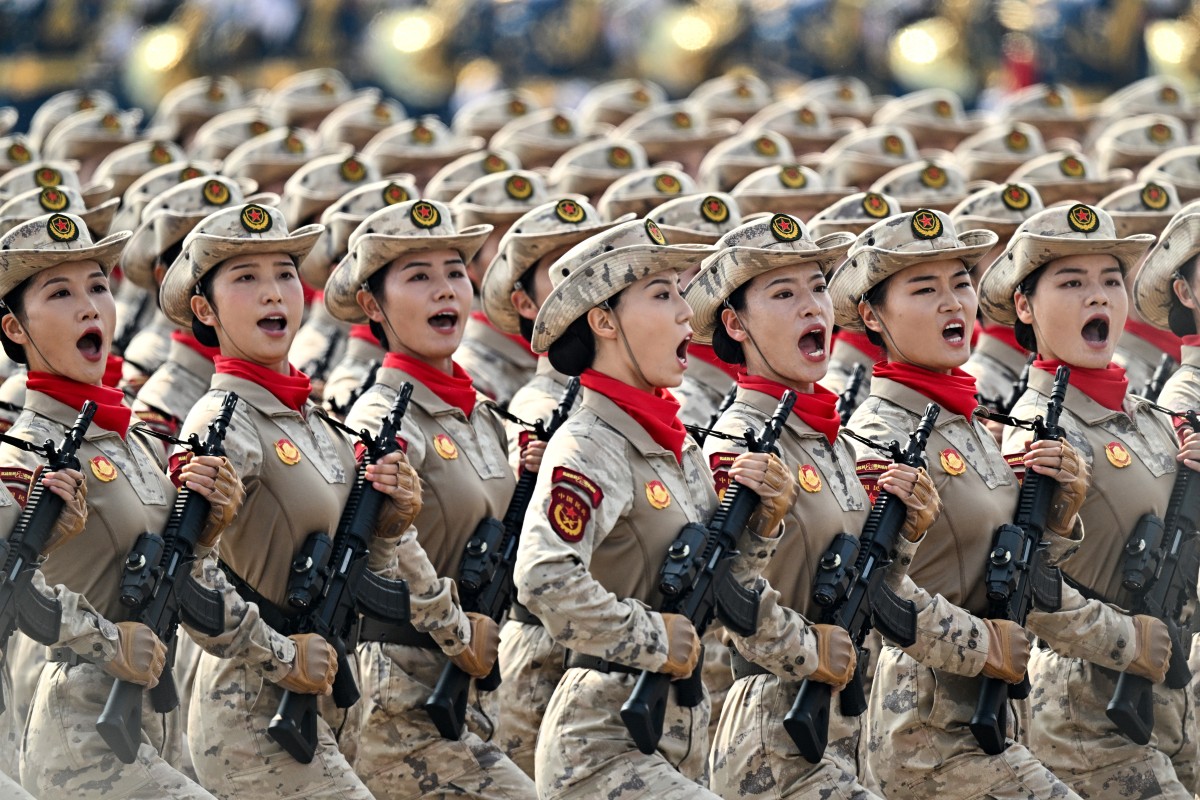
American strategic planning in the Pacific has rested on the concept of two island chains. The first island chain, from Japan through Taiwan to the Philippines, is the line China must break through. The second island chain, from Japan through Guam to Palau and Papua New Guinea, is America’s secure rear area, where it stages forces, repairs ships, and launches air power. China’s Pacific islands strategy thus seems to be a deliberate flanking maneuver around the first chain to undermine the second.
The third element is economic and informational coercion, demonstrated at a small scale to preview a larger campaign. The Pacific Islands provide a perfect laboratory for tactics China would use against Taiwan and to deter the US.
When Palau, which recognizes Taiwan, refused to switch, Beijing banned Chinese package tours to Palau in 2017, devastating its tourism sector, which had been 50 percent reliant on Chinese visitors. When the Solomon Islands experienced anti-government riots in 2021, Beijing quickly offered riot gear, police training, and surveillance technology, showing Pacific elites that China provides regime security without human rights lectures.
When Australia and New Zealand raised alarms about the Solomons security pact, Chinese state media and diplomats accused them of colonialism, leveraging genuine post-colonial sentiment in the islands to divide the traditional partners.
For Taiwan, this is a live rehearsal of encirclement and isolation. The economic punishment of Palau mirrors the targeted trade sanctions that Beijing has imposed on Taiwan’s pineapple farmers, grouper fishermen, and tech sector. And now its action in PNG endangers its energy security.
For the United States, the information campaign shows how China will attempt to fracture any coalition to defend Taiwan. If Beijing can frame its presence in the Solomons as anti-colonial development and paint US and Australian objections as neo-imperialism, it can use the same narrative in Southeast Asia and in the United Nations when a Taiwan contingency arises.
The message is that America will find it difficult to assemble a moral and political coalition, even among democracies, when China has already bought goodwill and dependency.
China also has an added advantage in the broader Indo-Pacific: while countries such as South Korea, Japan, Australia, and New Zealand do seem to share concerns regarding China’s growing military capabilities and coercive behavior in the maritime domain, this threat perception remains far less uniform across the broader region. Many countries, including India, continue to prioritize strategic autonomy and avoid formal alignment.
Consequently, efforts to build a region-wide security institution or transform existing ones into a collective defense institution, something like NATO in Europe, are likely to be difficult.
In sum, China’s actions in the Pacific Islands are not simply a sideshow to Taiwan. Every port lease, every security agreement, every switched diplomatic recognition is a tile in a mosaic depicting an Indo-Pacific in which Taiwan stands alone, and America is increasingly overstretched and politically isolated.
No wonder strategic experts in the region’s democracies say the time has indeed come for a strategic recalibration among the US and its allies and partners in the Indo-Pacific.
- Author and veteran journalist Prakash Nanda is Chairman of the Editorial Board of the EurAsian Times and has been commenting on politics, foreign policy, and strategic affairs for nearly three decades. He is a former National Fellow of the Indian Council for Historical Research and a recipient of the Seoul Peace Prize Scholarship.
- CONTACT: prakash.nanda (at) hotmail.com