The Indian Air Force (IAF) held a week-long counter-drone exercise to strengthen its capabilities against low-cost unmanned aerial systems.
The primary goal of the exercise, dubbed “Rotor Clap-III”, was reportedly to assess and refine operational principles to address emerging aerial threats from unmanned systems. The exercise concluded on August 2.
The Counter-Unmanned Aerial System (UAS) drill was held at the Pokhran Field Firing Range in the Thar Desert.
The site is best known as the location of India’s nuclear tests in 1974 and 1998, but its vast, sparsely populated expanse near the India-Pakistan border supports secure live-fire practice, helicopter operations, and high-intensity training while closely matching the terrain, climate, and conditions of the western theatre.
The drills were also aimed at improving the IAF’s helicopter fleet’s operational capabilities against threats posed by drones.
#IAF Helicopters undertook, Exercise ROTOR CLAP III themed "Counter-UAS" in Rajasthan.
The exercise brought together helicopter units of the #IndianAirForce to validate operational concepts against emerging aerial threats#ExerciseRotorClapIII #CounterUAS@DefenceMinIndia… pic.twitter.com/8nFwAQGm5T
— Indian Air Force (@IAF_MCC) August 1, 2026
Several IAF helicopter units participated in the exercise, conducting tactical missions such as coordinated actions against both aerial and ground-based threats, soldier insertion, reconnaissance, precision attacks, battlefield support, and casualty evacuation.
The drills evaluated integrated helicopter tactics, procedures, and coordination in simulated combat conditions.
Moreover, the aircrew and operational units had the opportunity to test and validate mission planning, inter-unit coordination, quick response, and cooperative operations in near-war scenarios throughout the exercise. According to reports, special emphasis was placed on ensuring smooth coordination among multiple helicopters in the desert terrain.
Notably, helicopters are increasingly being employed worldwide in counter-UAS roles, especially against slower, low-cost loitering munitions and reconnaissance drones. Russia and Ukraine, for example, routinely use military helicopters for this purpose, whereas Gulf countries have recently started deploying their own choppers to down Iranian drones.

In general, helicopters make good counter-UAS platforms because many of them cruise at speeds similar to those of propeller-driven drones such as the Shahed class, enabling them to close the distance, match altitude, and make repeated engagement passes—advantages not available to fast jets, which are limited to a single high-speed pass.
Typically, helicopters can also operate from dispersed or improvised sites, fly low and slow, and loiter over threat areas. Equipped with thermal or electro-optical sensors and night-vision systems, they are effective at detecting and engaging low-flying drones after dark.
Once the helicopter matches the drone’s path, gunners or automated systems use proximity-fuzed rockets or brief bursts of cannon or machine-gun fire to neutralize a drone.
Therefore, these armed helicopters form one mobile layer alongside ground-based guns, electronic warfare, interceptor drones, and high-end surface-to-air missiles (SAM).
Using helicopters as counter-drone platforms is also cost-effective, given that machine guns, cannons, and rockets are far cheaper per engagement than surface-to-air missiles or fighter sorties. In fact, the US has now integrated its Apache helicopters with APWKS laser rockets to further reduce the cost of hunting drones.
The IAF operates a range of different military choppers—AH-64 Apache, the aging Mi-25 and Mi-35 attack helicopters, the LCH Prachand, Chinook Heavy-lift transport helicopter, the Mi-17 Medium utility helicopter, and the ALH Dhruv
Sources said the exercise reaffirmed the IAF’s commitment to high operational readiness and adaptation to new security challenges. It forms part of India’s broader push to strengthen counter-UAS capabilities at a time when inexpensive small drones, loitering munitions, and sophisticated unmanned systems have upended the cost calculus of conflict and changed the face of conventional warfare that India has participated in.
India’s Counter-Drone Effort Inspired By Op Sindoor
India’s heightened focus on counter-drone measures is driven by global trends, persistent cross-border drone activity, and, most significantly, experience gained during Operation Sindoor in May 2025, which it launched against Pakistan-based terror infrastructure.
Pakistan retaliated almost instantly and employed large numbers of drones as a core element of its response codenamed Operation Bunyan al-Marsus.
Indian official briefings stated that Pakistan launched swarms of drones in major coordinated waves. According to the Government of India’s official press briefing, Pakistan launched 400–500 drones in a coordinated reconnaissance and SIGINT (Signal Intelligence) operation. These were intended to clutter Indian radars, force air-defense systems to expend ammunition and attention, probe for gaps, and mask the presence of a smaller number of more capable surveillance or attack drones.
Pakistan has invested heavily in drone manufacture using indigenous capabilities acquired from allies like Turkey and China, as previously explained in detail by the EurAsian Times. During the conflict, it used Turkish Asisguard Songar, Turkish Yiha-III, Bayraktar TB2 drone, and Chinese drones like the CH-4 and Wing Loong II, to name a few.
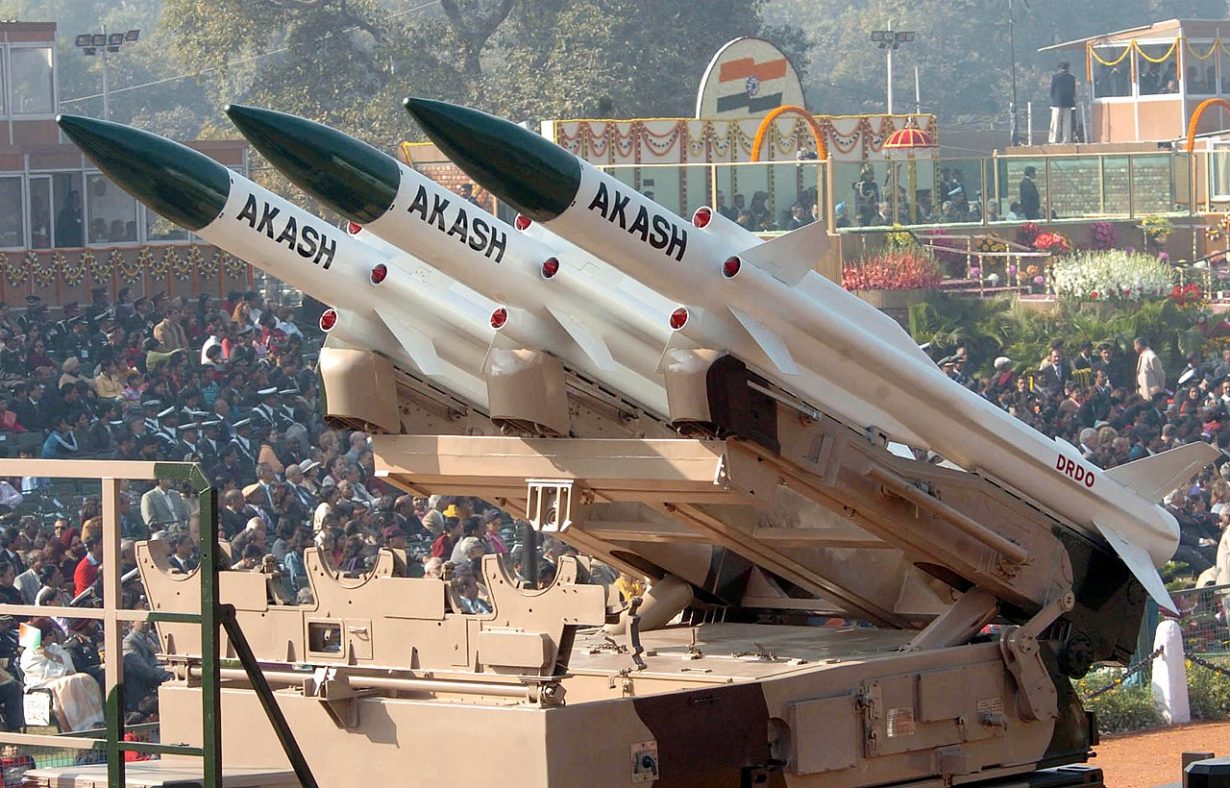
India stated that the large majority of incoming drones were neutralized by a combination of kinetic systems (anti-aircraft guns, including the L-70, ZU-23, and Schilka, as well as surface-to-air missiles such as Akash), and non-kinetic measures (spoofing and jamming).
While India has significantly expanded its own inventory of drones, many of which were used successfully and decisively against Pakistani targets during the war, the intensity of drone use by the Pakistani military during the four-day intense conflict has accelerated Indian investment in counter-drone programs and tactics.
For example, counter-drone grids are being incorporated into Mission Sudarshan Chakra, a long-term, AI-enabled, multi-layered national air-defense shield announced last year.
In early July 2026, the Defense Acquisition Council granted Acceptance of Necessity for procurement proposals worth approximately ₹52,000 crore. These include the indigenous Akash Tarang anti-UAV electronic-warfare system for the Army, Very Short-Range Air Defense Systems (V-SHORADS) to bolster low-altitude defense against drones, and jet-powered kamikaze drones, underscoring the priority now attached to both unmanned systems and counter-UAS capabilities
A range of new counter-drone systems developed jointly by public- and private-sector entities are at various stages of testing.
Last year, for instance, India’s Defense Research and Development Organization (DRDO) unveiled the D4 (Drone Detect, Deter, Destroy) anti-drone system, which is now being deployed along key border areas. This integrated counter-drone solution is designed to detect and neutralize rogue unmanned aerial vehicles (UAVs) with precision.
Earlier this year, the Indian Ministry of Defense (MoD) announced the completion of development trials of the Unmanned Aerial Vehicle Launched Precision Guided Missile-V3 (ULPGM-V3) in air-to-ground and air-to-air modes. The ULPGM is designed for UAV integration to destroy soft and hard targets, on the ground and in the air.
Similarly, India-based Zen Technologies launched an enhanced variant of its counter-unmanned aircraft system (C-UAS) that is already in service with the Indian Armed Forces in May 2026. The new variant of the system reportedly has increased detection and jamming ranges and is integrated with AI for improved threat detection.
These are just a few examples of India’s counter-drone effort.
The armed forces are also conducting dedicated counter-drone exercises based on lessons from Operation Sindoor. In October 2025, for instance, India’s largest drone and counter-drone warfare drill, Exercise Cold Start, was conducted in Madhya Pradesh to evaluate the effectiveness of the existing air defense
Therefore, the recently concluded Rotor Clap-III, focused on the IAF’s helicopter fleet, is another step in preparing for operations on a battlefield increasingly dominated by drones.
- Contact the author at sakshi.tiwari13 (at) outlook.com
- Follow EurAsian Times on Google News