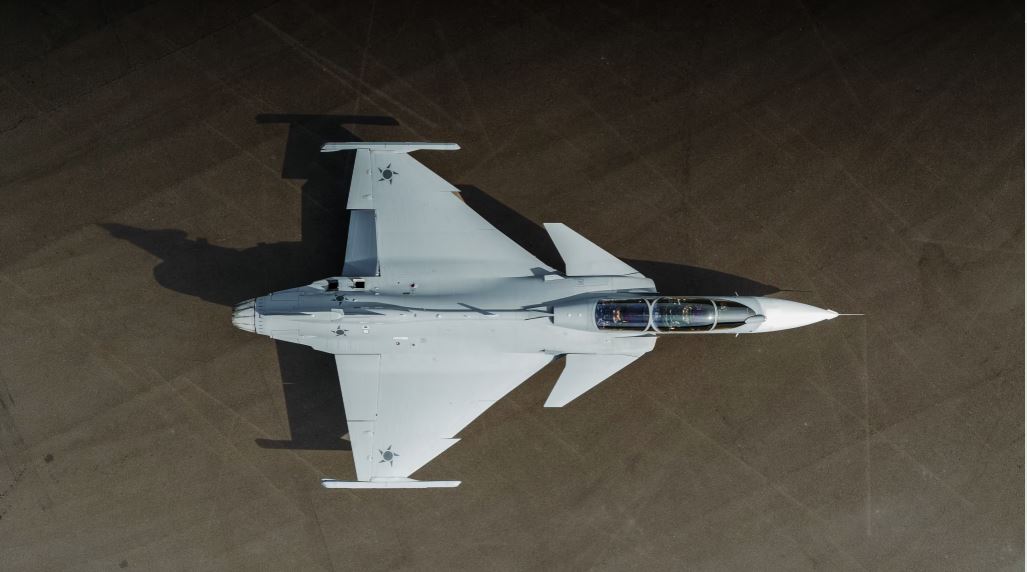
After China’s J-20, Russia’s Su-57, and South Korea’s KF-21 rolled out the twin-seat variants of their fighter jets, Saab has now unveiled a twin-seat variant of its Gripen E fighter jet.
The twin-seat variant, termed Gripen F, and developed in partnership with Brazilian industry, rolled out on June 2 at a ceremony held at Saab´s facilities in Linköping, Sweden.
Gripen F is the two-seat variant of the Gripen E series and has been developed to meet the training and operational requirements of modern air forces by combining conversion training and combat capability on the same platform.
Notably, just like the Gripen E, the Brazilian Air Force will get its hands on the new twin-seat Gripen F ahead of the Swedish Air Force.
The Brazilian Air Force (FAB) officially declared the first two Gripen E fighters operational in December 2022, three years ahead of their operationalization in the Swedish Air Force. This was the first incident in which a foreign air force operationalized a fighter jet before it entered the air force of the country that developed it.
As the launch customer, Brazil played an active role in the co-development of the two-seat variant, enabling direct industrial participation and long-term cooperation. Through an extensive transfer-of-technology (ToT) program, Brazil has trained hundreds of engineers and technicians while strengthening its national industrial base’s advanced design and development expertise.
Brazil was the first export customer for the Gripen E (JAS 39E/F) variant.
In October 2014, Brazil signed a major contract, valued at around US$5.4 billion, with Saab for 36 Gripen fighters.
The deal included 28 single-seat Gripen E and eight two-seat Gripen F fighter jets. Deliveries began in 2020, and to date, 11 aircraft (Gripen E) have been handed over.
This deal included significant technology transfer, local production in Brazil by Embraer, and support packages.
The first Gripen E fully produced in Brazil was unveiled in March 2026 at Embraer’s Gavião Peixoto facility.
“The rollout of Gripen F represents a shared achievement between Saab, Brazilian industry, and the Brazilian Air Force, reflecting the deep trust we have built together over many years. Developing this aircraft together demonstrates the maturity of this collaboration. It represents not only a highly capable fighter for the Brazilian Air Force, but also the tangible outcome of sustained joint development and shared ambition,” said Lars Tossman, head of Saab’s business area Aeronautics.
However, before final delivery to the Brazilian Air Force, the aircraft will be transferred to Saab’s Flight Test Center in Sweden, where it will start a dedicated flight test campaign.
“Designed for an era of rapid transformation, Gripen F delivers world-class performance, sensors, and revolutionary architecture, mirroring Gripen E,” Saab said in an official statement.
The twin-seat variant has been developed primarily for training purposes.
The Gripen F aircraft retains the same mission systems, sensors, and performance characteristics as the single-seat Gripen E while adding a second cockpit for instructors and trainee pilots.
“The addition of a fully independent second cockpit enables instructor-guided missions in a fully operational fighter, giving trainee pilots realistic live mission conditions,” Saab said in its statement, adding that it will dramatically reduce pilot training timelines.
However, the twin-seat variants can also be useful in combat situations, by “enhancing operational effectiveness in high-threat environments through shared workload and improved mission command.”
Notably, the unveiling of Gripen’s twin-seat variant fits into a pattern in which many countries have recently introduced twin-seat variants of their latest fighter jets.
While in many cases the twin-seat variants’ primary purpose is pilot training, some have introduced dedicated two-seat combat platforms.
The Comeback of Twin-Seat Fighter Aircraft
In January this year, South Korea made a historical announcement.
South Korea announced that its domestically developed fighter jet, the KF-21 Boramae, had completed its flight test program.
The six aircraft prototypes had completed over 1,600 sorties without a single accident. Notably, two of the six prototypes were twin-seat variants.
The twin-seat KF-21 Boramae is not just a pilot training platform but is also designed for missions requiring a second crew member, such as future collaborative combat aircraft control (MUM-T) or electronic warfare.
In fact, the first series-production KF-21 to roll out of KAI’s factory in Sacheon on 25 March is a twin-seat variant.
The Republic of Korea Air Force (ROKAF) aims for 120 KF-21 Boramae aircraft by around 2032. However, Seoul has not disclosed how many of these could be twin-seat platforms.
Similarly, last month, pictures emerged of Russia’s first two-seat version of the Sukhoi Su-57 Felon, its most modern and capable fighter. Russian media reports claim that the aircraft is currently undergoing flight trials.
The twin-seat Su-57 has an elongated forward fuselage with a tandem two-seat cockpit that bears an uncanny resemblance to the Su-30’s cockpit.
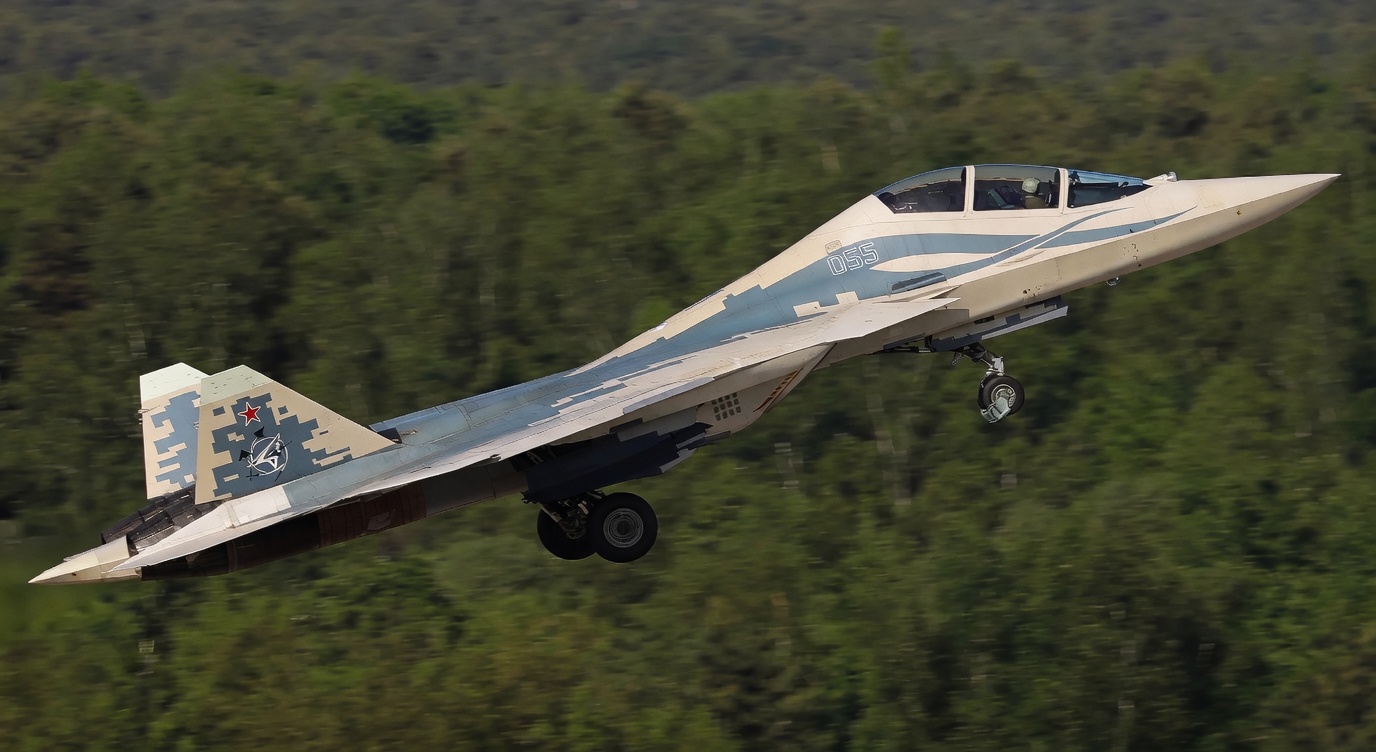
There is also speculation that the two-seat Su-57 is intended to operate alongside loyal wingman drones, specifically the Sukhoi S-70 Okhotnik-B (Hunter-B) flying-wing uncrewed combat air vehicle (UCAV).
In a twin-seat configuration, the second crew can act as a ‘mission commander’ for the manned-unmanned teaming (MUM-T), controlling the uncrewed systems and coordinating tactics from the rear seat.
Russia would also aggressively pitch the twin-seat Su-57 in the export market. India, in particular, has always been interested in a two-seat version of the Su-57.
In 2003, Russia and India signed a letter of intent concerning the joint development of the Prospective Multirole Fighter (PMF), commonly referred to in India as the Fifth-Generation Fighter Aircraft (FGFA). Reportedly, India wanted a twin-seat PMF. However, India walked away from the project in 2018 due to differences over design and workshare agreement.
Moscow is now pitching the Su-57 to India, and the twin-seat variant, the Su-57D, could be particularly appealing to New Delhi.
Both of America’s fifth-generation stealth fighters, the F-35 Lightning II and the F-22 Raptors, are single-seat aircraft.
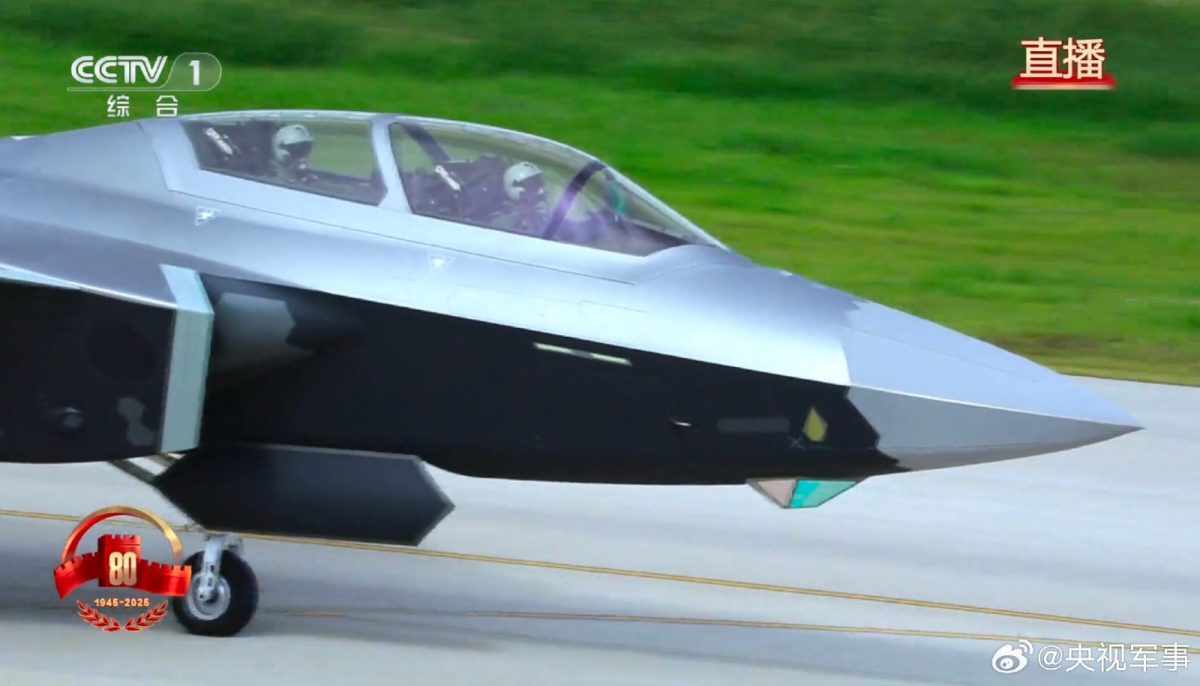
Meanwhile, China has developed its own twin-seat fifth-generation stealth fighter. In fact, China was the first country to roll out a twin-seat stealth fighter jet. In November 2024, China officially unveiled the scale model of the two-seat J-20S variant at the Zhuhai Airshow.
Then in September 2025, the J-20S made its public debut as an operational PLAAF asset during China’s V-Day military parade.
The J-20S was also described as the world’s first operational two-seat stealth fighter, intended for roles like pilot training, complex mission management, drone teaming (MUM-T), and battle management.
Twin-seat fighters are making a strong comeback as manned-unmanned teaming, drone swarm control, and electronic warfare become essential parts of combat missions.
Modern air combat involves managing sensors, electronic warfare, data links, multiple weapons, and coordination. A Weapon Systems Officer (WSO) can handle these, reducing pilot overload.
Besides, many buyer nations lack advanced simulators or training pipelines. A twin-seater serves as both a combat aircraft and a trainer.
Twin-seater aircraft could also serve as mini-AWACS, directing other fighter jets and drones while remaining stealthy themselves. Ironically, the use of swarm drones and MUM-T in future aerial combat might have given a new impetus to two-seat fighter jets.
- Sumit Ahlawat has over a decade of experience in news media. He has worked with Press Trust of India, Times Now, Zee News, Economic Times, and Microsoft News. He holds a Master’s Degree in International Media and Modern History from the University of Sheffield, UK.
- VIEWS PERSONAL OF THE AUTHOR.
- He can be reached at ahlawat.sumit85 (at) gmail.com