India continues to face the brunt of the wars in Iran and Ukraine. After losing scores of nationals in the ongoing Iran war, the latest reports confirm that 4 Indian citizens have been killed when a Russian missile struck a Turkish-owned cargo ship.
A foreign ministry statement condemned the strike, saying the MV Golden Leo “was attacked while departing the port of Odesa” and had five Indians among its crew of 17. “As per information available, four Indian nationals have tragically lost their lives, while one is hospitalized in a critical condition,” the statement said.
Ukraine’s navy said Russia had fired three cruise missiles at the Golden Leo, which flies the flag of Guinea-Bissau, as it was “leaving the combat zone with a cargo of grain”.
Ukrainian Foreign Minister Andriy Sybiga said the crew included citizens of Syria and India, while PM Koretsky said the vessel was struck near Odesa after leaving port.
“Eight crew members were rescued. Two of them were injured. Unfortunately, as of now, six sailors are confirmed dead, and four more are missing,” Kyiv’s transport minister, Mykola Kalashnyk, said on Telegram.
Sybiga confirmed a Ukrainian maritime pilot had been killed in the attack.
At least 13 Indians have been killed since the deadly US-Iran conflict broke out on February 28, according to official sources cited by news agency ANI. MEA Spokesperson Randhir Jaiswal said that Indian seafarers suffered the highest number of deaths in attacks on commercial shipping; however, he did not provide the exact numbers.
Earlier, during the recent G7 summit in France, Indian PM Narendra Modi told his American counterpart, Donald Trump, that “Indians also lost their lives” in the Iran War.
Modi highlighted the death of three Indian sailors in US air strikes when they were trying to leave the Strait of Hormuz.
Regretting the loss of life of Indian sailors, Modi highlighted how India, while not a part of the war, suffered high casualties.
During the nearly 40 days of initial hostilities, more than 10 Indians were killed in various strikes in the UAE, Saudi Arabia, Kuwait, and Qatar, while Indians were also injured in Israel.
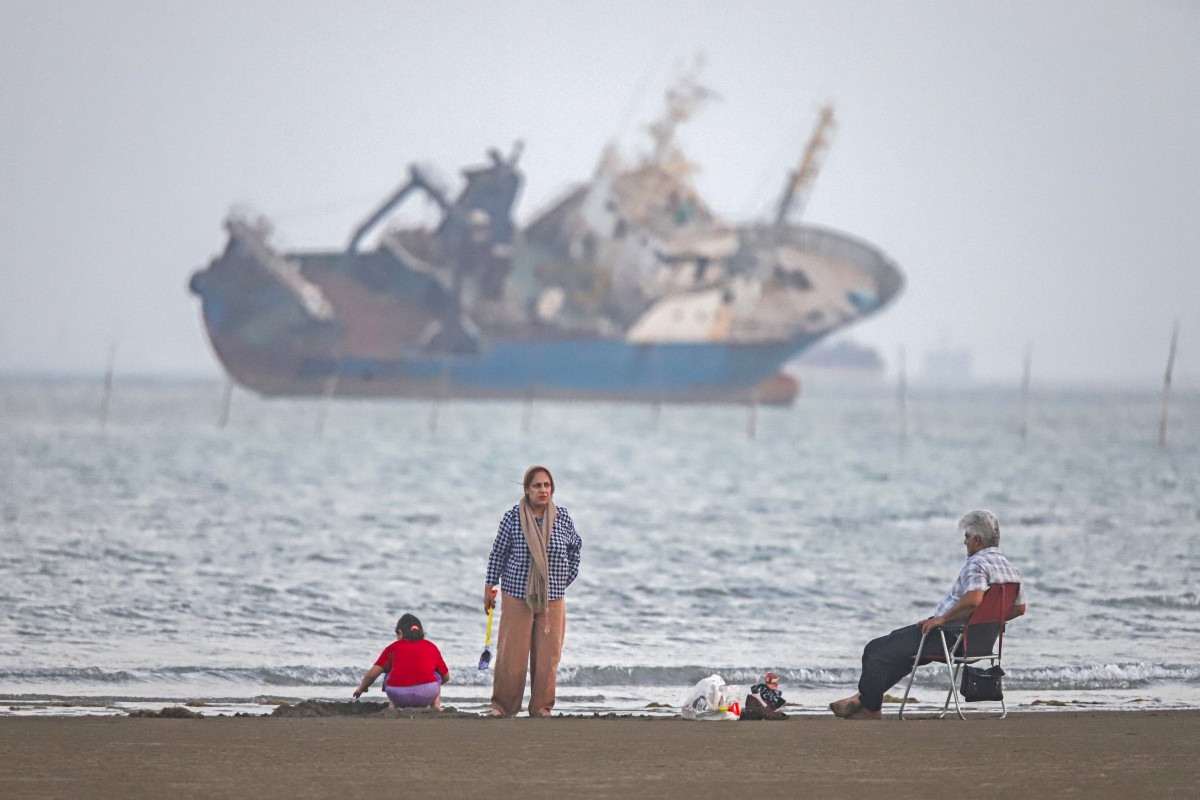
Meanwhile, on June 22, a massive blast at a Qatar gas hub killed 13 people and injured 66 others, one of the deadliest accidents at a Gulf energy facility. Later, the Indian Embassy in Doha informed that “Qatari authorities have confirmed that 12 Indian nationals have unfortunately passed away in the Ras Laffan incident”.
Millions of Indians work in the Gulf states, and the money they send back home is the largest source of remittances for India. Furthermore, India depends on Middle Eastern states for its energy and fertilizer imports. The Gulf states are also among India’s largest trading partners.
India has one of the largest seafaring workforces in the world. Hundreds of thousands of Indians work as sailors, engineers, and crew members on ships that sail across the globe. Many of them are employed on foreign-owned vessels carrying oil, grain, chemicals, and other cargo.
These ships often have to pass through risky areas — like the Strait of Hormuz in the Middle East or the Black Sea near Ukraine — because that’s where the important trade routes are.
When fighting breaks out and ships get attacked by missiles, drones, or naval forces, Indian crew members are frequently on board. That’s exactly what happened in the recent strike on the Golden Leo and in the repeated attacks on tankers and cargo ships in the Strait of Hormuz.
Indian seafarers end up becoming some of the biggest victims, not because India is involved in the wars, but because so many of its people earn their living at sea on international routes.
This is also why the Indian government has been so vocal. It has summoned officials from both Iran and the US to protest the attacks and has been pushing hard for the safety of its seafarers.
According to PIB, India’s seafarer workforce has grown from 1.25 lakh a decade ago to over three lakh today, placing the country among the top three global suppliers of trained seafarers. This creates vast opportunities in navigation, ship operations, logistics, and allied maritime industries both in India and abroad.
The pattern is clear: as long as Indian seafarers continue to form a prominent part of the world’s shipping crews, and as long as conflicts keep disrupting sea routes, more Indian lives will remain at risk.
By ET Online Desk