Should political imperatives or military necessities factor in determining who will lead the troops of two allies in the event of a war?
This is precisely the question being raised in the ongoing debates in South Korea (officially known as the Republic of Korea, or ROK).
Incidentally, the US–Republic of Korea alliance, which is based on the Mutual Defense Treaty signed in 1953 during the Korean War, is one of the most successful bilateral defense arrangements in modern history.
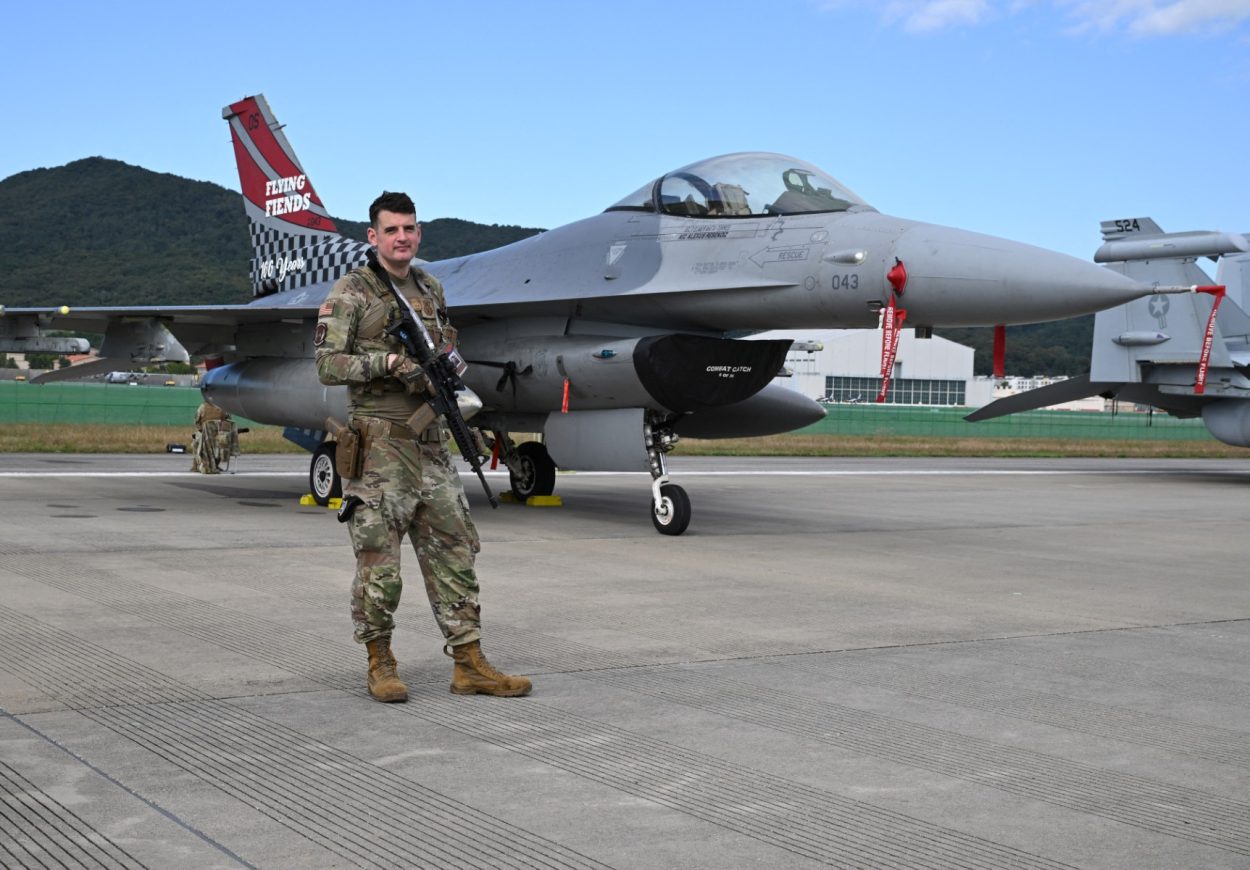
South Korea is the second country, after Japan, in the Indo-Pacific where the United States maintains a permanent military presence, with approximately 53,000 to 54,000 troops stationed in Japan and 24,000 to 28,500 troops in South Korea.
According to the Pentagon’s Base Structure Report, the US military maintains approximately 80 sites in South Korea and 98 sites in Japan.
However, unlike in Japan, where there is no combined force structure led by an American general that includes Japanese troops, as Japan’s constitution strictly limits its military (the Japan Self-Defense Forces) to homeland defense, in South Korea, there is what is called the Combined Forces Command (CFC) to deter or defeat external aggression against South Korea. It is headed by an American four-star general, with a South Korean four-star general serving as the deputy commander.
In the event of a war in South Korea, the American general exercises full wartime operational control (OPCON). And this is precisely where the debate is all about.
South Korea’s political leaders want OPCON to be under a Korean general, as it is a sovereign country, whereas the Americans and many South Korean analysts call for caution and a clear-cut roadmap, as the issue is not merely political but also involves military capabilities and threat perception.
The US is seemingly prepared for the OPCON transfer. However, differences persist on how effectively Seoul and Washington should manage the transition that will shape not only the future of the bilateral relationship, but also the alliance’s role in the broader regional order. Here, the tricky issues are the timeline, military readiness, and geopolitical pressures.
On May 27, President Lee Jae Myung, like many of his predecessors, reiterated in a meeting of the Cabinet and Korea’s Future Defense Strategy Committee the need for Korea to swiftly recover wartime operational control of its military. He stressed that recovering OPCON is “a central element to defense autonomy” while pledging to complete a detailed roadmap through deliberations with the US.
Reportedly, in this meeting, South Korean Defense Minister Ahn Gyu-back presented a tentative roadmap, saying, “ While the Republic of Korea has a powerful military, it’s the only one of the 190-some countries around the world without wartime OPCON. After verifying the full operational capability [of the Korea-led joint command slated to exercise wartime OPCON after the transfer] this year, we will have an OPCON transfer date for the president to consider. That will bring us one step closer to regaining OPCON,” he said.
However, General Xavier Brunson, American Commander of U.S. Forces Korea (USFK), has warned of the dangers of an OPCON transfer driven by political timelines, stating that “political expediency should not precede conditions.” During a hearing before the US Senate Armed Services Committee on April 22, he testified that a realistic roadmap of this transfer could be considered only in the first quarter of 2029.
US Defense Secretary Pete Hegseth is said to agree with General Brunson that capabilities and strict certification criteria must take precedence over political deadlines before the creation of the Future Combined Forces Command (F-CFC), the successor command structure.
It may be noted that OPCON in South Korea was delegated even before the US- ROK defense treaty was concluded. It was done in 1950 when President Syngman Rhee transferred command authority over ROK forces to the Commander of US Far East Command, following the North Korean invasion. Command was subsequently passed to the Commander of the United Nations Command and, in 1978, to the Commander of the ROK-U.S. Combined Forces Command (CFC), where it has remained.
However, peacetime operational control was returned to the ROK Armed Forces under the Kim Young-sam government in 1994. And, since the 9/11 attack on America, every US President has talked of its allies sharing the burden of the alliance, implying greater self-reliant operational capability and a stronger security burden on the part of allies like South Korea.
Even in the latest National Defense Strategy (NDS), NSS, and the U.S. In the State Department’s Agency Strategic Plan under the Trump administration, it was made clear that alliance networks would be refined and restructured, with increased security burden-sharing by allies.
Viewed thus, OPCON transfer is fully consistent with this US global strategy. In fact, the wartime OPCON transfer was first agreed upon in 2006 under the Roh Moo-hyun government, with an initial target date of 2012. But when North Korea sank the T ROKS Cheonan, a Pohang-class corvette of South Korea, carrying 104 personnel, on March 26, 2010, and bombarded Yeonpyeong Island, the idea of transfer was postponed to 2015.
Accordingly, the transfer framework was restructured under the Park Geun-hye government in 2014, shifting from a fixed timeline to a condition-based approach.
The US and South Korea completed the evaluation (2019) and verification (2020) of the future joint command’s initial operational capability (IOC), under what was termed the first stage of the three-phase assessment framework.
Evaluation of full operational capability (FOC), the second stage, was completed in 2022, and its verification is scheduled to take place during the two countries’ 38th Security Consultative Meeting this fall.
FOC is said to be a key condition in the transition plan as it evaluates whether the FCFC meets “Combined Mission Essential Task standards in command and control, intelligence and surveillance, firepower, and sustainment”.
Top defense officials of the two countries can then carry out the evaluation and verification of full mission capability (FMC) in the third and final stage and propose the transfer date to their respective Presidents.
Apparently, President Lee Jae Myung wants this date as early as possible. But military analysts of both the US and ROK want a slow and steady approach. They would like to see that the ROK has the critical military capabilities to lead combined defense, including C4ISR, ballistic missile defense, and counter-artillery systems, that the country possesses essential capabilities to respond to North Korea’s nuclear and missile threats at the early stages of provocation, and that the security environment on the Korean Peninsula and in the region (here, the there are factors of China and Russia) must be conducive to a stable transition.
As North Korea’s warfighting doctrine emphasizes surprise, massed artillery, and short-range ballistic missiles to inflict maximum damage on Seoul in the first hours, it is argued that the first 24 hours would decide whether the alliance can blunt the attack or face a prolonged, costly conflict.
But is that possible when, after the creation of the FCFC, a ROK four-star general would command, while key US strategic assets — B-52s, SSNs, space-based ISR, cyber capabilities — would remain under US national command authority?
In a crisis, would a ROK commander be able to task a US strategic bomber wing, or would it require White House approval?
If Washington retains a national veto, then the “transfer” will not only be cosmetic, but the ROK commander’s authority will be incomplete, it is argued.
Even otherwise, the essential political argument that a country loses its sovereignty if its forces are not under the command of a national General during the war cannot be stretched too far if the country does have a military alliance with another country that is much more resourceful and powerful.
For instance, wartime OPCON over NATO’s armed forces of its 32 member states, including the United Kingdom, France, and Germany, is exercised by the Supreme Allied Commander Europe (SACEUR), who is an American military general.
SACEUR is responsible for the overall command, direction, and planning of all NATO military operations. But none of these European countries, all proudly sovereign, regards this arrangement as a ’violation of national sovereignty.’
The important issue here is “the Unity of command”. And that applies to the US-ROK alliance, so the argument goes.
According to Dr. CHOI Kang, President at the leading South Korean thinktank Asan Institute for Policy Studies, if OPCON transfer is rushed before the ROK military has sufficiently put in place its own command-and-control frameworks and intelligence collection and analysis processes, the timely deployment of U.S. strategic assets will become difficult, and deterrence against North Korea will weaken.
Kang reminds us how the “Acheson Line” of 1950, defined by the then US Secretary of State Dean Acheson in a January 1950 speech, which excluded the Korean Peninsula (and Taiwan) from the US defense perimeter in the Far East, and gave “the wrong signal” to North Korea that ultimately led to the Korean War.
Likewise, discussions about the transfer of OPCON risk being interpreted as a “Second Acheson Line”, Kang argues. “We must not commit the fatal mistake of drawing a second Acheson Line ourselves”, he adds, explaining how the OPCON issue could weaken the alliance’s deterrence capability, encouraging North Korea to undertake misadventure.
Viewed thus, the wartime OPCON issue in South Korea is proving to be a complex issue or delicate situation that requires careful consideration.
In a way, it can be said that it reflects a broader dilemma of the security or military alliances between or among sovereign countries of how to balance historical structures with new power realities, how to assert sovereignty without sacrificing security, and how to empower ( on the part of the stronger partner) an ally without diluting deterrence or unity of command.
- Author and veteran journalist Prakash Nanda is Chairman of the Editorial Board of the EurAsian Times and has been commenting on politics, foreign policy, and strategic affairs for nearly three decades. He is a former National Fellow of the Indian Council for Historical Research and a recipient of the Seoul Peace Prize Scholarship.
- CONTACT: prakash.nanda (at) hotmail.com