The Balikatan 2026 multinational military drills, hosted by the Philippines, have had more surprises than previously anticipated. For instance, the US Army conducted a test firing of the Typhon Mid-Range Capability (MRC) long-range missile system as part of the joint exercise, years after it was first deployed in the Southeast Asian country amid severe criticism from China.
The US Army Pacific’s 1st Multi-Domain Task Force, in collaboration with the Philippine Army Artillery Regiment, successfully fired a long-range Tomahawk cruise missile from the Typhon launcher in the central Philippines, hitting a target in Fort Magsaysay, Laur, Nueva Ecija, in Luzon, about 630 kilometers away.
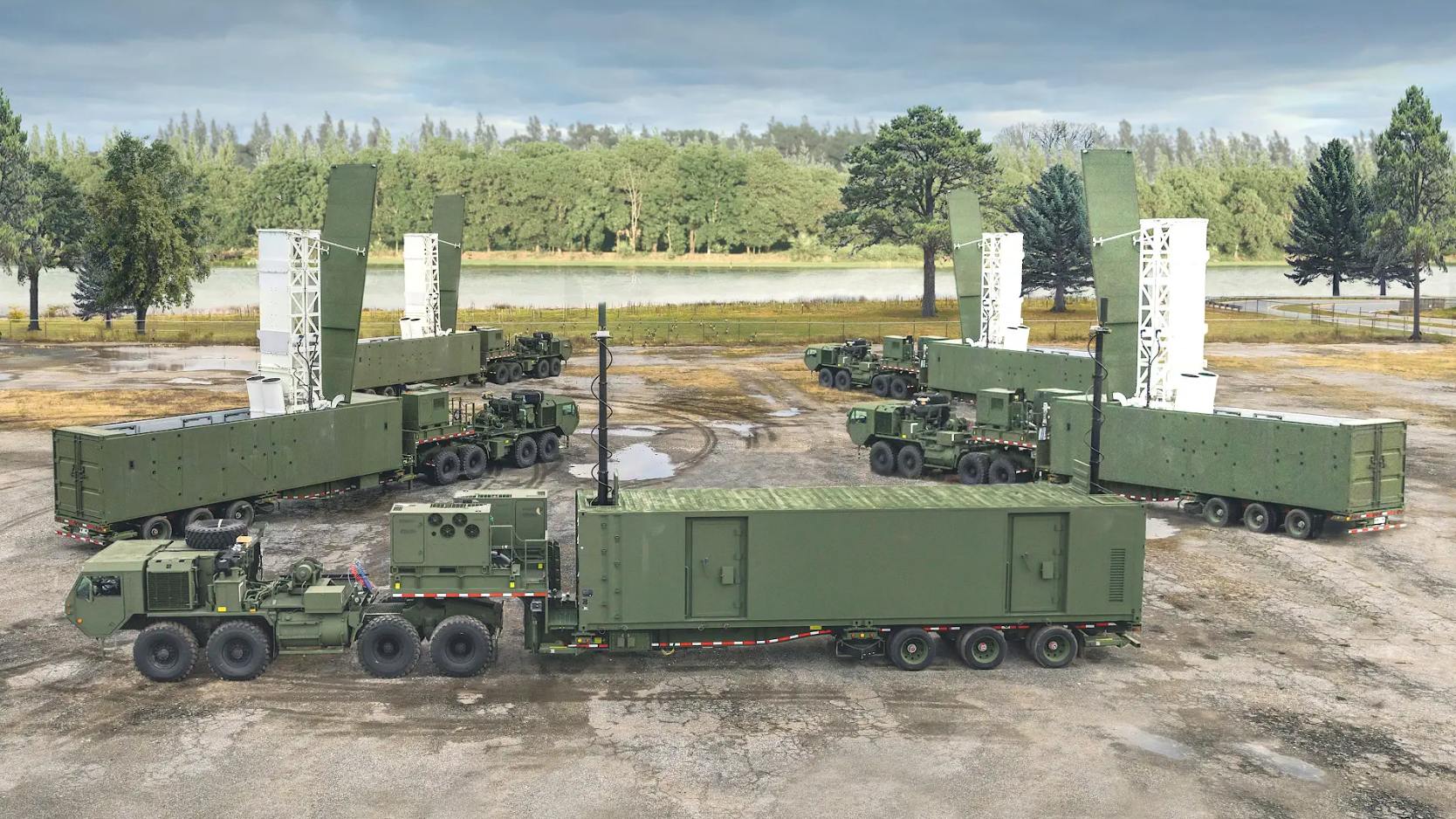
The Typhon Mid-Range Capability (MRC) system is a mobile, ground-launched missile system developed by the US Army, intended to deliver long-range, precise strikes in contested environments. It can fire two lethal missiles: the SM-6 and the Tomahawk. The Tomahawk cruise missiles can reach targets up to 1,600 kilometers, while the SM-6 missiles can effectively counter air and sea threats at ranges of over 200 kilometers.
The test was confirmed by Balikatan spokesperson Col. Dennis Hernandez, who disclosed that the missile was fired at around 12:12 a.m. and struck its designated impact area in Laur at around 1 a.m. He stated that the exercise was part of a Joint Pacific Multinational Readiness Center (JPMRC) scenario incorporated into this year’s Balikatan drills.
The forces simulated a mock land conflict scenario near Fort Magsaysay, where enemy forces were supposed to have taken Laur, necessitating Long-range fire support. “This is a land-based scenario… the JPMRC supports that ground activity, ground attack,” he stated.
As Trump prepares to meet Xi, Hegseth's War Dept. raises US-China tensions with unprecedented test of Tomahawk missile that can hit Chinese mainland
"the Typhon system had been flown 8,000 miles from… Washington State to Luzon in the Philippines"pic.twitter.com/4okVkcju8g https://t.co/diQVlYbqfp
— Erik Sperling (@ErikSperling) May 6, 2026
Further, Hernandez noted that Tacloban City was chosen as the launch location because the missile’s long range enables it to traverse the eastern seaboard toward the target, adding that the firing was not linked to any real-world engagement.
“That was only a single activity. One night only,” the spokesman emphasized.
Notably, the above statement appears aimed at China, with which Manila has long-standing territorial disputes in the South China Sea. In fact, the Filipino administration and security forces regularly accuse Beijing of bullying and intimidation near the disputed sites, including the firing of water cannons and deliberate collisions with its vessels.
Interestingly, the MRC’s target was located in Luzon—an island separated from Taiwan by only the Luzon Strait, a deep channel connecting the South China Sea to the Philippine Sea.
China, for one, is expected to use the channel in the event of an invasion of Taiwan, as previously explained by the EurAsian Times.
When fired from Luzon, a Tomahawk from an MRC battery could reach much of the South China Sea, including China’s artificial islands, parts of Taiwan (claimed by China), and the Taiwan Strait, as well as some parts of Eastern and Southern China where the missile could threaten major military command centers, industrial hubs, and coastal facilities.
Notably, the test-firing is significant as it comes two years after the system was originally deployed to the Philippines for Balikatan drills.
During Balikatan 2024, the US deployed the Typhon Mid-Range Capability (MRC) missile system, rankling China. Although no live-fire test was conducted at the time, the Philippine soldiers trained on the Typhon under US guidance, bolstering capabilities and cooperation.
The system has remained in the Southeast Asian country, with Manila expressing interest in its permanent deployment or acquisition, and China regularly calling for its withdrawal.
Therefore, it is safe to say that the latest test is likely to infuriate China.
Notably, the test sends a message of force projection from the US and its MDT (Mutual Defense Treaty) ally, the Philippines.
Analysts, including Collin Koh, an Indo-Pacific military affairs expert, have noted that it reflects a growing sophistication in the Balikatan drills and firmly establishes the US commitment to the Indo-Pacific despite its engagement in the Middle East.
Additionally, it demonstrates growing interoperability and joint long-range strike capability between the US and the Philippines amid China’s rapid military expansion in the South China Sea, which Beijing almost entirely claims as its sovereign territory. In fact, experts believe that a military showdown between China and the Philippines would inadvertently draw the US military into the conflict, triggering a major escalation.
Needless to say, the Typhon system could directly threaten China’s formidable anti-access/area-denial (A2/AD) strategy in a future conflict between the US and China by targeting Chinese naval infrastructure and military equipment within range.
Before this, the US Army conducted a live-fire test of the Typhon in the Northern Territory region, in collaboration with its Australian counterpart, marking the first time the long-range missile system was fired on foreign soil.
The Philippines has insisted that the firing of MRC is not aimed at a third party, or China, in this case. However, the nature of the ongoing drills appears to be preparation for a notional enemy, imitating tactical strategies Beijing may exercise in the event of a conflict. For example, Filipino and participating forces prevented a mock invasion attempt.
The Philippines & Allies Practice Coastal Defense
On May 4, 2026, more than 800 personnel from the Philippines, the US, Canada, and Japan conducted counter-landing live-fire exercises at the La Paz Sand Dunes in Laoag City, Ilocos Norte, the Philippines, as part of Balikatan 2026.
This event marked Japan’s first direct participation in counter-landing drills.
The drill simulated a situation in which these military forces would have to stop an enemy force from establishing a foothold on the Philippines’ shore.
As the exercise commenced, the target drones steadily approached the dunes.
Officials repeatedly emphasized that the drills were pre-planned and not directed against any particular country. However, the design and camouflage of the moving target seemed to resemble the Type 05 amphibious battle vehicles of the People’s Liberation Army.
While the US Army’s 25th Infantry Division assumed command on the ground in Northern Luzon, a command-and-control team from the I Marine Expeditionary Force, based more than 250 miles south at the Armed Forces of the Philippines (AFP) headquarters at Camp Aguinaldo, Manila, provided higher-level command and control.
Additionally, a unified coordination cell connected units from the Armed Forces of the Philippines (AFP) Northern Luzon Command and the Philippine Air Force.
The US Army units were in charge of the northern and central sections of the anti-invasion line, whereas the US and Philippine Marine Corps units were stationed further south.
To test a strategy that was reportedly developed by the US Army to thwart amphibious assaults, a combined force consisting of American, Philippine, Canadian, and Japanese soldiers took turns over the next few hours to tear into the mock beach landing.

According to infographics on display at the counter-landing event, the US Army developed the concept known as “Littoral Deep Battle” by combining lessons learned from Ukraine’s operations against Russia’s larger Black Sea Fleet, deep battle theory, and the service’s recent field manuals that form its doctrine against peer adversaries.
Typically, the counter-landing exercises train forces to detect, track, engage, and destroy simulated invading amphibious forces, such as boats, landing craft, and unmanned vehicles, before or as they reach the beach. However, in this particular case, these drills have heightened strategic relevance as Manila and Beijing remain mired in tensions, regularly triggering fears of miscalculation and escalation.
The United States forces fired the High Mobility Artillery Rocket System (HIMARS) long-range rocket at the intended target. The HIMARS, which has been proven in the Ukraine war, demonstrated rapid, precise reach extension while being mounted on a 5-ton truck.
“The biggest thing we implemented was the first thing you saw—the HIMARS,” Maj. Gen. James Bartholomees, commander of the US Army’s 25th Infantry Division, stated. “It is a rocket capability. That capability extends the reach of our forces, and we are training with the Philippine Army, as well as the Japanese in their rocket capability,” he added.
https://twitter.com/USEmbassyPH/status/2051912344276541707
The Philippine Army’s unit engaged floating targets with ground and marine assets using 105mm howitzers, Sabrah light tanks, and armored mortar vehicles; sea drones were utilized to assess damage.
The US AH-64 Apache attack helicopters, F-16 fighter jets, and P-8A Poseidon maritime patrol aircraft were part of the joint air support, while the Philippine A-29 Super Tucano aircraft, AW109 helicopters, and Hermes UAVs were also involved.
For close-quarters combat, the Japanese soldiers positioned themselves alongside US and Philippine infantry. They used machine guns, small arms, and other direct-fire weaponry to get to the coast. Meanwhile, the Canadian troops took part in similar mass casualty drills and used heavy machine guns, small weapons, and rockets to bolster defensive actions at nearby Culili Point.
And finally, an infantry line composed of soldiers from the Canadian Princess Patricia’s Canadian Light Infantry, the American 25th, the Japanese Amphibious Readiness Brigade, and the Philippine 5th Infantry Division fired sustained small-arms and crew-served weapons at moving practice targets and target drones positioned along the beach.
The drill integrated anti-armor systems, such as Javelin and Stinger missiles, against drone targets, emphasizing responses to modern unmanned aerial and surface threats.
- Contact the author at sakshi.tiwari13 (at) outlook.com
- Follow EurAsian Times on Google News