On May 25, 2026, the United States conducted fresh “self-defense” strikes on Iranian missile launch sites and vessels in southern Iran, near the Strait of Hormuz. The operation came roughly six weeks into a fragile ceasefire, reigniting fears of renewed escalation across the Middle East.
Yet despite this latest flare-up, a peace deal is on the cards.
For now, Iran shows no willingness to surrender its remaining enriched uranium stockpiles, relinquish influence over the Strait of Hormuz, or accept permanent caps on its ballistic missile and drone programs. For its part, the US is unwilling to offer war reparations or withdraw its regional military footprint.
A pure air campaign has proven unable to fully neutralize the Islamic Revolutionary Guard Corps (IRGC) or destroy Iran’s deeply buried, dispersed arsenal. President Donald Trump has repeatedly signaled reluctance for a large-scale ground invasion, which would carry enormous political and human costs.
The US has again turned to its Trump Card, i.e., Pakistan.
Though it hosts no permanent U.S. bases, Pakistan has played a pivotal role in nearly every major American strategic endeavor in the region for decades: be it the Soviet Union during the Cold War, the historical US detente with China in the 1970s, Afghanistan in the 1980s, the US War on Terror in 2001, and the US fight against the Taliban.
Today, Islamabad finds itself once again at the center of events. It shares a long border with Iran and maintains working relations with both Tehran and Washington. Islamabad played a pivotal role in the first Iran-US ceasefire, declared on April 8.
The U-2 Incident That Brought Pakistan into the Heart of US-Soviet Conflict
Post-independence, both India and Pakistan adopted very different geopolitical goals. While India became the leader of the Non-Aligned Movement (NAM), Pakistan pursued great-power politics and aligned itself more closely with the US and the anti-Soviet camp.
Pakistan joined the Baghdad Pact, also known as the Central Treaty Organization (CENTO), a Cold War military alliance formed in 1955 to prevent Soviet expansion into the Middle East.
Pakistan’s location at the doorstep of Central Asia or the Soviet Union’s southern territory made it uniquely useful for the US.
Islamabad needed US support and weapons against India, and in return, it could offer Washington access to its air bases for surveillance purposes on the Soviet Union.
On May 1, 1960, a US Lockheed U-2 spy plane piloted by Francis Gary Powers took off from Peshawar Air Base in Pakistan. It was on a high-altitude reconnaissance mission to photograph Soviet military sites, including missile test ranges. The plane was shot down over Sverdlovsk in the Soviet Union by an S-75 surface-to-air missile. Powers parachuted safely but was captured, tried, and imprisoned.
Pakistan, under President Ayub Khan, had allowed the US to use its territory for these secret overflights and intelligence operations after the US made an informal request to Islamabad in 1958. The incident embarrassed the US, but also exposed how Pakistan was secretly allowing itself to be used in the Cold War against the Soviet Union. Following the incident, Pakistan faced diplomatic pressure but continued limited cooperation with the US.
The incident highlighted how Pakistan was selling its geographic proximity to the Soviet Union and using it to its advantage to advance its own geopolitical goals.
Pakistan’s Role in US-China Détente
Pakistan served as the crucial secret backchannel between the United States and China during the historic rapprochement. Under President Yahya Khan, Pakistan passed confidential messages between Washington and Beijing starting in 1969–1970.
In July 1971, Henry Kissinger, President Nixon’s National Security Advisor, used an official visit to Pakistan as cover. He pretended to be ill and secretly flew on a Pakistani plane from Islamabad to Beijing for two days of talks with Chinese leader Zhou Enlai.
This secret trip laid the groundwork for President Richard Nixon’s groundbreaking visit to China in February 1972, the first by a US president, which formally opened diplomatic relations between the two.
Through this, the US was able to drive a wedge between Communist China and the Soviet Union, shifting the Cold War balance in its favor.
However, Pakistan’s most impactful role for the US came in the 1980s during the Soviet invasion of Afghanistan.
Soviet Invasion of Afghanistan (1979-1989)
In 1979, the Soviet Union invaded Afghanistan. The US was determined to turn Afghanistan into the Soviet Union’s Vietnam. However, Washington soon realized that it needed Islamabad to bleed the Soviets in Afghanistan.
Pakistan became the main frontline state and conduit for Operation Cyclone, the largest CIA covert op till that date. Pakistan’s ISI trained, armed, and supported Afghan Mujahideen fighters with billions in US, Saudi, and other aid. They also provided safe havens to Mujahideen fighters inside Pakistan.
CIA and Saudis provided weapons and supplied them to the Afghan Mujahideen fighters through Pakistan.
Over time, this proxy war drained the Soviets, contributing significantly to their eventual withdrawal from Afghanistan after a ten-year-long war.
This war bankrupted the Soviets, demoralized the army, and significantly weakened the USSR.
Pakistan’s Support in the War on Terror (2001)
After the Soviet defeat in Afghanistan and the eventual disintegration of the USSR and the end of the Cold War, for nearly a decade, Pakistan suddenly found that it had lost its relevance and strategic value to the US.
However, the 9/11 terror attacks on the US, once again, catapulted Islamabad to the center of the US geopolitical goals.
The US understood that to defeat the Taliban and al-Qaeda in landlocked Afghanistan, the US needed Pakistan. Islamabad was crucial, as Afghanistan’s Western neighbor, Iran, would not have provided any support to the US campaign.
Pakistan allowed the US to use its military bases and airspace for logistics purposes and for launching air raids inside Afghanistan. In return, Pakistan got billions in military and economic aid.
However, Pakistan played a double game; it also provided safe havens to the top Taliban leadership. Due to this duplicity by Islamabad, the US could not decisively defeat the Taliban. After twenty years of war, it had to sign an agreement with the same Taliban and leave Afghanistan after handing over power to the Taliban.
Ironically, Pakistan and the Taliban are not only at odds with each other but also what many dub as “sworn enemies”.
Pakistan’s Role in the Iran War
After years of irrelevance, Pakistan is once again in the spotlight. The US war in Iran has once again made Islamabad indispensable to Washington.
Pakistan and Iran share a nearly 900-km-long border. As soon as the war started, Pakistan strategically positioned itself as a mediator. However, even as Pakistan was mediating between the two, persistent allegations persisted that it was once again playing a double game.
There were reports that Pakistan shielded the Iranian Air Force by allowing them to park their jets at Pakistani airbases, and Tehran blamed Islamabad for protecting strategic American interests. Islamabad rejected this allegation.
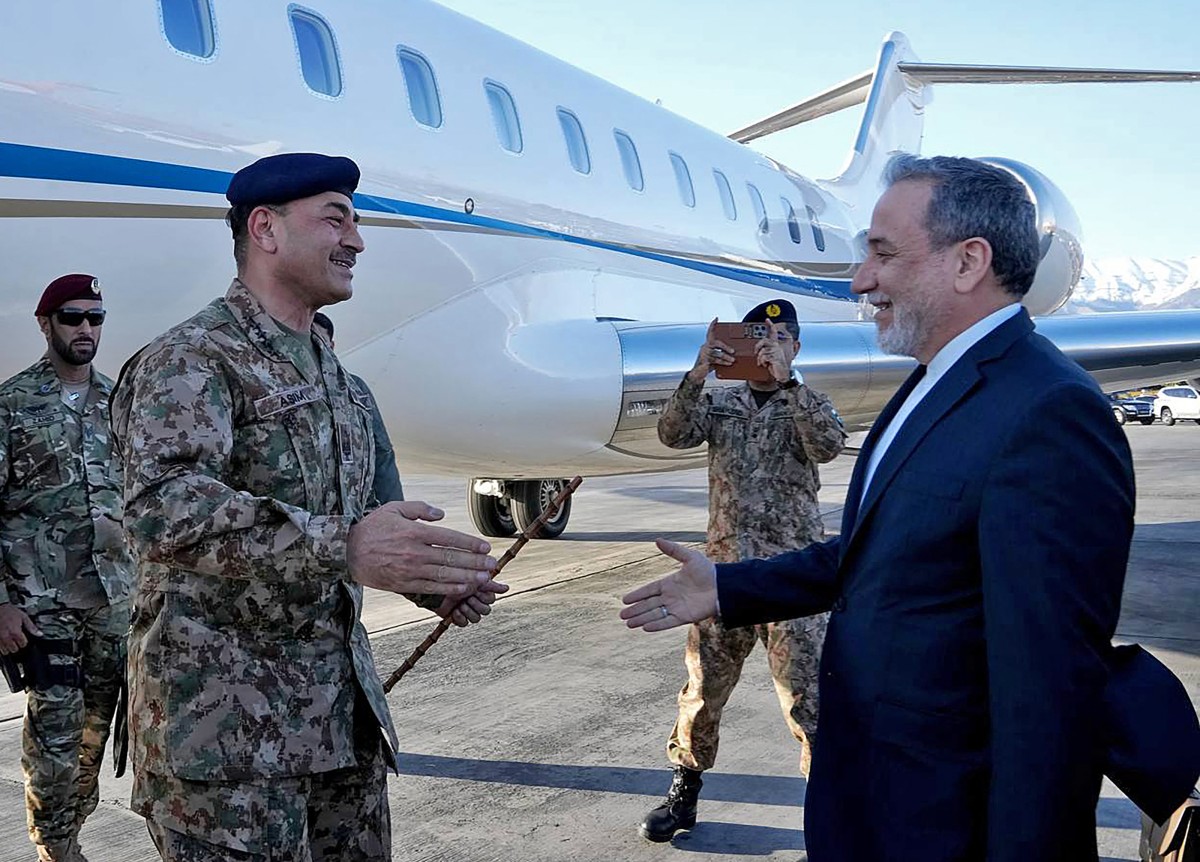
Furthermore, Pakistan has signed a mutual defense treaty with Saudi Arabia. Pakistan has already deployed its fighter jets and soldiers in Saudi Arabia for defensive roles.
Despite tumultuous relations with Israel, arguably America’s closest ally, Pakistan is again at the forefront of the US military campaign in the region.
From the Cold War U-2 missions and the opening to China, to the Afghan jihad in the 1980s and logistical support after 9/11, Islamabad has consistently provided Washington with critical geography, military bases, and intelligence. In return, Pakistan’s military has significantly benefited — gaining advanced weapons, billions in aid, training, and enhanced capabilities that have strengthened its position as one of the most powerful armies in the region.
- Sumit Ahlawat has over a decade of experience in news media. He has worked with Press Trust of India, Times Now, Zee News, Economic Times, and Microsoft News. He holds a Master’s Degree in International Media and Modern History from the University of Sheffield, UK.
- VIEWS PERSONAL OF THE AUTHOR.
- He can be reached at ahlawat.sumit85 (at) gmail.com