With the Indian Air Force’s (IAF) fighter squadron strength at its lowest in six decades, New Delhi is looking to boost its combat power, with French Rafale fighter jets at the forefront.
The IAF now fields only about 29 fighter squadrons against a sanctioned strength of 42, its lowest level since the 1960s, triggering a sharp debate in New Delhi over how to close the gap.
After years of debate, tests, negotiations, and hard bargaining, India has zeroed in on the French Rafale. India ordered 36 Rafale in 2016 and followed up with a follow-on order for 26 Rafale M (the Naval version) in 2025.
India is also negotiating a deal with France for 114 new Rafales. If finalized, India will have a fleet of 176 Rafales, making it the second-largest operator after France.
Simultaneously, India is developing its own fifth-generation fighter jet, the AMCA. According to the official timeline, which almost all analysts agree is overly ambitious, AMCA will enter serial production around 2035.
This means India will have a serious capability gap relative to China and possibly even Pakistan.
China has nearly 300 J-20 stealth fighter jets in its arsenal, and by 2035, this number could swell up to 1,000.
Pakistan, meanwhile, could reportedly acquire 40 J-35A fifth-generation fighter jets from China, and some reports say Pakistani pilots have already started training on these aircraft.
Rafale Jets: Can They Counter Stealth Fighters?
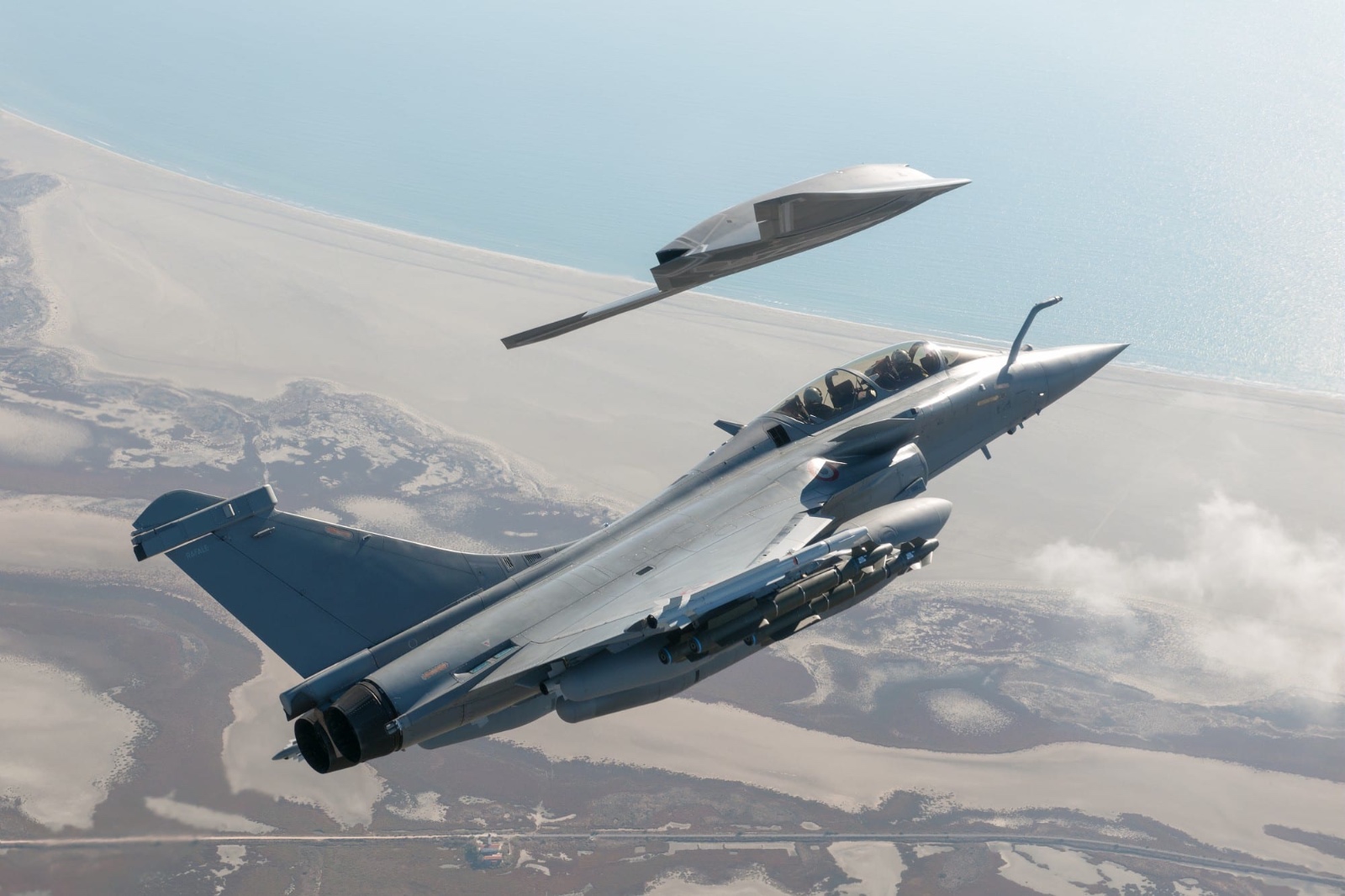
Amid this debate, a research paper by the French Institute of International Relations (IFRI) highlights that French pilots themselves are skeptical of the Rafale’s capabilities against stealth fighter jets.
While the paper suggests that this capability gap will be somewhat bridged with the arrival of Rafale F5, this version of the jet will be operational only around 2033-2035. This means India will have a serious capability gap vis-à-vis both China and Pakistan (if it indeed buys the J-35A) for the next decade.
The paper suggests that French Air Force pilots think the Rafale is not good enough against stealth aircraft.
“In the realm of air-to-air combat, the French Air and Space Force is well equipped and proficient when facing adversaries operating non-stealth fighter aircraft,” the paper said.
“However, the current operational shortfall in VLO (very low observable – another term for stealth fighter jets) technology could make France reliant on partner air forces equipped with VLO platforms and effectively limit it to a supporting role in allied operations for the period 2025–2035,” it added.
In a high-intensity combat with Western allies, the French fighter force “could be confined to the role of ‘auxiliaries’ to the 5th generation fighters, in a two-speed air coalition.”
Essentially, the paper acknowledges that while Rafale stands out for its air-to-air combat prowess, the stealth capability gap means France will rely on partner countries that operate stealth jets and will effectively play supporting roles in NATO operations during the period 2025 to 2035.
It further added that “combat missions against stealth fighters on Rafale are very difficult to win in the current state of sensors.”
A critical weakness highlighted by the paper is its limited efficiency in SEAD (suppression of enemy air defenses) missions.
Stealth fighters are better at SEAD (suppression of enemy air defenses) mainly because they can get close to radar and SAM sites, forcing conventional fighters to stay farther away.
A conventional fighter is typically detected by search radars at long range, which then share the data with SAM launchers, allowing them to track the target and shoot it down.
Stealth fighter jets, however, due to their very low radar-cross-section (RCS), are not easily detectable, especially in the X-band frequencies most SAM fire-control radars use.
Essentially, a radar that would be able to detect Su-30, Rafale, or F-15 at a distance of over 100 miles might not be able to detect a stealth jet, such as the F-22 Raptor or the F-35, until it’s already very close.
The stealth jets can therefore penetrate contested airspace unchallenged and perform SEAD missions effectively. We saw an iteration of this in 2025 and 2026, when on two occasions Israeli stealth fighter jets were able to penetrate Iranian airspace and perform SEAD missions before fourth-generation fighter jets entered the picture for heavy bombing missions.
France, however, “will not have a proper SEAD capability before Rafale F5,” it said.
US ‘Kill Switch’ Fear Returns as Japan To Move Classified Military Data to American Clouds in 2027
AASM/Hammer gives Rafales only limited DEAD (Destruction of Enemy Air Defenses) against short-range fixed SAM sites and still needs external sensors France does not have.
Another disadvantage is that the SCALP-EG range is only just sufficient against modern standoff SAMs and cannot be retargeted in flight, unlike the Tomahawk Block IV/V.
Rafale, therefore, while a very capable multirole fighter jet known for its air-to-air combat prowess, can not effectively perform SEAD/DEAD missions in contested airspace, which severely limits its operational freedom against a peer enemy.
Why France Ignored Stealth
Several reasons explain France’s reluctance to invest in VLO technology.
In the 1990s, both France’s armed forces and its national defense industry were caught off guard by the rapid emergence of American VLO capabilities.
“Having already committed to the Rafale program, French defense stakeholders downplayed the significance of VLO technology in the context of the peace dividend and the limited scope of military operations at the time,” the paper said.
The rise of VLO (stealth) platforms presented a commercial risk for the Rafale, with no alternative stealth design that could be rapidly developed in France.
Another reason France ignored stealth was the nature of conflicts from 1995 to 2022 in which France participated, where the Rafale’s capabilities consistently exceeded the operational demands of theaters in Afghanistan, Libya, and the Sahel.
However, against a near-peer enemy such as Russia or China, which have advanced integrated air defense systems (IADS), the Rafale’s ability to penetrate contested airspace remains debatable.
The technological asymmetry is now clear. “French pilots, who regularly participate in joint exercises against fifth-generation fighters, acknowledge that ‘combat missions against stealth aircraft in the Rafale are very difficult to win with the current state of sensors.’
Besides 114 Rafales, India is in talks with France over the 6th-gen FCAS aircraft program. However, if the deal materialized, FCAS jets are not expected to enter service anytime before 2040.
- Sumit Ahlawat has over a decade of experience in news media. He has worked with Press Trust of India, Times Now, Zee News, Economic Times, and Microsoft News. He holds a Master’s Degree in International Media and Modern History from the University of Sheffield, UK.
- He can be reached at ahlawat.sumit85 (at) gmail.com