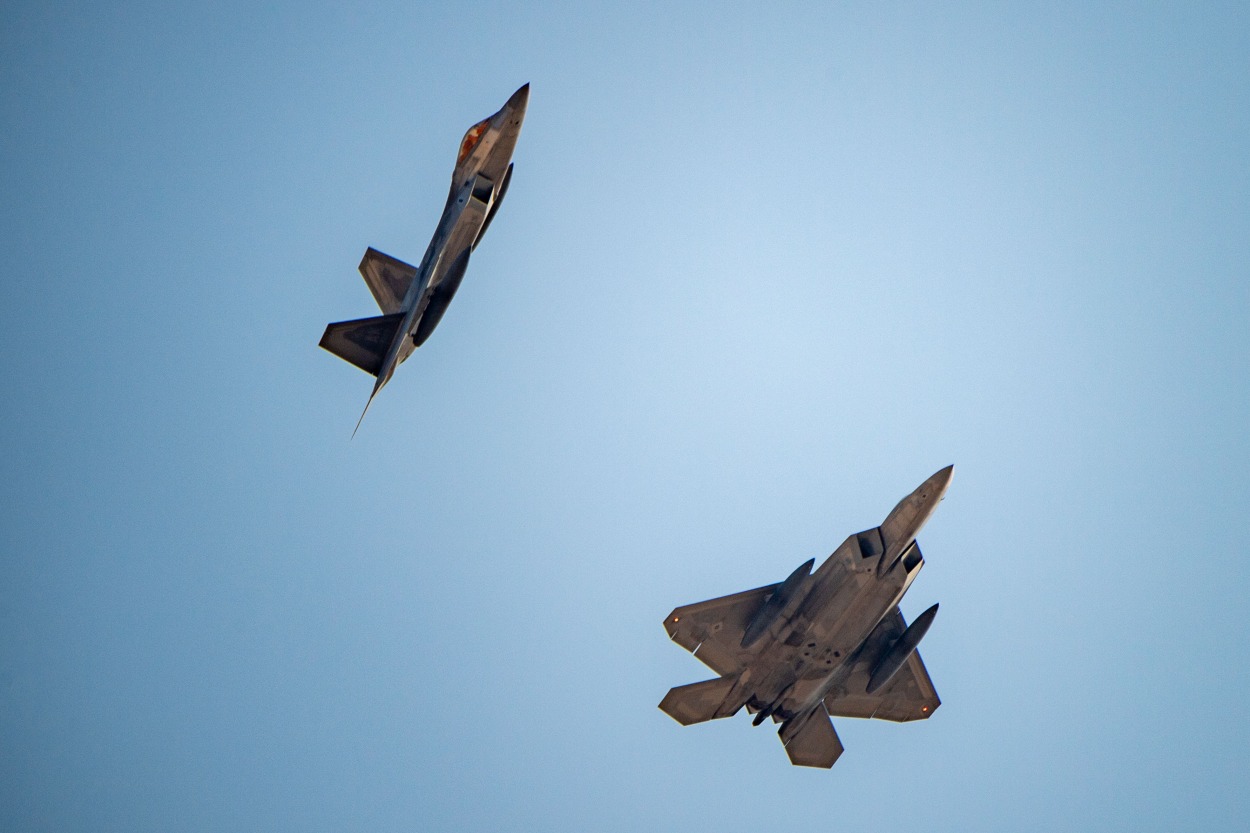
After years of delays, Taiwan’s first two F-16 Block 70 — serials 6727 and 6728 — are on the Pacific ferry to Taitung’s Chihhang Air Base. Taiwan already flies upgraded F-16Vs; what is new is that it is now receiving the latest production Block 70 airframes.
The two jets are part of Taiwan’s large order for 66 new F-16 Viper fighter jets, called ‘Peace Phoenix Soaring,’ placed in 2019.
The deliveries were expected to begin in 2023, and all 66 jets were scheduled to be delivered by the end of 2026.
However, supply-line pressures due to COVID-19, followed by Lockheed Martin’s decision to shift the F-16 assembly line from Fort Worth to Greenville, South Carolina, pushed the timeline back.
Furthermore, the jet’s electronic warfare suite, the embedded AN/ALQ-254 “Viper Shield” (L3Harris), experienced production bottlenecks, further delaying delivery timelines.
Lockheed later started two shifts and prioritized Taiwan’s order to deliver the jets. Still, the full 66-jet order is not expected to be delivered before 2028.
Besides, Taiwan has already upgraded around 140 F-16 Block 20 A/B fighter jets to the Viper standard in 2023.
When Lockheed Martin delivers the 66 new jets by 2028, the Taiwanese Air Force will have more than 200 F-16 Viper fighter jets, making it the largest Viper-standard fleet in the Indo-Pacific region.
However, the question remains: how do the F-16 Vipers stack up against the PLA Air Force’s J-20 stealth fighter, one of the most frequent visitors to the Taiwanese ADIZ?
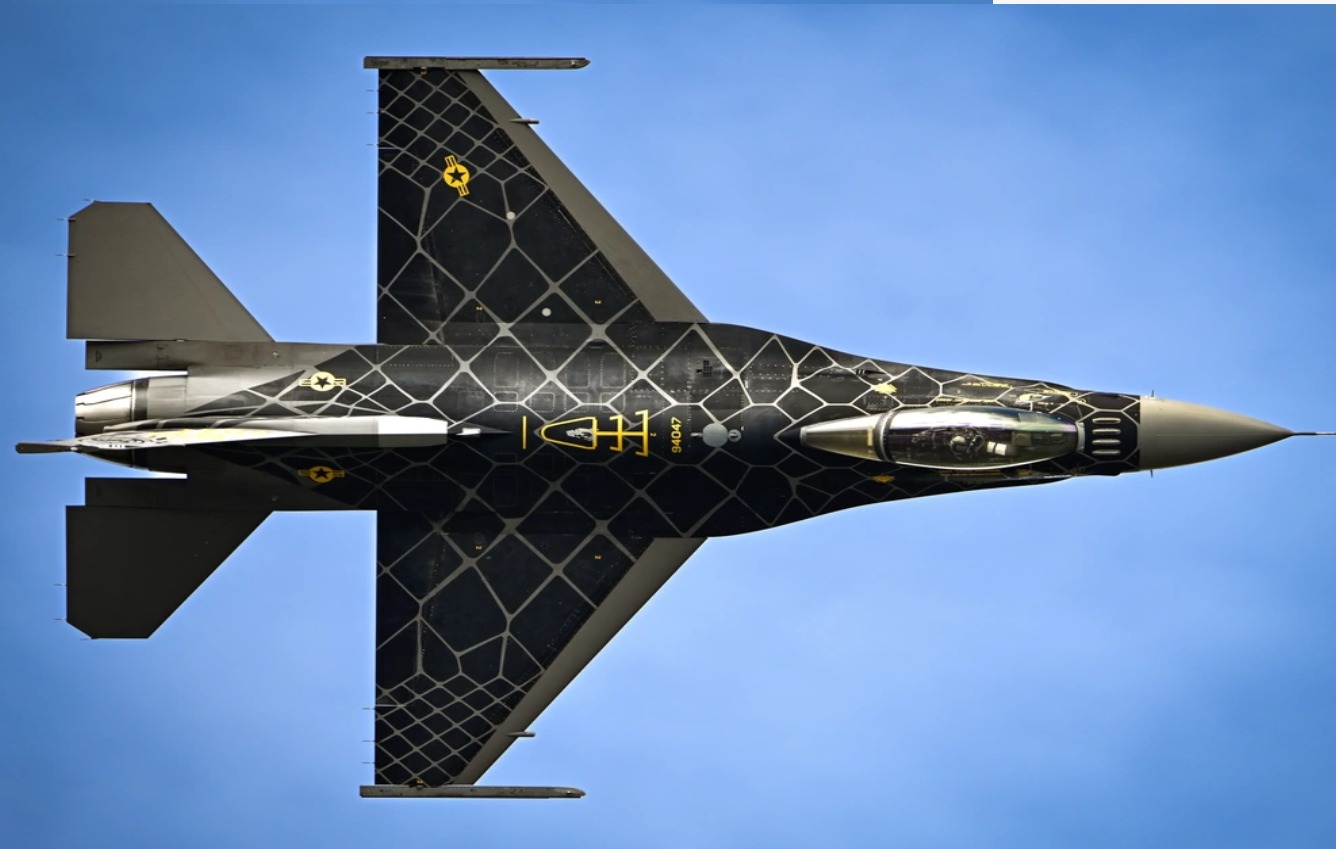
F-16 Viper – How Advanced is it From the Legacy F-16?
Lockheed Martin’s August 2026 F-16 fact sheet said the company had delivered 41 new-build Block 70/72 jets to seven countries and still had 119 of those aircraft in backlog. That backlog includes Taiwan’s remaining jets, plus orders for countries such as Bulgaria, Morocco, Jordan, and Peru.
Those figures cover factory-fresh Block 70/72s only. They are not a count of every F-16V, because several air forces are reaching the Viper standard by upgrading older jets rather than buying new ones.
In addition, many countries, such as Turkey, Greece, South Korea, Singapore, Morocco, Bahrain, and Poland, are upgrading their legacy F-16 fleets to the latest Viper standard.
So, how advanced is the Viper-standard jet compared to legacy F-16s?
Both the legacy F-16 and the latest Block 70/72 F-16V fighter jets share a common airframe shape, a single-engine layout, 9g capability, and basic flight characteristics.
The main differences are in sensors, computers, cockpit, electronic warfare, and modern weapons/data-link integration.
However, the biggest capability jump is perhaps in the radar system.
The legacy F-16A/B jets used the mechanically scanned AN/APG-66 radar. Most F-16C/D (Blocks 25–52) used the mechanically scanned AN/APG-68.
These radars have slower scan rates, more limited multi-target tracking capabilities, and poorer jamming performance.
For F-16V, however, Lockheed Martin is using Northrop Grumman’s AN/APG-83 SABR AESA radar.
It uses electronic beam steering, supports simultaneous air-to-air and air-to-ground modes, high-resolution SAR mapping, better jamming resistance, and tracks more targets at longer ranges.
Lockheed Martin states it delivers 5th-generation radar capabilities through hardware and software commonality with F-22 and F-35 radars.
“It delivers greater situational awareness, flexibility and quicker all-weather targeting and provides pilots with unprecedented target area detail and digital map displays that can be tailored with slew and zoom features,” said Lockheed Martin in a factsheet about the Block 70/72 jets.
The new Viper standard jets also provide enhanced battlespace awareness.
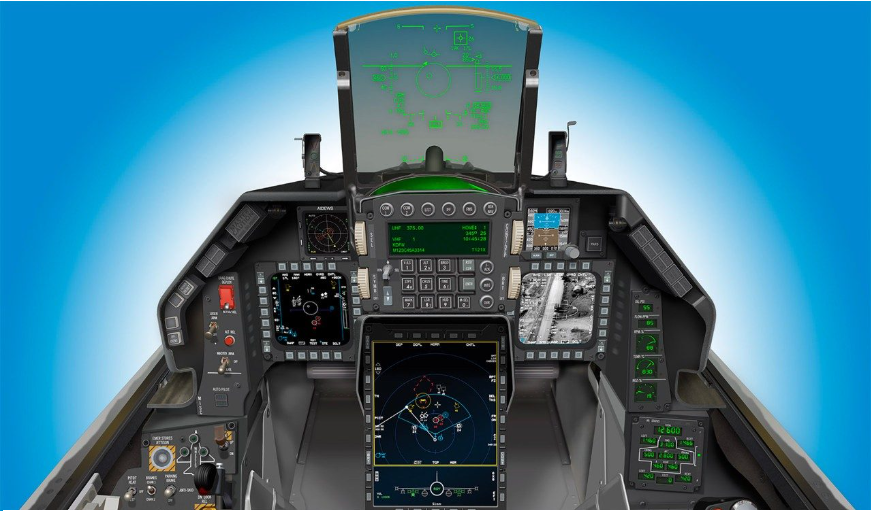
Block 70/72 features a new high-resolution Center Pedestal Display (CPD), which provides critical tactical imagery to pilots and enables them to take full advantage of AESA and targeting pod data.
The new CPD enables color moving maps, larger and easier-to-manage air-to-air Situation Displays, zoom functionality with the ability to switch information among displays, digital display of Flight Instrument Data, and a color/night helmet-mounted display.
Additional integration of the Lockheed Martin Sniper® Advanced Targeting Pod and Legion-ES™ IRST system increases pilot situational awareness and enhances warfighter survivability.
The F-16V also provides better protection to pilots. Lockheed Martin’s Automatic Ground Collision Avoidance System (Auto GCAS) was purpose-built to prevent deadly crashes and has already saved the lives of multiple pilots and F-16s since the system entered service with the U.S. Air Force in late 2014.
The Auto GCAS is designed to reduce incidents of what is known as controlled flight into terrain, or CFIT. According to U.S. Air Force statistics, CFIT incidents account for 26 percent of aircraft losses and a staggering 75 percent of all F-16 pilot fatalities.
The F-16V also provides extended structural capabilities.
The Block 70/72 has an extended structural life to 12,000 hours – more than 50 percent beyond that of previous production F-16 aircraft. The older F-16s had a structural life of around 8,000 hours.
According to Lockheed Martin, the F-16V could serve for 40 years without any major repairs.
The conformal fuel tanks provide increased fuel capacity and range without sacrificing the jet’s aerodynamic performance.
Furthermore, legacy F-16s relied on multiple older computers with limited processing power, whereas the F-16V has a single high-performance Modular Mission Computer (MMC) and a modernized avionics architecture. This gives far higher computing power for sensors, weapons, and data fusion.
The F-16V is certified for a very wide range of modern weapons, such as AIM-120D AMRAAM, AIM-9X, JASSM, JSOW, JDAM variants, and SDB, and uses Link 16, which provides enhanced situational awareness and enables real-time command, control, and tactical data exchange among military aircraft, ships, and ground forces.
They also have greater electrical power, cooling, and data-processing capacity to support the future integration of advanced electronic warfare equipment, weapons, and infrared search-and-track systems.
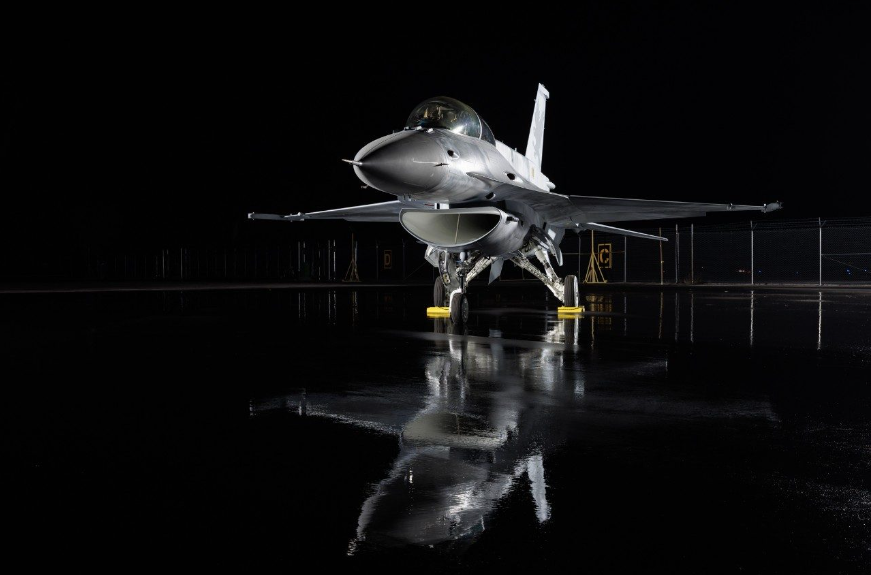
Because of all these capabilities, even though both the older F-16 and the latest F-16V share the same airframe design, the F-16V is a much more lethal aircraft.
Modern sensors, avionics, radars, an electronic warfare suite, Link 16, structural improvements, and an improved weapons package and ferry range mean the F-16V is a much more capable jet. That is why operators such as Taiwan, Greece, Bahrain, Slovakia, Bulgaria, and Turkey are upgrading their existing F-16 fleets.
Can Taiwan’s F-16 Vipers Counter China’s J-20?
According to Su Tzu-yun, a senior analyst at the government-funded Institute for National Defense and Security Research, the AN/APG-83 radar was designed to detect targets with small radar cross-sections and could “improve the F-16V’s chances of detecting PLA stealth aircraft such as the J-20 and J-35”.
He estimated the probability of detecting such aircraft at “more than 60 percent”, although actual performance would “depend heavily on range, angle, electronic warfare conditions and integration with other sensors”.
Furthermore, in 2019, the US approved the sale of infrared search and track systems (IRST) for Taiwan’s F-16 fleet. Unlike radar, the IRST systems detect the heat signature emitted by a fighter jet, and could be effective in detecting and targeting a stealth jet.
While stealth fighter jets have a very low radar cross-section (RCS), they cannot hide the heat signatures left by engine exhaust. An IRST system could possibly exploit this vulnerability.
However, despite these advantages, the J-20 is a fifth-generation fighter jet, while the F-16V remains a fourth-generation aircraft.
“As a fifth-generation stealth fighter, the J-20 was designed for low observability and long-range combat and carries advanced sensors and long-range air-to-air missiles,” Max Lo, executive director of the Taipei-based Taiwan International Strategic Study Society, was quoted as saying by The Star.
“Its effectiveness against the J-20 would therefore depend less on a one-on-one comparison and more on Taiwan’s ability to combine ground and airborne sensors, data links, electronic warfare and air-defense systems to locate and engage targets,” Lo said.
The F-16V’s Link 16 will enable two-way data transfer among military aircraft, ships, and ground-based radars.
Therefore, while the F-16V is a fourth-generation platform, its enhanced capabilities give Taiwan a better chance to counter China’s stealth fighter jets.
- Sumit Ahlawat has over a decade of experience in news media. He has worked with Press Trust of India, Times Now, Zee News, Economic Times, and Microsoft News. He holds a Master’s Degree in International Media and Modern History from the University of Sheffield, UK.
- He can be reached at ahlawat.sumit85 (at) gmail.com