France and Germany have rejected reports that their Main Ground Combat System (MGCS) project has collapsed, asserting their joint program to develop a next-generation battle tank remains on track.
On Thursday, France’s armed forces chief Fabien Mandon told parliament that Germany had decided to leave the battle tank program.
On Friday, French Defense Minister Catherine Vautrin said the MGCS project was still on course, speaking during German President Frank-Walter Steinmeier’s visit to the country.
“We would like to tell you, together with my colleague Minister Boris Pistorius, that MGCS remains a current and active project,” Vautrin said alongside the German defense minister in Le Haillan outside the southwestern French city of Bordeaux.
Pistorius said that he “fully” agreed.
“The MGCS project is not finished. It has not been abandoned. Nobody has stopped it. On the contrary, it is a flagship project of Franco-German cooperation.”
On Thursday, Mandon told French lawmakers the two armies had spent several years “to define what a future battle tank should be”. “The outcome is not good,” Mandon told lawmakers.
“We had hoped to build a future tank in cooperation with the Germans, but unfortunately we have to acknowledge that the Germans have decided to leave the project.”
Later on Thursday, he issued a statement softening his remarks, saying: “Although delayed, the program is continuing and remains highly relevant.”
Main Ground Combat System (MGCS)
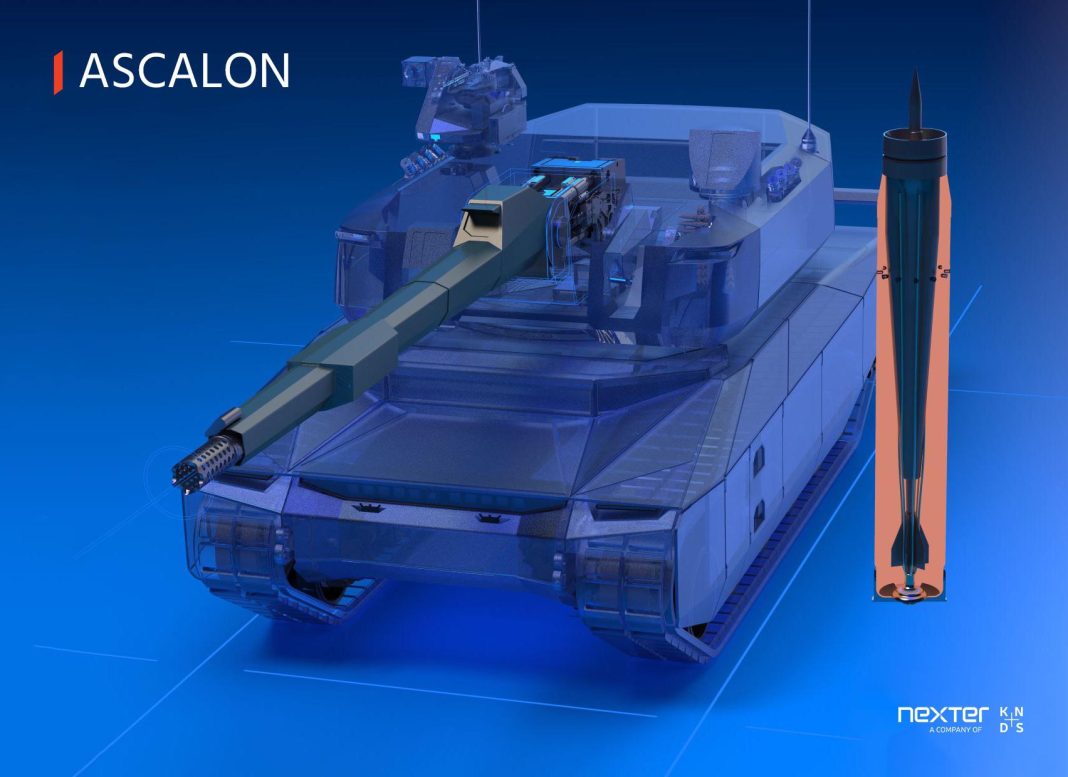
Launched jointly by France and Germany in 2017, the Main Ground Combat System (MGCS) aims to develop a next-generation battle tank to replace France’s Leclerc and Germany’s Leopard 2 tanks.
It is a “system of systems” project that includes a main battle tank and a network of other combat systems, such as artificial intelligence (AI) for decision-making, advanced sensors, robotics, and onboard unmanned aerial vehicles.
Earlier this June, Rheinmetall’s CEO warned that France may pull out of the MGCS project. “There is always a risk, but nothing has been decided yet,” Armin Papperger told Welt am Sonntag, adding that Paris is planning to drastically cut funding for the project.
A German government spokesperson later questioned the MGCS project, saying it was doubtful a joint tank would be built and that the project would likely focus on “platform-independent” technologies.

Meanwhile, Jean-Paul Alary, CEO of KNDS, the Franco-German company developing the tank, had said at the Eurosatory show in France that, although he could not comment on the MGCS’s current state because it is a political matter, it would be “very bad news” for Europe if the project failed.
The MGCS has remained embroiled in crises and beset by delays, much like the now-abandoned FCAS. Disagreements over the tank’s design, technology, and industrial responsibilities have plagued the MGCS for years.
In short, Berlin wants a stronger, better-armed tank for a potential battle with Russia, while Paris prefers a lighter tank for worldwide deployment. Political and budgetary tensions also persist over which country’s industry should lead.
The project was initially intended to be led by the Franco-German joint venture KNDS, comprising Germany’s Krauss-Maffei Wegmann and France’s Nexter. However, Germany allegedly leveraged its considerable political support to push for Rheinmetall’s involvement. Tensions have since grown between the KNDS and Rheinmetall over leadership of program “pillars,” production shares, and contracts.
From a French perspective, Rheinmetall’s involvement has altered the project’s delicate power dynamics, creating discontent and increasing frustration.
Moreover, the project has reportedly been starved of funding. As Rheinmetall CEO Papperger recently noted, the shareholding companies have received only €25 million ($29 million) since the project’s inception.
Meanwhile, France has grown uneasy with Germany’s increasing assertiveness and its emergence as Europe’s preeminent economic and, increasingly, military player, as veteran journalist Prakash Nanda of EurAsian Times noted.
“They are constantly fighting against the mismatched temperaments of their leaders, their orthogonal domestic politics, and the irreconcilably diverging strategic cultures at the heart of their deep states,” Carnegie Europe’s Strategic Europe wrote in a blog last month.
A core divergence lies in strategic outlook: France consistently advocates for greater European strategic autonomy, while Germany remains more committed to robust transatlantic ties with the United States. Meanwhile, economic and trade policies add another layer of friction, with the two powers often diverging on EU-level decisions regarding fiscal rules, industrial strategy, and market access.
France and Germany have struggled to rein in their powerful defense companies, leaving three major European projects — the Eurodrone, the FCAS fighter program, and the MGCS tank program — in serious difficulty. The FCAS has already collapsed, while the other two now risk failure.
- Contact the author (s) at editor (at) eurasiantimes.com
- With AFP Inputs
- Follow EurAsian Times on Google News