The J-10C fighter jet’s alleged triumph over the Eurofighter Typhoon in a simulated battle is trending once again, with Chinese state media confirming information that EurAsian Times reported in May 2024.
The Chinese state broadcaster CCTV recently confirmed that the J-10CE battered the Eurofighter Typhoon by winning all 9 engagements in a mock combat in 2024. The news has since generated significant media attention and been amplified by outlets such as the South China Morning Post and several Pakistan-based outlets.
While the CCTV report stopped short of publishing specific details about the exercise, the Pakistani media was quick to reveal that the mock battles took place during the “Zilzal-II” Pakistan-Qatar joint air exercise in January 2024, in which the J-10CE beat the Eurofighters of the Qatar Emiri Air Force (QEAF).
The media reports emphasized that the J-10CE aircraft prevailed in four simulated combat scenarios conducted beyond visual range and won all five of its close-range dogfights.
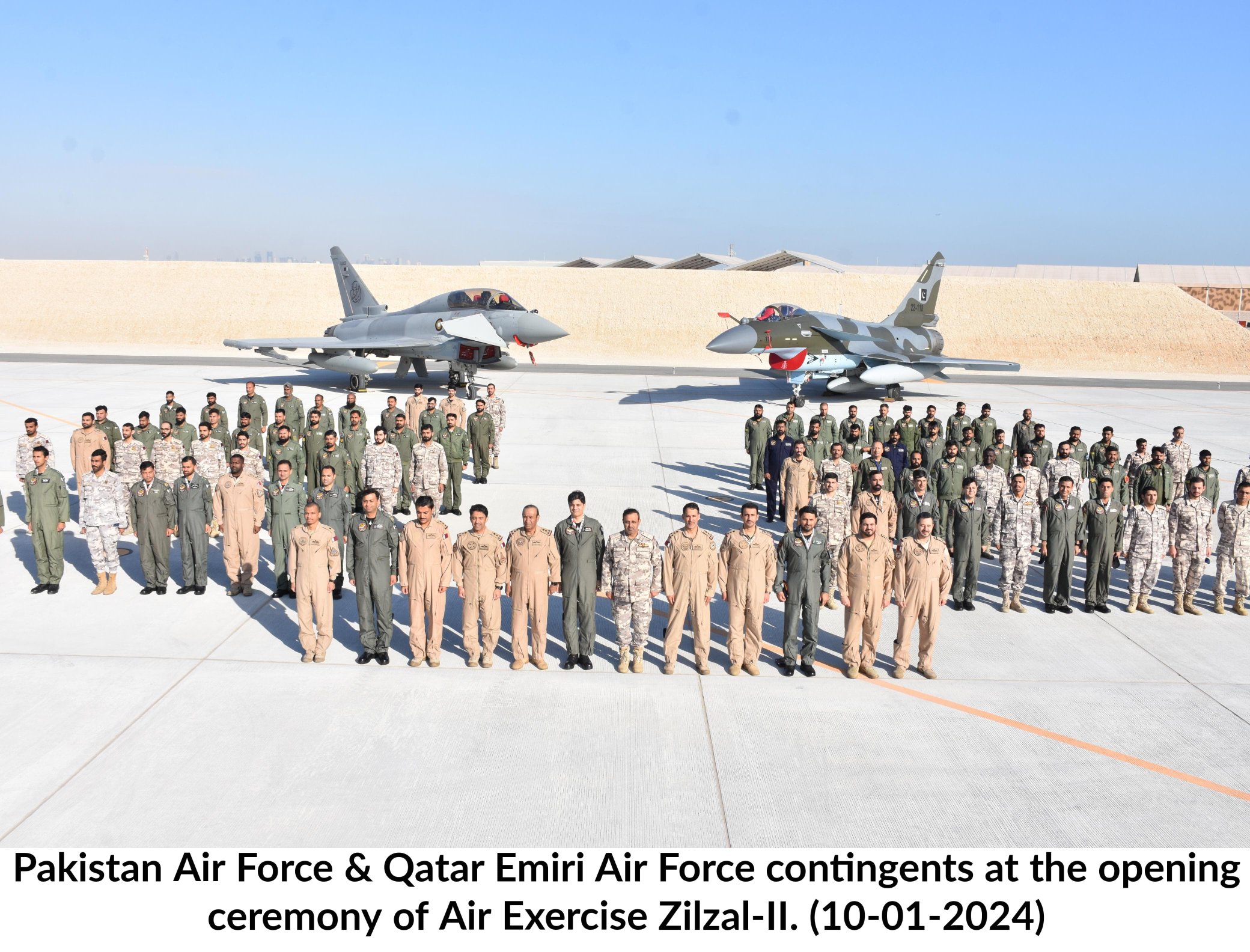
The EurAsian Times reported on this mock battle when it took place. At the time, the Pakistan Air Force (PAF) described the drills as among the most complex joint air force exercises, aimed at fostering interoperability between the two allied nations and creating a shared learning space.
Later that year, a separate EurAsian Times report analyzed claims made by Chinese military bloggers about the combat efficacy of the J-10CE. For example, Liu Xiaofei, a popular Chinese military influencer, said in a Douyin video: “If this claim can be confirmed, it shows that China’s previous-generation fighter jets are being continuously improved and have achieved similar, or even superior, ability compared with European fighters.”
When EurAsian Times asked about the feasibility of claims about J-10C 9:0 victory over the Typhoon, Rick Joe, a popular PLA analyst, told the EurAsian Times, “It is certainly within reason. Of course, the usual caveats about DACT [Dissimilar Air Combat Training] parameters and exercise realism and conditions apply, but if one assumes somewhat common sense and equal conditions, the outcome is still within reason.”
“From what I’ve gathered in recent years (even before the May 2025 conflict), the J-10C is a fairly impressive aircraft for its category and generation, even by international standards, and the PAF would have been given fairly up-to-date training and tactics from the PLAAF on how to maximize its effectiveness. Couple that with the PAF itself being an air force that has its house in order, I could see them on that occasion being able to achieve a disproportionately favorable outcome on that particular exercise, against that particular air force, at that particular time,” he added.
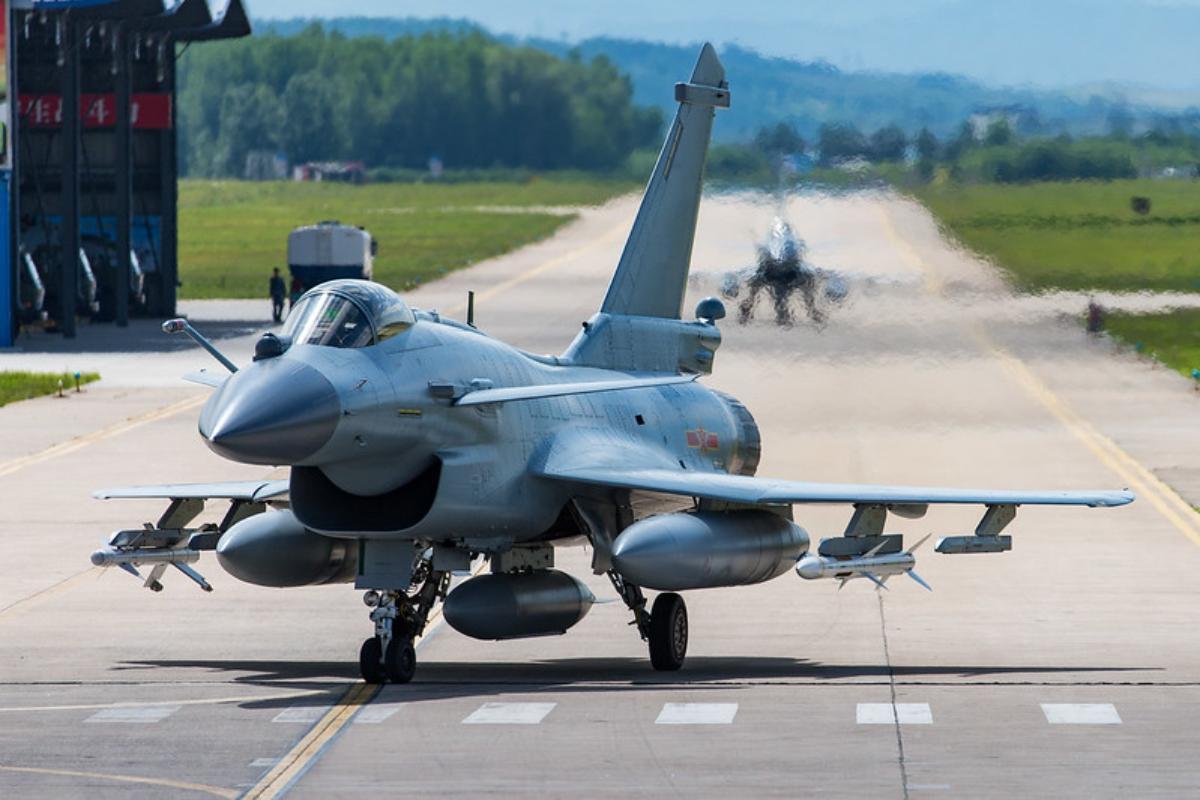
Nonetheless, China’s decision to confirm these claims and regurgitate the same narrative two years later appears to be a calculated move, as it comes at a time when Beijing has positioned the J-10CE as ideal for countries looking to upgrade their air forces with an affordable, non-Western and non-Russian 4+-generation combat jet that comes with no operational restrictions.
Earlier, Pakistan had claimed its J-10C jets had shot down 6 Indian jets during the May 20205 clash, including multiple Rafale jets. India accepted some operational losses but also claimed to have destroyed 12-14 Pakistani aircraft, including record shootdowns by the S-400 AD system. The exact losses on both sides have not been officially disclosed.
Earlier this month, China made an unexpected move: it used its state-owned media to air an interview with Zhang Heng, an engineer from the Aviation Industry Corporation of China’s (AVIC) Chengdu Aircraft Design and Research Institute, which produces the J-10C fighter. In the interview, Zhang and his colleagues made a rare admission that they had provided technical support to Pakistan during the clash with India.
Around the same time, Chinese journalist Li Zexin published a video of the J-10C on X, reiterating Pakistan’s claims to a wider global audience. Meanwhile, China’s English-language daily newspaper, China Daily, reported that the J-10CE will receive upgrades to make the aircraft more lethal.
“The J-10CE can adapt to customers’ needs, including air superiority and strike against ground targets, and can be customized based on the environments and mission requirements of different users. We can also offer optional payload packages to clients,” said Li Jun, a senior researcher at the Chengdu Aircraft Design and Research Institute and the principal designer of the J-10C combat jet. You can read a detailed EurAsian Times article on the upgrades and China’s coordinated push to export the aircraft here.
For China, positioning its aircraft as superior to European jets is a great marketing move.
However, despite aggressive marketing campaigns for the Rafale and Typhoon jets, it has been unable to sell either jet to anyone except Pakistan. However, countries such as Bangladesh and Indonesia are reportedly evaluating the jet.
Having said that, mock battles provide valuable training data and rough insights into relative strengths, but they may not definitively prove the overall superiority of one jet type over another, as much depends on the pilots’ skill and tactics.
The Eurofighter, for instance, triumphed over the fifth-generation F-22 Raptor in mock drills during the Red Flag air combat exercises over Alaska in 2012, demonstrating that it is a cutting-edge fighter capable of taking on any challenge, including a supposedly superior class of aircraft with stealth capabilities that make them harder to detect.
More recently, the Rafale scored a “kill” against the mighty combat-tested F-35 Lightning II jets in June 2025.
When “Lightning” Struck F-35
The French Dassault Rafale “scored a kill” against the American F-35 stealth fighter at Exercise Trident Atlantic 25 hosted by Finland in June 2025, with forces from Finland, France, the UK, and the US in attendance.
Two months after the exercise ended, in August 2025, the French Air and Space Force’s official X account shared a video clip from the exercise that seemed to be a mock drill.
At 0:15 seconds into the footage, a French Rafale pilot is seen locking an F-35 with its IRST (Infrared Search and Track) during a Basic Fighter Maneuver (BFM), also called dogfighting, at visual range. The frame shows a close-up of the target acquisition as the video proceeds, marking a kill, as reported by the EurAsian Times at the time.
In training exercises, scoring a kill means securing a radar lock on the rival aircraft, not firing an actual missile.
Interestingly, the post made no mention of a dogfight, suggesting the two jets could have engaged in a beyond-visual-range (BVR) aerial duel.
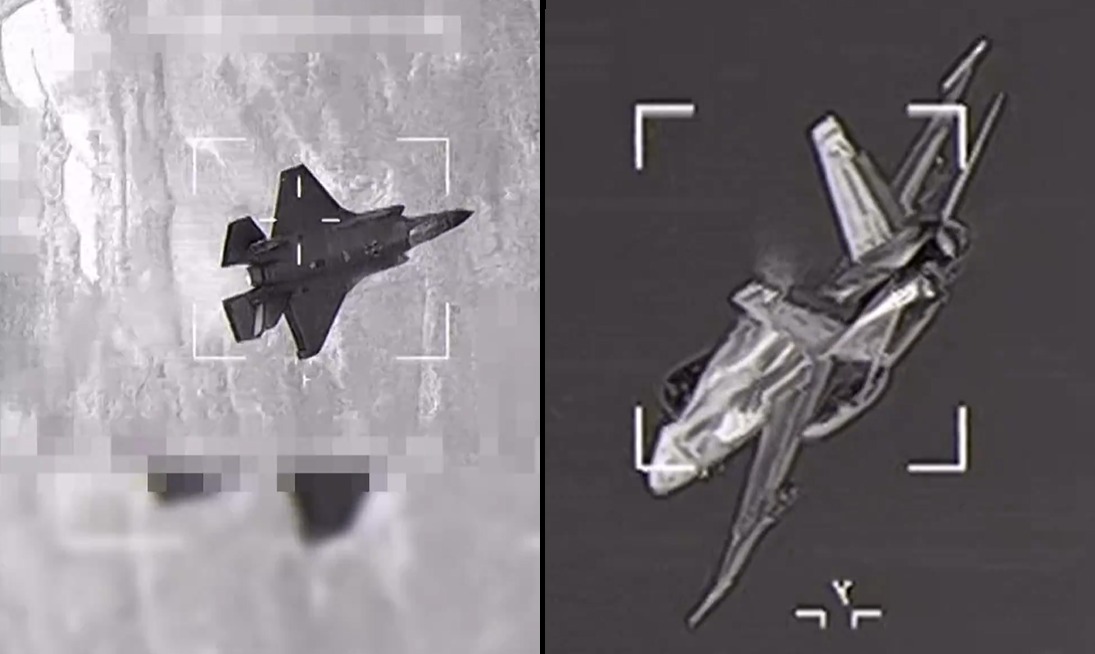
Not surprisingly, the video of the Rafale-F-35 engagement was widely reshared by French users, most of whom emphasized that the French Rafale, a 4.5th-generation fighter, dominated and scored a kill against the combat-hardened American fifth-generation stealth fighter, which is supposedly considered superior in combat.
The duel came at a much-needed moment for the Rafale, whose reputation had taken a global beating due to Pakistan’s allegations.
However, it was not the first time that the French 4.5th-generation fighter had bested an American fifth-generation workhorse.
Before this incident, during a joint drill in the United Arab Emirates in 2009, a Lockheed Martin F-22 Raptor of the US Air Force was “shot down” by a Rafale in a training duel.
Although the American pilots said their planes had never lost a battle, the French Ministry of Defense later posted a video on its website showing a Rafale taking position to lock the F-22 within its range and launching the infrared-guided Mica missile at it.
- Contact the author at sakshi.tiwari9555 (at) gmail.com
- Follow EurAsian Times on Google News